Heat Pump vs Air Conditioner for Southwest Florida Homes
Southwest Florida puts HVAC systems to work almost all year. Long cooling seasons, heavy humidity, and only a short stretch of mild weather make the heat pump vs air conditioner choice feel more important than it does in cooler states.
Both options can keep your home comfortable, but the better fit depends on more than temperature. You have to think about humidity control, seasonal energy use, coastal wear, ductwork, and how often you actually need heat.
If you live in Babcock Ranch or anywhere nearby, the smartest comparison starts with cooling performance, then moves to year-round value.
Key Takeaways
- A heat pump cools the same way an air conditioner does, but it can also heat your home.
- In Southwest Florida, cooling and humidity control matter more than winter heating.
- Proper sizing matters more than the brand on the outdoor unit.
- Coastal salt air can shorten equipment life, so corrosion protection matters.
- A heat pump can be worth it if you want efficient heat without a separate furnace or space heater.
How a Heat Pump and Air Conditioner Differ
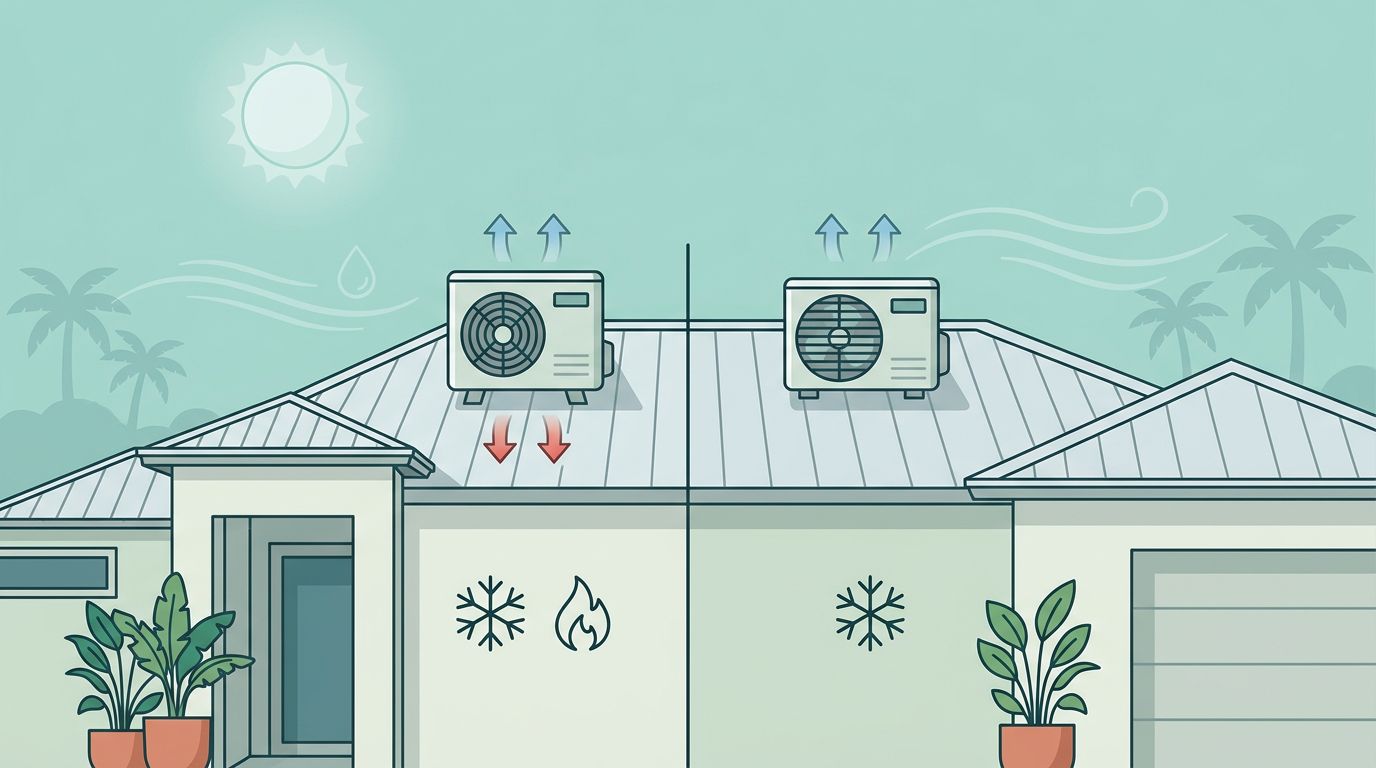
In cooling mode, a heat pump and a standard air conditioner work the same way. Both pull heat out of your home and move it outside. That means the cooling experience can be nearly identical when the equipment is sized and installed well.
The difference is in the heating cycle. A heat pump can reverse its operation and bring heat indoors during cool weather. A standard air conditioner cannot do that, so it needs a separate heat source if you want winter heating.
Here is the simple version for Southwest Florida: an air conditioner is built only for cooling, while a heat pump is a cooling system with heating built in. Since Southwest Florida has short, mild winters, that added function can be useful, but it is not always essential.
| Factor | Air Conditioner | Heat Pump | Southwest Florida Takeaway |
|---|---|---|---|
| Cooling performance | Excellent when sized correctly | Excellent when sized correctly | Cooling is a tie |
| Humidity control | Depends on runtime and sizing | Depends on runtime and sizing | Oversizing hurts both |
| Heating | Needs a separate heat source | Built-in heating | Heat pump helps on cool mornings |
| Upfront cost | Usually lower | Usually higher | AC fits tighter budgets |
| Year-round value | Best for cooling-only needs | Better for year-round use | Heat pump can pay off if you heat often |
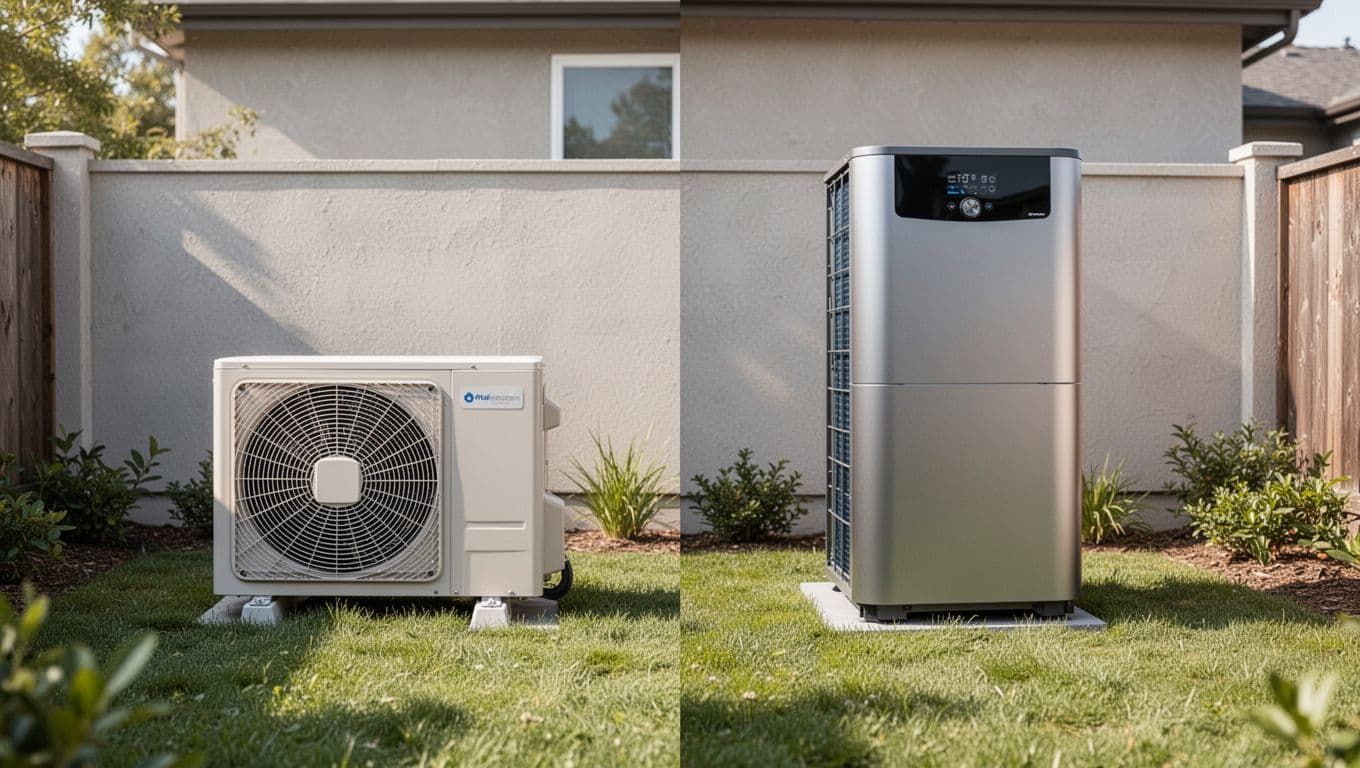
The table makes one thing clear, cooling is not the deciding factor by itself. The real question is whether you want the added heating function and whether your home will use it enough to justify the cost.
Cooling, Humidity, and Ductwork Matter More Than Winter Heat
Southwest Florida is a cooling-dominant climate. Your system has to fight heat, humidity, and long run times for most of the year. That means comfort depends on more than raw capacity.
A system that is too large can cool the air too fast and shut off before it removes enough moisture. The house feels cool, but it can still feel sticky. On the other hand, a properly sized system runs long enough to pull humidity down and keep rooms more even.
In Southwest Florida, the right-sized system often feels better than the biggest one.
That is why load calculation matters so much. Square footage gives you a rough idea, but it does not tell the full story. Sun exposure, ceiling height, insulation, window size, air leakage, and duct design all change the answer. If you want a deeper look at that part of the decision, see choosing the right AC size for your home.
Ductwork also changes the outcome. A heat pump and an air conditioner can both struggle if the ducts leak, kink, or send too much air to one area and not enough to another. Good duct design matters because it affects airflow, humidity control, and noise.
Coastal exposure matters too. Homes closer to the Gulf, open water, or salty wind need extra attention. Salt air can corrode coils, fasteners, and cabinets over time. That risk applies to both systems, so ask about corrosion-resistant finishes, regular coil cleaning, and a placement that keeps the outdoor unit out of the worst spray.
Cost, Efficiency, and Lifespan in a Hot Climate
Upfront price is often the first difference homeowners notice. A heat pump usually costs more than a standard air conditioner because it includes the parts needed for both cooling and heating. If you almost never use heat, that extra cost can be hard to justify.
Efficiency is the next piece. For cooling, look at SEER2 . Higher SEER2 numbers usually mean lower cooling costs, which matters a lot in Southwest Florida because cooling runs for so many months. For heating, heat pumps also carry an HSPF2 rating. That rating matters when you actually use the heating mode.
If your winter use is limited to a few cool nights and mornings, the heating savings may not be dramatic. If your current backup heat is electric resistance heat, a heat pump can still be a smart upgrade because it heats more efficiently than those strip elements.
Lifespan is usually similar for both systems when they are installed well and maintained regularly. Coastal homes can shorten that life if coils are neglected or corrosion protection is ignored. Routine maintenance matters more than many homeowners think. Dirty coils, low refrigerant, clogged drains, and weak electrical connections all reduce comfort and shorten equipment life.
Noise is another detail worth weighing. Some variable-speed models run quietly because they ramp up and down instead of cycling hard. That can matter in a quiet neighborhood or when the condenser sits near a patio, bedroom window, or side yard.
When Each Option Makes Sense for a Southwest Florida Home
A heat pump makes sense when you want one system to handle most of the year and you do use heat now and then. It is a good fit for homeowners who want lower heating costs than electric strip heat, or who prefer a single system for both seasons. It also works well when you are replacing a full system and want year-round value instead of cooling only.
A standard air conditioner still makes sense when cooling is your clear priority and your heating needs are tiny. If your budget is tighter, a good AC can be the practical choice. That is especially true if your home already has another efficient way to handle heat, or if you simply do not want to pay extra for a feature you may use a handful of times each winter.
Homes with older or poorly designed ductwork deserve extra caution. A heat pump does not fix duct leaks, bad airflow, or weak insulation. Neither does a high-SEER2 air conditioner. In those cases, the system choice matters less than the installation quality.
Here are the situations that usually point one way or the other:
A heat pump is a strong fit when:
You want cooling and heating in one system.
You care about lower heating costs during cooler months.
Your home already needs a full replacement, so the added heating function has real value.
A standard air conditioner is a strong fit when:
Your main goal is strong cooling with the lowest upfront cost.
You rarely use heat in Southwest Florida.
You want to put more of the budget toward higher efficiency, duct repairs, or better indoor air quality.
Either way, installation quality matters as much as the equipment itself. Good airflow, correct charge, proper sizing, and a clean duct system do more for comfort than most marketing claims ever will.
The Bottom Line for Southwest Florida Homes
For most homes in Southwest Florida, the decision comes down to how much you value built-in heat. If you want one system that cools like an air conditioner and also handles the rare cold snap, a heat pump is often the better all-around choice.
If your focus is cooling only, and you want to keep upfront cost down, a standard air conditioner can be the smarter move. In either case, a well-sized system with strong humidity control, solid ductwork, and corrosion-aware installation will matter more than the label on the cabinet.
When you compare heat pump vs air conditioner , start with comfort, then look at humidity, energy use, and how long you plan to stay in the home. That order makes the choice much easier.
Recent Posts