How Long AC Systems Last in Southwest Florida
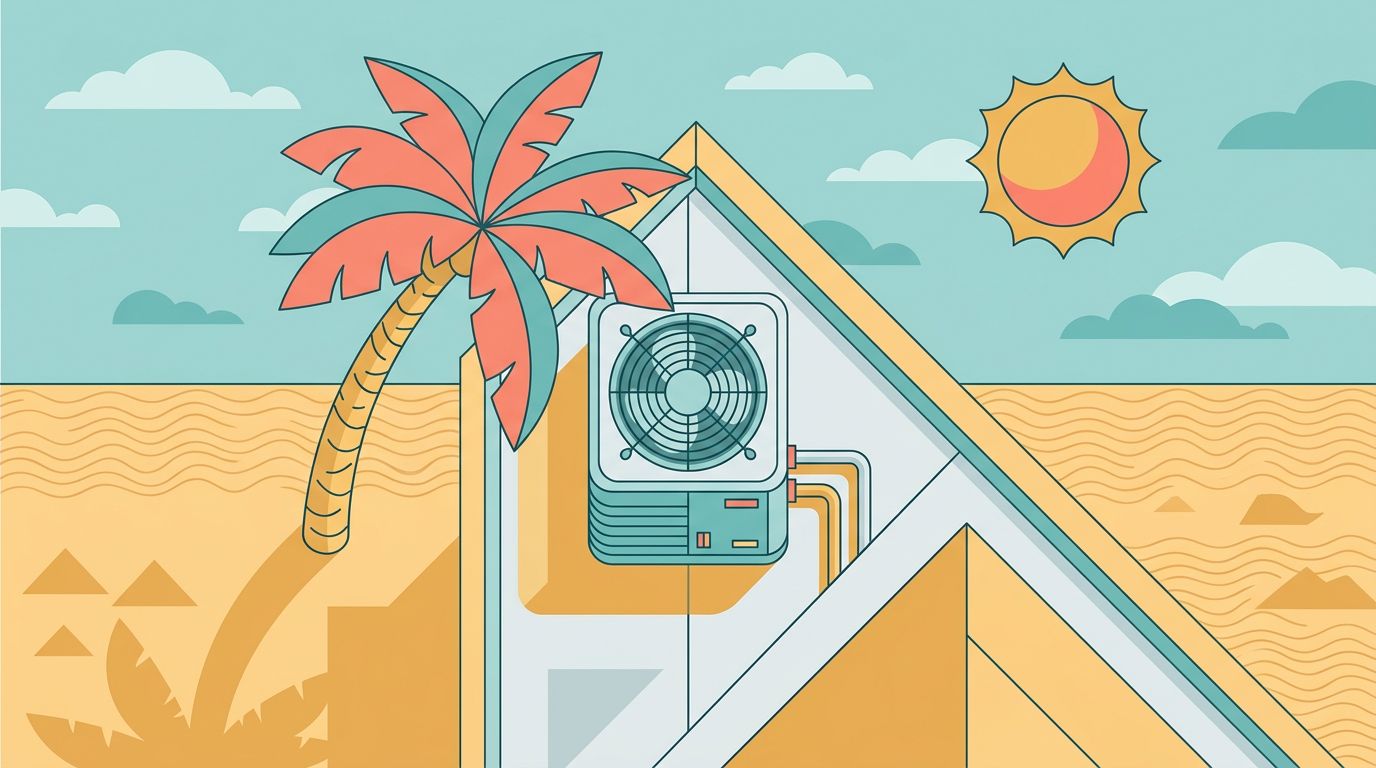
An AC system in Southwest Florida works harder than the same unit in most parts of the country. Long cooling seasons, heavy humidity, salt air near the coast, and storm season all add wear fast.
That means AC system lifespan here is not a simple number. A 12-year-old unit might still cool well, while a 7-year-old system with poor airflow and dirty coils can feel worn out.
If you live in Babcock Ranch, Cape Coral, Fort Myers, or anywhere nearby, the real question is not just how old your AC is. It's how well it has been cared for in local conditions.
What AC lifespan looks like in Southwest Florida
Most central AC systems in Southwest Florida last about 10 to 15 years . Some reach 15 years or a little more with strong maintenance, good installation, and clean ductwork. Others start struggling much sooner if they run with dirty coils, weak airflow, or repeated electrical problems.
Heat pumps usually fall in the same range. They often run nearly year-round in this climate, so their parts rack up hours fast. That extra runtime matters.
| System type | Realistic lifespan in Southwest Florida | What can shorten it |
|---|---|---|
| Central AC | 10 to 15 years | Long runtime, salt air, poor maintenance |
| Heat pump | 10 to 15 years | Year-round use, drainage issues, worn electrical parts |
| Well-maintained system | 15 years or more | Good installation and regular service |
A system that makes it past 15 years in Southwest Florida has done well. However, age alone does not tell the whole story. Some units lose efficiency early, while others keep going because the home's airflow, maintenance, and installation were all done right.
The indoor and outdoor parts also age differently. The outdoor condenser takes the brunt of sun, rain, and corrosion. Meanwhile, the indoor coil, blower, and drain line deal with moisture and dust. When one part struggles, the whole system feels older than it is.
Why Southwest Florida wears AC systems down faster
Southwest Florida puts HVAC equipment in a tough spot. The outdoor unit sits in heat for months at a time, then gets hit with rain, wind, and humidity. Near the coast, salt in the air can speed up rust and corrosion on fins, fasteners, and metal cabinets.
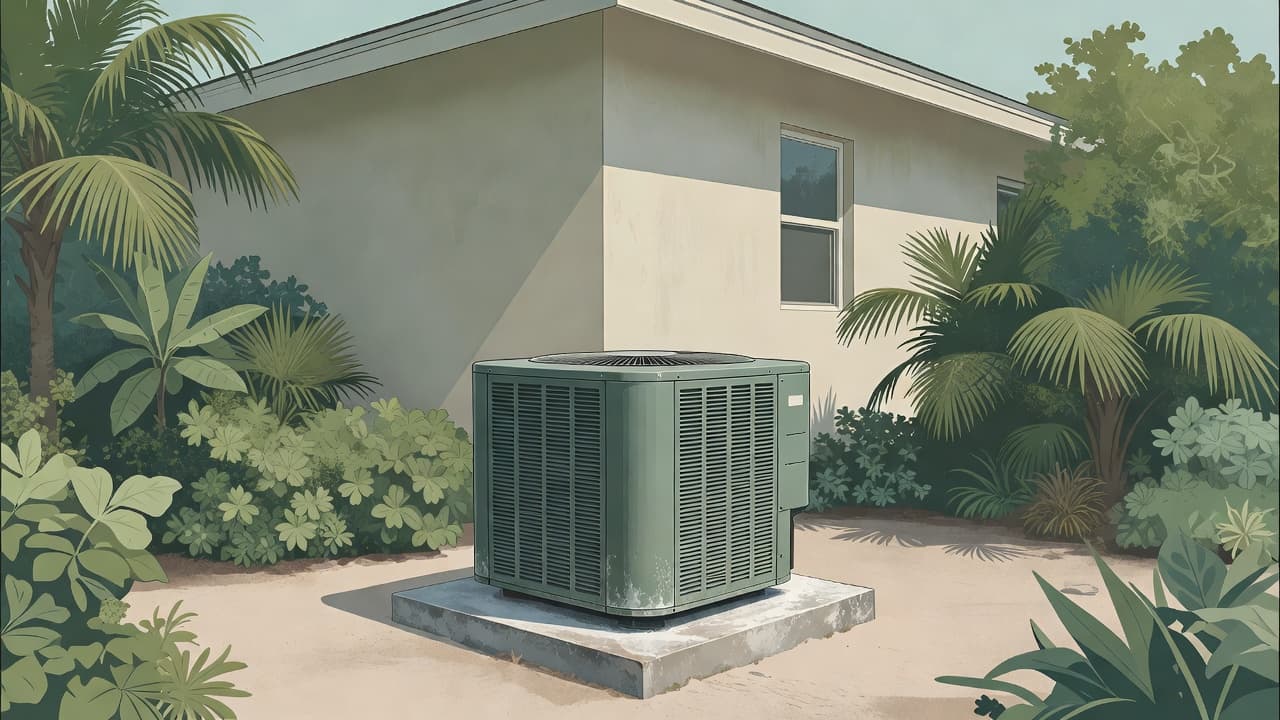
That outdoor exposure is only part of the story. The system also runs for long stretches because homes need cooling for much of the year. More runtime means more wear on the compressor, fan motor, contactor, capacitor, and other working parts.
Humidity adds another layer. When an AC system runs often, it has to remove moisture as well as heat. If the drain line clogs or the coil gets dirty, the unit works harder and may start short cycling or icing up.
Installation quality matters too. An oversized system may cool quickly but leave too much humidity behind. An undersized system may run for hours without catching up. Poor duct sealing, weak return airflow, and bad refrigerant charge can shorten life just as much as weather.
In coastal communities like Sanibel or Bonita Springs, the environment can be especially harsh. Inland areas still deal with heat and humidity, but salt exposure near the coast gives corrosion a head start.
Signs your AC system is getting close to the end
A failing system usually gives warning signs before it quits completely. You may notice one issue at first, then another follows a few months later.
Watch for these common signs:
- Cooling feels uneven across the home, even when the thermostat setting stays the same.
- Repairs keep coming back , especially if the same parts fail again.
- Energy bills climb without a clear change in usage.
- The outdoor unit looks rusty or the coil fins seem badly corroded.
- The system runs longer than it used to, or it short cycles and shuts off too fast.
- Humidity stays high indoors, even when the AC is running.
- Odd noises grow louder , such as rattling, grinding, or buzzing.
One sign by itself does not mean the system is done. A bad capacitor can be a simple repair. A clogged drain line can be cleaned. But when several of these problems show up together, the system may be nearing the end of its useful life.
If an older AC needs repairs more often than it cools comfortably, age is no longer the only issue. Condition matters more than the calendar.
You should also pay attention to comfort. If some rooms never cool properly, the system may be losing capacity. In Southwest Florida, that kind of weakness shows up fast during the hottest months.
How to extend AC lifespan in Florida heat
The best way to stretch AC system lifespan is steady maintenance. Small tasks do a lot of heavy lifting here because the equipment runs so often.
Start with the filter. A dirty filter cuts airflow, makes the blower work harder, and can coat the indoor coil with dust. In many homes, filters need to be checked every month and changed every 1 to 3 months, depending on dust, pets, and how often the system runs.
Keep the outdoor unit clear too. Grass clippings, palm debris, leaves, and dirt can block airflow around the condenser. The unit needs room to breathe. If the coil cannot shed heat, the compressor pays for it.
Coil care matters just as much. A dirty evaporator coil can reduce cooling and cause freezing. A dirty condenser coil makes the outdoor unit work harder in the sun. Both problems shorten equipment life.
Airflow also needs attention. Closed vents, crushed flex duct, dirty returns, and leaky ductwork all force the system to work against itself. Good airflow is one of the simplest ways to protect the equipment.
Twice-yearly tune-ups help catch small issues before they turn expensive. That's why many homeowners prefer a year-round heating and cooling care plan. Routine service can cover drain checks, coil cleaning, electrical testing, thermostat checks, and system adjustments before peak season hits.
The little things add up:
- Replace filters on schedule.
- Keep supply and return vents open.
- Rinse debris away from the outdoor unit.
- Flush the condensate line when needed.
- Fix weak airflow or strange noises early.
Timely repairs matter because one failing part can strain the rest of the system. A weak capacitor, dirty coil, or low refrigerant charge can push a healthy unit into a hard-working, high-wear cycle.
Repair or replace an older AC system?
Age matters, but it should not be the only factor in the decision. A 9-year-old system with one repair and good efficiency is different from a 13-year-old system with rust, weak cooling, and repeated breakdowns.
Repair usually makes sense when the system is still fairly young, the problem is isolated, and the rest of the equipment looks healthy. A capacitor, contactor, drain line, or thermostat issue can often be fixed without much trouble.
Replacement starts to make more sense when repairs keep stacking up. If the compressor is struggling, the coil is badly corroded, or the system no longer removes humidity well, the money may be better spent on new equipment.
A few questions help narrow it down:
- Is the system under 10 years old and mostly reliable?
- Are the repairs occasional, or are they becoming a pattern?
- Does the home stay cool and dry, or does it feel weak and sticky?
- Is the outdoor unit showing heavy corrosion?
If the answer points toward frequent repairs and poor performance, replacement often brings more comfort and fewer surprises. That is especially true in Southwest Florida, where a tired system has little room to coast through the season.
Conclusion
Most homeowners in Southwest Florida can expect a central AC or heat pump to last about 10 to 15 years , with some systems lasting longer when maintenance is consistent and installation quality is strong. Coastal air, humidity, and long run times can shorten that window, so age alone never tells the full story.
Filter changes, coil cleaning, airflow checks, and fast repairs all help protect the system. When those basics stay on track, your AC has a much better chance of making it through the local heat without constant trouble.
If your system is getting older, pay attention to comfort, repair frequency, and corrosion. Those signs usually tell you more than the model year ever will.
Recent Posts