How to Test AC Airflow and HVAC Airflow at Home
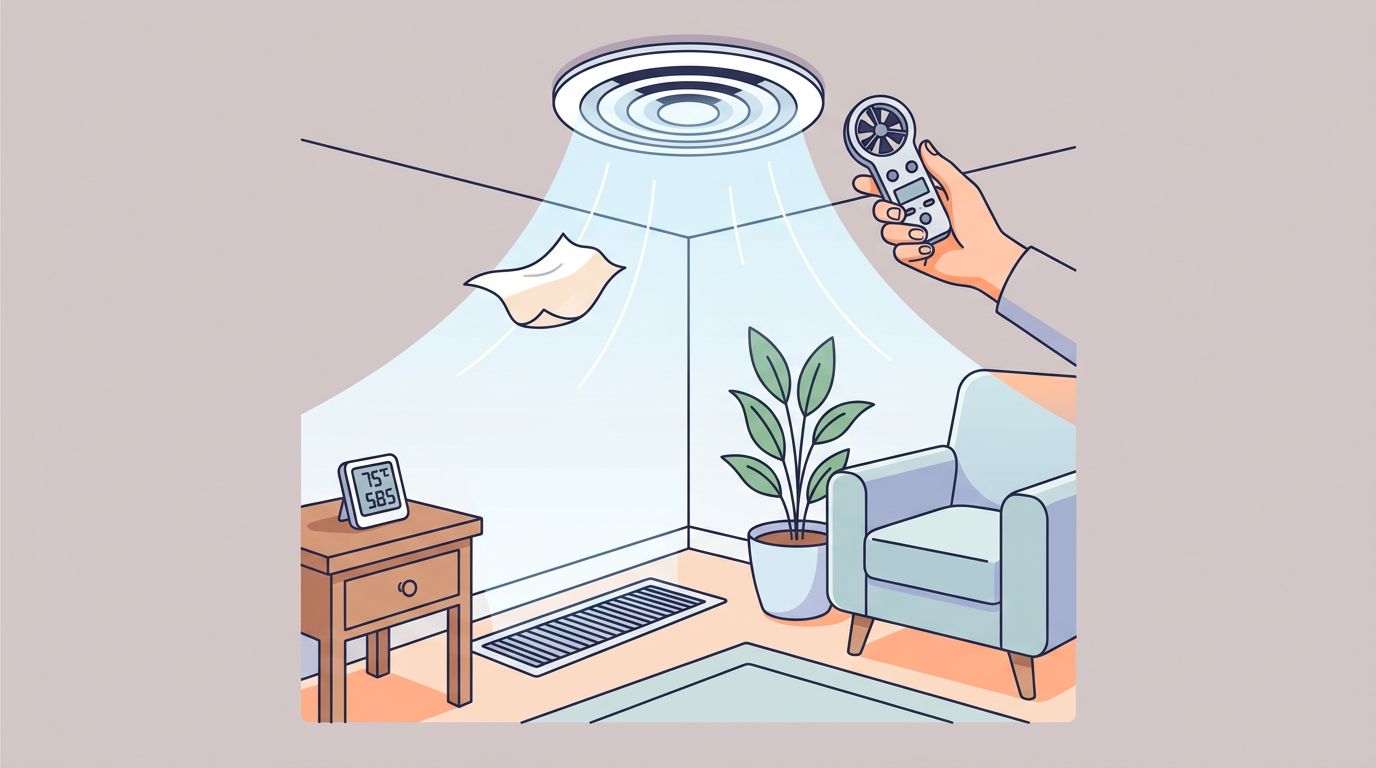
If your home suffers from hot and cold spots, where one room stays warm while the rest of the house feels cool, you may have an issue with your cooling system, not just a faulty thermostat. You can test AC airflow at home using simple tools like a tissue, a thermometer, and, for a more accurate reading, an inexpensive anemometer to evaluate your HVAC airflow.
These checks will not replace professional duct or equipment testing, but they can effectively show whether air is moving as it should and help you identify where the performance problem begins. Begin with a safe visual inspection, then compare the output of your supply vents, return vents, and individual room temperatures.
Key Takeaways
- Check the air filter, supply registers, and return grilles before taking measurements.
- Use a tissue to compare air movement, then use an anemometer for a more consistent reading.
- A temperature difference between supply and return vents can reveal cooling trouble, but it does not prove an airflow issue.
- Weak airflow at one vent often points to a damper, duct, or register problem.
- Stop and call a licensed HVAC professional if you find ice, water, electrical concerns, burning smells, or major airflow loss.
Prepare the AC System for an Airflow Test
Start with the system running in cooling mode. Adjust your thermostat settings by choosing cooling mode, selecting Fan Auto, and allowing the air conditioner to run for at least 10 to 15 minutes. Testing immediately after the blower starts can give inconsistent results.
Keep the interior doors in their normal positions. If you usually sleep with a bedroom door closed, test that room with the door closed. A closed door can restrict the return-air path and change the pressure in that space.
Walk through the home and note which rooms feel comfortable and which ones feel warm or stuffy. Identifying these hot and cold spots helps you better understand the performance of your system. Pay attention to unusual sounds, such as whistling at a vent, rattling near the air handler, or a blower that sounds strained.
Before inspecting anything near the air handler, turn the thermostat off. If you plan to remove an equipment access panel, switch off the correct circuit breaker first. Only inspect parts that are designed for homeowner access, such as the air filter, return grille, and visible ductwork connections.
Never remove sealed refrigerant panels, touch exposed wiring, or reach into the blower motor compartment. A powered fan can start without warning, and electrical components can remain dangerous even after the thermostat is off.
Check these basic items before measuring:
- The air filter is clean and installed with the airflow arrow pointing toward the air handler.
- Supply vents and registers are open and free from furniture, rugs, curtains, and other obstructions.
- Return grilles aren't blocked by shelving, boxes, or dust buildup.
- Flexible ductwork in accessible areas isn't crushed, sharply bent, disconnected, or sagging.
- The thermostat fan setting is on Auto rather than On, unless you want to test constant circulation.
A dirty air filter is one of the most common causes of weak airflow. However, replacing it with a filter that is too restrictive can also reduce the air volume moving through the system. Use the size and filter rating recommended for your equipment.
Three Simple Ways to Test AC Airflow
You do not need professional instruments for an initial check. These methods help you compare vents and identify changes in system performance, although each has its own limits.
1. Use a tissue at each vent
Hold a single square of toilet tissue or a thin facial tissue a few inches in front of your supply and return vents. The tissue should move outward as conditioned air leaves the supply register. Test the center and edges of the register, but do not press the tissue against the grille.
Next, test the return grille. The tissue should pull toward the return when the system runs. A return that barely pulls air may have a blocked filter, an obstructed grille, a restricted return duct, or insufficient return capacity.
Compare rooms instead of judging one vent in isolation. A slight difference between registers is normal because vents vary in size and duct length. A clear difference, such as strong airflow in the living room and barely moving tissue in a back bedroom, deserves further inspection.
2. Measure air velocity with an anemometer
A handheld vane or hot-wire anemometer can measure air velocity at a supply register. Many models display feet per minute, or FPM. Choose an anemometer with a small sensor that fits across the register without blocking it.
Hold the anemometer at the same distance from each vent. Take several readings across the grille because air may exit faster through some sections than others. Record the readings and compare one room with another under the same operating conditions.
You can estimate volume by multiplying average air velocity by the register's effective open area:
Airflow in CFM = average air velocity in FPM x effective register area in square feet
This estimate has limits. The outside dimensions of a grille are not the same as its open area, and turbulence can affect readings. Use the resulting CFM to compare vents, not to confirm that your system meets its design airflow.
An anemometer is most useful when one vent measures much lower than similar vents. It can also help you document a change after replacing a filter or opening a blocked register.
3. Check supply and return temperatures
Place a digital thermometer in the return air near the grille, then measure air coming from a supply register. Avoid touching the metal grille because it can affect the reading. Take both measurements after the system has run steadily for several minutes.
The difference between return-air temperature and supply-air temperature is often called the Delta T, or temperature split. Many residential systems show a difference in the general range of 15 to 22 degrees Fahrenheit, but the correct range depends on the equipment, indoor humidity, outdoor conditions, and manufacturer specifications.
This reading is a cooling check, not a direct airflow measurement. A normal Delta T does not prove that every room receives enough air. Likewise, an unusual split can result from low refrigerant, a dirty evaporator coil, poor airflow, extreme humidity, or other problems.
Don't add refrigerant or open the air conditioner to investigate an abnormal reading. Refrigerant circuits require specialized tools and licensed service in many situations. Record the temperatures and share them with a technician instead.
A tissue test shows whether air is moving. An anemometer compares air speed. Neither test authorizes electrical or refrigerant repairs.
Compare Vents, Returns, and Rooms
Airflow problems become easier to identify when you compare patterns to assess your home's overall air distribution. Test every supply register with the same method and write down the results. Be sure to include the room name, register size, tissue movement, and any unusual noise.
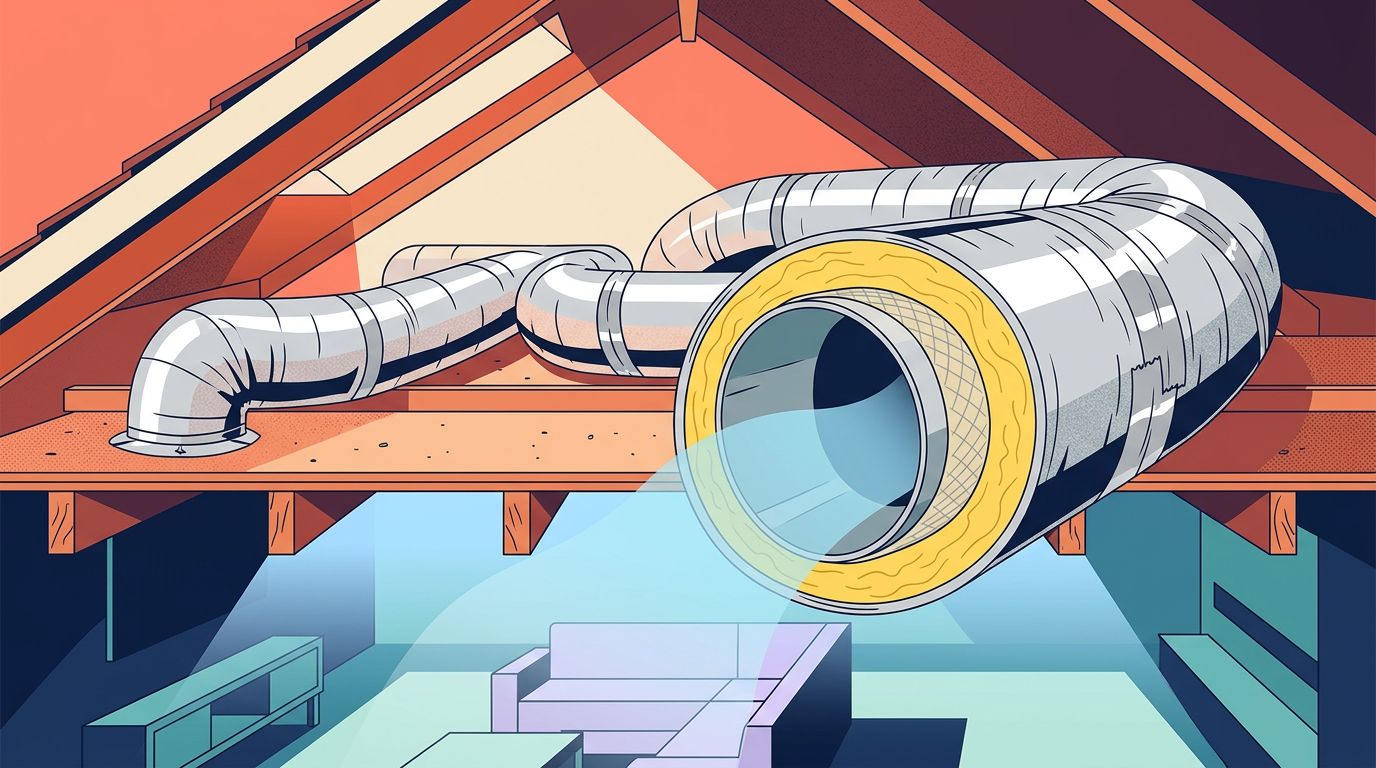
A single weak vent usually points to a local problem. The branch duct may have closed balancing dampers, a sharp bend, a loose connection, or leaky ducts hidden inside an attic or ceiling space. The register itself may also be clogged with dust or partly closed.
When several vents and registers in one area show weak airflow, look for a larger duct issue. A disconnected main duct, crushed flex duct, or closed zone damper can affect multiple rooms. Accessible duct connections can be viewed, but do not cut into ductwork or disturb insulation while investigating.
If supply airflow feels weak throughout the home, check the filter and return grilles first. A blocked return makes the blower work against resistance. Some homes also have return ducts that are too small for the system, especially after renovations or room additions.
Room pressure matters as well. Hold the tissue near the gap under a closed interior door. If the tissue is pulled strongly toward the room or pushed away from it, the room may lack a clear return-air path. Opening the door can improve circulation, but it does not correct a poorly designed return system.
Record your results in a simple table if several rooms are involved to better analyze your supply and return vents.
| Location | Supply airflow | Return airflow | Room condition |
|---|---|---|---|
| Living room | Strong, steady | Moderate pull | Comfortable |
| Back bedroom | Weak | No nearby return | Warm |
| Hallway | Moderate | Strong pull | Comfortable |
The most useful clue is usually the comparison, not one exact number. A warm room with weak airflow needs a different inspection than a warm room with strong airflow but poor cooling.
Troubleshoot Weak AC Airflow Safely
Begin with the easiest fixes to improve the energy efficiency of your home. Replace a dirty filter with the correct size, open all supply registers, clear furniture from vents, and remove dust from return grilles. Let the system run for 15 to 20 minutes, then repeat the tissue or temperature comparison.
If only one register remains weak, inspect the visible boot and nearby duct for separation or crushing. In an attic, look for a flex duct that has collapsed under stored items or sharp bends. Do not crawl across unsupported drywall, move electrical wiring, or disturb insulation without proper protection.
Weak airflow across the entire house requires more caution. A dirty evaporator coil, clogged condenser coils, a failing blower fan, incorrect blower speed, blocked returns, or a frozen coil can all drastically reduce air movement. These components are often difficult to access and usually require professional testing.
An HVAC professional uses specialized tools to diagnose complex issues that manual testing cannot detect. For example, they may use a manometer to measure static pressure and total external static pressure, ensuring your system is not overworking against restricted airflow. They might also employ a flow hood to obtain precise volume measurements, providing a much more accurate assessment of system performance than basic DIY methods.
Ice on the refrigerant line or indoor coil is a reason to turn the system off and schedule service. Continuing to run a frozen system can cause significant damage. Let the ice melt naturally, and do not chip it away with a tool or pour hot water on the equipment.
Water around the air handler also needs attention. A clogged condensate drain can cause overflow, while a frozen coil can produce excess water when it melts. Turn off the system if water is reaching electrical parts or damaging ceilings, walls, or flooring.
Call a licensed HVAC professional when:
- Airflow suddenly drops across the entire home.
- The blower makes grinding, squealing, or repeated clicking sounds.
- The breaker trips, wiring looks damaged, or you smell burning.
- Ice forms on the indoor coil or refrigerant line.
- A return grille has strong suction but supply vents remain weak.
- The AC runs continuously while rooms stay warm.
- You suspect a refrigerant leak, dirty coil, blower problem, or leaky ducts.
An HVAC professional can measure total system airflow, static pressure, temperature split, refrigerant performance, and duct leakage. These advanced tests can identify underlying mechanical or structural problems that a simple room by room tissue check cannot uncover.
Frequently Asked Questions
Can I fix weak airflow throughout my entire home on my own?
Usually, a system-wide drop in airflow indicates a more complex issue such as a dirty evaporator coil, a failing blower motor, or restricted ductwork. While you should always start by checking your air filter and return grilles for blockages, persistent issues across the entire house typically require professional diagnostic tools like a manometer.
Why does the tissue test work differently at supply and return vents?
Supply vents should push air out, so the tissue will move outward when held in front of the register. Conversely, return grilles should pull air in, meaning the tissue should be drawn toward the grille; if it does not pull, you likely have a restricted return duct or a heavily clogged filter.
Is a difference in temperature between rooms a sign of a broken HVAC system?
Not necessarily, as temperature variations can be caused by duct design, solar gain, or poor insulation in specific rooms. However, if one room is consistently much warmer than others despite having strong, consistent airflow from the register, the problem may be related to heat gain rather than the HVAC system itself.
When should I stop testing and call a professional?
You should immediately turn off your system and contact an HVAC technician if you discover ice on the refrigerant lines, notice water leaking near the air handler, or detect a burning smell. These symptoms suggest mechanical or electrical failures that go beyond simple airflow maintenance and require specialized repair.
Conclusion
Testing HVAC airflow at home starts with simple comparisons. Check the filter and registers, use a tissue to find weak vents, measure air speed if you have an anemometer, and compare supply and return temperatures to better understand your cooling performance.
The strongest warning sign is a clear change in pressure from one room to another or a sudden drop in output across the whole house. Maintaining consistent airflow is essential for both home comfort and long-term energy efficiency. While these safe testing methods can help you locate the source of the problem, electrical, refrigerant, coil, blower, and duct repairs should always be handled by a licensed HVAC professional.
Recent Posts