Hurricane Prep for Outdoor AC Units in Fort Myers Beach
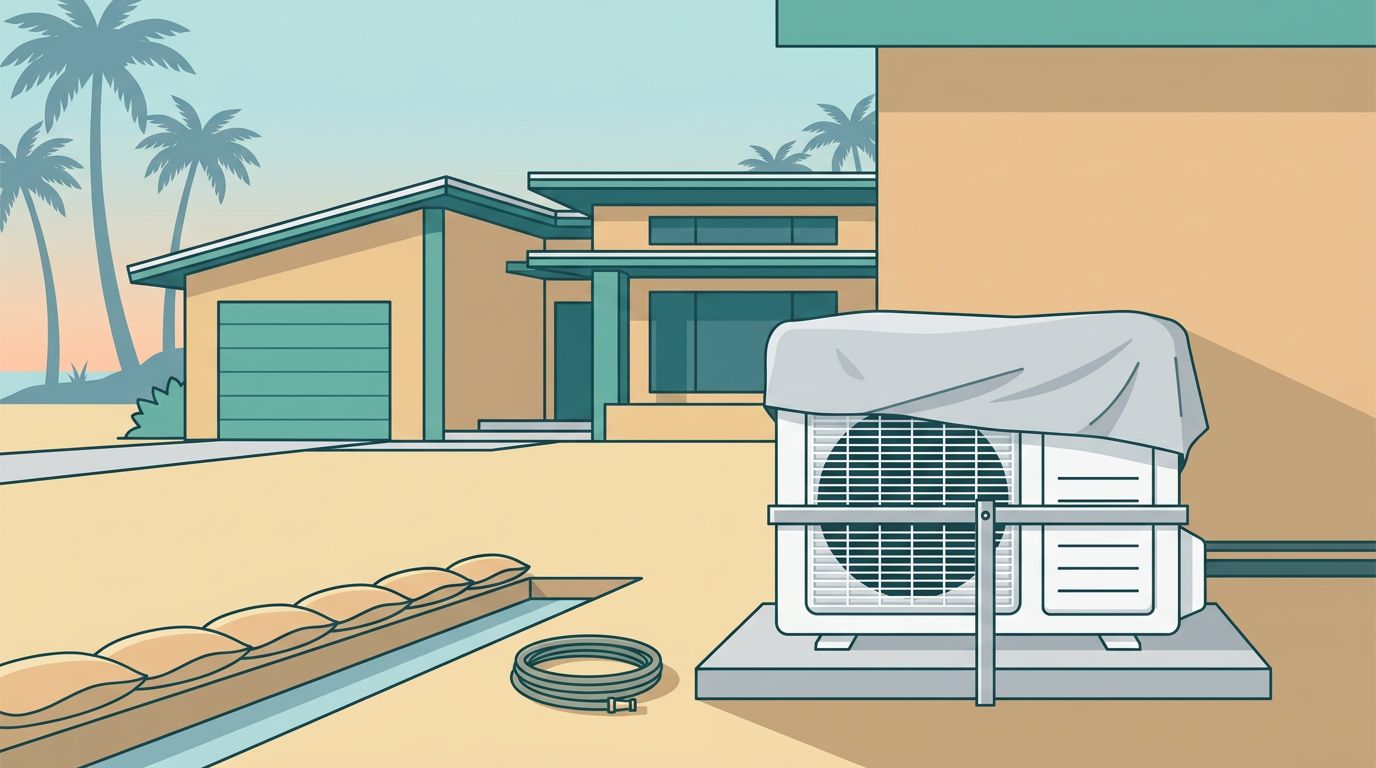
On Fort Myers Beach, an outdoor AC unit sits in the open when storm season turns rough. That makes hurricane prep for AC units part of basic home protection, not an extra project for later.
Wind-driven rain, salt air, and flying debris can damage a condenser in a few minutes. If the yard floods, the risk rises fast because water and electricity never mix well.
A little prep before the first watch or warning can save you a costly repair and a long, hot outage. The safest work starts before a storm is on the radar, when you still have time to clear the yard and check the pad.
Why coastal storms are rough on outdoor AC units
Fort Myers Beach homes deal with more than heavy rain. Strong gusts can push branches, patio chairs, planters, and loose trim into the condenser cabinet.
Salt air also works on metal parts all year. Fasteners corrode, coil fins weaken, and electrical connections can loosen faster near the coast than inland.
That is why a unit that looks fine in July can still need attention before hurricane season peaks. A system may cool well and still have weak anchoring, a cracked pad, or brittle wiring insulation.
Storm prep is easier when you treat the outdoor unit like a permanent part of the home, not a piece of equipment that can ride out the weather on its own. The cabinet is heavy, but that does not make it storm-proof. It can shift, tip, or take a hit from debris if the area around it is crowded.
A pre-season check gives you time to fix small problems before they turn into a no-cool emergency after landfall. That matters even more on a barrier island, where supply and service delays can stretch longer than people expect.
Schedule maintenance before storm season
A pre-hurricane tune-up gives a technician time to spot loose electrical parts, weak capacitors, dirty coils, and rust at the base. Those are the small issues that often become larger after a storm.
If you want a simple way to stay on schedule, year-round heating and cooling care keeps regular tune-ups on the calendar before the weather gets rough. That kind of routine is useful in Southwest Florida, where humidity and corrosion never take a season off.
During a maintenance visit, ask for a close look at the pad, the mounting hardware, and the surrounding clearance. If the unit rocks when touched, sits unevenly, or shows signs of settling, get that fixed before hurricane watches start.
Ask the technician to inspect refrigerant line insulation and the disconnect box too. Coastal moisture wears those parts down without much warning.
A good seasonal check also gives you a chance to clean up the space around the condenser. Remove anything that could become a projectile in strong wind, then make sure the service access stays open. A blocked unit is harder to inspect after the storm, and a crowded yard gives debris more places to gather.
If you own a home here full-time, that maintenance date should land before the height of storm season. If the property sits empty part of the year, even more reason to set the work early. You do not want to discover a problem the week a named storm enters the Gulf.
Secure the condenser and clear the yard
Once the system has been checked, turn to the outdoor space itself. The goal is simple, keep the condenser from moving and keep debris from hitting it.
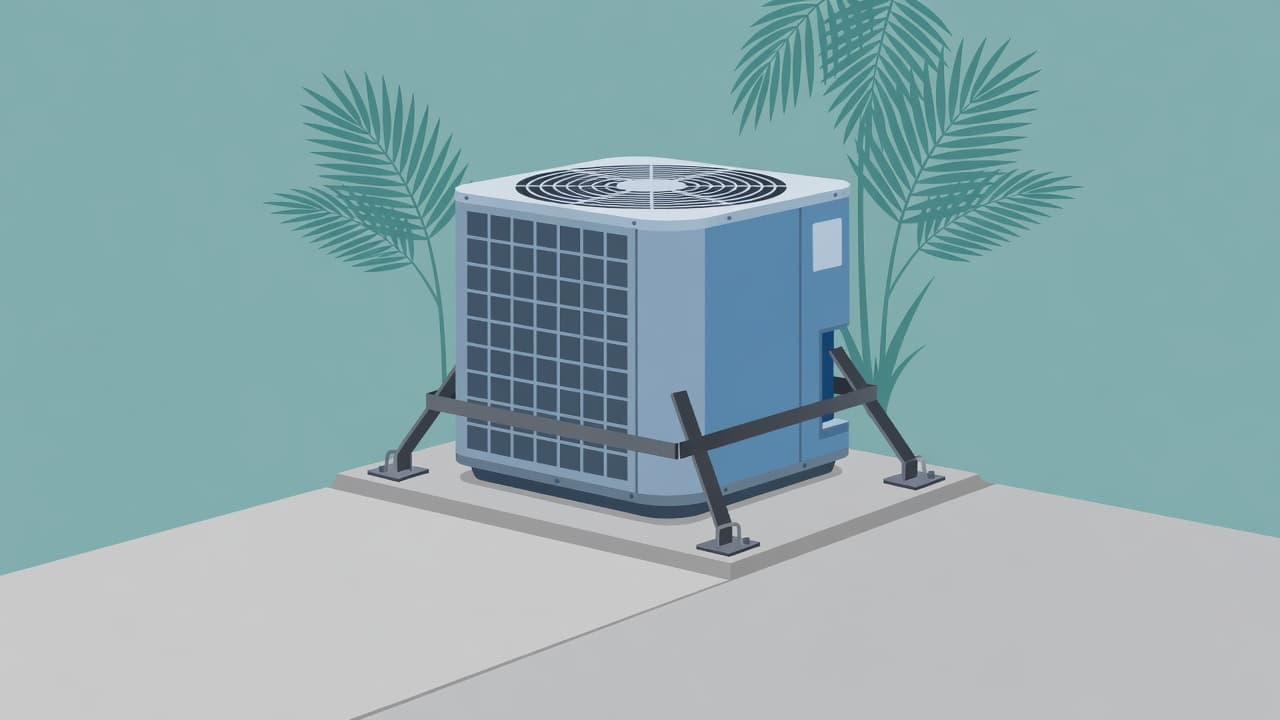
Start with a quick walk around the unit, then work through the basics in order.
- Move patio chairs, grills, toys, tools, and planters away from the condenser.
- Trim palm fronds, branches, and shrubs so they are well clear of the cabinet and fan.
- Check the concrete pad for cracks, shifting, or tilt.
- Look at the anchor points and mounting hardware, then have a professional tighten or replace anything that looks worn.
- Add a rigid debris shield only if it can be secured properly and removed after the storm.
Palm fronds can spear fins, and small branches can bend the fan guard. That is why cleanup matters as much as the hardware itself.
A loose tarp is a bad substitute for real protection. In strong wind, it can flap, tear, or turn into another object flying across the yard. A plywood barrier, when installed correctly, gives better defense against broken limbs and other debris.
A cover that can blow away is not protection. It becomes part of the problem.
Keep in mind that the unit still needs room after the storm for inspection and cleanup. If branches or furniture trap the cabinet, you will lose time getting to the damage. Clear space now, while the weather is calm and the work is easy.
If the condenser sits in a low spot, ask about a raised pad or platform before the next season starts. Floodwater can get into the unit, and a saturated base can let it settle out of level. That kind of shift can strain refrigerant lines and compressor mounts later.
Power, flooding, and the jobs to leave to a pro
Shutting off power at the thermostat and breaker can help protect the system from surges and accidental starts. Do that only if you can reach the equipment safely and dry ground is underfoot.
If water is already rising, do not step through it to reach the panel or outdoor disconnect. That is when you wait, leave the area, and let a qualified professional handle the rest. Electricity and floodwater are a dangerous mix, even in shallow standing water.
If you can shut the system down safely, do it before the storm arrives. Then leave it off until the area is dry and the unit has been checked. Power should not go back on just because the sky looks clear.
Do not try to open electrical compartments, clear refrigerant lines, or straighten bent coils yourself. Those repairs call for proper tools and training, and a bad fix can make the system worse. Loose wiring, damaged insulation, and refrigerant issues are all reasons to stop and call for service.
If the unit was flooded, flipped, or buried in debris, do not assume it is fine because it still looks mostly intact. Water can ruin motors, control boards, and connections long before the damage shows on the outside.
A technician can also check the disconnect, capacitor, and contactor before the system is asked to run again. That kind of inspection is much safer than guessing.
What to do after the storm passes
Once the wind drops, take a careful look before you turn anything back on. Check for visible damage, standing water, broken branches, missing panels, and wires that look loose or exposed.
If the condenser was submerged, keep it off.
If the unit has standing water or exposed wiring, leave it off until it has been inspected.
If the breaker tripped during the storm or trips again when you try to restart, that is a sign the system needs attention before it runs. troubleshooting air conditioner electrical issues can help you recognize when the problem is bigger than a simple reset.
Listen for rattling, grinding, or buzzing if the unit starts at all. Those sounds often point to damaged fan parts, bent components, or electrical trouble. Running the system through that kind of noise can turn a repair into a full replacement.
After that first inspection, clear away debris around the pad so airflow and service access stay open. Rinse salt and sand off the area only when the unit is confirmed safe, because rushed cleanup around wet electrical parts creates another hazard.
When in doubt, wait for a professional inspection. A technician can check the compressor, electrical parts, mounting hardware, and cooling performance without guessing. That is especially important after a storm that brought flooding, repeated power outages, or flying debris.
Final Thoughts
Good hurricane prep for outdoor AC units in Fort Myers Beach starts before the first storm warning. A clean yard, solid anchoring, a sound pad, and a safe shutdown matter more than last-minute panic fixes.
If the unit gets flooded or damaged, leave the restart to a pro. That simple choice protects the equipment, the home, and everyone inside.
Recent Posts