AC Replacement in Fort Myers: Prepare for Installation Day
A new air conditioner can make your Fort Myers home more comfortable, but installation day may briefly disrupt your routine. Crews need clear access, a safe work area, and time to test the system properly.
Southwest Florida heat and humidity also require a little planning. Your home may feel warmer while the old equipment is removed, so arrange a cool place to wait and protect pets, children, and sensitive belongings. A few practical steps will help the replacement go smoothly.
Key Takeaways
- Clear paths to the indoor air handler, outdoor unit, electrical panel, and thermostat.
- Protect floors, furniture, walls, and belongings near the work areas.
- Plan for temporary heat and humidity during the installation.
- Ask the technician to review drainage, airflow, thermostat settings, and system operation.
- Keep the final checklist nearby before the crew leaves.
Prepare Your Home Before the AC Crew Arrives
Start by reviewing the installation agreement a few days before the appointment. Confirm the equipment being installed, the expected arrival window, the areas the crew will access, and any work that falls outside the standard replacement. If the contractor handles permits or inspections, confirm those details as well.
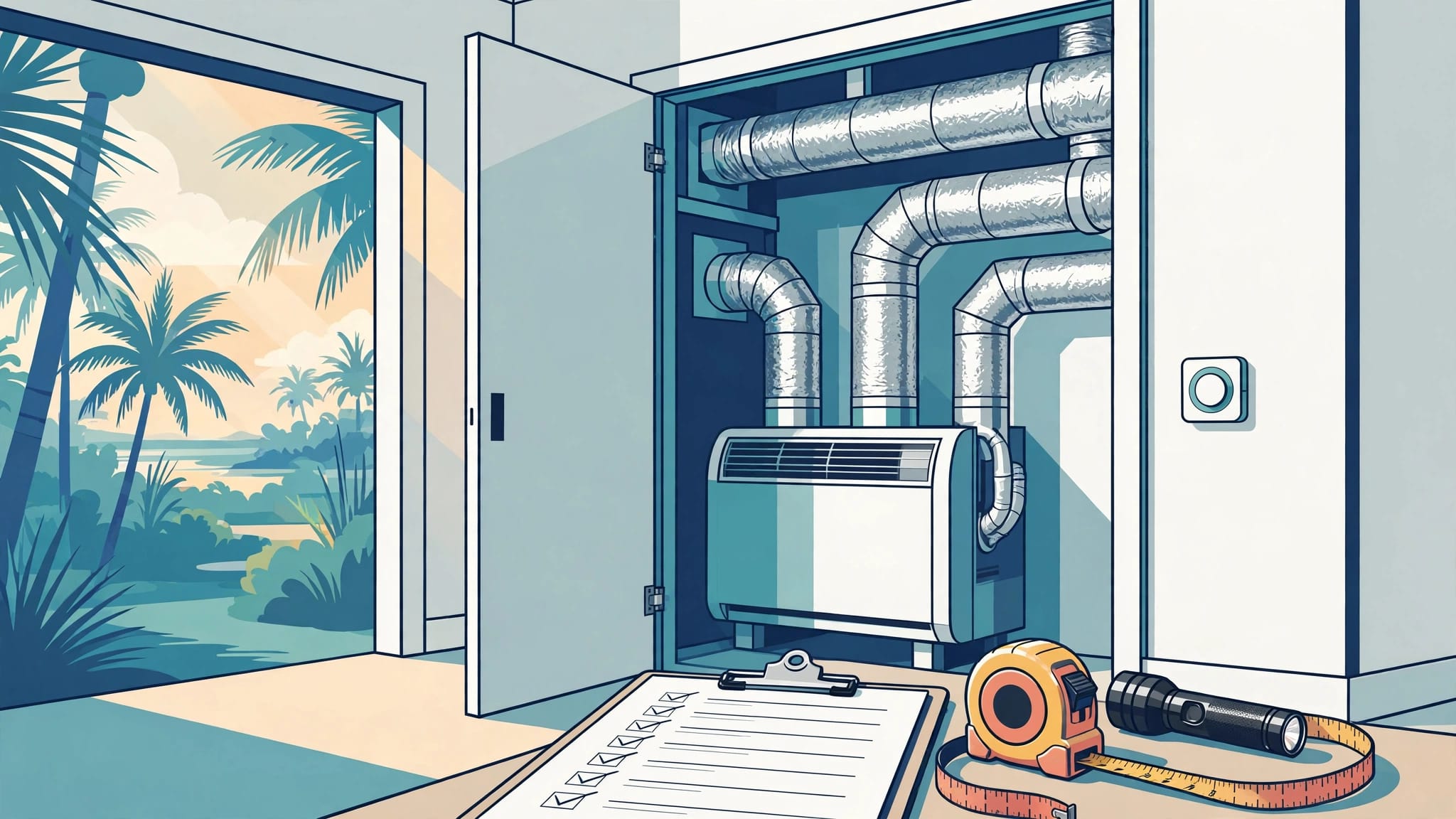
Next, clear a path to the indoor air handler. In many Fort Myers homes, the equipment sits in a closet, garage, attic, utility room, or hallway. Remove boxes, stored items, decorations, and cleaning supplies from the area. The technician may need room to disconnect the old unit, carry in equipment, access duct connections, and work around the condensate drain.
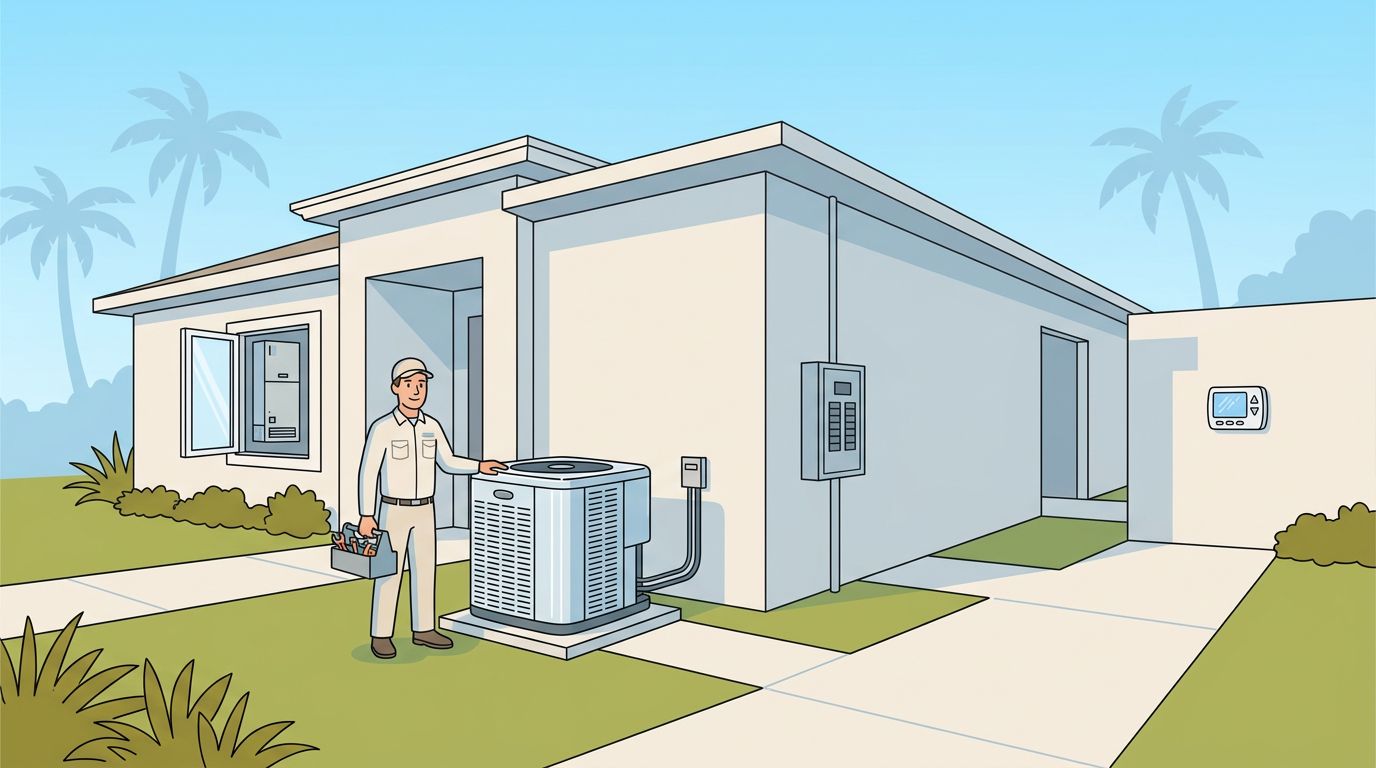
The outdoor condenser also needs clear access. Move patio furniture, planters, pool equipment, toys, and garden tools away from the unit. Keep a walkway open between the driveway and the installation area. Large equipment is easier and safer to move when workers don't need to carry it around obstacles.
Protect anything that could be damaged by dust, foot traffic, or water. Roll up small rugs and place valuable decorations in another room. If the crew will work near finished flooring, ask whether they bring floor protection. You can also cover nearby furniture with clean sheets or plastic, but leave the actual work area open.
Keep pets in a closed room away from the crew. Open doors create escape risks, and unfamiliar noise may make animals anxious. Children should also stay clear of tools, wiring, ladders, and removed equipment.
Before the appointment, locate your electrical panel and main water shutoff. You may not need to operate either one, but knowing where they are can save time if the technician needs access. Also remove items stored beneath or near the air handler, especially paper goods, electronics, and anything sensitive to moisture.
Plan for Fort Myers Heat and Humidity
Air conditioning replacement in Fort Myers can take several hours, and some projects last most of the day. During that time, the old system may be off while the new equipment is connected and tested. Even a short interruption can feel uncomfortable when outdoor temperatures are high and humidity is heavy.
Choose one room where your household can wait comfortably. Close blinds on sunny windows, keep exterior doors shut, and use portable fans if you have them. Fans don't lower the room temperature, but they can improve comfort while the air conditioner is unavailable. Avoid running heat-producing appliances, such as the oven or clothes dryer, during the work.
If you own a portable air conditioner or a window unit, test it before installation day. Make sure it has a safe electrical connection and a way to drain condensation. Avoid overloading a power strip, especially in an older home. A standard fan may be enough for a short appointment, but backup cooling helps when the job takes longer than expected.
Humidity deserves attention in Southwest Florida. Moist outdoor air can enter when doors remain open, and indoor moisture may rise while the system is disconnected. Keep doors closed whenever possible, and use a dehumidifier if your home already has one. Don't place a dehumidifier in the work area unless the technician approves it, because cords and water containers can create hazards.
A comfortable installation day starts with a simple plan: one cool waiting area, closed doors, working fans, and safe access for the crew.
Your HVAC contractor may ask you to turn off the old system before arrival. Follow the instructions you received, especially if the existing unit has a leak, electrical issue, or drainage problem. Don't operate equipment that makes unusual sounds, smells overheated, trips a breaker, or leaks water.
If you work from home, plan to work elsewhere. Installation involves drilling, cutting, lifting, testing, and conversation between technicians. The noise can make calls difficult, while the open doors may affect your indoor temperature. Arranging childcare or pet care can also make the appointment less stressful.
Know What Happens During AC Replacement
The crew usually begins by confirming the equipment, reviewing the work area, and checking the existing connections. They may photograph or inspect the current installation before removing it. This is a good time to mention concerns such as hot rooms, weak airflow, water stains, unusual odors, or a thermostat that has been unreliable.
Power to the air conditioner will be turned off before removal. The technicians then disconnect the electrical wiring, refrigerant lines, drain connections, ductwork, and thermostat wiring as needed. The old indoor and outdoor components may leave behind dust, standing water, or small pieces of insulation, so keep your belongings away from the work zone.
The new equipment must sit level and connect correctly to the home's existing system. Depending on the project, the crew may replace or modify the equipment pad, refrigerant lines, disconnect, drain piping, wiring, duct transition, or return-air connection. Those changes should match the approved scope of work.
Proper condensate drainage matters in a humid climate. The technician should inspect the drain line and confirm that water can leave the system safely. Ask whether the installation includes a float safety switch or other protection against an overflowing drain pan. If the air handler is in an attic or closet, discuss where condensate would go if a blockage occurred.
The crew will also check airflow and electrical operation. They may measure temperature change, inspect supply and return connections, test the thermostat, and look for duct leaks near the new equipment. The air conditioner should run through a complete cooling cycle before the job ends.
Installation time depends on the home's layout and the amount of work involved. A straightforward changeout may take several hours, while difficult attic access, electrical updates, duct modifications, or a new equipment location can extend the appointment. The old system's removal and disposal may add time as well.
Stay available for questions, but give the technicians room to work. If a new condition appears, such as damaged ductwork or an unsafe electrical connection, ask for a clear explanation and written pricing before approving additional work.
Review the New System Before the Crew Leaves
Once the installation is complete, walk through the system with the technician. Ask them to show you the indoor unit, outdoor condenser, electrical disconnect, filter location, drain line, and thermostat. You should know which parts need regular attention and which issues require a service call.
Test the thermostat yourself. Set the desired temperature, switch between available modes, and confirm that the display responds correctly. If the system includes a programmable or smart thermostat, ask how to adjust schedules, fan settings, humidity controls, and vacation settings. Don't leave the appointment with features you can't operate.
Check that air moves from each supply register and returns through the correct return grille. The air may not feel cold immediately, especially if the system has only run for a few minutes. Still, the technician should verify normal operation rather than asking you to wait several days without testing it.
Listen for unusual rattling, scraping, buzzing, or vibration. A new system will have its own operating sounds, but sharp or irregular noises deserve attention before the crew leaves. Look around the indoor unit for water, damp insulation, loose panels, or an unsecured drain connection.
Ask when to replace the filter and which size to buy. A restricted filter can reduce airflow and add strain to the system. Write the filter size inside the utility closet or save it on your phone.
Finally, collect the installation documents. Keep the equipment model and serial numbers, warranty information, maintenance recommendations, permit details, and service contact information in one place. Ask who to call if the system stops cooling, the drain backs up, or the thermostat displays an error.
A Final Installation-Day Checklist
Before the crew arrives:
- Clear the indoor and outdoor work areas.
- Protect floors and move fragile belongings.
- Secure pets and arrange a cool waiting space.
- Test fans, portable cooling equipment, and dehumidifiers.
- Confirm access to the electrical panel and thermostat.
Before the crew leaves:
- Run the new system through a cooling cycle.
- Review thermostat operation and filter size.
- Check airflow, drainage, and unusual sounds.
- Confirm cleanup, old equipment removal, and approved work.
- Save warranty and equipment information.
A Smoother Start for Your New Air Conditioner
Preparing your home helps the installation crew work safely and helps your household stay comfortable in Fort Myers heat. Clear access, protected floors, a humidity plan, and a careful final walkthrough cover the details that matter most.
The first cooling cycle should leave you with more than a lower thermostat reading. You should also understand how to operate, maintain, and monitor the new system. With that preparation, AC replacement becomes a manageable home project instead of an uncomfortable surprise.
Recent Posts