Air Purifier vs UV Light for Fort Myers Homes
Fort Myers homes face a steady indoor air challenge: air conditioning runs for much of the year while humidity, pollen, dust, and outdoor smoke can enter the living space. The right indoor air quality equipment can make your home feel cleaner, but air purifiers and UV lights solve different problems.
A filter captures particles. A UV-C HVAC light treats air or equipment surfaces with ultraviolet energy. Neither option prevents or treats illness, and neither replaces proper HVAC maintenance or humidity control. Understanding the differences will help you choose equipment that fits your home and your AC system.
Key Takeaways
- Air purifiers capture particles , including dust, pollen, pet dander, and some smoke.
- UV-C HVAC lights target microorganisms near the indoor coil or inside the duct system under suitable conditions.
- Portable UV devices often provide less predictable results than professionally installed HVAC equipment.
- Fort Myers homeowners should address humidity and filtration before adding UV technology.
- A qualified HVAC technician should check airflow, electrical needs, lamp placement, and safety before installation.
What an Air Purifier and UV-C Light Actually Do
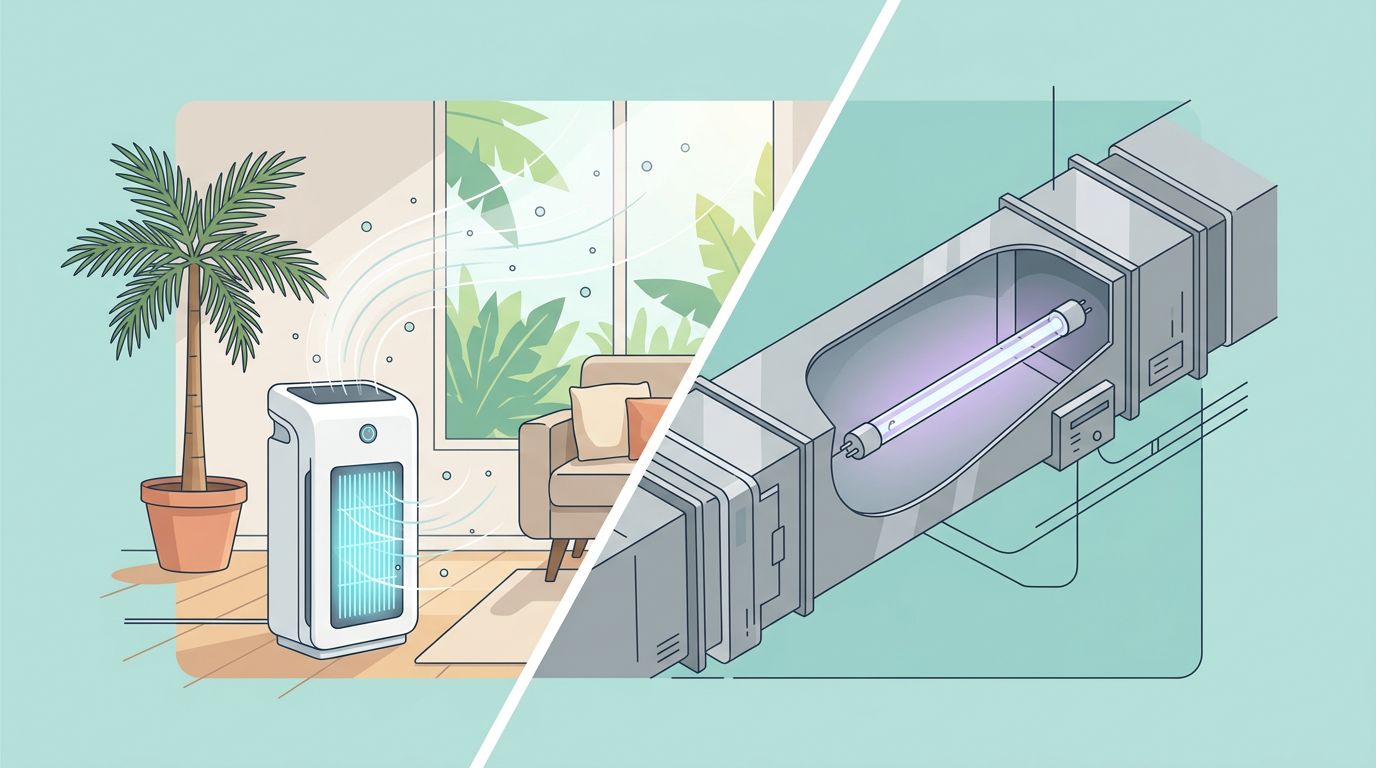
An air purifier improves indoor air by removing or reducing specific pollutants. Portable units usually pull room air through a filter, while whole-home systems connect to the central air handler and clean air as it moves through the ductwork.
A true HEPA filter can capture very small airborne particles when the purifier has enough airflow for the room. Many portable units also include a carbon filter, which can reduce certain odors. However, carbon media has limited capacity and won't remove every gas or odor source.
Whole-home air cleaners use a larger filter installed near the furnace or air handler. Depending on the system, the filter may have a MERV rating that indicates how effectively it captures particles. A MERV 11 or MERV 13 filter can provide stronger filtration than a basic fiberglass filter, but your HVAC equipment must support the added resistance.
A UV-C HVAC light works differently. The lamp emits ultraviolet-C energy inside the air handler or ductwork. When microorganisms receive enough UV-C exposure, the energy can damage their ability to reproduce. The result depends on lamp intensity, distance, airflow speed, surface cleanliness, and exposure time.
Many HVAC UV systems focus on the indoor coil and drain pan. Keeping those surfaces cleaner can support better airflow and reduce buildup. A lamp installed in a fast-moving supply duct may have limited contact time with airborne particles, so placement matters.
Portable UV devices deserve extra caution. Some products use UV-C lamps in a small chamber, while others combine UV with ionization or other technologies. If the device exposes people to UV-C, it can injure skin and eyes. Some air-cleaning products can also produce ozone, which can irritate the lungs.
UV-C light only works where the light reaches with enough intensity and exposure time. A lamp cannot treat dust or mold hidden behind an obstruction.
Why Fort Myers Humidity Changes the Decision
Southwest Florida's warm, humid climate affects indoor air quality in ways that a purifier or UV lamp cannot solve alone. When indoor humidity remains high, a home can feel damp even when the thermostat reaches its set temperature. Moisture also supports mold growth on surfaces where dust and organic material collect.
An air purifier can capture airborne spores and particles, but it doesn't remove moisture. A UV-C light may reduce viable microorganisms on an illuminated coil or drain pan, but it won't correct a condensate problem, wet insulation, or a leaking duct.
That makes the AC system itself part of the decision. A dirty filter restricts airflow. A clogged drain line can leave water standing near the air handler. An oversized system may cool the home quickly without running long enough to remove sufficient humidity. Each issue needs a different repair or adjustment.
Many homeowners target indoor humidity between 30% and 50%, although the right level depends on the building and occupants. A technician can check humidity, temperature split, airflow, coil condition, ductwork, and drainage during an indoor air quality evaluation.
Filtration usually makes more sense when your main concerns are:
- Pollen entering through doors, windows, or leaks
- Dust and pet dander
- Fine particles from cooking or nearby smoke
- A need to clean air across several rooms
UV-C may make sense as an HVAC add-on when the indoor coil has recurring organic buildup, the air handler has enough room for safe installation, and the system receives regular maintenance. It should support good filtration and moisture control, not replace them.
Homes in Fort Myers, Cape Coral, Estero, Bonita Springs, Sanibel, and Babcock Ranch can have different construction details and HVAC layouts. A solution that fits one home may create excess static pressure or provide poor coverage in another.
Air Purifier vs UV Light: Side-by-Side Comparison
The table below shows how the main options differ in function, limitations, and installation needs.
| Option | Best at addressing | Main limitations | Installation and safety |
|---|---|---|---|
| Portable HEPA air purifier | Dust, pollen, pet dander, and some smoke particles in one room | Covers a limited area and needs regular filter changes | Place it with open airflow around the intake and outlet |
| Whole-home air cleaner | Airborne particles throughout a central HVAC system | Requires compatible filter size and adequate airflow | A technician should check static pressure and filter access |
| UV-C HVAC light | Microorganisms on illuminated coil and drain-pan surfaces | Doesn't remove dust, allergens, moisture, or odors | Install inside the air handler with shielding and safe access |
| Portable UV device | Air passing through a contained treatment chamber | Results vary widely; unsafe exposure is possible in poorly designed units | Review safety controls, ozone information, and independent listings |
For most Fort Myers homes, particle filtration offers the clearest benefit for everyday dust and allergens . UV-C can add value in the right air handler, especially when surface cleanliness is a recurring concern. A portable UV unit should not be selected based on the word "UV" alone.
How to Choose and Install the Right System
Start with the problem you can observe. If dust settles quickly, family members notice seasonal pollen, or smoke enters the home, improve filtration first. A portable HEPA purifier can help in a bedroom or living room. A whole-home filter is more practical when you want coverage throughout the house.
Before installing a higher-efficiency filter, have a technician check the system's airflow. A filter that is too restrictive can reduce comfort, increase blower strain, and contribute to coil problems. The correct filter depends on the equipment, filter cabinet, duct design, and blower capacity.
If musty odors or recurring coil buildup are the main concern, inspect the air handler before purchasing a UV lamp. The technician should look for standing water, dirty coils, drain issues, biological buildup, and duct leakage. Cleaning and repair may solve the source of the problem.
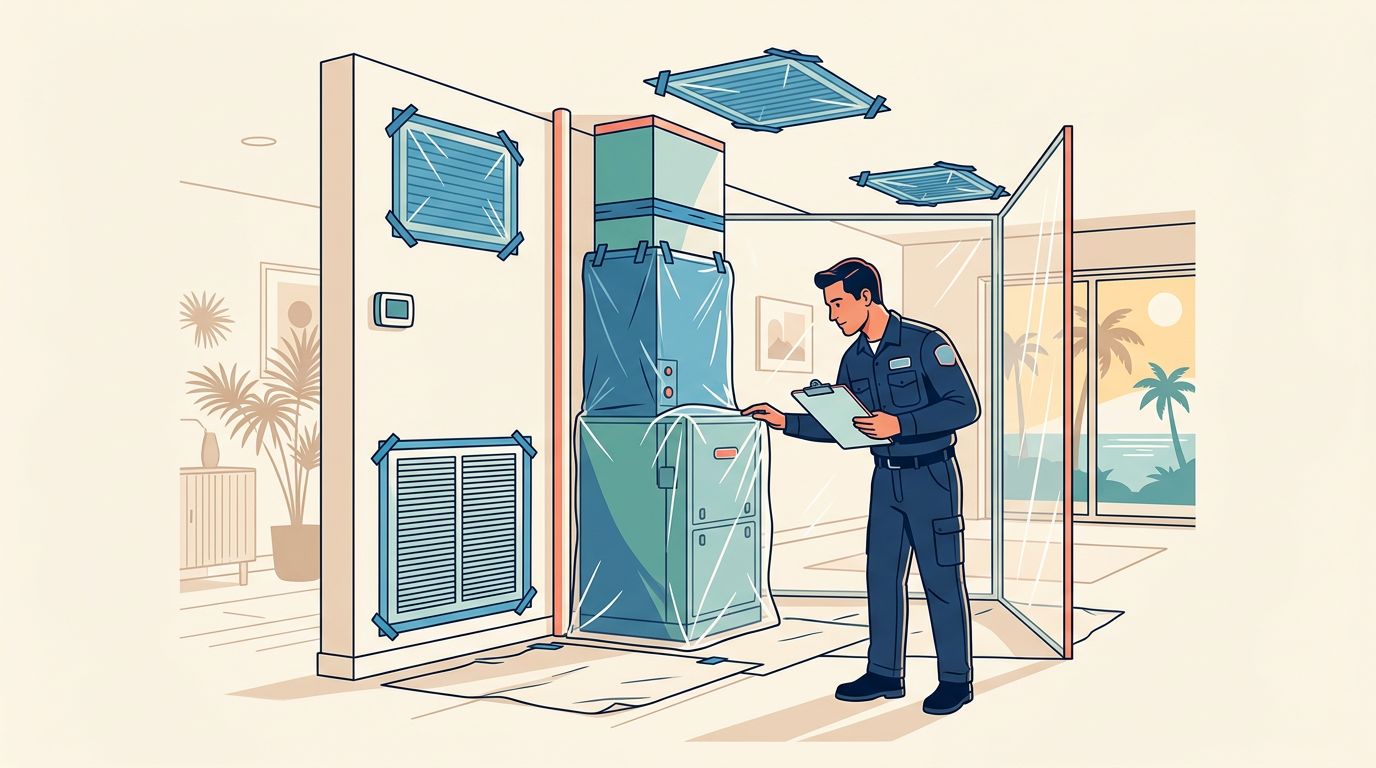
A professional UV-C installation should place the lamp where it can treat the intended surface without exposing occupants. The housing should protect service personnel from direct UV-C contact, and the installation should follow the manufacturer's electrical and clearance requirements. The lamp also needs access for cleaning and replacement.
Avoid placing a portable UV-C device where people can look directly at the lamp. Don't use a product that lacks clear operating instructions, safety information, or ozone disclosures. If a unit combines UV with ionization, ask what technology it uses and whether independent test information is available.
Installation costs vary based on equipment, electrical work, filter cabinet changes, air-handler access, and duct modifications. Portable purifiers usually cost less upfront, but they need replacement filters. Whole-home filters require recurring media changes, while UV lamps need replacement on the schedule set by the manufacturer.
A local HVAC professional can also confirm whether your system needs a thermostat upgrade, duct repair, filter replacement, or humidity control before you add air-cleaning equipment. That assessment prevents you from paying for a device that cannot address the actual problem.
Maintenance Determines the Results
Neither technology can compensate for a neglected AC system. Replace or clean filters on the schedule recommended for your home, and check them more often during construction, heavy pollen, or smoky conditions. A clogged filter reduces airflow and limits the amount of air the system can clean.
Portable purifiers need clear space around their intake and outlet. Wash or vacuum reusable prefilters as directed, and replace HEPA or carbon filters when the manufacturer specifies. A dirty purifier may move less air and provide less filtration.
UV-C lamps also need attention. Dust on the lamp can reduce its output, and ultraviolet bulbs lose effectiveness over time even when they still glow. Follow the replacement interval in the product documentation, and have a technician service lamps installed inside an air handler.
Schedule regular AC maintenance to check the coil, drain pan, condensate line, blower, duct connections, and electrical components. In a humid climate, moisture control often has a larger effect on comfort and odor than adding another air-cleaning device.
Conclusion
The choice between an air purifier and a UV light depends on the pollutant you want to address. For Fort Myers homes with dust, pollen, pet dander, or smoke concerns, start with properly sized filtration and verified airflow. For recurring coil or drain-pan buildup, a professionally installed UV-C HVAC light may provide useful support.
Portable UV devices deserve careful screening because direct exposure and ozone can create safety concerns. Neither option prevents or treats illness, and neither fixes excessive humidity or HVAC defects. When you need to choose one solution, prioritize filtration and moisture control first, then consider UV-C when your air handler and maintenance needs support it .
Recent Posts