How to Read an HVAC Service Invoice in Babcock Ranch
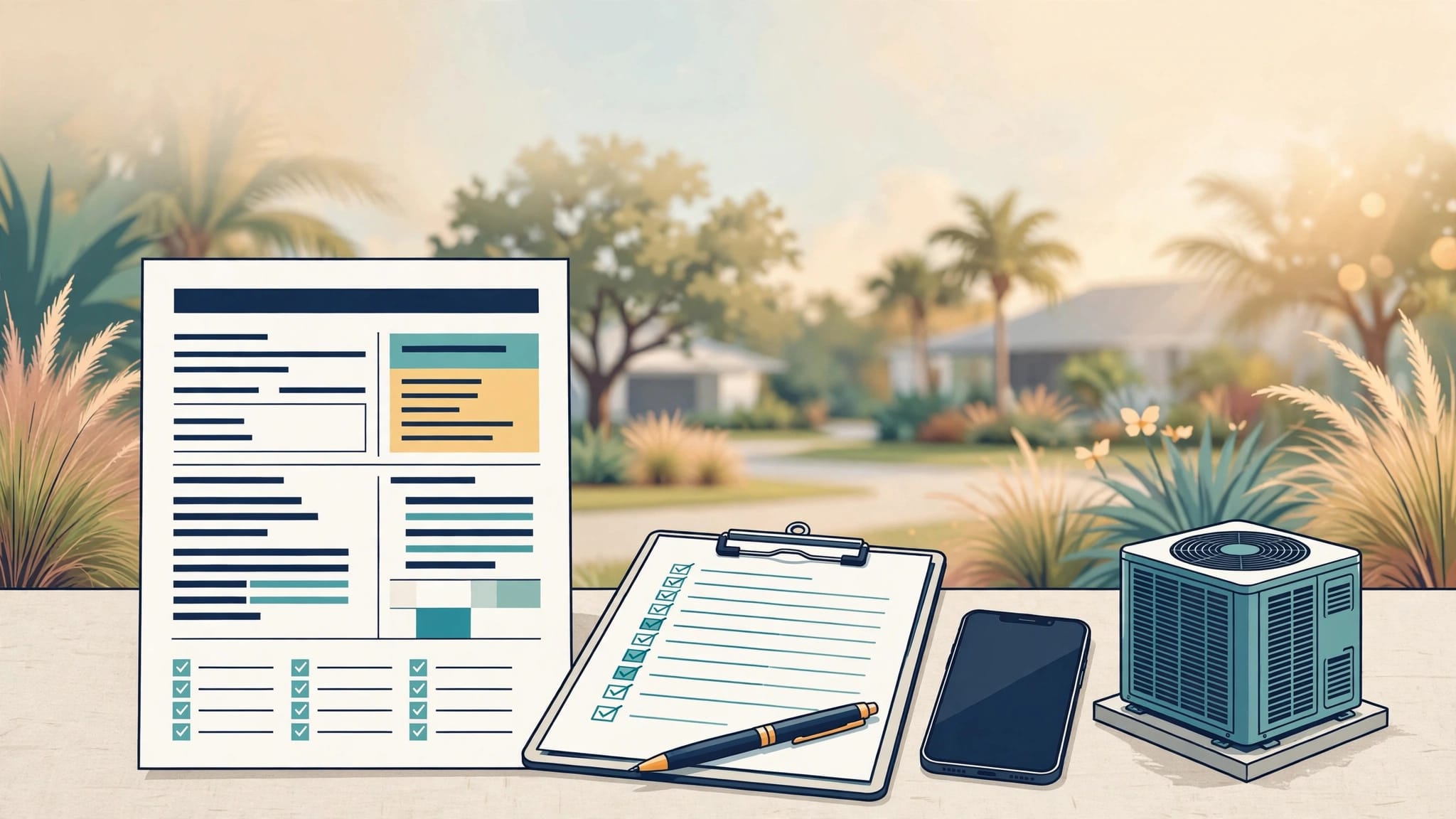
A service visit can end with cool air and a bill full of unfamiliar terms. Your HVAC service invoice should make the work easy to follow, not leave you guessing what happened at your Babcock Ranch home.
A clear invoice connects the original problem, the technician's findings, the approved repair, and the final charge. Review it while the service details are still fresh, then ask for clarification before payment if a line doesn't match your understanding.
Start With the Service Details and Equipment Information
The top of an invoice identifies the visit. Check it first, because errors here can carry into warranty records and future service history.
Confirm the customer, address, and service date
Your name, Babcock Ranch address, invoice number, and service date should be correct. The invoice may also show the technician's name, arrival window, payment terms, and a work-order number.
If the visit happened after normal business hours, the document should state that clearly. An emergency response charge is different from a standard daytime service call. It should never appear as a surprise after the repair is complete.
Also compare the date to the day your system failed or received maintenance. A simple typo is easy to correct now. Months later, it can make a warranty claim harder to trace.
Look for your system's make, model, and serial number
Your air conditioner or heat pump has identifying information on the outdoor condenser and indoor air handler. An invoice may list the brand, model number, serial number, system size, or equipment location.
Those details matter most when a contractor replaces a part. A capacitor, contactor, blower motor, thermostat, or control board must match your equipment. If the invoice lists a model you don't recognize, ask the technician to confirm it.
For a whole-system replacement, save the final paperwork with the equipment registration documents. Installation records can matter years later if a manufacturer warranty issue comes up.
Read Each HVAC Service Invoice Charge in Order
A well-written HVAC service invoice separates the visit fee from the repair itself. It should also show whether a discount, credit, tax, or warranty adjustment changed the total.
Diagnostic fees pay for finding the problem
A diagnostic charge covers the technician's time to inspect the system and identify the fault. That can include checking electrical components, measuring temperatures, testing the thermostat, inspecting the drain line, or evaluating airflow.
Diagnosis isn't the same as repair. If a technician found a failed capacitor, the invoice should show a diagnostic line and a separate line for replacing the capacitor, unless the company combines them in an approved flat-rate repair.
Many companies credit some or all of a diagnostic fee toward an authorized repair. If that was discussed, look for a line such as "diagnostic credit" or "service-call credit."
A diagnostic fee can be valid even when no repair takes place. The invoice should still state what the technician found and what options were offered.
Labor, parts, and flat-rate repairs
Some contractors bill labor by the hour. Others quote a flat rate for the complete repair. Flat-rate pricing often combines labor, standard materials, and the part into one amount, so don't assume a missing hourly rate means missing information.
The following example shows how a clear bill might look. All prices are illustrative only, not standard Babcock Ranch rates.
| Invoice line | What it means | Illustrative amount |
|---|---|---|
| Diagnostic visit | Testing and identifying the AC issue | $99 |
| Diagnostic credit | Credit applied after repair approval | -$99 |
| Capacitor replacement | Part, installation, and system test | $285 |
| Sales tax, if applicable | Tax shown separately when charged | Varies |
| Total due | Final amount after credits and tax | Varies |
Check that the total adds up. Then look for separate items such as permit fees, disposal, refrigerant, trip charges, or after-hours service. Each charge should be understandable from the invoice or the approved estimate.
For repair work, compare the bill with the estimate you received through Babcock Ranch AC installation and repair. A written total before work begins makes the final invoice much easier to review.
Match the Invoice to the Work Performed
Your memory of the appointment matters. Read the technician's notes before looking only at the total.
Compare the problem, diagnosis, and repair
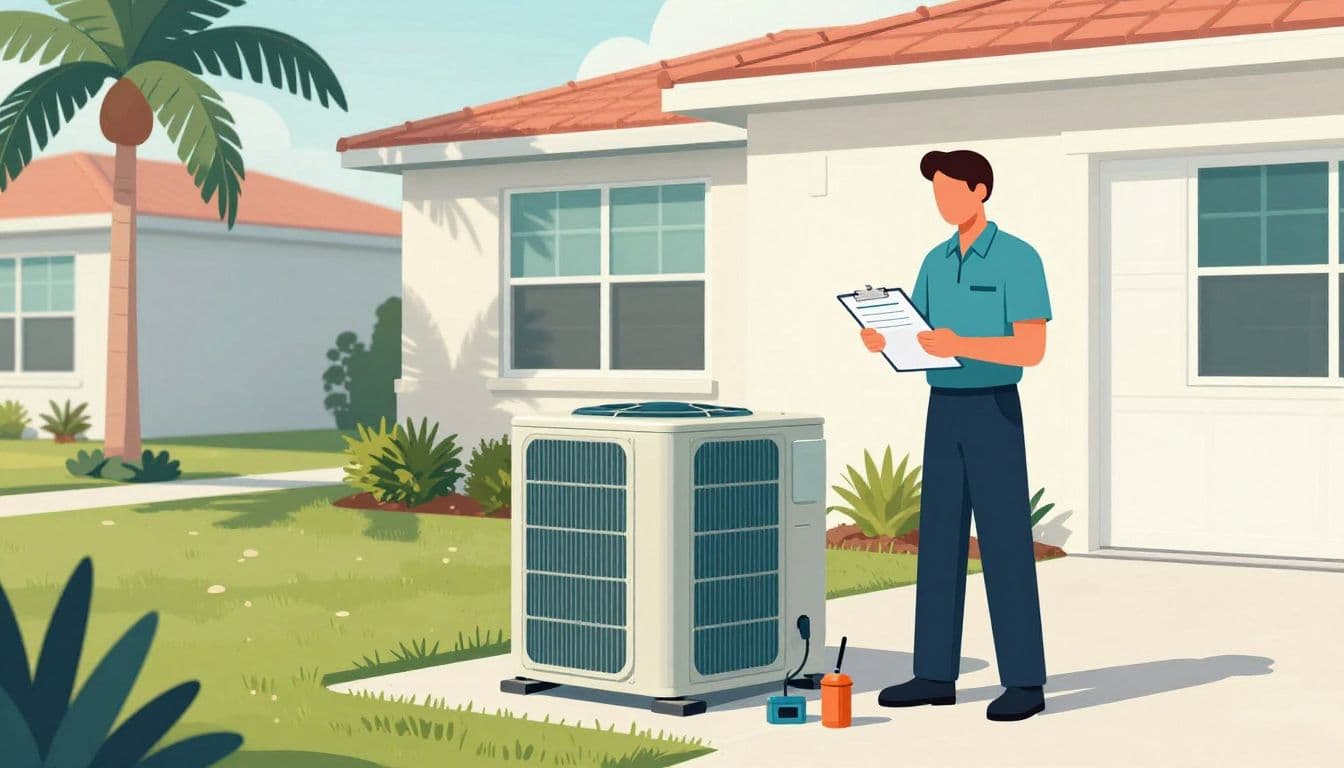
A useful invoice tells a short story. It may say the system was not cooling, the technician found a weak capacitor, and the capacitor was replaced and tested. That sequence gives you a way to confirm the charge.
If the technician cleaned a clogged condensate drain line, the notes should mention the drain line. If they replaced a thermostat, the invoice should identify the thermostat model or describe the upgrade.
Ask for more detail if the notes only say "repair completed." That phrase doesn't explain which component failed, what the technician did, or whether the system ran properly before they left.
Separate maintenance work from repair work
A tune-up is planned care. It can include inspecting components, rinsing the condenser coil, checking electrical readings, testing the condensate drain, verifying thermostat operation, and examining filters.
A repair fixes a known issue, such as a failed part, refrigerant leak, damaged wire, or blocked drain. Although maintenance can reveal a problem, the invoice should separate the maintenance visit from the additional repair.
This distinction matters when your household has a membership plan. If you receive repair discounts or priority scheduling through Comfort Club maintenance plans, the invoice should show the membership discount as its own line.
Understand Common HVAC Terms Without the Jargon
Invoices use equipment terms because part names need to be accurate. Still, the wording should give you a plain-English explanation.
Parts you may see on an AC repair bill
A capacitor gives the compressor or fan motor the electrical boost it needs to start. A contactor is an electrical switch that sends power to the outdoor unit.
The blower motor moves cooled air through your ducts. The evaporator coil sits indoors and absorbs heat from your home. The outdoor condenser coil releases that heat outside.
A condensate drain line carries away water that forms as your system removes humidity. In Southwest Florida, algae or debris can clog this line and lead to water backups or a shutoff switch that stops cooling.
If an invoice lists "refrigerant," ask why it was added. A sealed system doesn't use up refrigerant during normal operation. Low refrigerant can point to a leak, and the notes should explain whether the technician found or recommended testing for one.
Measurements should connect to the diagnosis
Technicians may record voltage, amperage, pressure, temperature split, static pressure, or a capacitor's microfarad reading. You don't need to interpret every number. However, the reading should support the repair recommendation.
For example, a failed capacitor may have a measured value below its rated microfarads. A restricted drain line may have visible standing water or trigger a float switch. Those notes create a useful record if the same issue returns.
An invoice doesn't need a laboratory report. It does need enough detail to show why the work was appropriate.
Check Warranty Coverage, Credits, and Discounts
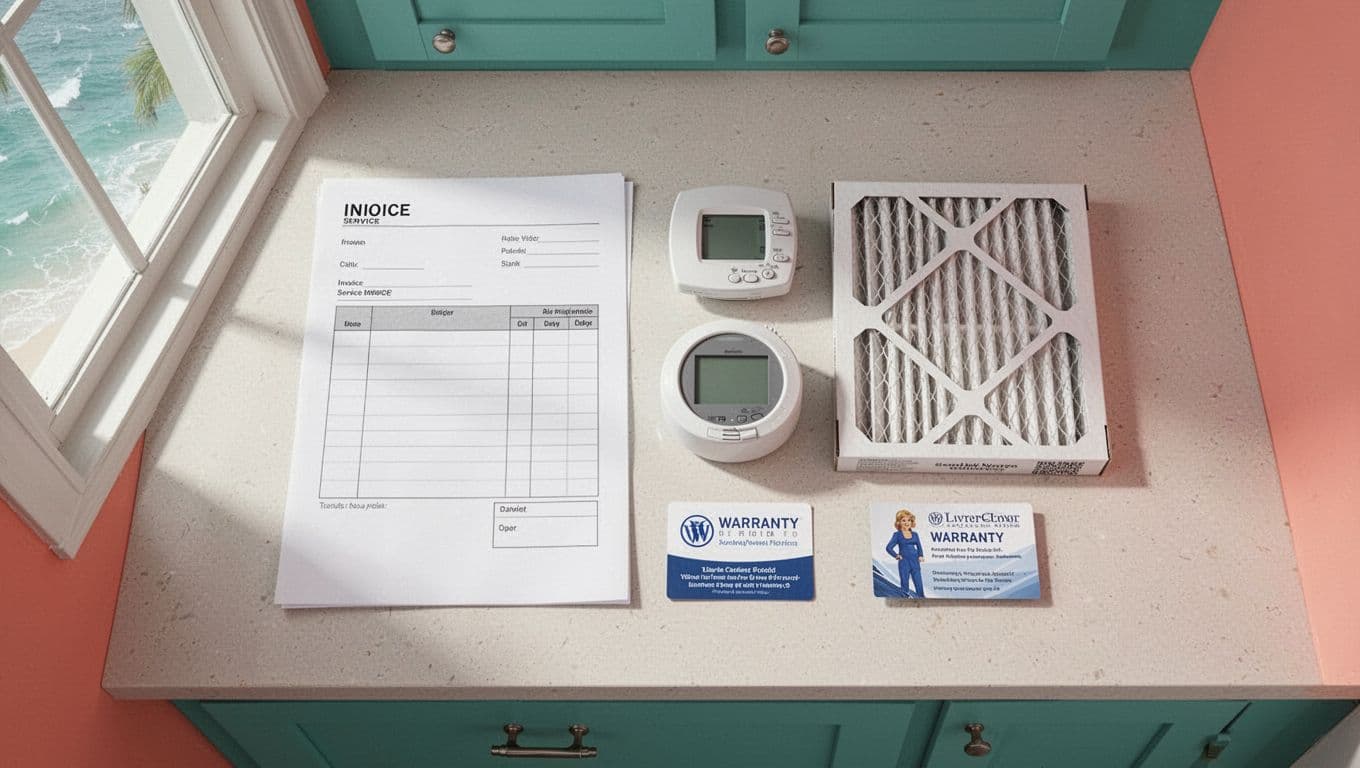
Before you pay, look for a warranty line on both the part and the labor. These are different protections.
Manufacturer warranties and labor warranties are separate
A manufacturer may cover a replacement part for a stated period if the equipment meets registration requirements. That coverage often doesn't include the labor to diagnose the issue, install the part, or return for a follow-up visit.
The contractor's labor warranty covers workmanship for a stated period. Your invoice should identify the part warranty and labor warranty in plain terms, or direct you to the written warranty terms.
Keep the invoice, estimate, photographs of the old part if available, and proof of payment together. A clear paper trail helps if the component fails during its warranty period.
Review credits before approving the total
Look for a diagnostic credit, maintenance-member discount, coupon, deposit, warranty adjustment, or financing payment. Each reduction should appear as a negative amount or a clearly labeled adjustment.
If your system is still under a parts warranty, ask whether the invoice reflects that coverage. You may still owe labor, shipping, refrigerant, or diagnostic charges, depending on the warranty terms. The bill should show those costs rather than presenting one unexplained total.
Ask for Clarification Before You Pay
Most invoice questions have a simple answer. Calling promptly gives the company a chance to correct a typo or explain a charge while the work order is open.
Questions that deserve a direct answer
Contact the company before payment if any of these situations apply:
- The equipment model, service date, or your address is incorrect.
- The repair listed doesn't match what the technician discussed or performed.
- A diagnostic credit or membership discount is missing.
- The invoice includes a part without a description, quantity, or warranty information.
- The final total is higher than the approved estimate without a documented reason.
- You see an emergency or after-hours fee that was never explained.
Request an updated invoice when a correction is needed. Don't rely only on a verbal promise, especially when a warranty, deposit, or future service record is involved.
For an urgent cooling failure, the same principle applies after the immediate repair. A clear estimate should come before work begins through Babcock Ranch emergency HVAC service, and the invoice should reflect that authorization.
Keep Your Invoice for Future HVAC Decisions
File the invoice with your home records, either in a paper folder or a clearly named digital folder. Include the date, equipment model, repair description, and warranty end date in the file name if you scan it.
Over time, those records show whether one part keeps failing, how often a drain line clogs, and when a system begins needing larger repairs. They also help a technician understand your equipment history without guesswork.
When comparing repair and replacement options, a stack of detailed invoices gives you better information than a rough memory of "a few expensive visits."
A Clear Invoice Protects Your Comfort
An HVAC bill should show the service date, diagnosis, approved work, parts, labor, credits, and warranty terms in a way you can follow. If one of those pieces is missing, ask for it before paying.
Babcock Ranch homeowners depend on steady cooling through long humid months. A readable HVAC service invoice helps you confirm that the work matches the charge and keeps your home's service history ready when you need it.
Recent Posts