Why Refrigerant Line Insulation Matters in Fort Myers Homes
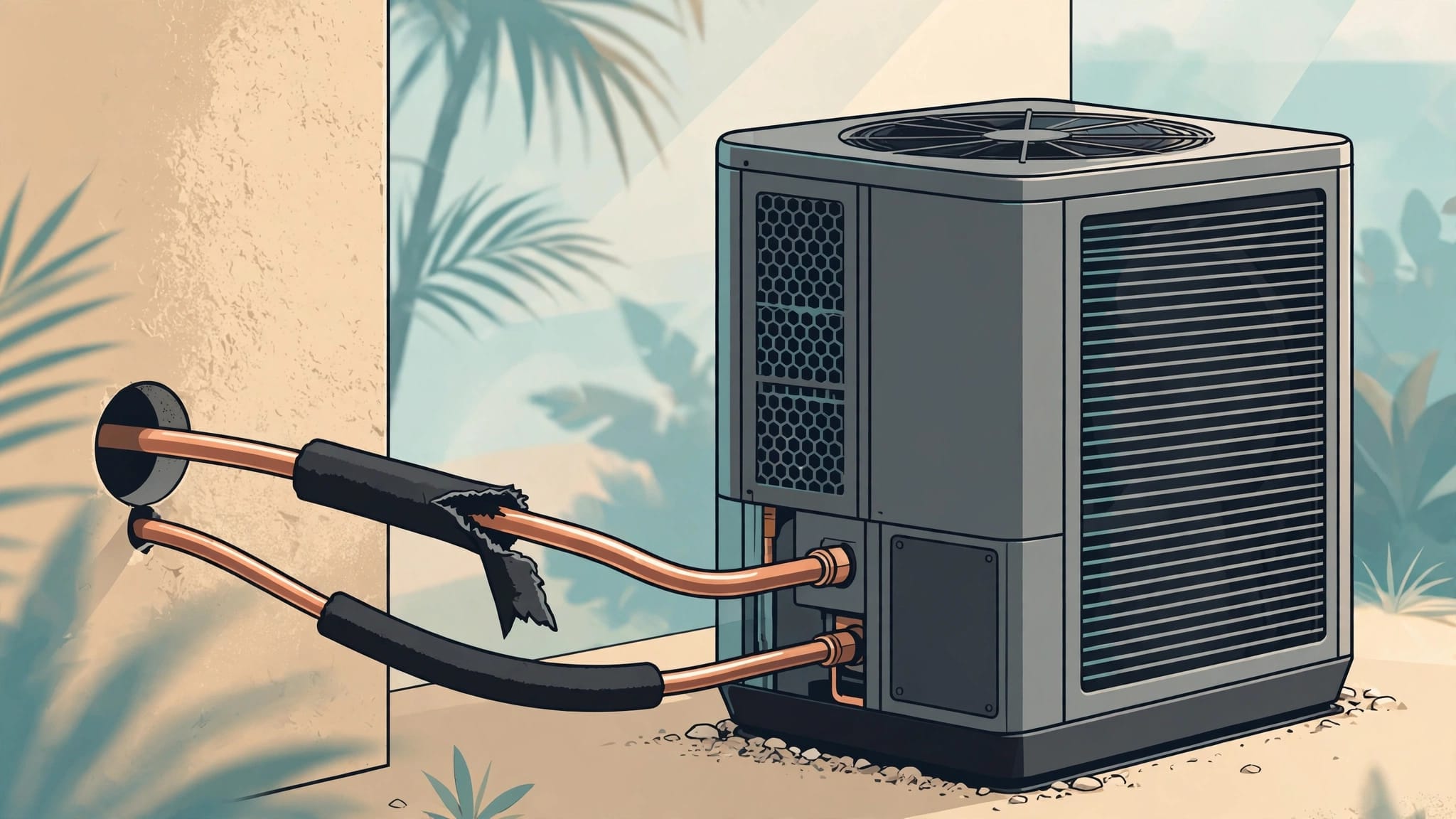
A small tear in the foam around your AC line can look harmless, especially beside a busy outdoor unit. In Fort Myers, though, refrigerant line insulation helps your system handle intense heat and heavy humidity without unnecessary strain.
That black foam sleeve affects cooling performance, moisture control, and the condition of nearby surfaces. It cannot fix a refrigerant leak, but it can help a properly charged system run as intended. Start by knowing what those two copper lines do.
Why Refrigerant Line Insulation Protects AC Performance
Your outdoor condenser connects to the indoor air handler through a pair of copper tubes called a line set. Although they travel together, the lines carry refrigerant in different states and need different treatment.
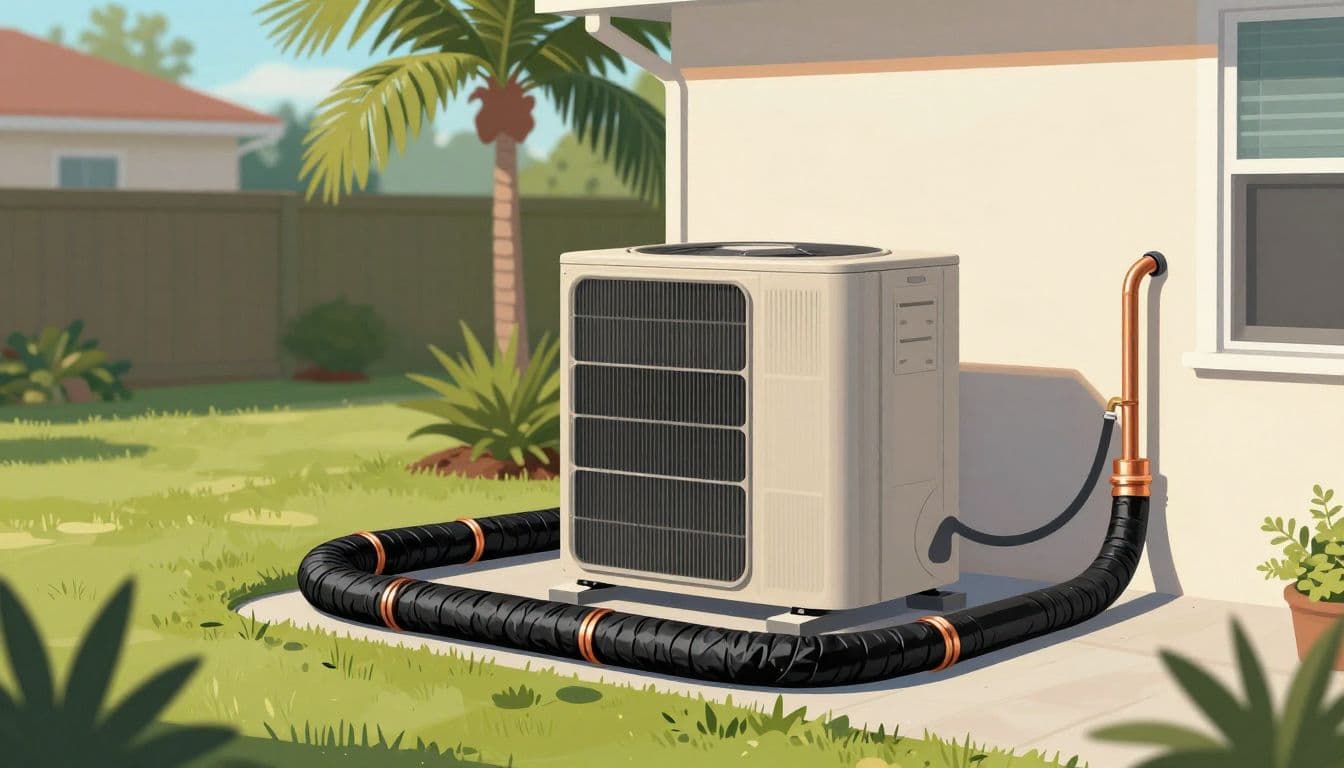
The larger suction line needs insulation
The suction line is the larger copper pipe. It carries cool, low-pressure refrigerant vapor from the indoor evaporator coil back to the outdoor compressor.
Because this line is cold during a cooling cycle, unprotected copper can absorb outdoor heat before the refrigerant reaches the condenser. Proper insulation slows that unwanted heat gain. It also creates a barrier between the cold copper and Fort Myers' humid air.
Most residential systems use closed-cell foam insulation on this larger line. The foam should fit snugly, with sealed joints and no exposed sections near the outdoor unit.
The smaller liquid line has a different job
The liquid line is the smaller copper pipe. It carries high-pressure liquid refrigerant from the outdoor unit toward the indoor coil.
This line is usually warmer than the suction line during cooling. Therefore, many standard residential installations leave it bare. Some systems or installation conditions may call for insulation on both lines, so the equipment manufacturer's requirements and local installation conditions matter.
The key point is simple: insulation belongs on the cold suction line because it limits heat gain and condensation. A bare liquid line is often normal.
Fort Myers Heat and Humidity Wear Down Line Insulation
Florida AC equipment works through long cooling seasons. Sun, rain, salt-laden coastal air, yard work, and daily temperature swings all take a toll on the foam covering.
UV exposure turns foam brittle
Direct sunlight breaks down unprotected foam insulation. It may fade, crack, split open, or crumble when touched. Once the foam opens, hot air reaches the cold copper line.
A technician can replace damaged sections and use a suitable UV-resistant exterior covering when needed. Wrapping the line with household tape or an improvised material often traps water or falls apart quickly in the sun.
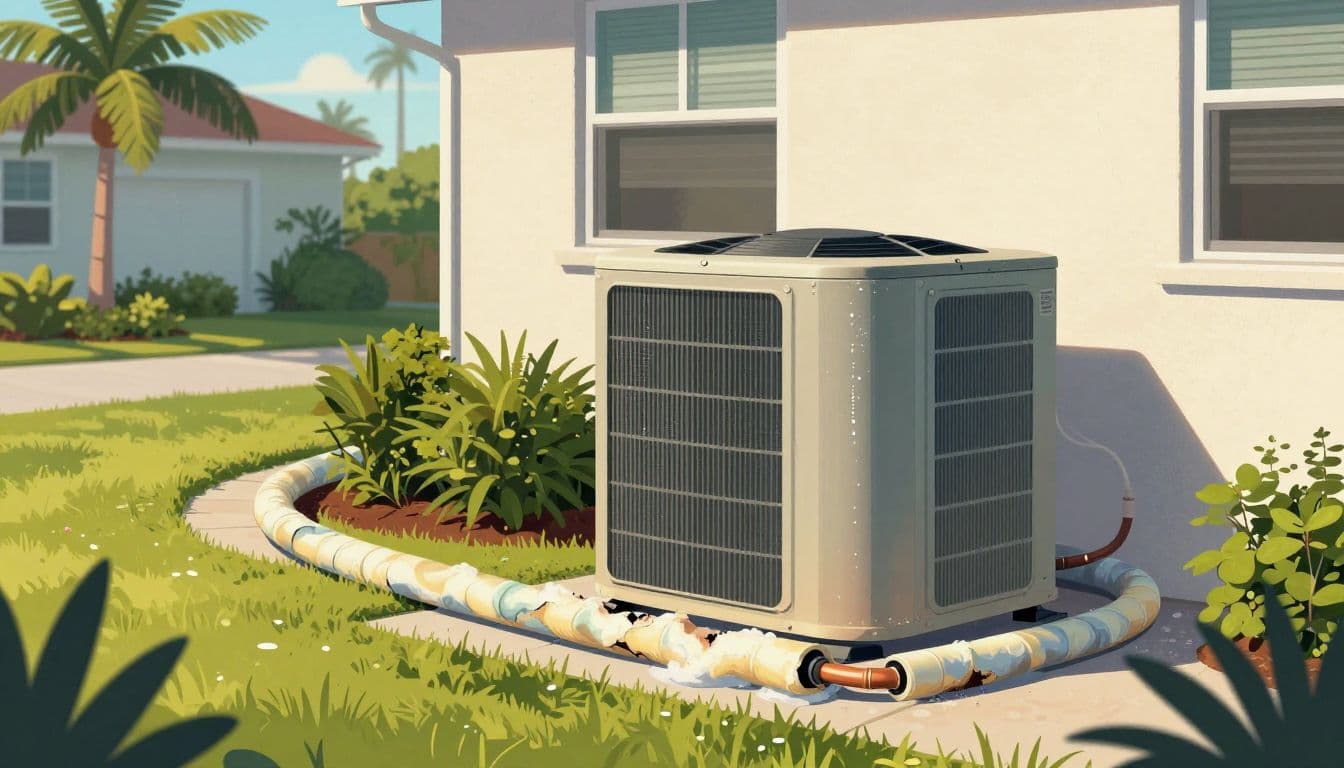
Humid air creates condensation fast
Warm, moisture-heavy air condenses on a cold exposed suction line much like water beads on an iced drink. In Fort Myers, that can happen often during summer operation.
Repeated condensation can drip onto a wall, slab, line-set cover, or soil below the unit. Moisture around building materials may support mold growth when it stays wet. It can also stain surfaces and encourage corrosion around nearby metal components.
A wet suction line may point to missing insulation, but ice on the line calls for professional diagnosis.
Insulation doesn't eliminate every source of AC moisture. A clogged condensate drain, frozen evaporator coil, or airflow problem can create separate water issues indoors.
What Damaged Line Insulation Can Do to Your System
A small exposed patch does not always mean your air conditioner will fail today. Still, leaving it exposed through a Florida cooling season can add avoidable stress.
Heat gain makes cooling less efficient
When the suction line absorbs heat outside, the refrigerant returns to the compressor warmer than it should. The system then has less favorable operating conditions as it moves heat from inside your home.
That doesn't produce a guaranteed dollar amount on an electric bill. However, it can make the AC run longer or work harder to reach the thermostat setting, especially during a hot afternoon.
In Babcock Ranch, Cape Coral, Estero, and Fort Myers, air conditioners often run for long stretches. Small performance losses have more time to add up when the system operates day after day.
Moisture can damage more than appearances
Condensation around deteriorated refrigerant line insulation can keep the copper line and nearby surfaces wet. Over time, moisture can damage exterior finishes or collect within a line-set cover.
Rodents, insects, and lawn equipment can also tear foam insulation. If the line runs along the side of the home, check that mulch, vines, and stored items do not press against it.
The compressor is the system's most expensive major component. It relies on correct refrigerant flow and stable operating conditions. Insulation alone does not protect it from every problem, but keeping the suction line covered avoids one source of extra heat.
Insulation Cannot Repair a Refrigerant Leak
Foam insulation and refrigerant are separate issues. A damaged sleeve does not cause every low-refrigerant problem, and replacing the sleeve does not seal a leak.
Signs that need a technician's diagnosis
Weak cooling, ice on the copper line, hissing sounds, repeated short cycles, and rising indoor humidity can have several causes. Low refrigerant is one possibility, but dirty coils, airflow restrictions, drain problems, and electrical faults can create similar symptoms.
Refrigerant runs in a closed system. If the charge is low, a technician needs to locate and repair the leak before adding refrigerant. Adding refrigerant without repairing the source only delays the problem.
For ice, poor cooling, or suspected line damage, arrange Fort Myers AC repair services rather than guessing at the cause. A trained technician can check pressures, inspect the line set, test for leaks, and evaluate airflow safely.
Why DIY refrigerant work is risky
Do not cut into refrigerant tubing, remove service-port caps, or attempt to recharge an AC system. Refrigerant work requires trained handling, proper recovery equipment, and accurate measurements.
Electrical components around the outdoor unit also carry shock hazards. Even with the thermostat off, the condenser may still have live power. Homeowners can inspect visible insulation without touching wiring, panels, or refrigerant fittings.
How to Inspect the Line Set Safely
A quick visual check a few times a year can help you spot deteriorating insulation early. Look after a storm, after landscaping work, and before the peak summer stretch.
Look for visible gaps and wet spots
Stand a few feet from the outdoor unit and follow the two copper lines toward the wall. The larger line should have continuous foam insulation with no major gaps.
Watch for these visible warning signs:
- Foam that is cracked, flattened, crumbly, or missing in sections.
- Exposed copper on the larger suction line.
- Water droplets or a persistent wet patch below the line.
- Black spotting or mildew on a nearby wall or line-set cover.
- Damaged protective covering where the line enters the house.
- Ice on either refrigerant line while the system is running.
Do not squeeze brittle foam or pull at loose pieces. A gentle visual inspection is enough to decide whether the line needs attention.
Separate normal operation from warning signs
A warm smaller liquid line can be normal. The insulated suction line should feel cool during operation, but there is no reason to handle it.
Steady condensation on exposed copper deserves attention, particularly if it drips onto your home's exterior. Ice, loud buzzing, burning smells, a tripped breaker, or a system that cannot cool the home call for faster service.
If one part of the house stays warmer than the rest, the line insulation may not be the cause. Airflow, duct balance, thermostat placement, and system capacity can all contribute to uneven temperatures.
Maintenance Keeps Small Problems From Growing
An AC tune-up gives a technician a chance to inspect the suction-line covering alongside the coils, drain system, blower, electrical connections, and refrigerant operation. That broader check matters because problems often overlap.
Ask for a complete exterior inspection
During maintenance, ask the technician to inspect exposed refrigerant line insulation, line-set routing, and the wall penetration. They can replace degraded foam and identify whether condensation is coming from the line, the drain, or another component.
Regular service also helps catch dirty coils and weak electrical parts before they add strain during the hottest months. Scheduled air conditioning tune-ups are particularly useful before summer demand peaks.
Keep the condenser area clear of leaves, grass clippings, and stored items. Avoid directing sprinkler heads at the unit or line set. Those simple habits reduce moisture exposure and make inspection easier.
Keep the Cold Line Covered and the System Checked
Fort Myers heat and humidity punish exposed AC components, including the foam around the suction line. Intact refrigerant line insulation limits heat gain, controls condensation, and supports normal cooling operation.
Check the visible line set for cracked foam, wet surfaces, and ice. Then leave refrigerant, electrical, and repair work to a qualified HVAC technician. A small insulation repair is often straightforward, while the symptoms behind it may need a closer look.
Recent Posts