AC Dedicated Circuit: How Babcock Ranch Homeowners Can Tell
A breaker that trips when your air conditioner starts may point to a wiring problem, an overloaded circuit, or a failing HVAC component. Knowing whether your home has an AC dedicated circuit helps, but the breaker label alone cannot confirm that the installation is safe.
Most central air conditioners and heat pumps need an individual branch circuit. However, the correct setup depends on the equipment nameplate, the adopted electrical code, and the condition of the wiring. Here's how to check the warning signs safely and when to call a licensed professional for AC installation and repair in Babcock Ranch.
What an AC dedicated circuit means
A dedicated circuit supplies power to one major appliance or piece of equipment. Your central air conditioner should generally have its own branch circuit rather than sharing power with household receptacles, lighting, or another appliance.
Individual branch circuit versus shared circuit
When an AC shares a circuit, the air conditioner and another load can draw power through the same conductors and breaker. That may cause nuisance trips, voltage problems, or overheated wiring if the combined demand exceeds what the circuit can safely handle.
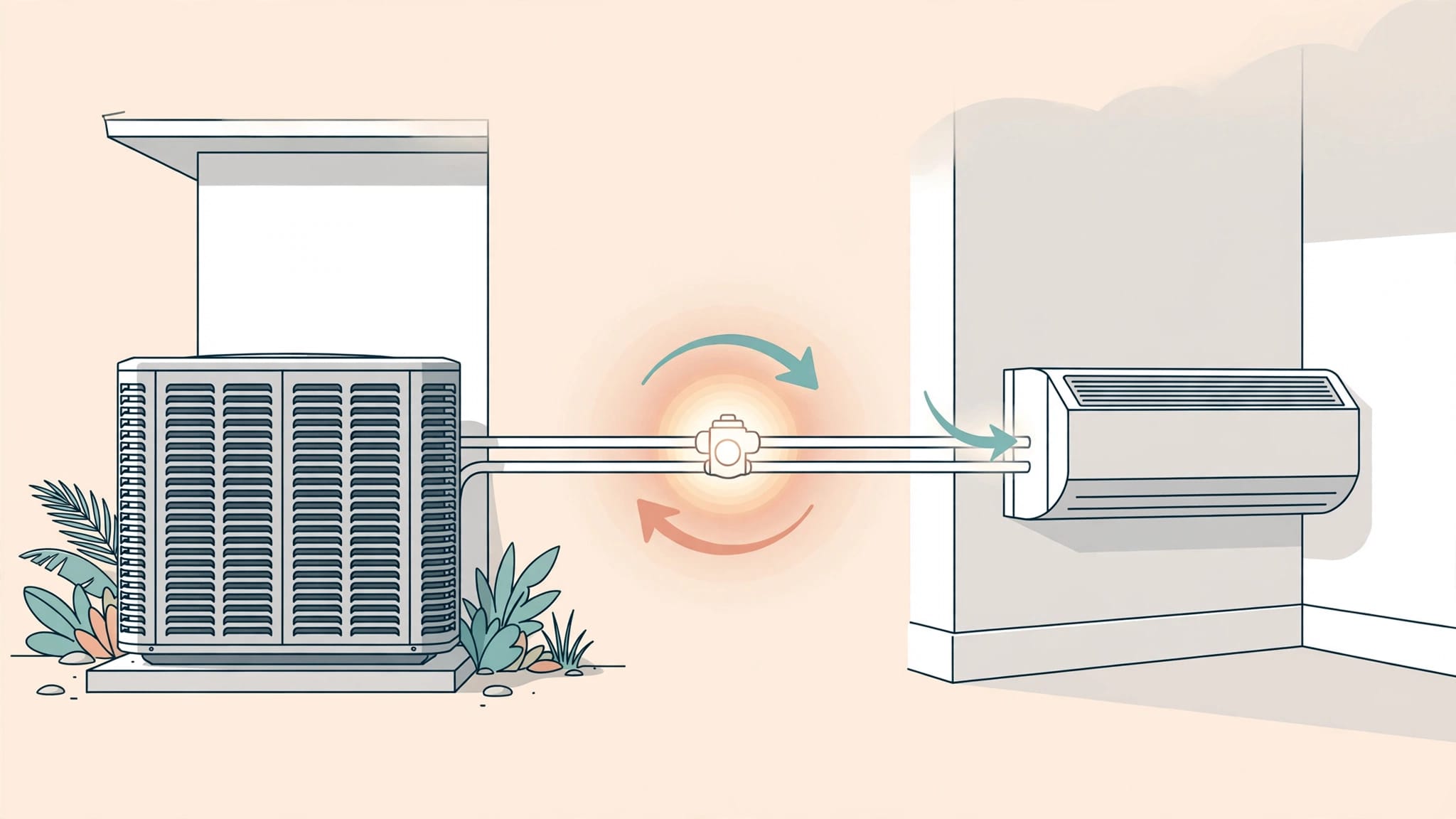
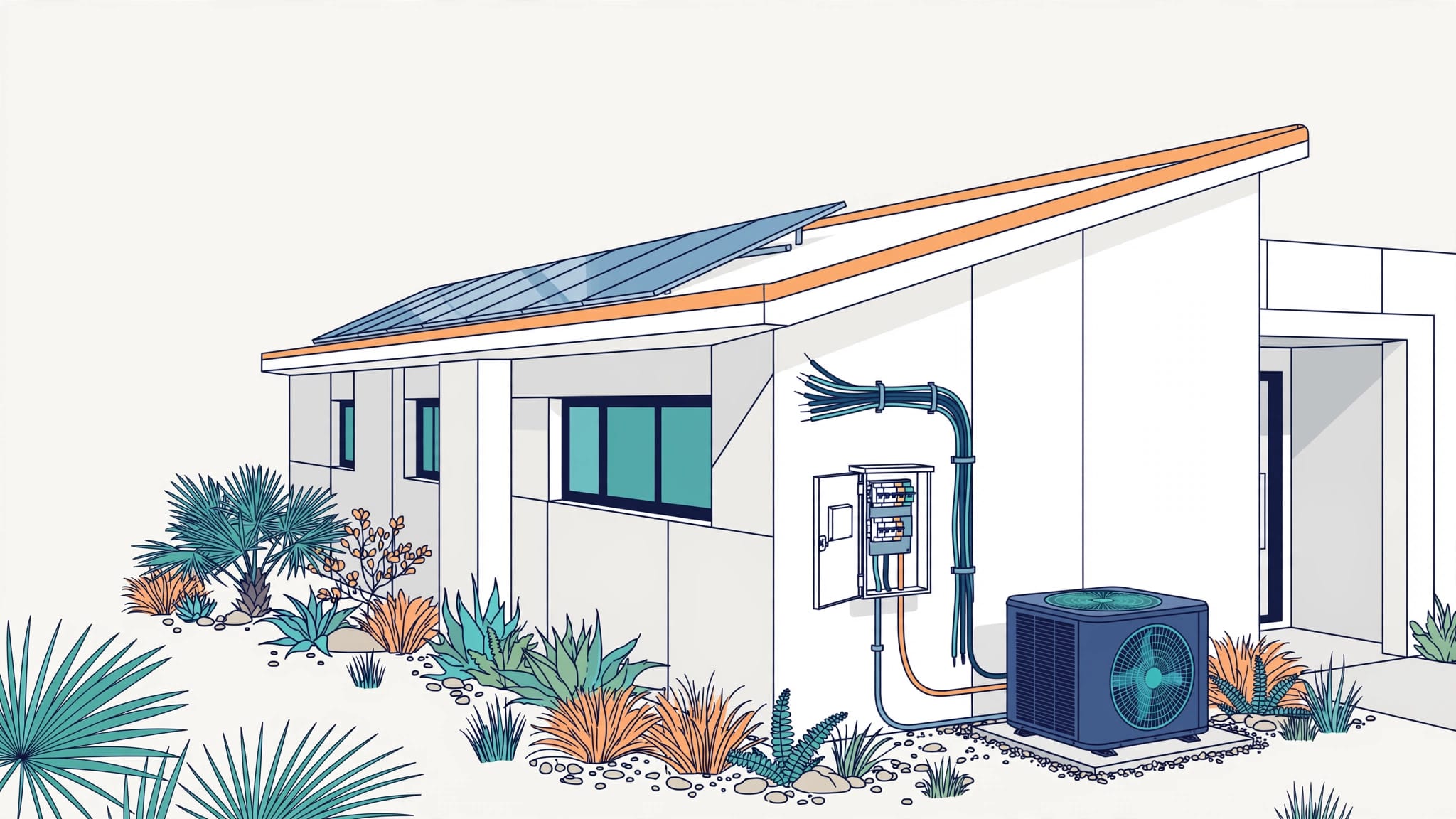
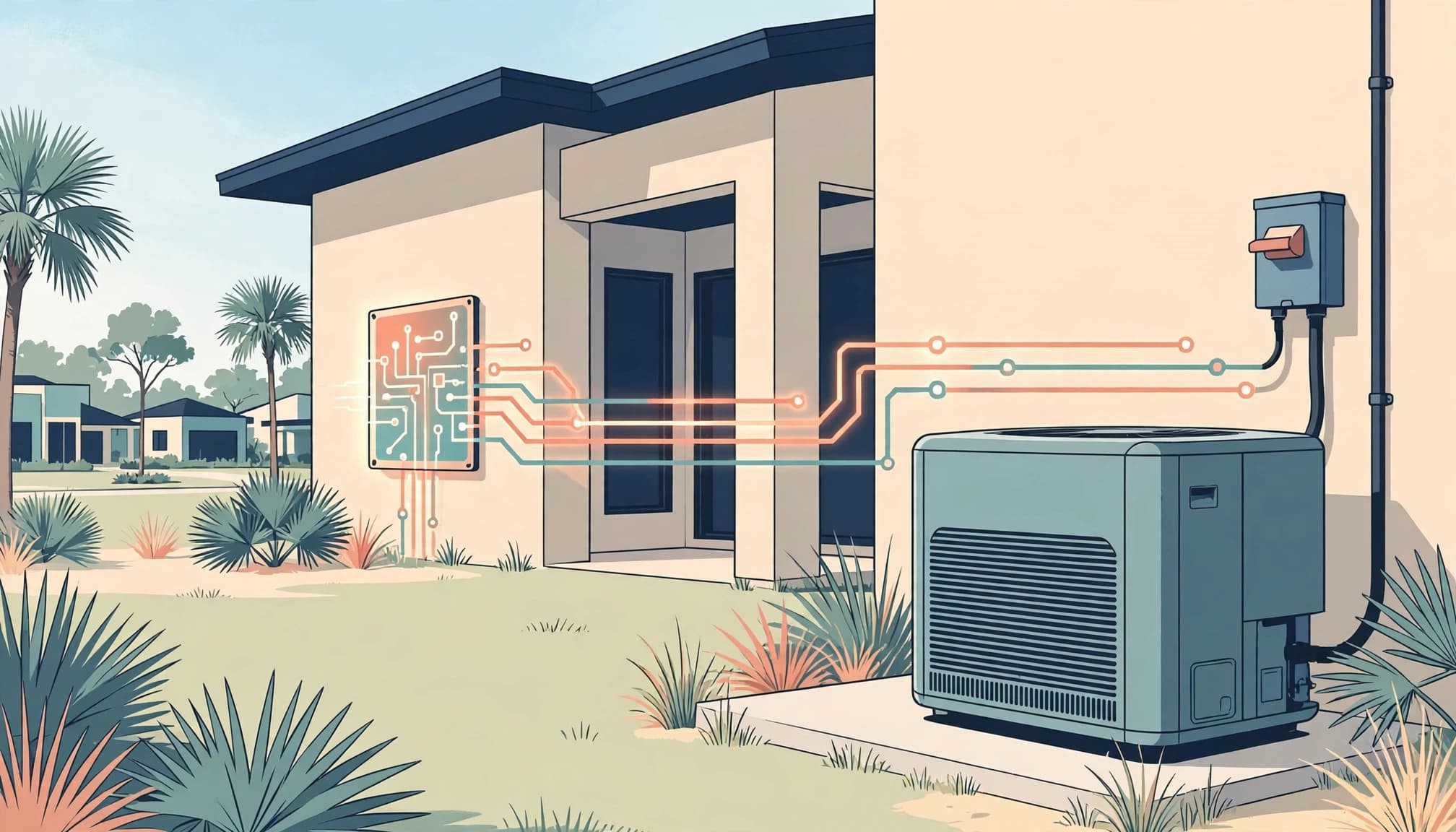
A dedicated circuit runs from the electrical panel to the outdoor condenser or its disconnect. The indoor air handler may have its own circuit, depending on the system design. A split heat pump can also have additional electrical requirements for auxiliary heat.
Look at the panel only from a safe position. A breaker labeled "AC," "condenser," or "heat pump" suggests a separate circuit, but labels can be inaccurate or incomplete. Never remove the panel cover to trace wires yourself.
Why the outdoor disconnect matters
Most outdoor condensers have a disconnect near the unit. It gives qualified workers a nearby way to isolate power during service. The disconnect is part of the electrical installation, not a switch homeowners should open, repair, or bypass.
Do not touch a disconnect that looks wet, loose, scorched, corroded, or damaged after a storm. A disconnect can still contain dangerous voltage even when the outdoor unit is silent.
Check the AC nameplate before checking the breaker
The equipment data plate provides more useful information than the system's tonnage or the breaker's amp rating. You may find the plate on the outdoor condenser, air handler, or another accessible part of the equipment.
MCA and MOCP tell you different things
Two markings matter most:
- MCA , or minimum circuit ampacity, indicates the minimum conductor capacity required for the equipment.
- MOCP or MOP , meaning maximum overcurrent protection, indicates the largest permitted breaker or fuse size for that unit.
The wire must meet or exceed the listed MCA. The breaker must stay at or below the marked MOCP, unless the manufacturer provides a permitted configuration under the applicable code. The breaker rating is not automatically supposed to match the MCA.
For example, a unit's nameplate may allow a breaker size that doesn't match a simple amp calculation. Compressors need extra current during startup, so air-conditioning equipment has special electrical rules under NEC Article 440.
Why tonnage is not enough
A three-ton system does not automatically require one universal breaker size. Two systems with similar cooling capacity can have different compressors, voltage requirements, efficiency ratings, startup characteristics, and nameplate values.
The same caution applies when replacing an older condenser. A new system may need different conductors, breaker protection, disconnect equipment, or panel capacity. Ask the installer to confirm the exact equipment match, nameplate values, and electrical scope in writing. An AHRI-certified AC replacement can help verify that the indoor and outdoor equipment belong together, but it doesn't replace an electrical inspection.
Warning signs your AC circuit needs attention
A dedicated circuit can still have a loose connection, damaged conductor, weak breaker, or overloaded panel. Watch for changes in how the system starts and runs, especially during Southwest Florida's long cooling season.
Common warning signs include:
- The AC breaker trips when cooling starts.
- The breaker trips after the system runs for several minutes.
- Lights flicker when the compressor or air handler starts.
- An outlet, disconnect, breaker, or nearby wall feels warm.
- You hear buzzing, chattering, repeated clicking, or harsh humming.
- You smell burning insulation or see darkened plastic.
- The system overheats, shuts down, or repeatedly fails to start.
- Someone has been using an extension cord to power HVAC equipment.
An extension cord is not a proper replacement for a dedicated HVAC circuit. It can overheat, create voltage drop, and leave connections exposed to damage. Central air-conditioning equipment should receive power through correctly sized permanent wiring.
| What you notice | What it may indicate | Safe response |
|---|---|---|
| Breaker trips at startup | Compressor, capacitor, wiring, or breaker problem | Turn the system off and schedule service |
| Breaker trips after 10 to 20 minutes | Motor overheating, airflow restriction, or fan problem | Leave it off for professional testing |
| Outdoor unit hums but won't start | Capacitor, contactor, compressor, or power issue | Don't open the cabinet or keep restarting it |
| Lights flicker during startup | Voltage drop, loose connection, or heavy electrical demand | Arrange HVAC or electrical diagnosis |
| Warm outlet, breaker, or burning odor | Overheating connection or electrical fault | Shut the system off and seek prompt help |
A single trip can have several causes. Repeated trips are a safety warning, not an invitation to keep resetting the breaker. If your AC breaker keeps tripping, the system needs testing rather than a larger breaker.
A tripping breaker doesn't prove you need a new circuit
A breaker trips when it detects a condition such as excess current or a short circuit. That condition may come from the branch circuit, but it may also start inside the air conditioner.
HVAC problems can look electrical
A failing capacitor can make the compressor or fan draw abnormal current. A damaged contactor, shorted motor, restricted airflow, dirty coil, or failing compressor can produce similar symptoms.
Storms and power interruptions may also stress electrical controls. Insects, moisture, corrosion, and loose connections can affect outdoor equipment. Babcock Ranch homes face heat, humidity, heavy rain, vegetation, and long run times, so several different faults can appear as a breaker problem.
If the outdoor unit hums without starting, turn the system off. Repeated startup attempts can strain the compressor. See this guide to an AC outdoor unit humming but not starting for symptoms that need prompt attention.
A bigger breaker is not a repair
Installing a larger breaker can allow unsafe current through conductors that weren't designed for it. It may also ignore the equipment's MOCP marking and increase fire risk.
Likewise, don't add an outlet, run temporary wiring, bypass a disconnect, or move the AC onto another household circuit. Never keep resetting a breaker to "test" the system. If it trips again, leave it off.
Manufacturer requirements and electrical-code requirements
These two sources of requirements work together, but they aren't identical.
The manufacturer's nameplate and installation instructions identify the equipment's MCA, MOCP, voltage, wiring conditions, and other system-specific information. Those values apply to the exact model being installed.
The electrical code establishes minimum safety requirements for branch circuits, overcurrent protection, disconnects, grounding, conductor installation, and HVAC equipment. NEC Article 440 contains rules for air-conditioning and refrigeration equipment, including motor-compressor protection.
A permit or inspection process may also apply to replacement or electrical work. Requirements can depend on the current authority having jurisdiction and the scope of the project. There is no single Babcock Ranch rule that replaces the equipment nameplate and adopted code.
Homeowners should also confirm any current community or HOA requirements before exterior changes. Those requirements may affect the condenser location, screening, pad, or visible wiring, but they don't determine the correct breaker size.
When to call an electrician or HVAC professional
Electrical and HVAC problems often overlap, so the right professional depends on what testing reveals.
Call an HVAC professional when the system itself is suspect
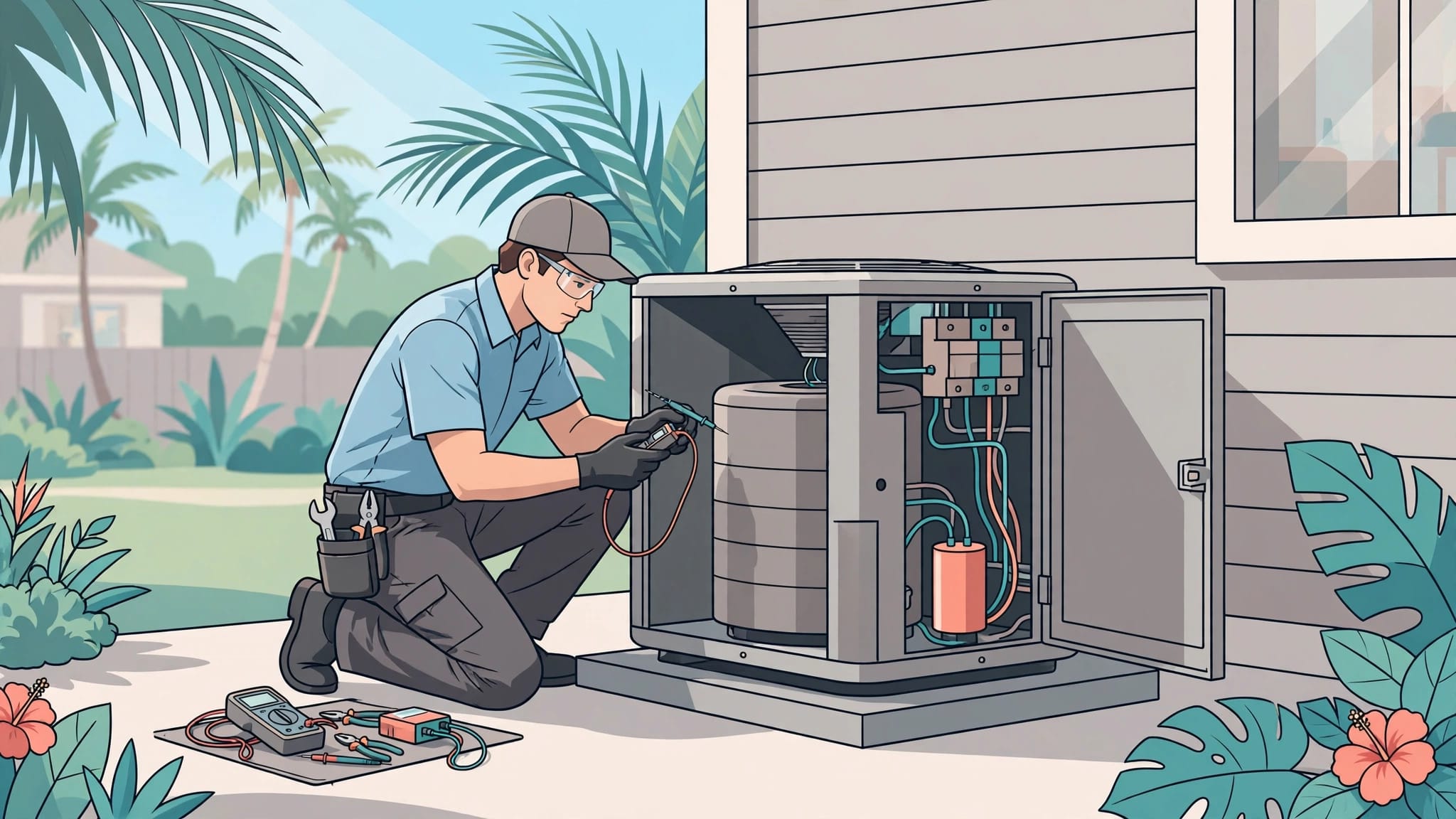
A licensed HVAC technician can test operating amperage, capacitors, contactors, compressor performance, refrigerant conditions, airflow, controls, and wiring within the equipment. They can also determine whether a dirty filter, iced coil, failing motor, or blocked condenser is contributing to high electrical demand.
Basic homeowner checks are limited to safe observations. You can replace an accessible filter, make sure supply registers aren't blocked, and clear loose debris away from the outdoor unit without touching electrical parts. Stop immediately if you see exposed wiring, smoke, sparks, melted insulation, or ice that keeps returning.
Call a licensed electrician for circuit or panel work
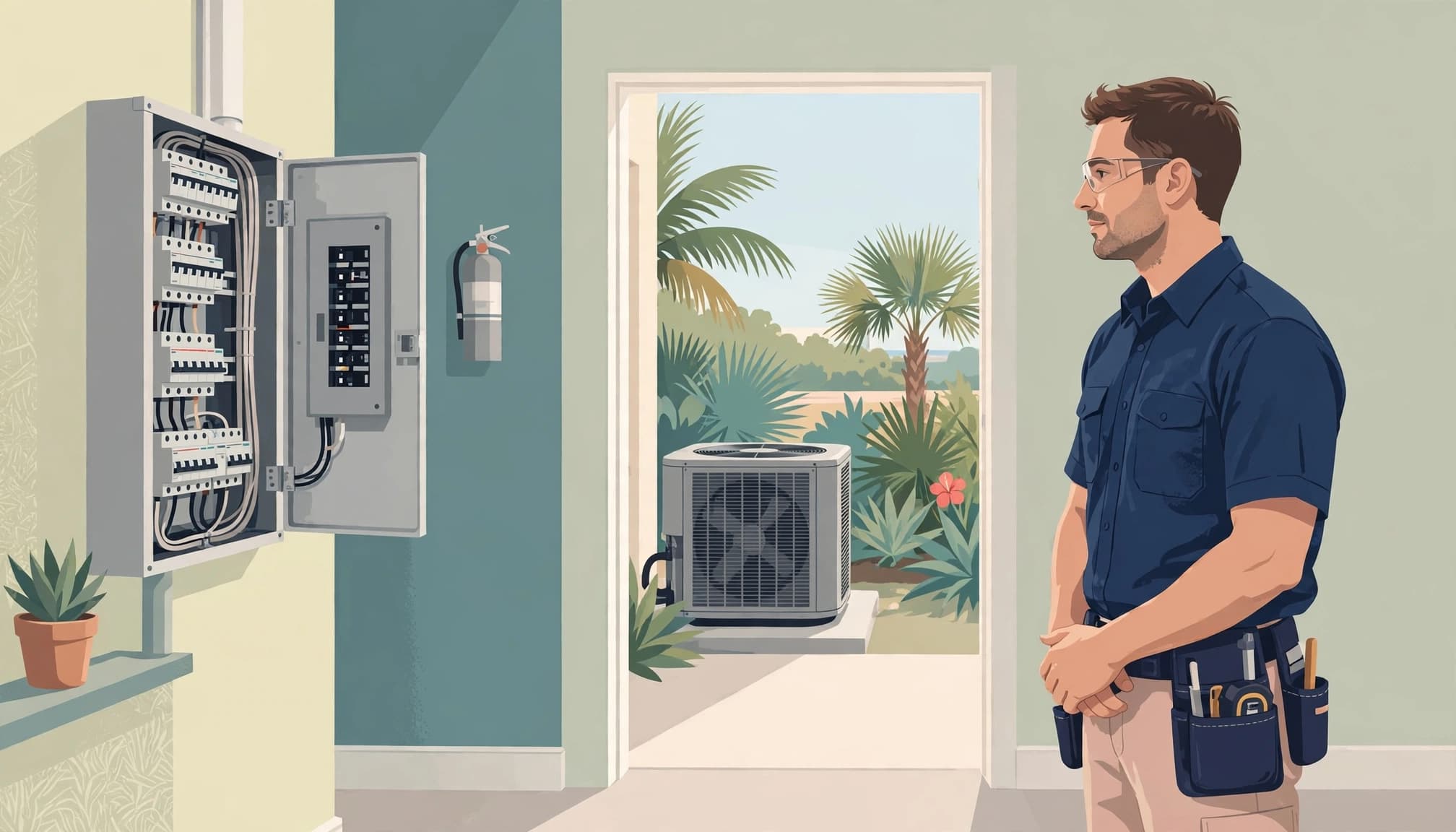
A licensed electrician should inspect the branch circuit, breaker, panel capacity, conductors, grounding, disconnect, and line-side connections. Florida licensing guidance distinguishes this work from ordinary homeowner maintenance. Don't remove an electrical panel cover or work inside a disconnect.
During a professional visit, ask for clear answers:
- Does the AC have an individual branch circuit?
- Do the conductors meet the equipment's MCA?
- Does the breaker match the listed MOCP?
- Is the disconnect in good condition?
- Is the trip caused by the circuit or by the HVAC equipment?
- Does the panel have adequate capacity for the system?
What a professional diagnosis may include
A proper diagnosis starts with the equipment data plate and the homeowner's observations. Take a photo of the nameplate from a safe position if it is easy to see. Record when the breaker trips, whether lights flicker, and whether the outdoor fan starts.
The technician may measure current draw, inspect connections, test the capacitor and contactor, check voltage, evaluate airflow, and examine the compressor. An electrician may then verify conductor size, breaker protection, disconnect condition, and panel capacity.
Routine maintenance can catch loose connections, capacitor wear, debris, coil problems, and airflow restrictions before they cause a shutdown. A plan such as Comfort Club HVAC maintenance can also help keep electrical and cooling checks on a regular schedule.
Key Takeaways
- Most central AC systems need an individual branch circuit.
- The exact answer comes from the equipment nameplate, adopted code, and an inspection.
- MCA sets the minimum conductor capacity, while MOCP sets the maximum protective-device rating.
- Tonnage alone does not determine breaker or wire size.
- Flickering lights, buzzing, warm electrical parts, burning odors, and repeated trips require attention.
- Never solve a trip by installing a larger breaker or using an extension cord.
- Leave repeated breaker trips off and call a licensed HVAC professional or electrician.
FAQ
How can I tell if my AC has a dedicated circuit?
Look for a breaker labeled for the AC, condenser, or heat pump, then check whether it appears separate from household circuits. That label is only a clue. A licensed electrician must trace and test the circuit to confirm its wiring, breaker protection, and connection to the equipment.
Does every central AC need a dedicated circuit?
Most central air conditioners and heat pumps are supplied by an individual branch circuit. The exact arrangement depends on the equipment and installation. The nameplate, installation instructions, and applicable electrical code control the final answer.
Can I reset the AC breaker once?
If there is no smoke, burning odor, visible damage, or unusual heat, one reset may be reasonable after the system has stopped. If the breaker trips again, leave it off. Don't keep resetting it, especially if the lights flicker or the equipment buzzes.
Who should install a new AC dedicated circuit?
A licensed electrician should handle new branch-circuit, panel, breaker, disconnect, and line-side work. A licensed HVAC professional should diagnose the air conditioner and coordinate electrical needs during installation or replacement.
Conclusion
An AC dedicated circuit is more than a separate breaker label. The wire size, breaker rating, disconnect, panel, and equipment nameplate must all work together safely.
If your Babcock Ranch air conditioner trips repeatedly, buzzes, overheats, flickers the lights, or relies on an extension cord, turn it off and arrange a professional diagnosis. A breaker is protecting your home, and repeated trips deserve a real answer rather than another reset.
Recent Posts