

Sunset Gulf HVAC • September 7, 2026

AHRI Certificates for AC Replacement in Babcock Ranch

Share this article

AHRI Certificates for AC Replacement in Babcock Ranch

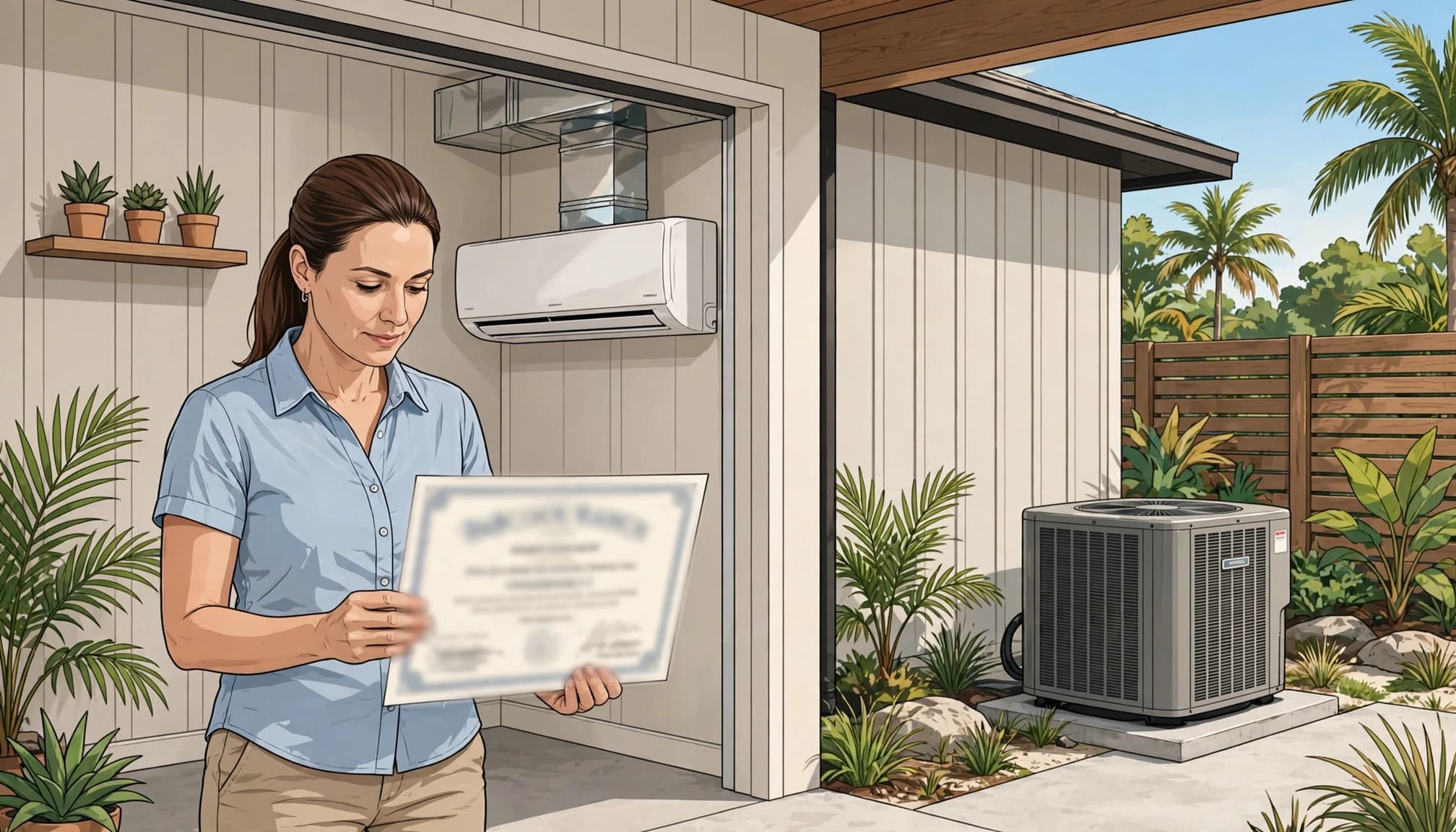
A new outdoor unit can look impressive on installation day, yet its advertised efficiency may not apply to the equipment inside your home. For a Babcock Ranch replacement, the AHRI certificate ties the proposed system together on paper before the first hot afternoon tests it.

That detail matters because your condenser, indoor coil, and air handler must work as a matched set. Ask for the certificate early, then compare it to the model numbers on your proposal and final invoice.

What an AHRI Certificate Actually Proves

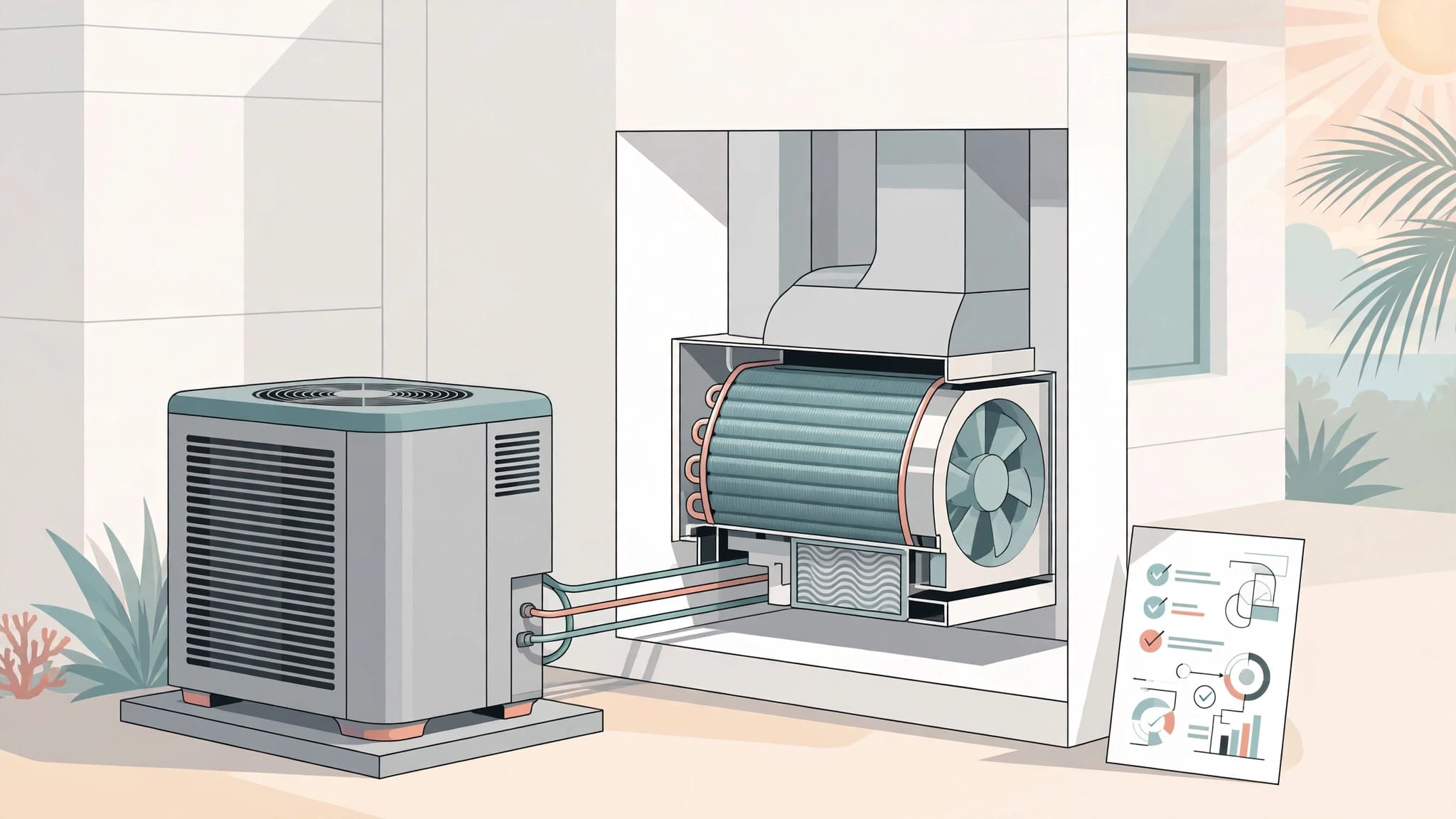
An AHRI certificate is a performance record for an exact HVAC equipment combination. For a central air conditioner, that combination usually includes the outdoor condenser and indoor evaporator coil. Depending on the system, it may also include the air handler or furnace.

The document confirms that the listed components were rated together through the Air-Conditioning, Heating, and Refrigeration Institute's certified program. It does not mean every condenser with the same brand name or nominal tonnage gets the same efficiency rating.

The indoor equipment changes the rating

A contractor may quote a high-efficiency condenser, then pair it with a different coil because of availability, fit, or cost. That substitute coil can change the certified capacity and efficiency of the system.

For that reason, the AHRI certificate should list the same outdoor model, indoor coil model, and air handler model that will be installed. A close match is not enough.

What the certificate does not guarantee

The certificate is helpful documentation, but it doesn't promise that an installation meets every code requirement. It also doesn't automatically establish rebate eligibility or warranty coverage.

Those questions depend on the local permit process, program rules, manufacturer requirements, and the actual work completed. Keep the certificate with your proposal, invoice, permit documents, and equipment registration records.

An AHRI certificate verifies a rated equipment match. It does not measure whether your ducts, airflow, drain system, and installation quality are right for the home.

How SEER2, EER2, and HSPF2 Fit In

AHRI certificates use the current residential efficiency measurements: SEER2, EER2, and, for heat pumps, HSPF2. These are updated test metrics that replaced the older SEER, EER, and HSPF labels in 2023.

SEER2 measures seasonal cooling efficiency

SEER2 estimates cooling efficiency across a range of operating conditions over a season. Since Southwest Florida systems run hard for much of the year, this rating is often a major part of an AC replacement comparison.

Still, a higher SEER2 number doesn't automatically mean lower bills in every Babcock Ranch home. Correct sizing, thermostat settings, duct leakage, attic heat, and maintenance all affect real-world energy use.

EER2 matters during heavy cooling demand

EER2 reflects cooling efficiency under more demanding conditions. It can be useful when comparing systems that will face long, humid Florida afternoons.

For applicable single-phase split-system central AC units under 45,000 Btu per hour, the commonly referenced Southeast regional minimum is 14.3 SEER2 and 11.7 EER2. Your contractor should confirm the requirement for the exact equipment class and installation, rather than relying on a broad rule of thumb.

HSPF2 applies to heat pumps

HSPF2 measures seasonal heating efficiency, so it applies when you replace your AC with a heat pump. A heat pump cools your home in summer and provides heat during Florida's cooler spells.

If the proposal is for a straight-cool air conditioner, HSPF2 is not part of the decision. If it is a heat pump, the certificate should show its matched heating and cooling ratings.

Review the AC Replacement Proposal Before You Sign

A clear proposal goes beyond a brand name, tonnage, and price. It identifies the equipment, installation scope, and details that can affect comfort after the crew leaves.

Proper sizing deserves the same attention as the AHRI match. A 3-ton unit may suit one home and short-cycle in another. Before approving a system, review how AC sizing works in Babcock Ranch homes, especially if your old system struggled with humidity or uneven rooms.

Questions to ask your HVAC contractor

Bring these questions to the estimate appointment:

  • What is the AHRI certificate number for this exact system?
  • Which outdoor unit, indoor coil, and air handler models appear on that certificate?
  • What certified SEER2 and EER2 ratings will this combination deliver?
  • If this is a heat pump, what is its certified HSPF2 rating?
  • How did you determine the right system size for my home?
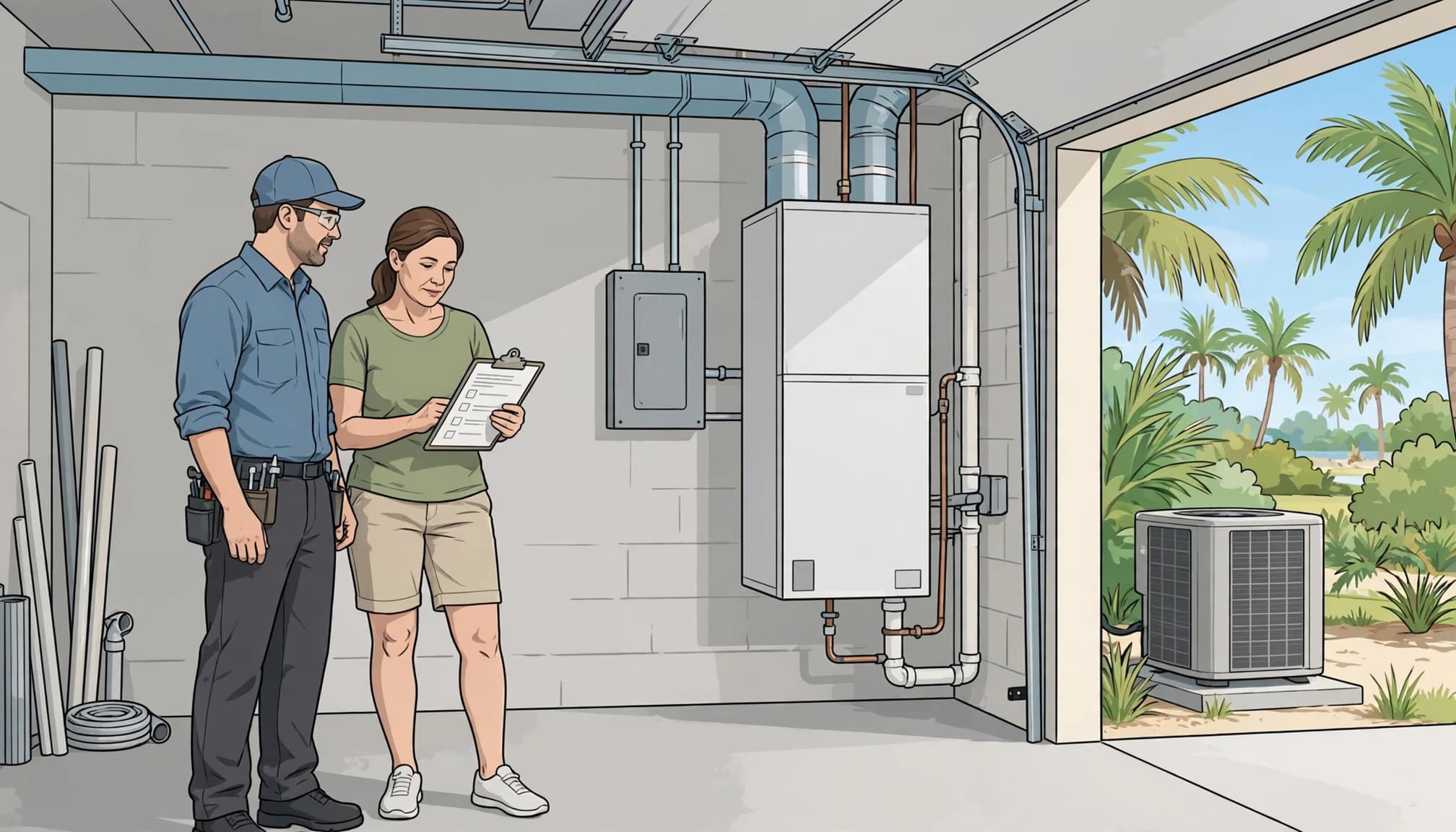
  • Will you inspect ductwork, refrigerant lines, electrical connections, and condensate drainage?
  • If a listed component changes before installation, will you provide an updated AHRI match?

A contractor should also explain what the price includes. Ask about permit fees, old equipment removal, thermostat work, duct transitions, startup testing, and how change orders receive approval.

Mistakes that can create problems later

Don't assume the number printed on a condenser brochure applies to every system pairing. The indoor coil and air handler can change that rating.

Also, avoid comparing old SEER labels directly against newer SEER2 ratings. They use different test procedures. Finally, don't treat a certificate as proof that existing ducts are ready for a new system.

Crushed flex duct, return-air restrictions, loose connections, or wet attic insulation can limit comfort even with correctly matched equipment. A new system needs a clear path to deliver cooled, dehumidified air to every room.

Quick AHRI Certificate FAQ

Should I receive the certificate before installation?

Yes. Request it with the final proposal so you can verify the listed model numbers before equipment arrives. Review it again if the contractor makes any substitution.

Does every replacement system need the same paperwork?

The records can vary by equipment type and local permit process. However, a certified match document is useful whenever you need to confirm the published performance of a split HVAC system.

Is the highest efficiency rating always the right choice?

No. The right replacement balances certified efficiency with correct sizing, duct condition, humidity control, installation quality, and your budget. A mismatched or oversized system can disappoint regardless of its label.

Final Thoughts

An AHRI certificate gives you a reliable way to confirm that the condenser, coil, and air handler were rated together. It turns vague efficiency claims into model numbers and documented performance values.

Keep the certificate, confirm every listed component, and ask how the contractor will address sizing and airflow. In Babcock Ranch's long cooling season, those details shape comfort long after installation day.

Recent Posts

By Sunset Gulf HVAC September 13, 2026
A hissing air conditioner can make any Naples homeowner worry about a refrigerant leak. However, AC hissing sounds can also come from airflow problems, duct leaks, expansion components, or normal pressure changes as the system starts and stops. The sound matters most when it a...

By Sunset Gulf HVAC September 12, 2026
A rising electric bill, sticky rooms, or an air conditioner that runs all day can point to more than an aging unit. Your ducts, insulation, thermostat, filter, and home envelope may also be wasting cooling. If you're searching for an HVAC energy audit Fort Myers homeowners can...

By Sunset Gulf HVAC September 11, 2026
A new outdoor unit can connect to old copper tubing, but that connection alone doesn't make it safe. In Cape Coral, humidity, salt air, heat, and years of vibration can affect the line set hidden between your indoor and outdoor equipment. Homeowners can sometimes reuse refrige...