AC Condenser Clearance for Babcock Ranch Homes
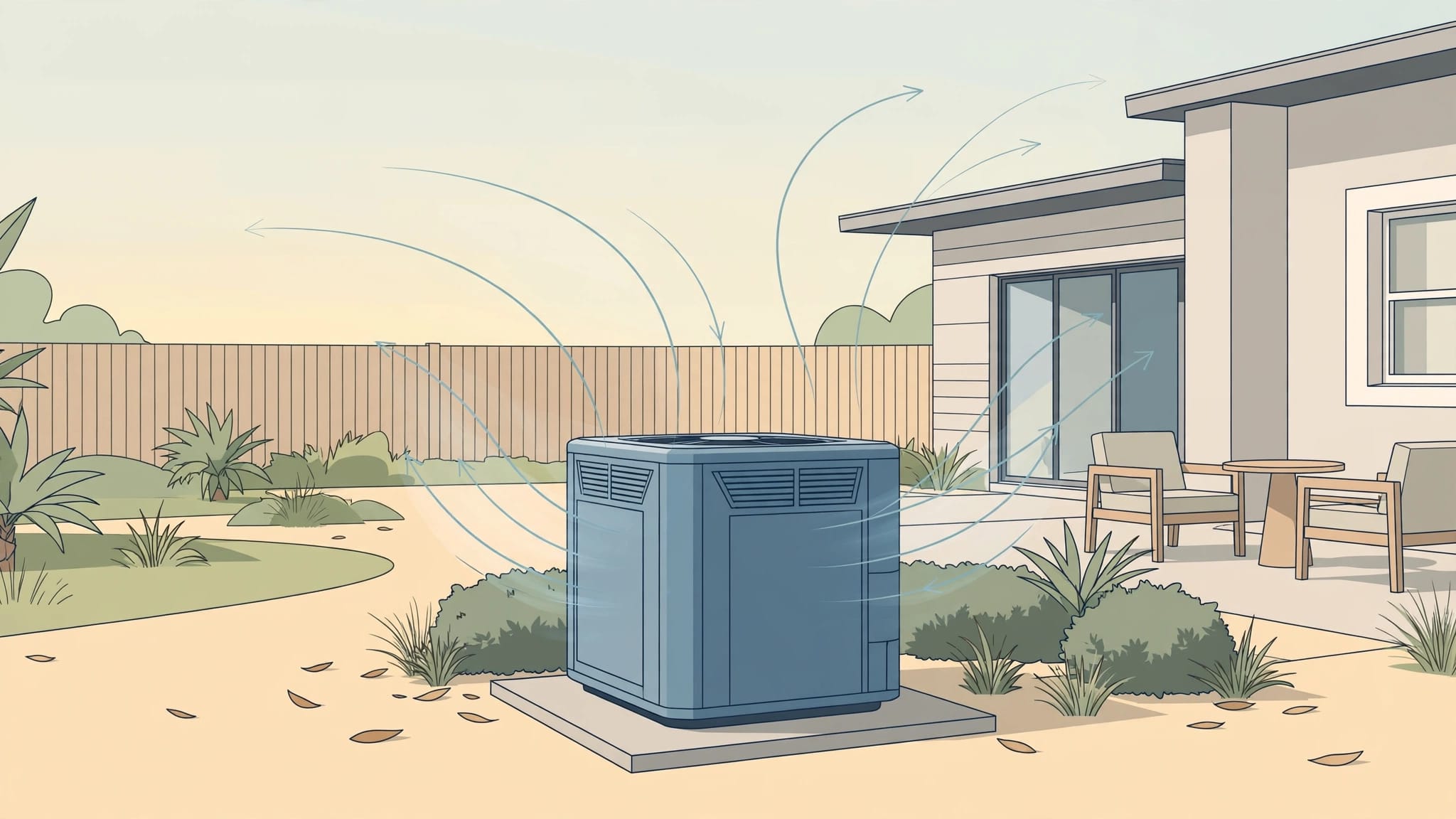
A crowded outdoor AC unit can lose airflow, collect debris, and become harder to repair when Florida heat is at its worst. Proper AC condenser clearance gives the system room to reject heat and gives a technician room to work safely.
In Babcock Ranch, that space can disappear fast behind fresh landscaping, privacy screens, patio furniture, or a new fence. The right measurement isn't one universal number. Your equipment model, installation location, permits, utility routes, and HOA rules can all affect the final layout.
Start with the unit's requirements, then review the space around it before a small obstruction becomes a costly service call.
AC Condenser Clearance Starts With the Installation Manual
The outdoor condenser releases heat pulled from inside your home. It draws air through the coil, then exhausts warmer air upward through the fan. When shrubs, walls, or stored items block that airflow, the system may run longer and face more strain.
The manufacturer's installation instructions control the required spacing for your exact model. If those instructions call for more room than a general HVAC guideline, the manual wins. This matters because clearance needs differ by cabinet design, coil layout, fan discharge, and service-panel location.
Keep a copy of the outdoor unit's model number and installation literature with your home records. If you can't find it, a licensed HVAC technician can identify the model and verify the applicable requirements during an inspection.
Operating room and service room are different
An AC unit needs open space to operate, but it also needs a clear path for diagnosis and repair. A condenser may have adequate airflow on one side while still lacking enough room for a technician to remove a panel, test electrical components, or clean the coil.
The service side is usually where the electrical disconnect, refrigerant connections, or removable access panels sit. Blocking that side with hedges, a fence, or storage bins can turn a simple repair into a longer visit.
A condenser can appear open from the yard while its service panel remains inaccessible. Check the clearance from the technician's working position, not only from the street.
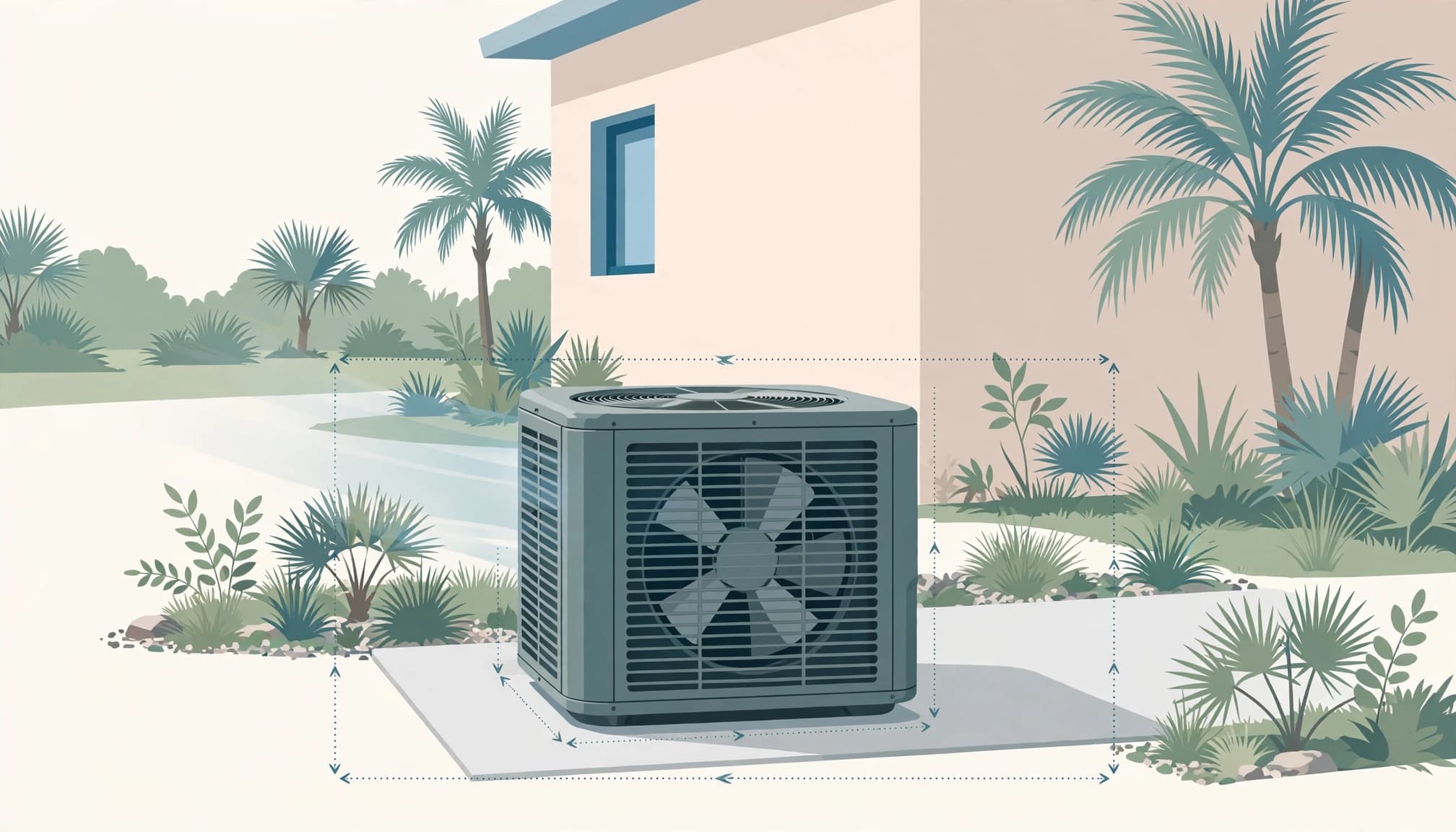
Typical AC Condenser Clearance Measurements
Many homeowners hear one number and apply it to every side of the unit. That approach can cause trouble. General ranges are useful for spotting an obvious problem, yet they are examples, not guaranteed requirements for every condenser.
Some manufacturer instructions use larger clearances than common field rules. For example, published installation documents for certain residential models call for 48 to 60 inches above the unit and more space around most coil sides. Other designs allow a tighter side near a wall.
Use the following ranges as a practical starting point while you locate the manual for your own equipment.
| Area around the condenser | Common example range | Why it matters |
|---|---|---|
| Non-service sides | About 12 to 24 inches | Allows coil airflow |
| Service or access-panel side | About 24 to 36 inches | Gives room for inspection and repair |
| Clear space above the fan | About 48 to 60 inches | Prevents hot discharge air from being trapped |
| Between separate condensers | About 24 to 48 inches | Reduces air recirculation and service conflicts |
The AC condenser clearance that applies at your house may be greater than these examples. Follow the stricter requirement when the manual, permit documents, community rules, or local code call for more space.
Don't block the air leaving the top
The fan sends warm air upward. A low deck, solid awning, dense tree canopy, or tightly built enclosure can push that heat back toward the coil. Then the unit pulls in warmer air and works harder to cool your home.
Avoid placing anything above the condenser unless the equipment manufacturer approves that arrangement. A shade tree can be helpful when its branches remain well above the discharge area. However, falling leaves, seed pods, and palm debris can still clog the coil or fan guard.
Landscaping Around a Babcock Ranch Condenser
Florida landscaping grows quickly, especially after summer rain. A shrub that looked harmless at installation can cover a coil within a season. Mulch can also migrate toward the base, and groundcover may creep into the pad area.
Keep plants trimmed back before leaves touch the cabinet. The condenser needs more than a narrow opening through the branches. Air must reach the coil across the sides that the manufacturer identifies as intake areas.
Choose plants with mature size in mind
Before planting near the AC, look at the plant's mature width instead of its size at the nursery. Low-growing plants and a clear mulch border usually create fewer access problems than thick hedges beside the cabinet.
Don't pile mulch against the condenser base or let it cover drainage paths around the pad. During heavy rain, water should move away from the equipment rather than pooling beneath it.
A simple visual check once a month is useful during the wet season. Remove loose leaves, grass clippings, and palm fronds from around the cabinet. Never use a pressure washer or poke debris through the delicate coil fins.
Fences and screens need more than good looks
A privacy screen can hide an outdoor unit, but a solid enclosure can also limit airflow. Slatted or louvered designs may work when they meet the equipment manual's spacing requirements. Still, the screen must leave enough room for service access and future replacement.
Avoid attaching a screen directly to the condenser pad or cabinet. The unit needs a stable, level base, and technicians need room to remove panels. A fence gate or removable section may also help if a future system replacement requires wider access.
Property Lines, Utilities, and HOA Approval
A unit can meet its manufacturer's airflow requirements and still be in the wrong place for the lot. This is common when a homeowner wants to move a condenser away from a bedroom window, expand a patio, or add a pool enclosure.
Local permitting requirements may apply when the equipment moves. A site plan can require the location of property lines, setbacks, easements, utilities, and the proposed condenser. The responsible building department depends on the home's address and project scope.
Moving a condenser needs a closer review
Replacing a condenser in the same approved location is different from relocating it. Moving the unit can require changes to the electrical disconnect, refrigerant line set, pad, condensate routing, and drainage around the home.
It can also raise setback questions. Florida doesn't use one statewide property-line setback for every residential condenser. Local land-use rules and permit review determine what applies to a particular home.
Ask the contractor which jurisdiction reviews your address and whether the proposed location needs a permit or updated site plan. Get the answer before pouring a pad or installing a screen.
Babcock Ranch community rules may apply
Babcock Ranch homeowners should also check HOA or architectural-review requirements before installing, moving, screening, or substantially changing outdoor equipment. Florida law allows associations to review certain central air-conditioning plans, especially when visibility from neighboring property or common areas is involved.
Corner lots and homes facing open spaces can have added visibility concerns. Community documents may address screening materials, exterior appearance, placement, and approval procedures.
HOA approval doesn't replace manufacturer clearance. Likewise, a roomy installation doesn't replace required architectural approval. The finished project must satisfy both.
Check Your Existing Condenser Without Opening It
You don't need to remove panels or handle electrical components to spot a clearance issue. Walk around the unit when the system is off and look for objects that crowd the cabinet, top fan guard, or access panel.
Start with branches, vines, furniture, pool supplies, trash bins, toys, and decorative screens. Then look at the ground. A tilted or cracked pad, standing water, or mulch buildup deserves attention because it can affect drainage and access.
Safe homeowner checks
A quick outdoor check can catch problems early:
- Keep leaves, grass clippings, and loose debris away from the coil and pad.
- Trim vegetation before it touches the cabinet or closes off the service side.
- Leave the electrical disconnect visible and accessible for a technician.
- Check after storms for branches, shifted screens, standing water, or damaged insulation on exposed refrigerant lines.
- Keep pets and outdoor storage away from the unit's working area.
Don't open the condenser cabinet or reach through the fan guard. The equipment contains high-voltage electrical parts, and some components can retain electrical energy.
If the unit hums without starting, makes grinding or repeated clicking sounds, loses cooling, or has visible damage, arrange Babcock Ranch AC installation and repair rather than repeatedly restarting the system.
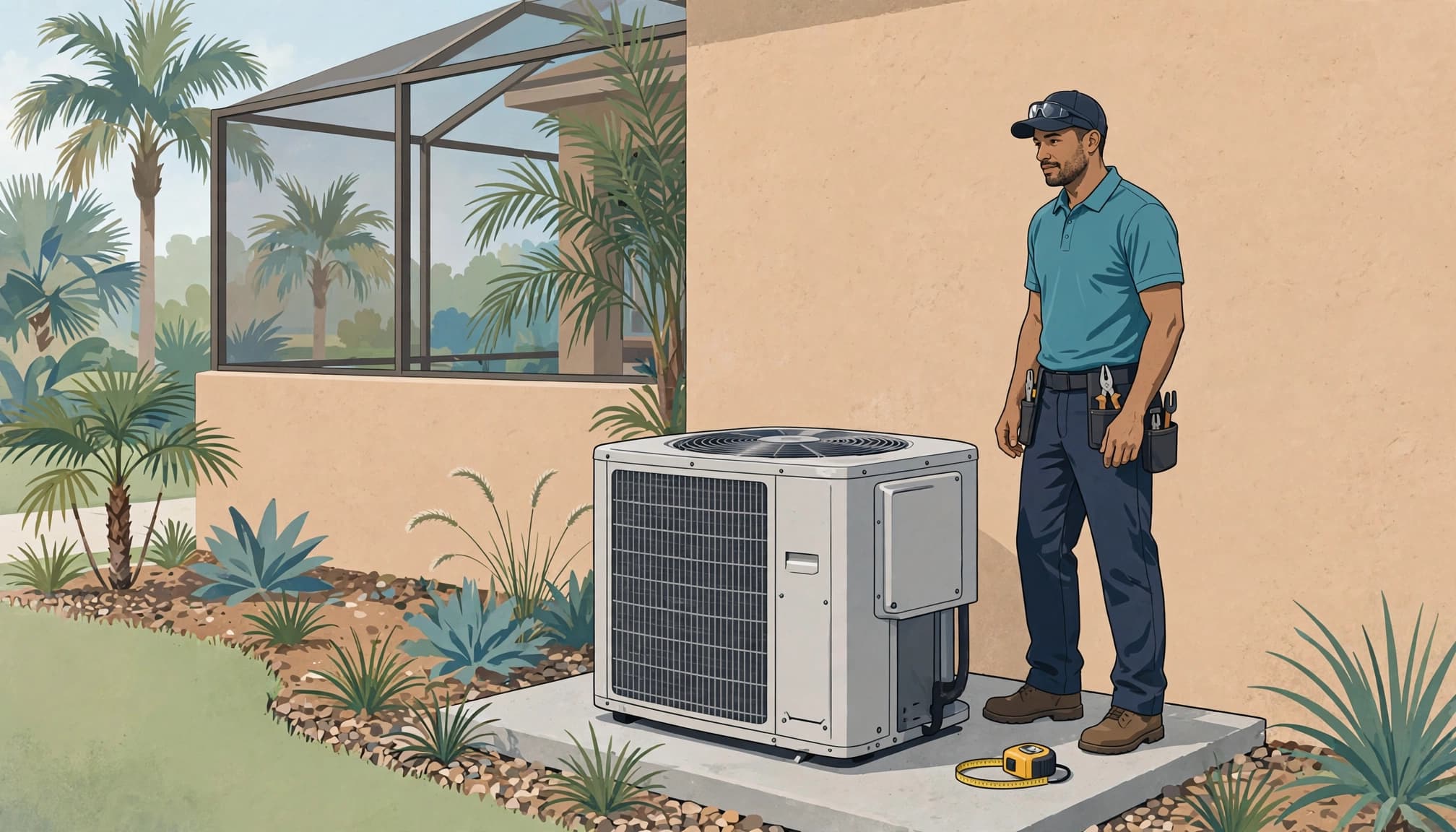
Keep Clearance Through Florida's Wet Season
Clearance isn't a one-time installation detail. Southwest Florida's heat, rain, wind, and fast plant growth change the space around outdoor equipment throughout the year.
A condenser coil covered with lawn debris or pressed against overgrown landscaping can't release heat as freely. That can raise operating stress during long afternoon cooling cycles. Regular care also makes it easier to spot damaged wires, loose screens, corroded fasteners, or a pad that has started to settle.
Add clearance checks to routine maintenance
A professional tune-up should include an outdoor-unit inspection, coil condition check, electrical review, and confirmation that technicians can safely access the equipment. Scheduled service is also a good time to ask whether your existing AC condenser clearance still matches the manufacturer's instructions.
Homeowners who prefer planned upkeep can consider the Comfort Club maintenance plan, which includes regular system inspections and condenser coil care.
Clear the area before a storm arrives
Don't wrap a condenser in a tarp before a storm. Loose material can tear, trap moisture, or become debris. Instead, remove furniture, planters, and loose yard items near the unit. Trim weak branches well before storm season when possible.
After severe weather passes, inspect the area from a safe distance. Clear loose debris around the unit, but don't start it if you see crushed fins, damaged wiring, flooding around electrical parts, or a shifted cabinet. A licensed HVAC inspection can determine whether the system is safe to run.
A Clear Condenser Has Room to Work
Good airflow, service access, and an approved location all matter around an outdoor AC unit. Typical measurements can help you spot an issue, but AC condenser clearance is ultimately set by the stricter of the manufacturer instructions, local requirements, permit conditions, and applicable HOA rules.
Keep landscaping, screens, and storage from closing in around the cabinet. When a proposed change leaves you unsure about airflow, property lines, or access, have a licensed HVAC professional inspect the site before work begins.
Recent Posts