
Sunset Gulf HVAC • September 11, 2026

Can Old Refrigerant Lines Be Reused During AC Replacement?

Share this article

Can Old Refrigerant Lines Be Reused During AC Replacement?

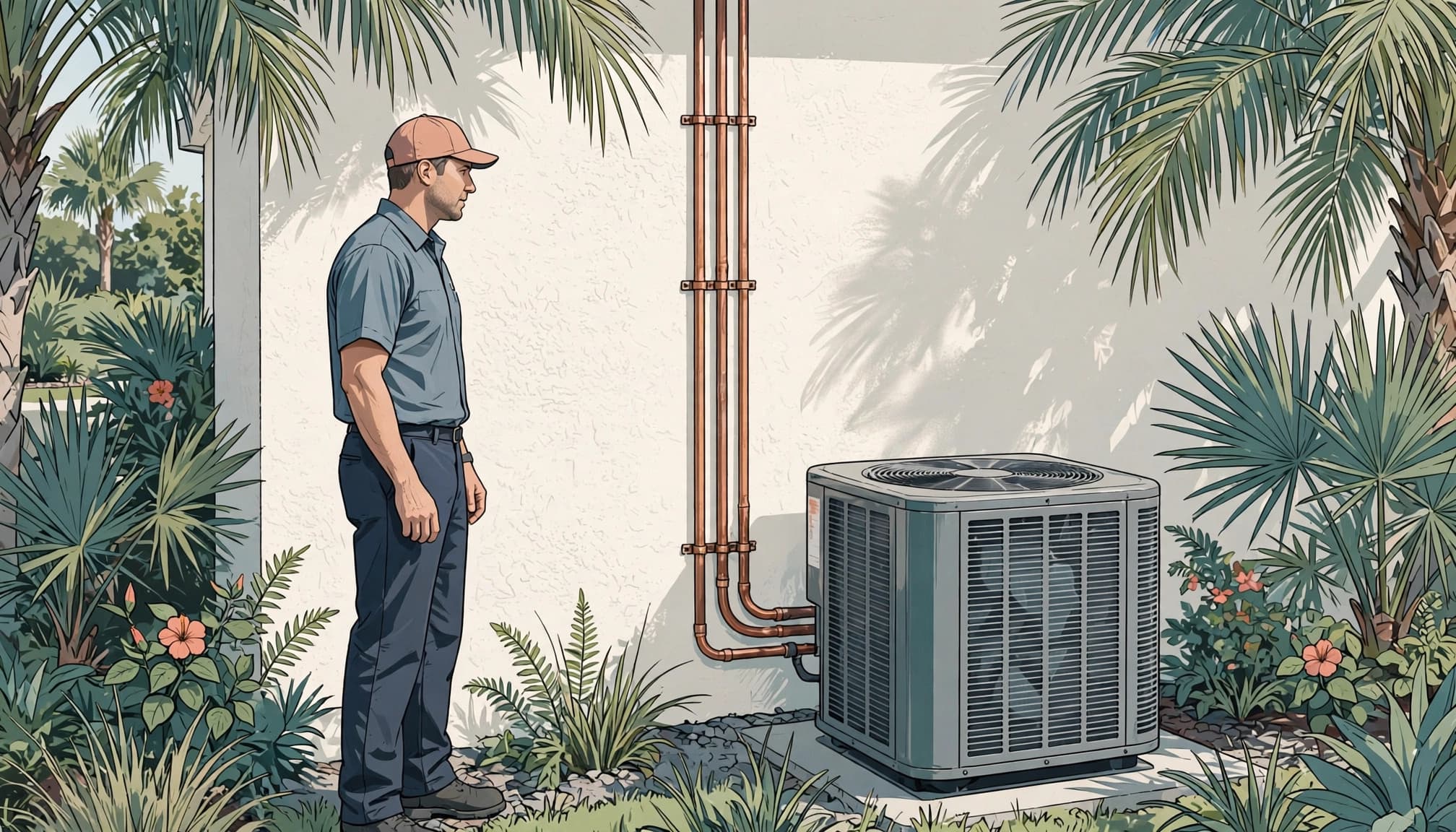
A new outdoor unit can connect to old copper tubing, but that connection alone doesn't make it safe. In Cape Coral, humidity, salt air, heat, and years of vibration can affect the line set hidden between your indoor and outdoor equipment.

Homeowners can sometimes reuse refrigerant lines during a replacement, but only after a licensed HVAC professional checks the exact system match, tubing condition, and manufacturer requirements. The decision should be part of the installation plan, not a last-minute shortcut.

Key Takeaways for Cape Coral Homeowners

  • Reusing a line set may be possible when its size, condition, pressure rating, and cleanliness meet the new equipment manufacturer's requirements.
  • An older R-22 line set isn't automatically compatible with R-410A, R-32, or R-454B equipment.
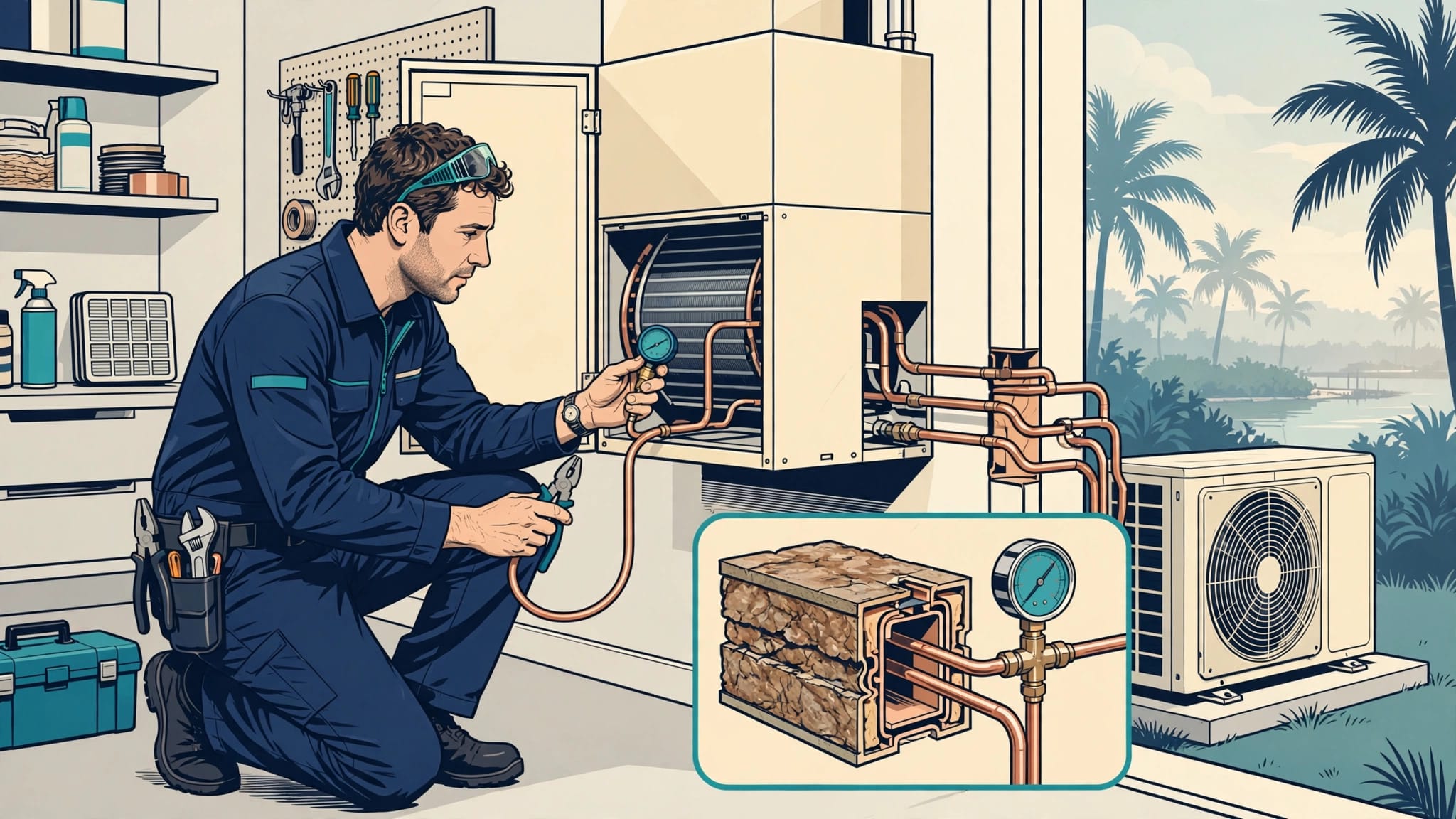
  • A technician should inspect the copper, insulation, fittings, routing, and accessible joints before approving reuse.
  • Pressure testing and a deep evacuation help confirm that the sealed tubing is leak-free and dry.
  • Replacement is often safer after compressor burnout, severe corrosion, unknown repairs, kinks, or suspected contamination.

The outdoor condenser, indoor coil, metering device, controls, and refrigerant lines need approval as one system. A new condenser alone does not create a matched installation.

When You Can Reuse Refrigerant Lines

The existing copper tubing may stay in place if it meets the replacement unit's installation instructions. A contractor should verify the proposed outdoor unit, indoor coil, air handler, and refrigerant type before making that call.

The line size must match the new equipment

Every system needs a correctly sized liquid line and suction line. Common residential sizes often fall near 3/8-inch to 1/2-inch for liquid lines and 3/4-inch to 7/8-inch for suction lines, but those measurements are not universal.

Line length, vertical rise, capacity, and equipment design can change the required size. A line set that worked with an older system may restrict refrigerant flow or oil return in a newer one. Ask the contractor to compare the installed tubing with the manufacturer's line-set chart for the exact model numbers.

The refrigerant must be compatible with the full system

R-22 equipment requires careful planning. The U.S. stopped producing and importing new HCFC-22 on January 1, 2020, although reclaimed R-22 may still support repairs to existing systems. An operating R-22 unit does not need replacement solely because of its refrigerant.

However, R-22 cannot simply be swapped for R-410A, R-32, or R-454B. Modern equipment must use the refrigerant for which it was designed. In 2026, many new residential systems use lower-GWP refrigerants such as R-454B or R-32, depending on the manufacturer.

What a Professional Inspects Before Reuse

A careful inspection looks beyond the visible section near the condenser. The line set may pass through an attic, wall cavity, or slab where damage is harder to see.

Copper, insulation, joints, and routing

The technician checks for crushed tubing, sharp bends, rubbing points, corroded sections, leaking fittings, and poor previous repairs. In coastal Southwest Florida, exposed copper and deteriorated insulation deserve close attention.

The large suction line needs intact closed-cell insulation to limit heat gain and condensation. Missing or split insulation can lead to sweating, energy loss, and water damage near the line path. Lines that are inaccessible, buried, or repeatedly damaged may cost more to diagnose than to replace.

Oil, moisture, and contamination history

A line set can hold residual oil, debris, and moisture from the previous system. This is a major concern when replacing an R-22 system because it commonly used mineral oil, while R-410A and many newer systems use POE oil.

A compressor burnout raises the risk further because acidic residue and debris can spread through the refrigerant circuit. In that situation, replacing the lines is often the safer choice. If reuse is allowed, the contractor must follow the equipment manufacturer's approved cleaning procedure.

Testing and Flushing Are Part of the Decision

Flushing is not a universal fix for old refrigerant lines. Some manufacturers permit an approved flush in limited situations, while others require new tubing for certain refrigerant changes or contamination concerns.

Pressure testing finds leaks before charging

After making connections, the installer should pressure-test the line set with dry nitrogen according to the manufacturer's procedure. This helps locate leaks at fittings, brazed joints, or hidden damaged sections before refrigerant enters the system.

A documented installation also includes evacuation. Pulling the system down to 500 microns or lower, followed by a hold test, helps show whether moisture or leakage remains. Refrigerant line testing and AC replacement should include these checks rather than relying on a quick startup.

Charging must follow the equipment instructions

The technician should charge the system by the manufacturer's specified method, often by weight and confirmed with the required operating measurements. Pressure alone cannot prove a proper charge because outdoor temperature, airflow, and indoor humidity affect readings.

Newer R-454B equipment also has A2L mild-flammability requirements. Its approved indoor coil, controls, safety features, refrigerant charge limits, and installation clearances matter as much as the copper tubing.

When New Refrigerant Lines Are the Safer Option

Replace the line set when its diameter is wrong, its history is unknown, or it shows corrosion, kinks, oil staining, repeated leak repairs, or damaged insulation. A prior compressor failure and evidence of moisture also favor replacement.

New tubing is often the better investment when a contractor cannot verify cleanliness or access the full run for inspection. It can also simplify warranty compliance for a complete system replacement.

For a new heat pump or air conditioner, ask for the AHRI certificate showing the matched outdoor unit and indoor equipment. AHRI certificates for AC replacement help confirm that the proposed combination carries the stated efficiency ratings.

FAQ

Can I reuse R-22 refrigerant lines with a new AC?

Possibly, but never assume they are compatible. A licensed HVAC professional must confirm line diameter, tubing condition, oil compatibility, pressure rating, and the new manufacturer's written requirements. The indoor coil and outdoor unit also need to be an approved match.

Does an old line set always need flushing?

No. Flushing may be appropriate when the manufacturer permits it and the line set has no serious contamination. It does not repair damaged copper, remove every risk after compressor burnout, or make an incorrect line size acceptable.

What should I ask my AC replacement contractor?

Ask which refrigerant the new unit uses, whether the existing line set meets the model-specific requirements, and how the contractor will test it. Also ask whether the estimate includes permits, evacuation, pressure testing, startup measurements, and disposal of the old equipment.

A Better Replacement Decision Starts With Inspection

Old copper lines can sometimes remain in service, but reuse refrigerant lines only when the complete replacement system supports that choice. The right decision protects comfort, equipment performance, and warranty coverage.

A thorough inspection and documented testing give Cape Coral homeowners a clearer answer than the age of the tubing alone.

Recent Posts

By Sunset Gulf HVAC September 13, 2026
A hissing air conditioner can make any Naples homeowner worry about a refrigerant leak. However, AC hissing sounds can also come from airflow problems, duct leaks, expansion components, or normal pressure changes as the system starts and stops. The sound matters most when it a...
By Sunset Gulf HVAC September 12, 2026
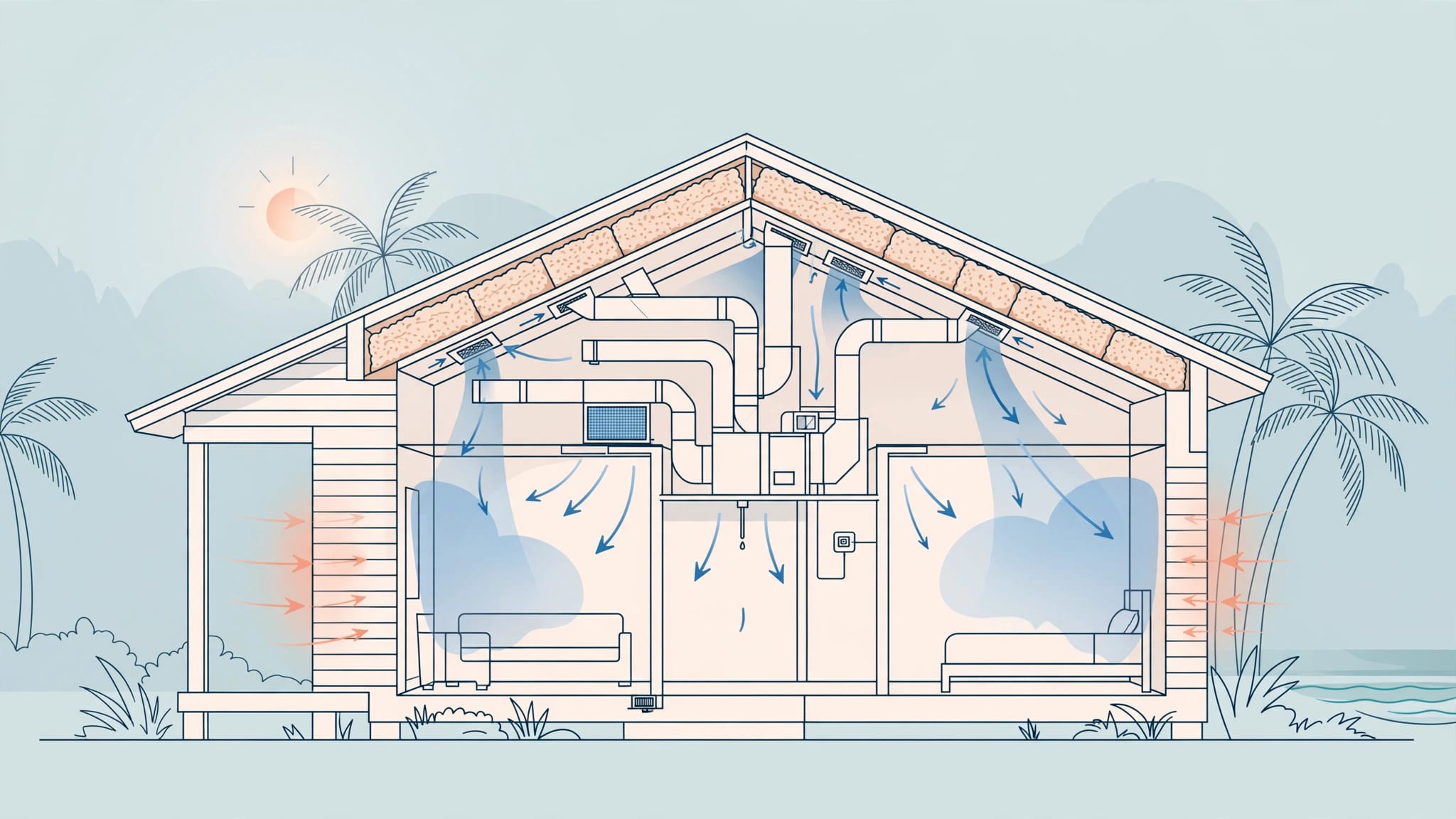
A rising electric bill, sticky rooms, or an air conditioner that runs all day can point to more than an aging unit. Your ducts, insulation, thermostat, filter, and home envelope may also be wasting cooling. If you're searching for an HVAC energy audit Fort Myers homeowners can...
By Sunset Gulf HVAC September 10, 2026
A thermostat that goes blank, drops Wi-Fi, or keeps rebooting can make Florida heat feel much worse. Often, the issue is power, and a thermostat C-wire may be part of the answer. Still, a C-wire isn't required for every thermostat or every HVAC system. Before replacing equipme...