
Sunset Gulf HVAC • September 10, 2026

How to Tell If Your Thermostat Needs a C-Wire in Babcock Ranch

Share this article

How to Tell If Your Thermostat Needs a C-Wire in Babcock Ranch

A thermostat that goes blank, drops Wi-Fi, or keeps rebooting can make Florida heat feel much worse. Often, the issue is power, and a thermostat C-wire may be part of the answer.

Still, a C-wire isn't required for every thermostat or every HVAC system. Before replacing equipment or changing wiring, narrow down what your thermostat and system actually need.

Key Takeaways

  • A C-wire provides continuous 24-volt power from the HVAC system to the thermostat.
  • Many basic thermostats work without a C-wire, while many smart models need one for dependable power.
  • Turn off HVAC power at the breaker before inspecting thermostat wiring.
  • Never identify a common wire by color alone. Terminal labels and the HVAC control board matter more.
  • Heat pumps, multi-stage systems, unfamiliar wiring, and any high-voltage equipment need a qualified HVAC technician.

What a Thermostat C-Wire Does

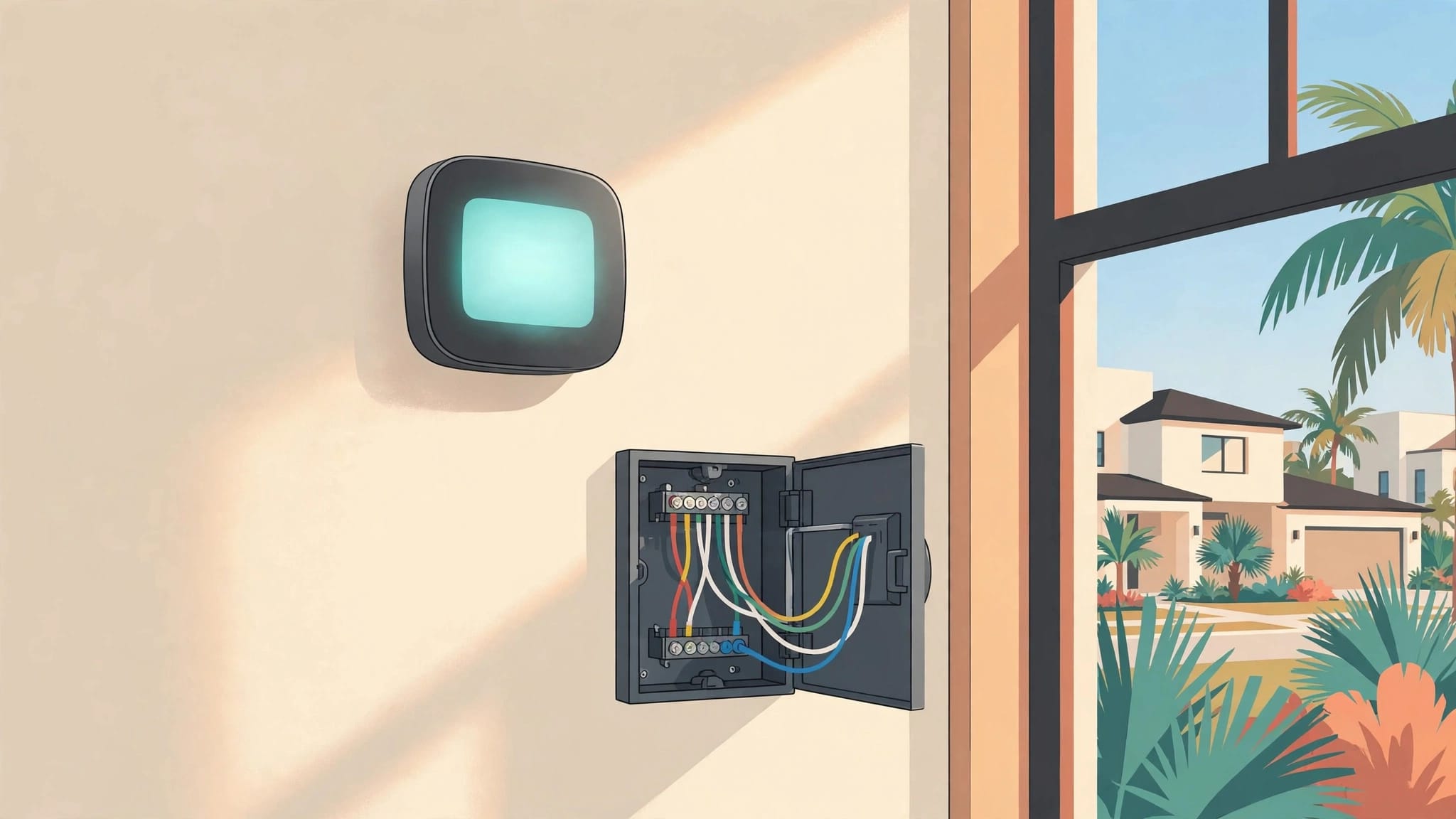
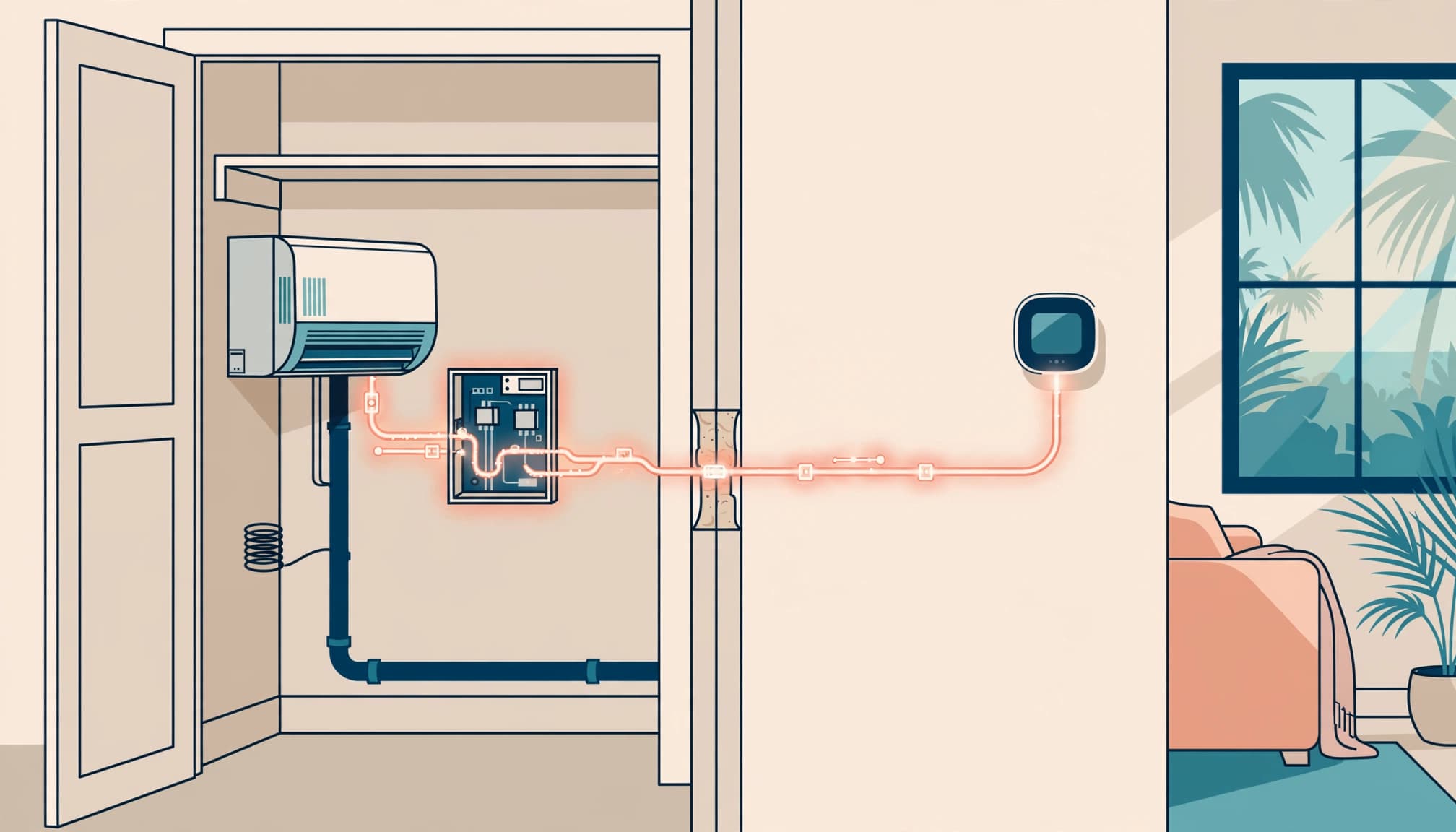
A thermostat sends low-voltage signals that tell your AC, heat pump, fan, or heat source when to run. The C-wire, also called the common wire, completes the 24-volt circuit and provides steady power.

Why continuous power matters

Traditional battery-powered thermostats often need power only when they call for cooling or heating. By contrast, Wi-Fi thermostats, touchscreens, occupancy sensors, and app-connected controls may draw power throughout the day.

Without stable 24-volt power, a smart thermostat may rely on batteries or "power stealing." That can lead to a dim display, short battery life, random restarts, or dropped network connections.

Why some systems work without it

A missing C-wire doesn't automatically mean something is wrong. Some thermostat models run well on batteries, while others include an approved power adapter or manufacturer-specific wiring option.

The right answer depends on the thermostat model, existing cable, HVAC transformer, and control board. A thermostat C-wire is a compatibility question, not a universal upgrade.

Signs Your Thermostat May Need a C-Wire

Power symptoms often become obvious after installing a new smart thermostat. However, those symptoms can also point to a weak battery, loose connection, failing transformer, or a larger HVAC control issue.

The display is blank, flickering, or restarting

A screen that repeatedly turns off and back on may not receive dependable power. Likewise, a thermostat that loses its clock, Wi-Fi connection, or programmed schedule can need more than a battery change.

First, replace accessible batteries with the correct type if your thermostat uses them. If problems continue, avoid handling wiring and arrange professional testing.

The system clicks but does not start normally

One click when the thermostat calls for cooling can be normal. Repeated clicking while the indoor blower and outdoor unit stay off needs attention, because the issue may involve the thermostat, relay, low-voltage wiring, transformer, or control board.

For more context on those symptoms, see thermostat and relay clicking problems.

A thermostat can look powered on while still lacking the stable control voltage needed to operate reliably.

Check Wiring Safely Before Making Assumptions

You can gather useful information without treating thermostat wiring as a do-it-yourself repair. Start by locating the thermostat's model number and checking its installation requirements.

Shut off HVAC power first

Turn off power to the indoor HVAC equipment at the appropriate breaker before inspecting any thermostat wiring. A thermostat uses low-voltage controls, but the air handler or nearby equipment can contain high-voltage electrical parts.

Do not rely on the thermostat screen going dark as proof that all power is off. Also, don't pull wires, loosen terminal screws, or remove equipment panels if you aren't trained to work on HVAC controls.

Look at terminal labels, not insulation color

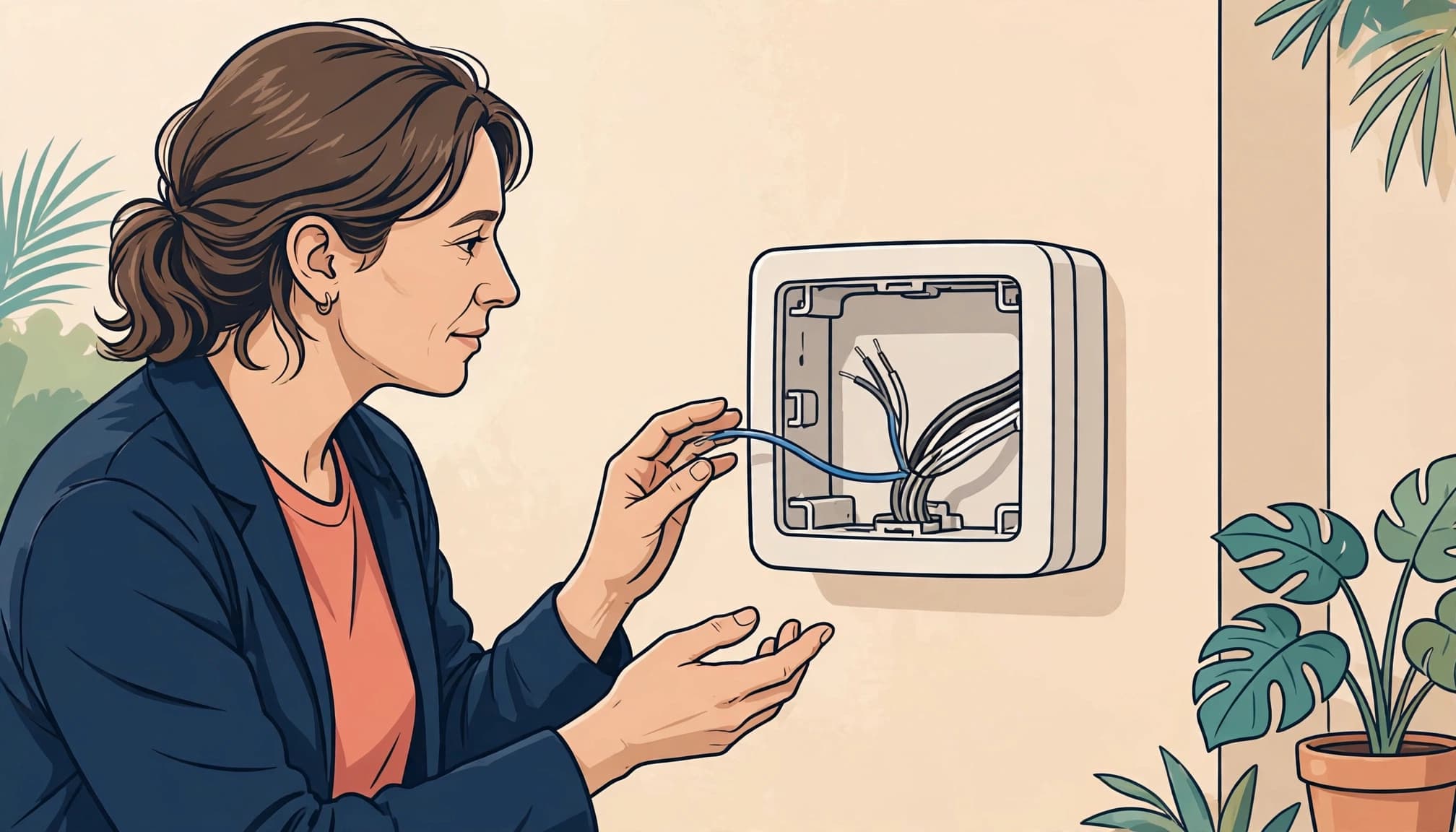
A blue wire is often used as a common wire, but color isn't proof. Installers may use any available conductor, and an unused wire may not connect at both ends.

A technician confirms the thermostat terminal marking, follows that conductor to the indoor control board, and verifies the system's 24-volt circuit. This check is especially important with heat pumps, multi-stage equipment, zone controls, or unusual installations.

Rule Out Problems That Are Not C-Wire Related

A thermostat can't correct an air conditioning problem farther down the system. In Babcock Ranch, long cooling seasons can expose airflow, drainage, humidity, and equipment issues that resemble thermostat trouble.

Check settings and thermostat placement

Confirm the thermostat is set to Cool, the fan is on Auto, and the temperature setting is below the room temperature. Also consider where the thermostat sits. A sunny wall, supply vent, kitchen, drafty doorway, or humid spot can make it sense the wrong conditions.

A central interior wall in a regularly used living area usually gives a more accurate reading of your home's average temperature.

Watch for broader AC symptoms

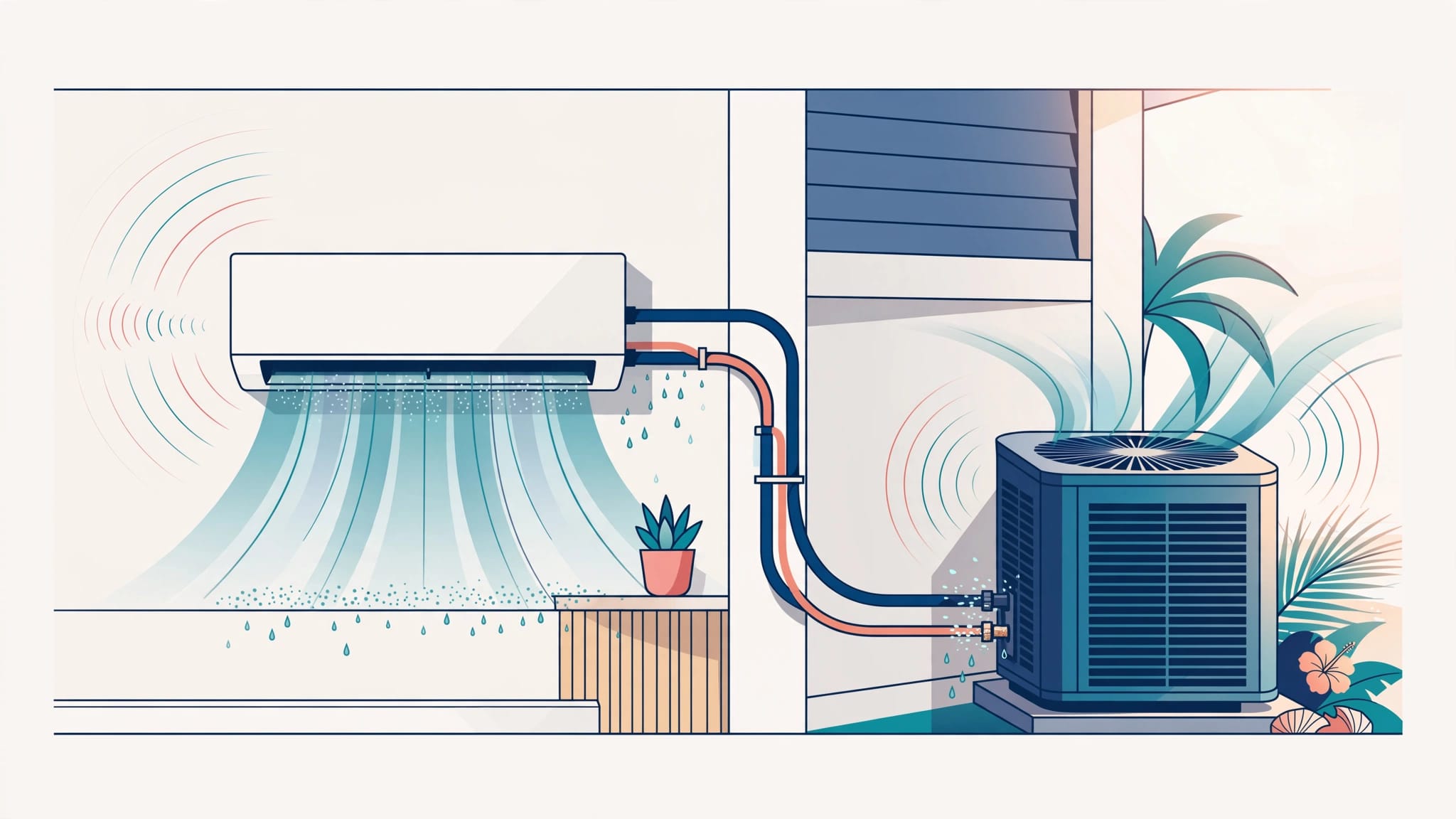
If your home stays sticky, has weak airflow, or cools unevenly, the thermostat may not be the main problem. A dirty filter, clogged drain line, refrigerant issue, duct leak, or weak blower can affect comfort.

When the AC runs all day without cooling well, consider Babcock Ranch AC installation and repair instead of assuming a new thermostat will fix it.

FAQ About Thermostat C-Wires

Can I use a smart thermostat without a C-wire?

Sometimes. Certain models can run on batteries, an approved adapter, or a built-in power management method. Check the manufacturer's requirements for your exact model, then have an HVAC technician confirm compatibility with your system.

Is a C-wire the same as a ground wire?

No. The C-wire is part of the HVAC system's 24-volt control circuit. It is not a household electrical ground wire, so it should never be connected to a ground terminal or improvised from another circuit.

Get a Clear Answer Before Changing Wiring

A thermostat C-wire can provide the steady power a modern thermostat needs, but it won't solve every comfort problem. Reliable diagnosis starts with the thermostat model, terminal connections, and the condition of the complete HVAC system.

For Babcock Ranch homeowners, a qualified technician can confirm the wiring safely and identify issues that go beyond the thermostat. Accurate testing protects both your comfort and your equipment.

Recent Posts

By Sunset Gulf HVAC September 13, 2026
A hissing air conditioner can make any Naples homeowner worry about a refrigerant leak. However, AC hissing sounds can also come from airflow problems, duct leaks, expansion components, or normal pressure changes as the system starts and stops. The sound matters most when it a...
By Sunset Gulf HVAC September 12, 2026
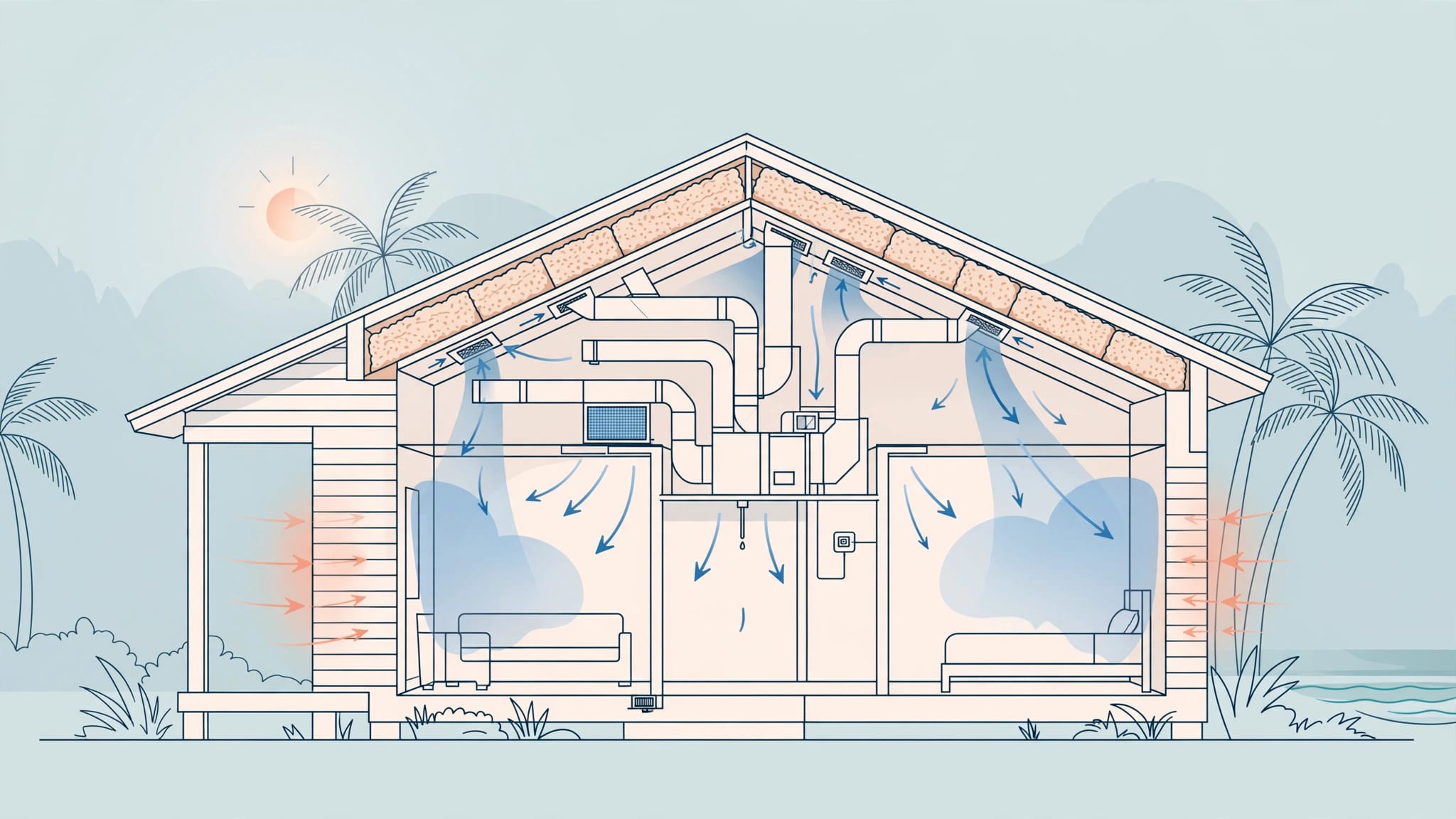
A rising electric bill, sticky rooms, or an air conditioner that runs all day can point to more than an aging unit. Your ducts, insulation, thermostat, filter, and home envelope may also be wasting cooling. If you're searching for an HVAC energy audit Fort Myers homeowners can...
By Sunset Gulf HVAC September 11, 2026
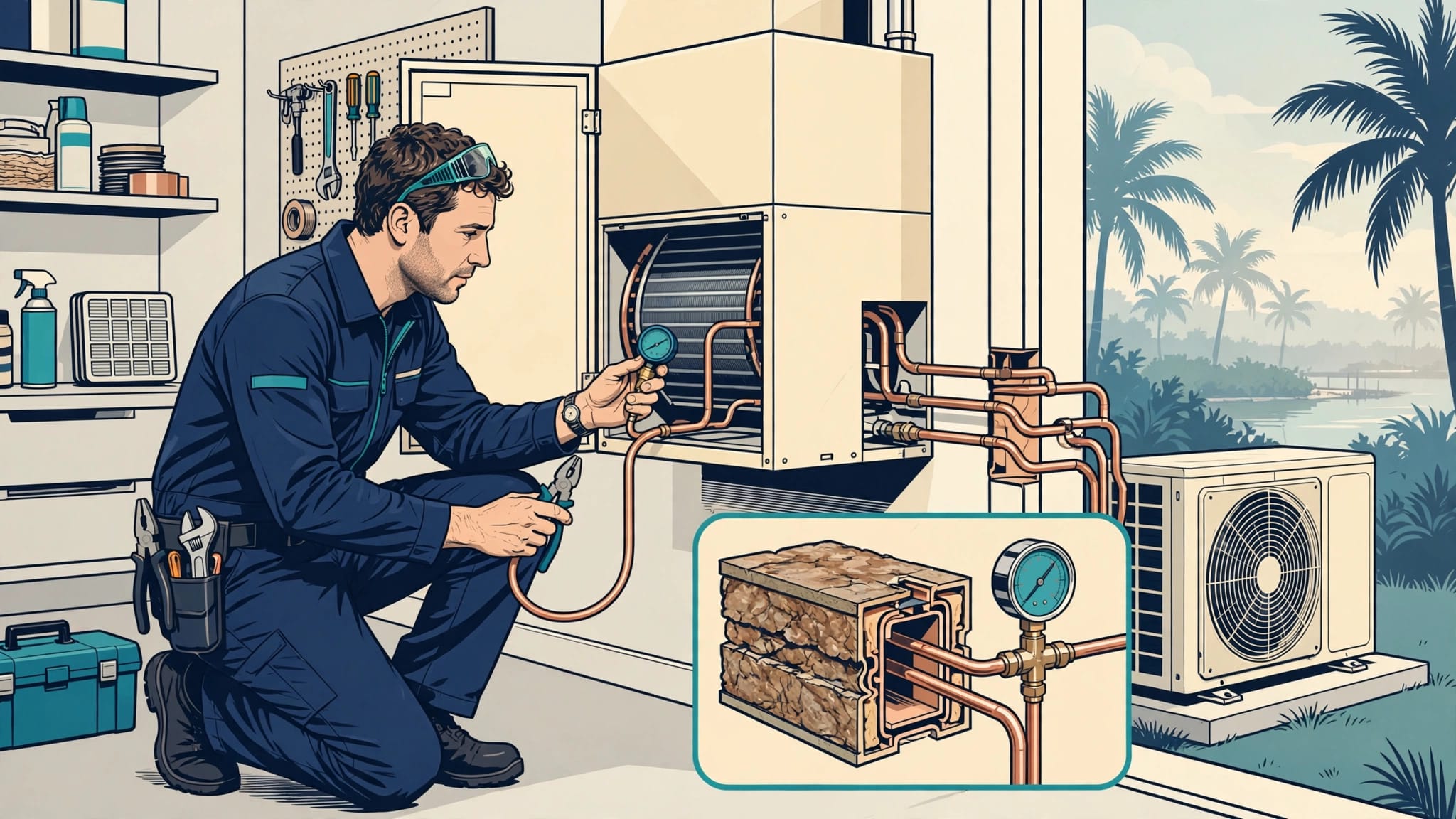
A new outdoor unit can connect to old copper tubing, but that connection alone doesn't make it safe. In Cape Coral, humidity, salt air, heat, and years of vibration can affect the line set hidden between your indoor and outdoor equipment. Homeowners can sometimes reuse refrige...