Heat Pump Thermostat Compatibility for Babcock Ranch Homes
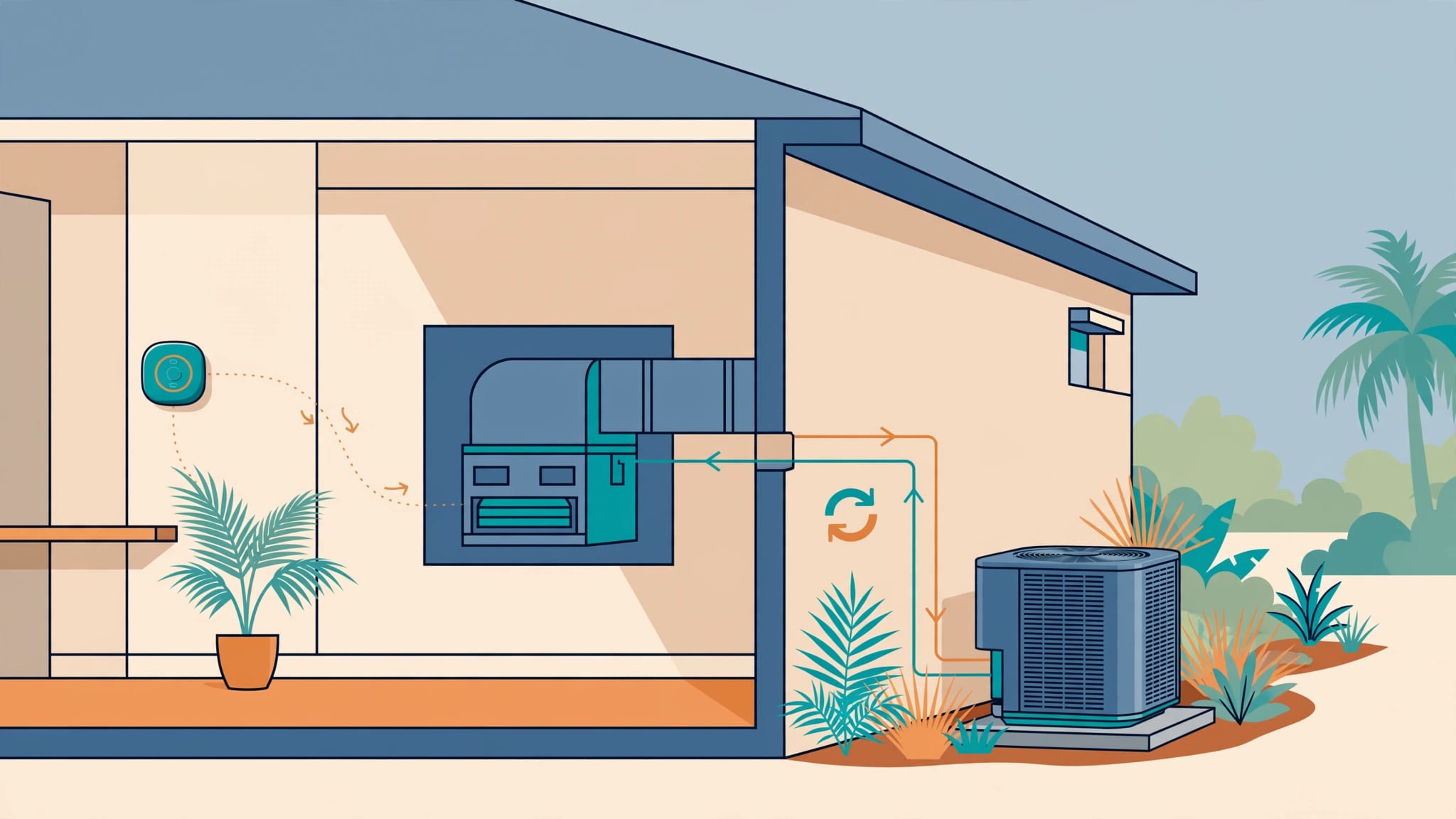
A thermostat can look like a simple wall control, yet the wrong replacement can leave a heat pump stuck in the wrong mode or running expensive backup heat. Heat pump thermostat compatibility depends on the full HVAC system, not the thermostat's screen size, app features, or number of visible wires.
For Babcock Ranch homeowners, a compatible thermostat must match the indoor air handler, outdoor unit, wiring, heat stages, and equipment controls. A quick check before buying can prevent a frustrating installation and an uncomfortable home.
Key Takeaways
- A heat pump both cools and heats your home by reversing its refrigeration cycle. A conventional air conditioner only cools and relies on separate heating equipment.
- The O/B terminal controls the reversing valve on most heat pumps. Choosing the wrong O or B setting can make the system cool when you ask for heat, or heat when you ask for cooling.
- AUX heat and emergency heat are different. Auxiliary heat supports the heat pump, while emergency heat bypasses the compressor and uses backup heat alone.
- Wire count is only one clue. Terminal labels, equipment model numbers, system stages, and manufacturer requirements matter more.
- Dual-fuel, communicating, variable-speed, variable-capacity, and multi-stage systems need professional confirmation before a thermostat change.
Why Heat Pump Thermostats Work Differently
A thermostat tells your HVAC equipment when to run. However, a heat pump needs more instructions than a basic cooling-only system because it can move heat in two directions.
A heat pump can heat and cool
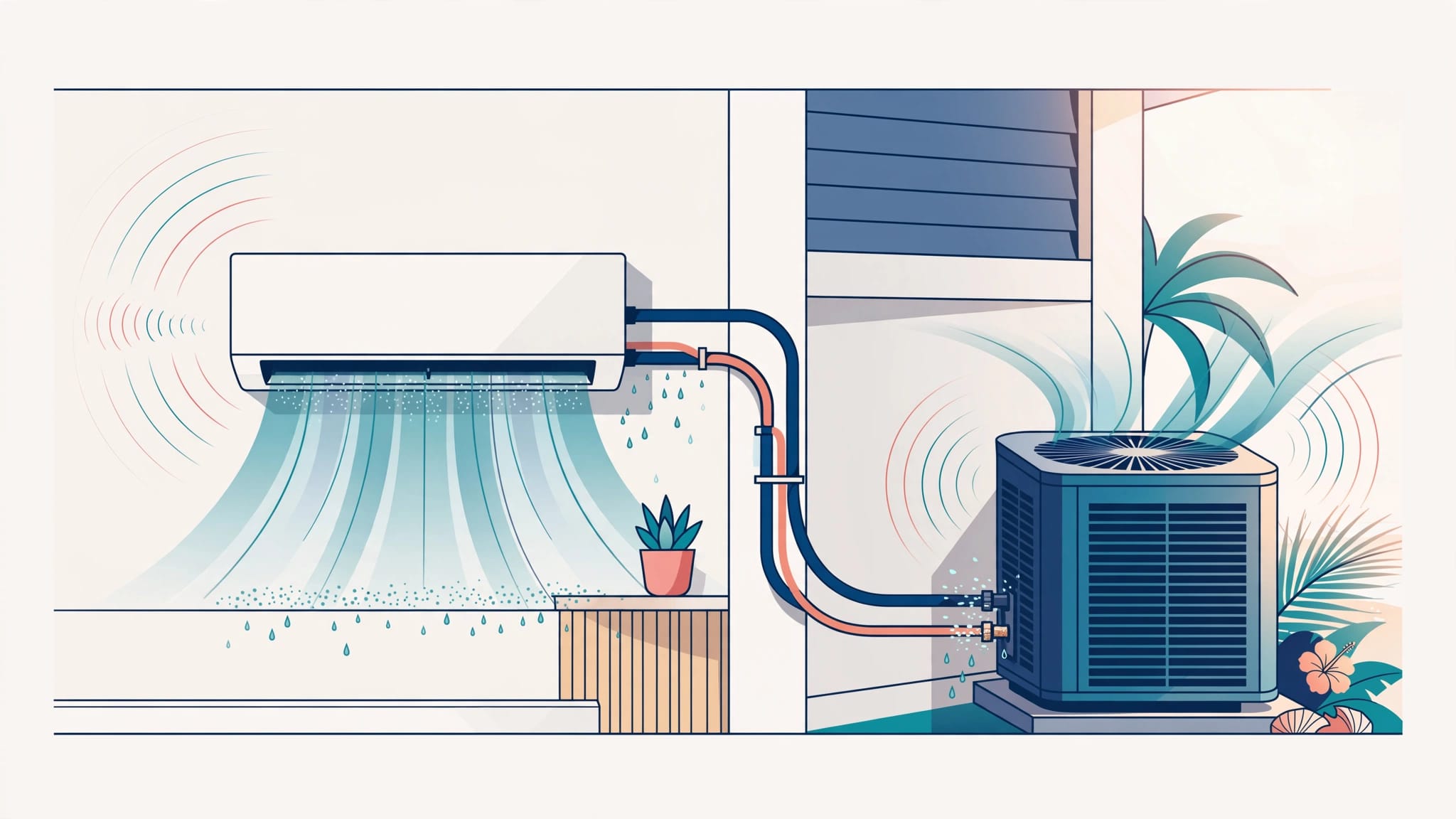
In cooling mode, a heat pump works much like a conventional air conditioner. It pulls heat from indoor air and releases it outside.
During heating mode, the process reverses. The outdoor unit pulls available heat from outdoor air and transfers it indoors. Southwest Florida's mild winter weather often suits heat pump operation well, although each home's equipment and controls differ.
A conventional air conditioner does not reverse its cycle. It cools only. Heating may come from electric heat strips, a furnace, or another separate source. That difference affects thermostat terminals and setup options.
The thermostat must recognize the system type
Many programmable and smart thermostats can control a heat pump, but only when configured as a heat pump. A generic electric-heat profile can call for backup heat at the wrong times.
The thermostat also needs enough control points for your equipment. A one-stage heat pump may need fewer connections than a two-stage system with electric heat strips. Therefore, a model that works in one Babcock Ranch home may not work in the next.
Heat Pump Thermostat Compatibility Depends on More Than Wires
Homeowners often count wires before shopping. That can help, but it cannot confirm a match on its own. Wire colors may also vary, so terminal letters matter more than insulation color.
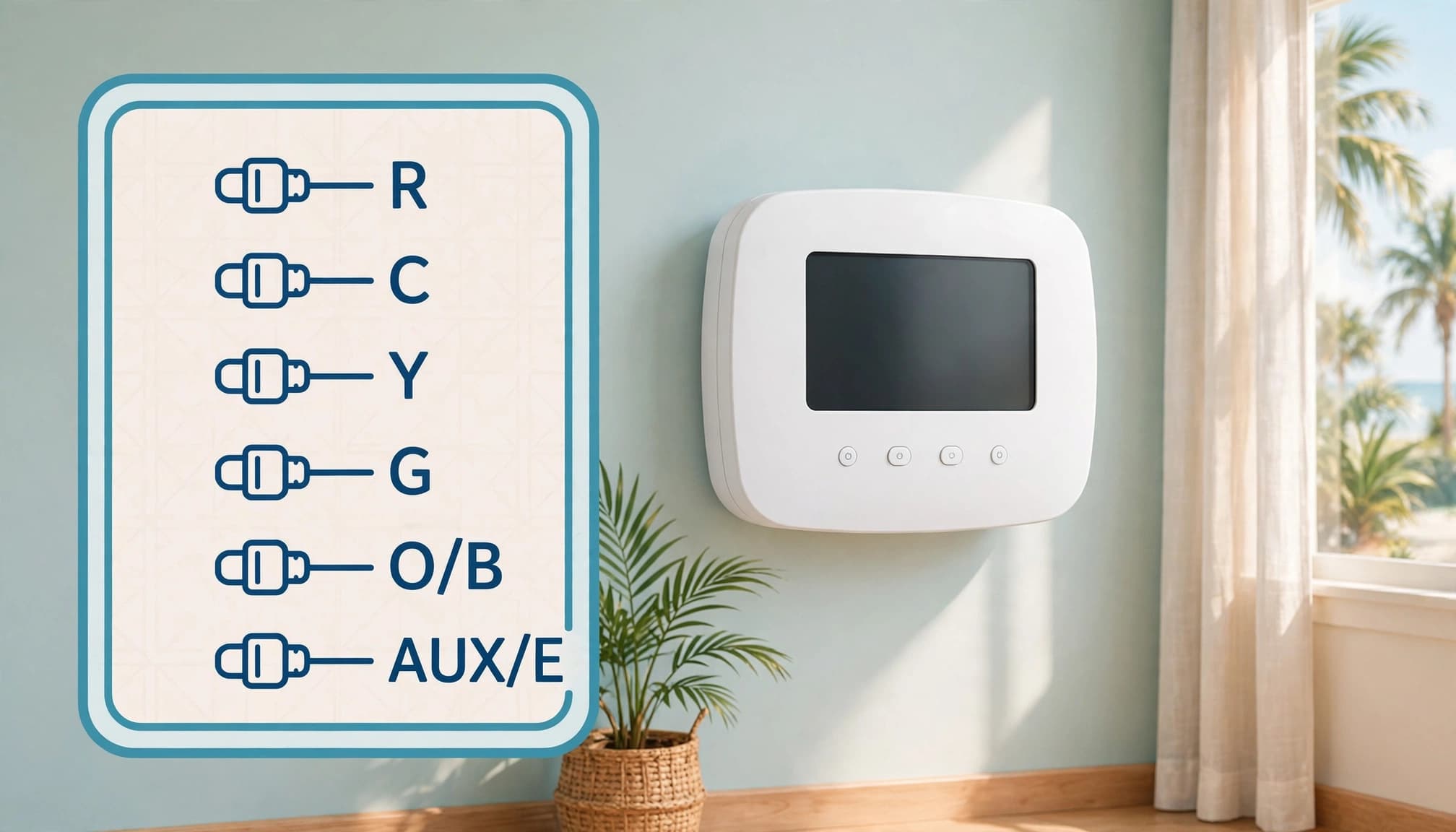
Common thermostat terminals in plain language
The labels below describe common low-voltage thermostat terminals. Your system may not use every one.
| Terminal | Usual job |
|---|---|
| R, Rc, or Rh | Provides 24-volt control power |
| C | Provides the return path for continuous thermostat power |
| Y or Y1 | Starts the compressor's first stage |
| Y2 | Calls for a second compressor stage |
| G | Runs the indoor blower fan |
| O/B | Controls the heat pump reversing valve |
| W2 or AUX | Calls for supplemental backup heat |
| E | Calls for emergency heat only |
The C wire is often important for Wi-Fi thermostats because it provides steady power. Still, a C wire does not prove the rest of the system will work with that thermostat.
Equipment stages and controls also matter
A stage is a level of heating or cooling capacity. A single-stage unit runs at one output level. A multi-stage system may use Y2 or additional control signals to operate at different capacities.
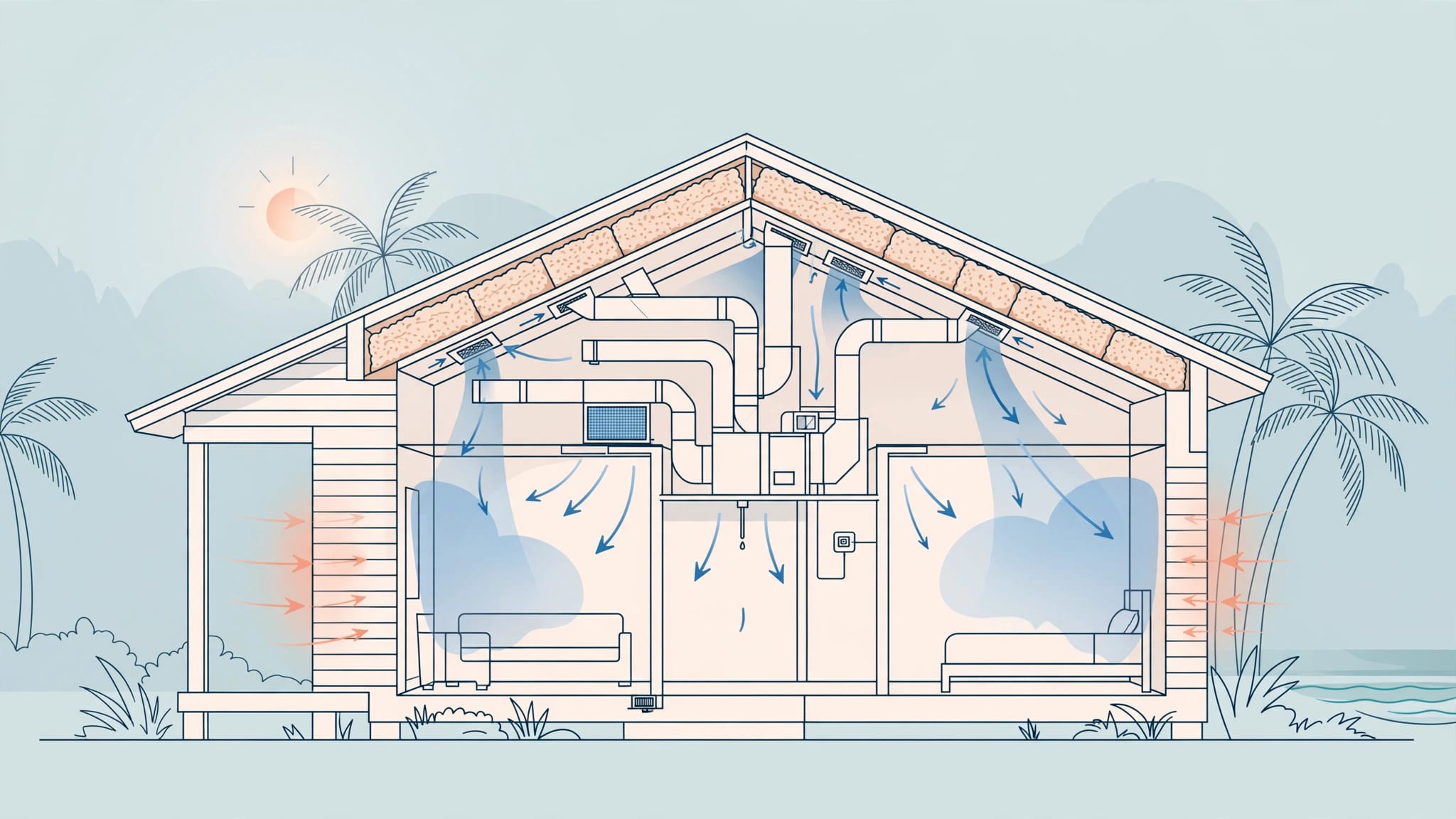
The indoor air handler matters as much as the outdoor unit. It may contain electric heat strips, a variable-speed blower, a safety switch, or manufacturer-specific controls. Compatibility requires the thermostat to operate the complete system correctly, including those indoor components.
A thermostat with the same number of terminals as your old one can still be incompatible if it cannot manage your system's stages or control logic.
O Versus B Settings Can Reverse Heating and Cooling
O/B settings cause more confusion than almost any other thermostat option. The setting tells the thermostat when to energize the reversing valve, which changes the heat pump between heating and cooling operation.
What the O setting means
On many heat pumps, O energizes the reversing valve during cooling. Carrier, Trane, Goodman, and Lennox equipment commonly uses this arrangement.
When a compatible thermostat is set to O, it sends that signal when the home needs cooling. The equipment manual remains the final authority because manufacturers can use different control arrangements.
What the B setting means
B energizes the reversing valve during heating. Rheem, Ruud, Weathermaker, Ameristar, and some Bosch ducted heat pump models may use a B-style setting.
Choosing O when the equipment requires B, or the reverse, can cause obvious trouble. The thermostat may call for heat and deliver cool air. It may also cool poorly when set to cooling. Do not guess based on brand alone, because the correct setting must match the exact equipment documentation.
Auxiliary Heat and Emergency Heat Are Not the Same
Both features use backup heat, often electric heat strips inside the air handler. However, they operate differently and should not be treated as interchangeable.
Auxiliary heat helps the heat pump
Auxiliary heat, often shown as AUX or W2, works alongside the heat pump when the system needs extra help. It may run during a cold morning, a defrost cycle, or recovery after a large temperature increase.
A brief Aux Heat message does not automatically mean there is a problem. However, auxiliary heat that runs for hours during mild weather deserves attention.
Avoid raising the heating setpoint several degrees at once. A large jump can make the thermostat call for backup heat to warm the home faster. Smaller schedule changes and a steady temperature often reduce unnecessary AUX use.
Emergency heat replaces the heat pump
Emergency heat turns off the compressor and runs backup heat alone. Homeowners should use it only when a qualified technician advises it or when the heat pump cannot operate safely.
Emergency heat can cost more to run when electric heat strips provide the backup. Some thermostat models support emergency heat while others do not, even if both advertise heat pump support. Confirm that the thermostat has the required E capability before replacing a thermostat on a system that uses it.
A Safe Visual Compatibility Checklist
You can gather useful details without opening electrical panels, touching wires, or changing settings. Keep the equipment in normal operation while you inspect.
Check accessible labels and paperwork
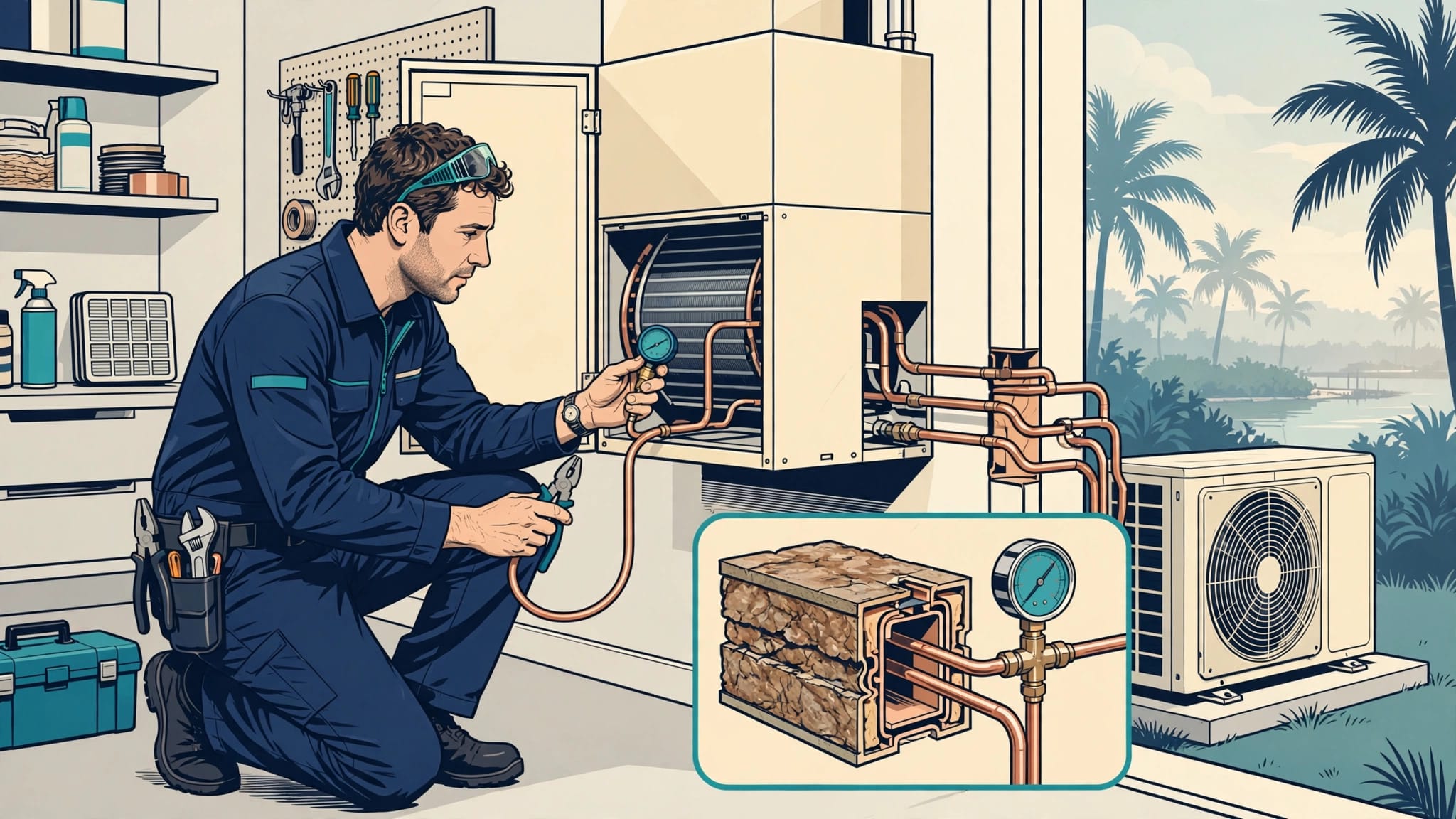
Look for the model number on the outdoor heat pump cabinet and on any accessible air handler label. Take clear photos of both labels, the current thermostat display, and the thermostat's terminal labels only if they are already plainly visible.
Then find the installation manual or product documentation for the outdoor unit, indoor unit, and thermostat. Those documents identify required controls, staging, and the correct reversing-valve setting.
Use this short checklist:
- Confirm that the outdoor unit is a heat pump, not a cooling-only air conditioner.
- Check whether the existing thermostat lists O/B, AUX or W2, and E.
- Note whether the thermostat shows one or two heating and cooling stages.
- Record the exact make and model numbers of the indoor and outdoor equipment.
- Look for a manufacturer's thermostat or communicating control already installed.
Avoid unsafe troubleshooting shortcuts
Do not open high-voltage equipment compartments. Do not move thermostat wires, bypass float switches, defeat safety controls, or install jumpers to make a new thermostat power up.
A dead thermostat, a tripped condensate safety switch, or a low-voltage control problem can look similar from the wall. If cooling fails after a storm or the outdoor unit hums but will not start, schedule AC installation and repair in Babcock Ranch rather than trying to force the equipment to run.
Systems That Need Professional Compatibility Confirmation
Some systems use standard 24-volt thermostat controls. Others use manufacturer-specific communication or more detailed staging. The more advanced the equipment, the less useful a wire-count check becomes.
Dual-fuel and multi-stage systems
A dual-fuel system pairs a heat pump with a gas or propane furnace. The thermostat and equipment controls must decide which heat source runs at the proper time. A setup error can waste fuel, reduce comfort, or operate the wrong heat source.
Multi-stage equipment needs a thermostat that supports every required stage. A system with Y2, W2/AUX, or other advanced terminals may need more than basic heat pump capability.
Variable-speed and communicating equipment
Variable-speed or variable-capacity equipment can adjust output instead of cycling at a single fixed level. Some systems need a manufacturer-approved thermostat, an interface module, or a specific configuration to retain those features.
Communicating systems, including Trane ComfortLink and Lennox iComfort setups, use proprietary digital communication instead of standard thermostat wiring. Replacing that control with a third-party thermostat may remove features or stop correct operation. Confirm the approved options before buying anything.
Choosing and Using a Thermostat in Southwest Florida
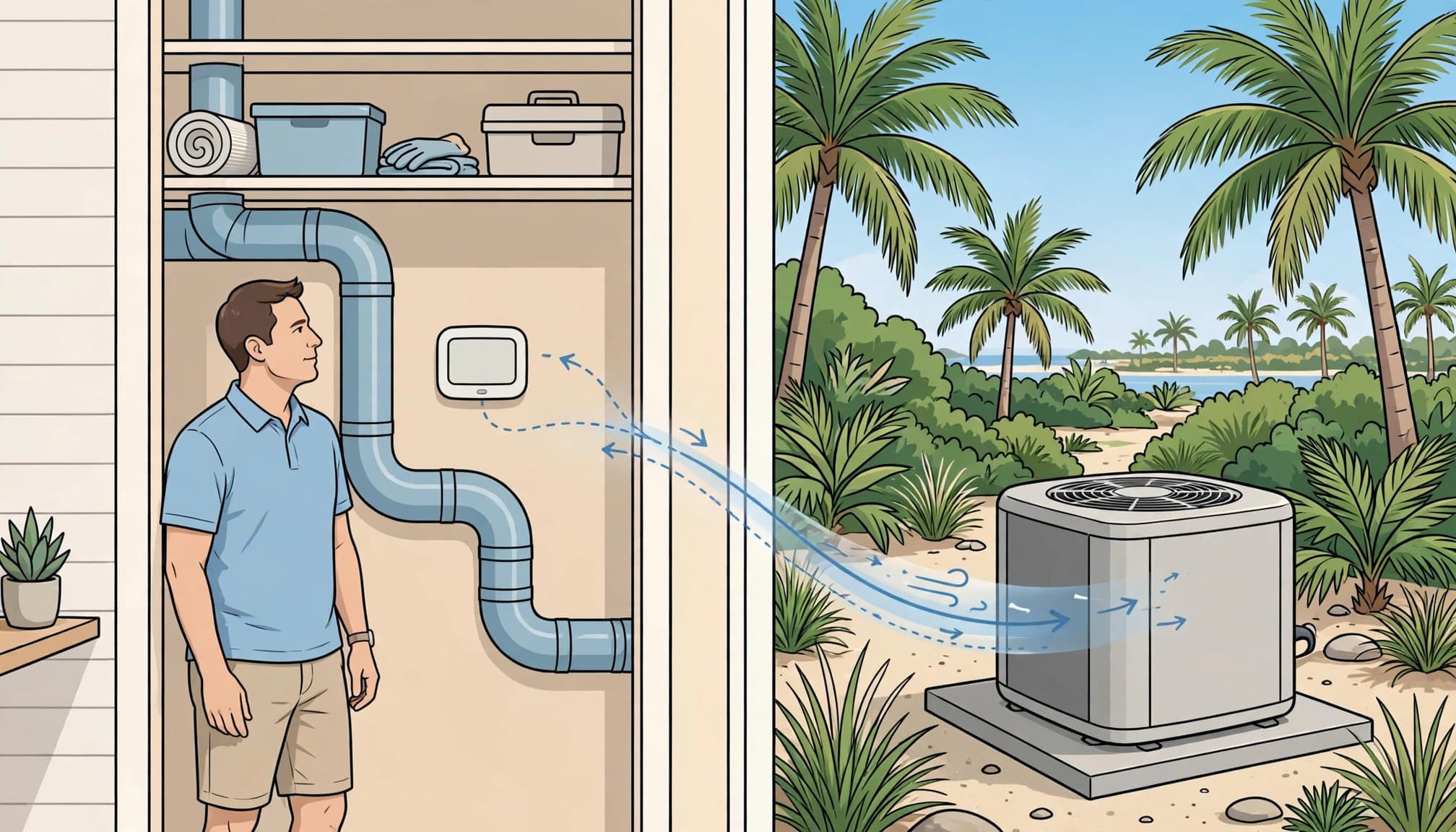
Once compatibility is confirmed, comfort still depends on thermostat placement and daily settings. A good thermostat cannot correct a system that receives misleading temperature readings.
Location affects every setting
Install thermostats on a central interior wall in a regularly used living area whenever possible. Avoid direct sunlight, exterior walls, supply vents, kitchens, bathrooms, and doors that create drafts.
A thermostat in a hot or humid spot can shut cooling off too late or turn it on too often. For long Southwest Florida cooling seasons, stable readings help the equipment manage temperature and humidity more consistently.
Smart features should fit your equipment
Remote control, scheduling, maintenance alerts, and humidity displays can be useful. Yet those features come after basic system compatibility. Select the heat-pump system type during setup, then use the manufacturer's instructions for staging and O/B configuration.
For everyday cooling habits, review these Babcock Ranch summer thermostat settings. If your system is difficult to control or frequently calls for AUX heat, a service visit can identify whether the issue is configuration, airflow, wiring, or equipment performance.
Frequently Asked Questions
Can I use any smart thermostat with a heat pump?
No. Heat pump thermostat compatibility requires correct support for the reversing valve, heating stages, cooling stages, auxiliary heat, and emergency heat when applicable. Communicating and variable-capacity equipment may require a manufacturer-approved control.
Does a C wire mean my new thermostat will work?
No. A C wire can provide continuous low-voltage power, which many smart thermostats need. It does not confirm O/B settings, stage support, emergency heat capability, or manufacturer requirements.
Why does my thermostat show Aux Heat?
Auxiliary heat may appear during a defrost cycle, cooler weather, or recovery after a major temperature change. If it stays on for long periods during mild weather, have the system checked.
Can the wrong O/B setting damage my heat pump?
An incorrect setting commonly causes heating or cooling problems because the reversing valve operates at the wrong time. Turn the system off and seek professional help if the unit repeatedly delivers the wrong air temperature after a thermostat replacement.
Final Thoughts on Heat Pump Thermostat Compatibility
The safest thermostat upgrade starts with the equipment, not the display on the store shelf. Verify the indoor and outdoor model numbers, system stages, O/B setting, backup heat controls, and manufacturer requirements before making a purchase.
For Babcock Ranch homes, heat pump thermostat compatibility protects comfort during humid summers and cool winter mornings. When the system includes dual-fuel heat, communicating controls, variable-speed equipment, or unclear wiring, a qualified HVAC professional can confirm the right path before a small thermostat change becomes a larger repair.
Recent Posts