Attic Ventilation in Babcock Ranch: Ridge Vents or Powered Fans?
A hot attic can affect comfort, ductwork, insulation, and indoor humidity throughout your home. Choosing between passive ridge vents and powered fans requires more than comparing the equipment.
For homeowners researching attic ventilation Babcock Ranch options, the right answer depends on roof design, soffit intake, solar exposure, insulation, storm conditions, and the existing ventilation system. In most cases, an exhaust fan cannot correct missing or blocked intake ventilation. Start with the entire airflow path, then choose equipment that fits the home.
Key Takeaways
- Ridge vents work as part of a balanced system with clear soffit or other intake vents.
- A powered exhaust fan should not replace adequate soffit ventilation.
- Florida ventilation rules focus on vent area, location, installation, and product requirements. They don't require every home to use a ridge vent.
- A vented attic, spray-foamed roof deck, and sealed attic need different approaches.
- Southwest Florida homes need protection against heat, moisture, wind-driven rain, and storm exposure.
- A qualified professional should inspect the roof assembly, intake openings, insulation, ducts, and existing ventilation before recommending changes.
Why Attic Ventilation Is Different in Babcock Ranch
Babcock Ranch homes deal with long cooling seasons, strong sunlight, high humidity, and heavy rain. Those conditions make attic ventilation a roof and building-envelope issue, not only an HVAC issue.
Heat and humidity affect the whole home
Sunlight heats roof coverings throughout the day. That heat raises attic temperatures and can transfer through weak insulation into rooms below. If ductwork runs through the attic, damaged insulation or leaking connections can also reduce the system's ability to deliver conditioned air.
Humidity creates another concern. Attic ventilation may help manage heat and moisture in a properly designed vented attic, but it doesn't replace air conditioning, dehumidification, insulation, or air sealing. An attic fan also won't correct a blocked condensate drain, leaky duct, or poorly sized AC system.
Homes with a sealed roof deck or spray foam insulation follow a different design. Adding vents without reviewing that assembly can interfere with the intended airflow and moisture control strategy.
Storm exposure matters
Vent openings need protection against wind-driven rain and storm debris. Building America guidance recommends upper vents that resist water intrusion and carry Florida Building Code TAS 100(A) approval when required for the installation.
That detail matters in Southwest Florida. A vent that moves air well during calm weather may perform poorly if its design allows rain into the attic. Roof geometry, ridge length, gable openings, soffit construction, and the home's exposure all affect the decision.
Attic Ventilation Babcock Ranch Homes Need Starts With Intake
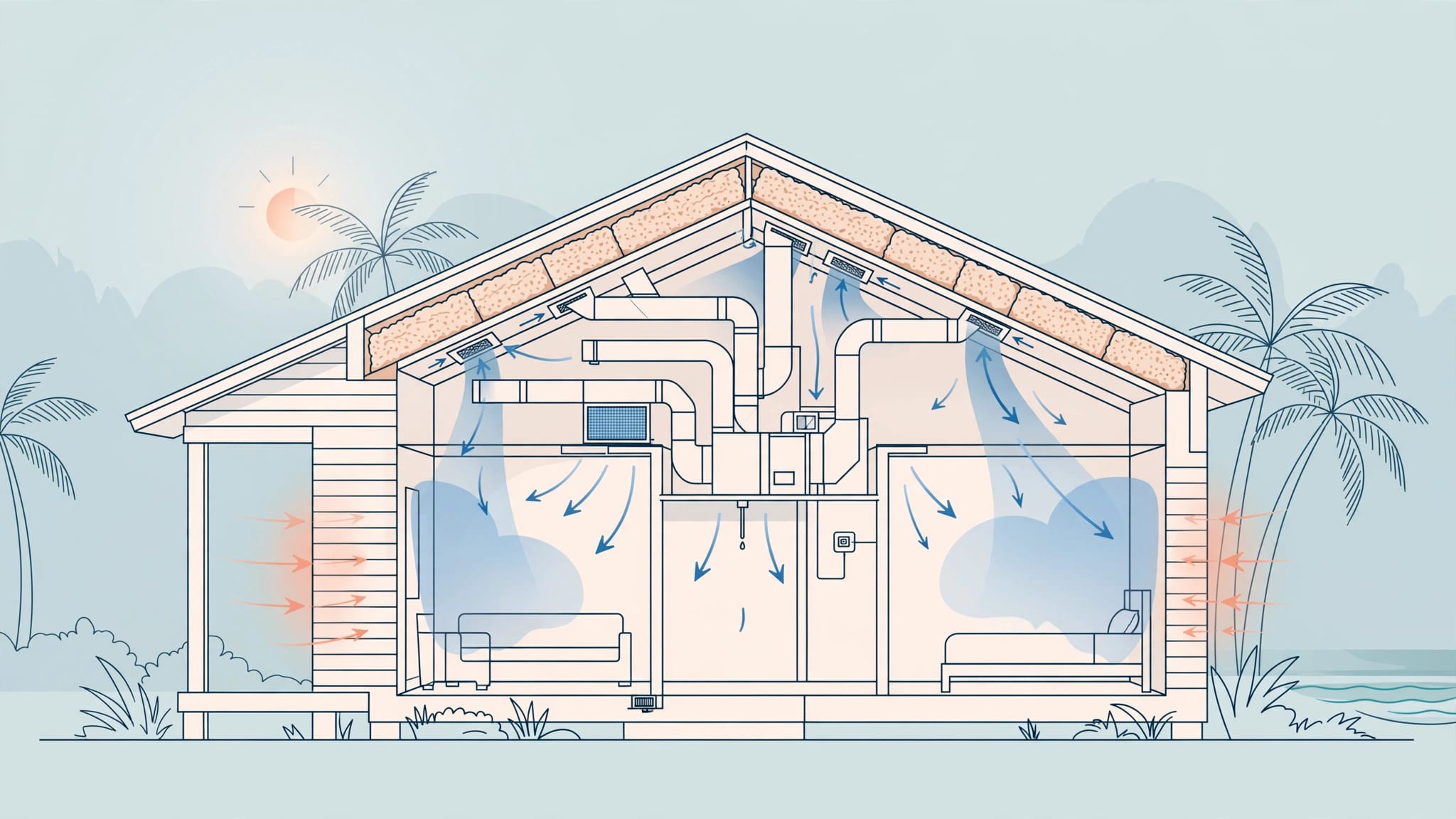
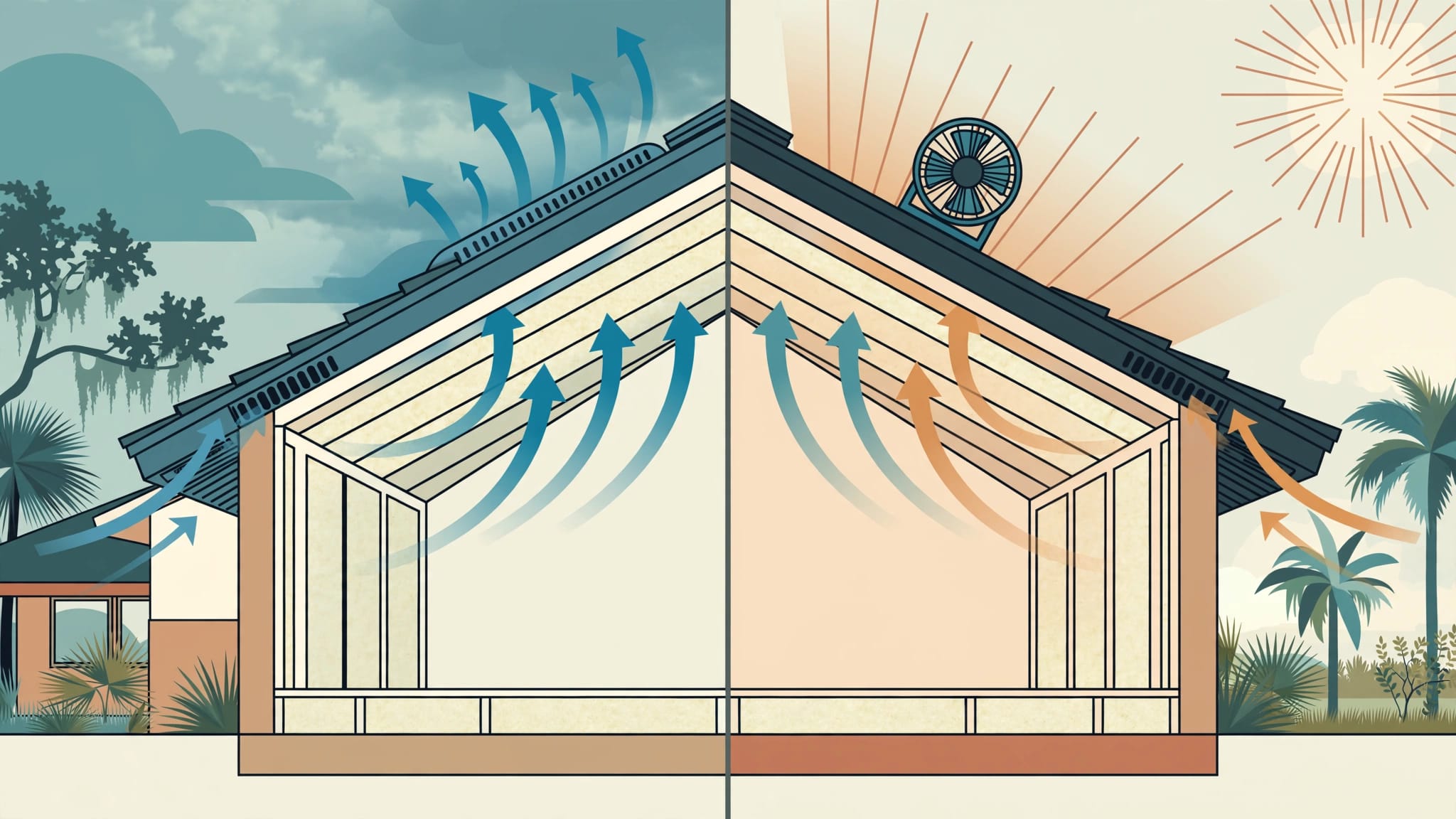
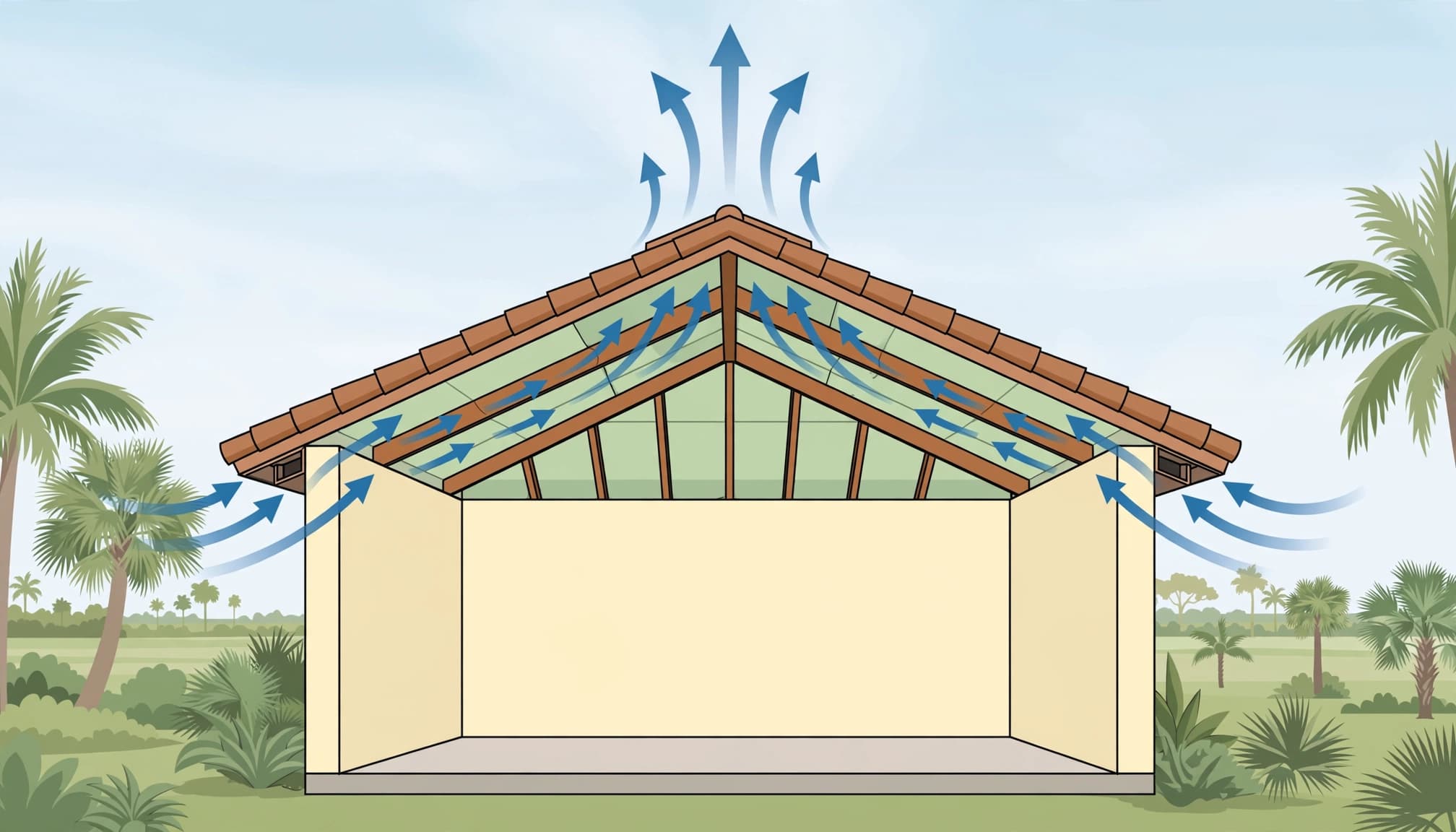
A roof ventilation system needs both a place for air to enter and a place for air to leave. Soffit or eave vents usually provide intake near the lower roof edges. Ridge vents, gable vents, and other upper openings provide exhaust.
Intake and exhaust must work together
As warm attic air rises, it can leave through a properly installed ridge vent. Replacement air enters through the soffits. This passive movement depends on clear channels under the roof deck and enough open vent area.
Insulation can cover soffit openings. Insect screens, paint, dust, and construction debris can also restrict airflow. A ridge vent may be present, yet the attic can still perform poorly if the lower intake path is blocked.
Powered exhaust fans create stronger air movement, but they still need replacement air. If the soffits don't provide enough intake, the fan may pull air through gaps around ceiling penetrations, attic hatches, recessed lights, or duct openings. That can bring humid or dusty air from unintended areas.
For related whole-home ventilation questions, review these fresh-air ventilation options for Babcock Ranch homes. Fresh-air ventilation and attic ventilation address different airflow needs.
Net-free area is more useful than vent size
Net-free area means the usable opening left after screens, louvers, and other restrictions. Florida attic provisions commonly use a minimum ratio of 1 square foot of net-free ventilation area for every 150 square feet of attic or rafter space .
The ratio may be reduced to 1 square foot per 300 square feet only when specific conditions are met. Those conditions include a qualifying Class I or II vapor retarder on the warm-in-winter side of the ceiling and proper placement of 40% to 50% of the required vent area in the upper portion of the attic.
Upper vents generally need to be within 3 feet of the ridge or highest point, subject to framing and installation requirements. The applicable code edition and product instructions should be confirmed for the project.
Ridge Vents: Strengths and Installation Checks
Ridge vents are passive exhaust devices installed along a roof peak. They have no motor and don't require a dedicated electrical connection. Their performance depends on correct installation and a clear intake path.
Why homeowners often prefer ridge vents
A continuous ridge vent can provide even exhaust along a roof peak instead of concentrating airflow at one powered fan location. It also works with soffit intake vents as part of a balanced ventilation plan.
Because it has no motor, a ridge vent doesn't add an electrical load or create a mechanical component that needs repair. However, those points don't mean a ridge vent automatically improves every attic. A short ridge, complicated roof shape, blocked soffits, or sealed roof assembly can limit its value.
One Florida project detail lists 15 square inches of net-free area per linear foot for a ridge vent and 5 square inches per linear foot for a soffit vent. That is a project-specific example, not a universal statewide requirement. Product specifications and the complete roof design still control the selection.
What the installer should verify
A qualified professional should confirm that the ridge vent is continuous where intended, properly flashed, secured, and compatible with the roof covering. They should also check whether the roof has adequate soffit intake beneath every ventilated section.
Product approval matters in Florida's storm-prone environment. The vent should be rated and installed for the home's location and roof system. A professional should also review manufacturer instructions, roof penetrations, wind exposure, and the possibility of wind-driven rain.
If the roof has gable vents, turbine vents, or older box vents, adding a ridge vent without reviewing the existing openings may produce an unbalanced layout. The system should be assessed as a whole.
Powered Attic Fans: Where They Fit
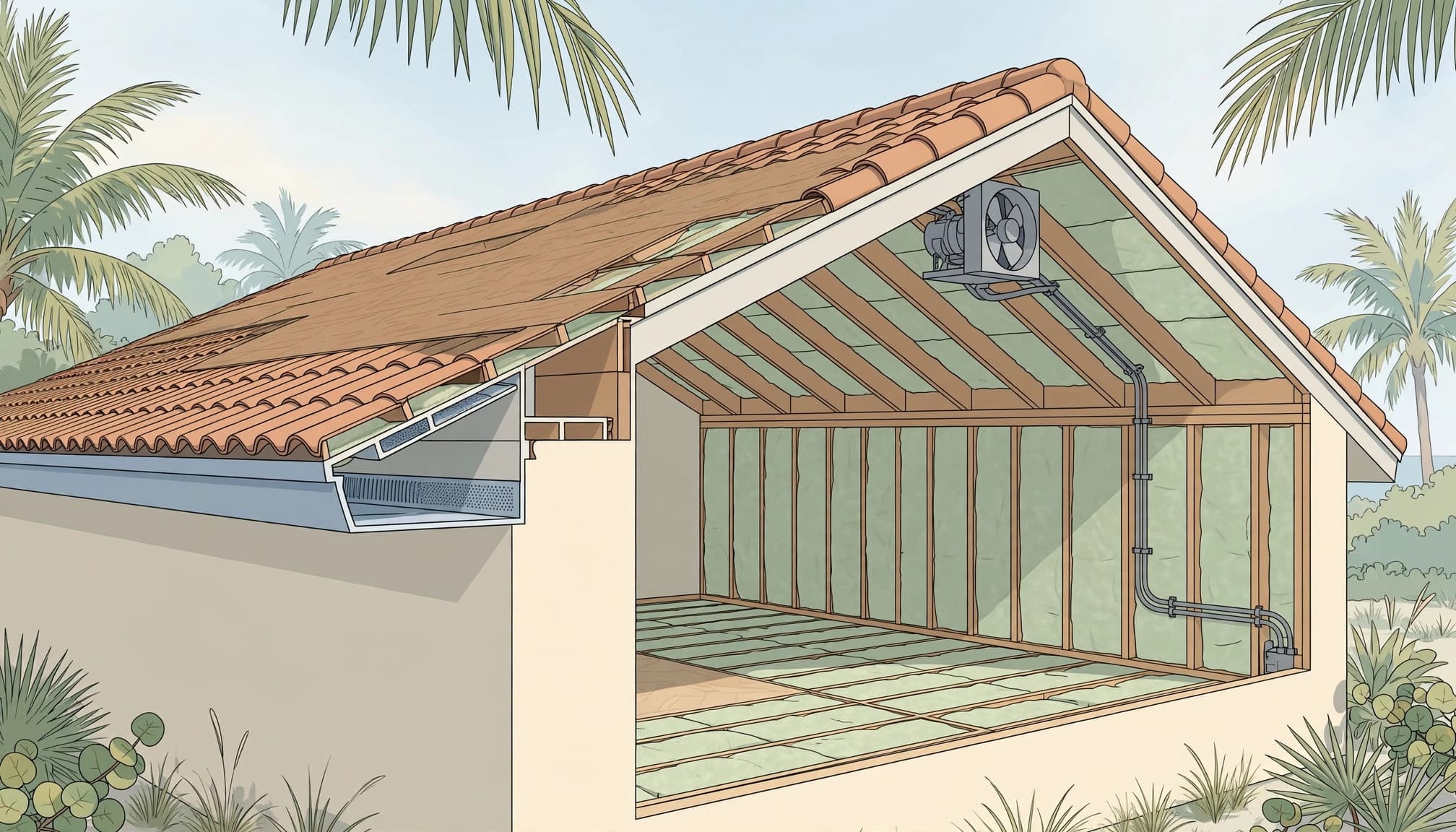
Powered attic fans use an electric motor to exhaust warm air through a roof, gable, or other approved outlet. Some models use a thermostat, while others include solar-powered operation. The power source doesn't remove the need for proper intake ventilation.
A fan is not a substitute for soffit intake
This is the most important point in the ridge vent versus powered fan comparison. An exhaust fan can remove air, but it cannot create a healthy replacement-air path by itself.
When intake is inadequate, the fan may depressurize the attic and draw air from the home through small openings. That air may come from ceiling penetrations, duct chases, attic access panels, or other unintended paths. In a humid climate, uncontrolled air movement can create moisture and comfort concerns.
A powered fan may also mask a ventilation layout problem without solving it. Before installation, inspect soffit vents, baffles, insulation coverage, air sealing, and roof openings. Never choose a fan based only on motor size or advertised airflow.
Florida rules require careful classification
Florida residential provisions state that mechanical exhaust air generally cannot discharge into an attic, soffit, ridge vent, or crawl space. Mechanical exhaust normally needs to discharge outdoors. The provisions include a narrow exception for whole-house ventilation-type attic fans that discharge into a private attic.
That exception doesn't mean every powered attic fan qualifies. A whole-house fan is a different system from a typical roof-mounted attic exhaust fan. It moves air from the living space through a ceiling opening and requires a properly designed exhaust path.
Florida Energy Conservation Code provisions for whole-house fans call for exhaust openings totaling at least four times the ceiling cutout area. Soffit vents don't count toward that exhaust-opening requirement. A licensed professional should determine which rules apply to the proposed equipment.
What a Professional Should Inspect
A reliable recommendation starts with inspection rather than a product choice. Local conditions, roof design, solar exposure, and existing ventilation all affect the result.
Roof and intake conditions
The inspection should identify:
- Whether the attic is vented, sealed, or partly conditioned
- The length and shape of each roof ridge
- Soffit continuity and blocked intake openings
- Existing gable, box, turbine, or powered vents
- Baffles between soffit openings and the attic
- Signs of water intrusion, staining, mold, or wet insulation
- Roof penetrations and areas vulnerable to wind-driven rain
The professional should also check whether the roof covering and vent product are compatible. A home with multiple roof planes may need a different plan than a simple gable roof.
Insulation, ducts, and indoor comfort
Attic ventilation won't solve duct leakage or missing insulation. If bedrooms feel warm, rooms have weak airflow, or the home feels sticky, inspect the HVAC system as well.
Duct joints can loosen, flexible duct can sag, and insulation can become thin around repairs or penetrations. Homeowners who notice dust, musty odors, or uneven airflow can review these common signs your ducts need cleaning. Duct cleaning, sealing, insulation repair, or dehumidification may address the actual comfort problem better than adding an attic fan.
Ridge Vent vs. Powered Fan: Which Fits Your Home?
The comparison below shows the main differences, but it isn't a substitute for an inspection.
| Feature | Ridge vent | Powered attic fan |
|---|---|---|
| Operation | Passive airflow through a roof peak | Motor-driven exhaust |
| Intake requirement | Needs clear soffit or lower intake | Still needs adequate intake |
| Electrical connection | Usually not required | Usually required, unless solar-powered |
| Main concern | Poor performance when intake or ridge layout is inadequate | Negative pressure, wiring, rain exposure, and improper classification |
| Best starting point | A compatible vented roof with usable soffits | A specific design where a professional confirms the airflow and installation |
| Maintenance | Inspect roof seal, screens, and openings | Inspect motor, controls, wiring, roof seal, and intake path |
For many vented roofs, a properly designed ridge-and-soffit system is the simpler starting point. A powered fan may have a place, but it should be selected only after checking intake capacity, roof geometry, storm requirements, and the applicable code provisions.
FAQ: Attic Ventilation in Babcock Ranch
Is a ridge vent always better than a powered fan?
No. A ridge vent can work well on a compatible vented roof with continuous soffit intake, but it may not suit every roof design. A sealed attic, complex roof, blocked soffits, or limited ridge length can change the recommendation.
Can I install a powered fan without adding soffit vents?
That approach is risky. The fan still needs adequate replacement air. Without it, the fan may pull air through gaps in the ceiling or other unintended openings. A professional should measure and inspect the intake path before recommending a powered exhaust fan.
Will an attic fan lower my cooling bills?
You shouldn't assume it will. Results depend on the roof assembly, insulation, duct condition, intake area, controls, fan operation, and existing ventilation. The fan also uses electricity unless it has a separate solar power system. A professional should identify the cause of the attic or comfort problem before promising a result.
Does attic ventilation control indoor humidity?
It can support moisture control in a correctly designed vented attic, but it doesn't replace the AC system or a whole-home dehumidifier. If the home feels sticky, check indoor humidity, AC run time, duct leakage, air sealing, and ventilation equipment together.
What should I ask before approving the work?
Ask the contractor to explain the intake area, exhaust area, roof assembly, product approval, water-intrusion protection, electrical requirements, and expected effect on the home. You should also receive a clear explanation of whether the work involves an attic exhaust fan, a whole-house fan, or a separate fresh-air ventilation system.
Conclusion
The best attic ventilation choice for a Babcock Ranch home starts with balanced airflow. Ridge vents can provide passive upper exhaust when the roof has clear soffit intake and a compatible design. Powered fans require the same intake foundation and add electrical, installation, storm, and code considerations.
Before changing the roof ventilation, have a qualified professional evaluate the attic assembly, insulation, ducts, roof geometry, solar exposure, and existing openings. Homeowners can request a free HVAC quote for an evaluation of related comfort, duct, and ventilation concerns. A fan should support a sound ventilation plan, not compensate for one that was never completed.
Recent Posts