AC Hard Start Kits: A Florida Homeowner's Guide
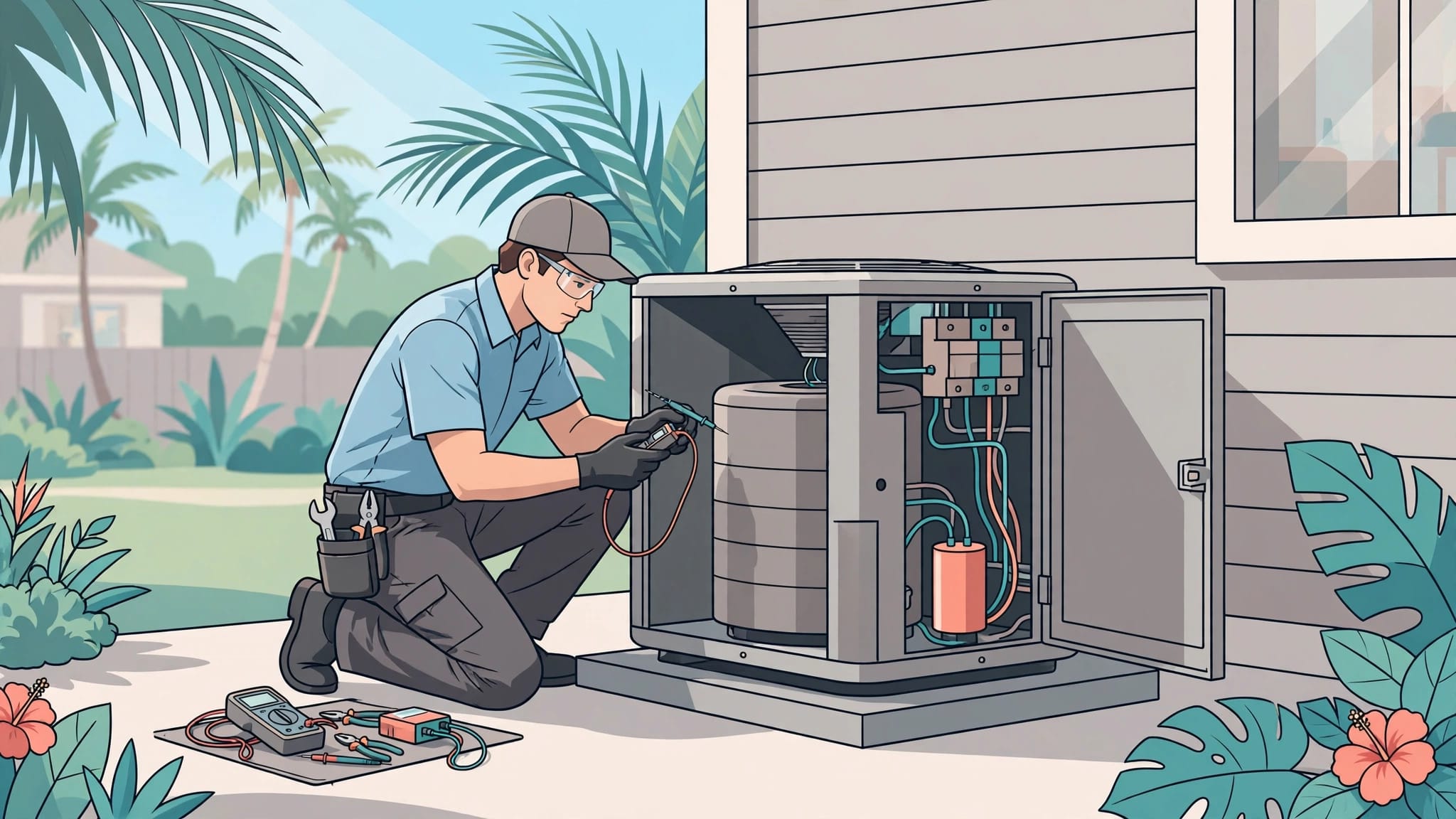
A struggling air conditioner can make a hard start kit sound like an easy answer. In reality, AC hard start kits only fit certain equipment and electrical conditions, so the right first step is a diagnosis.
Florida homes place heavy demands on cooling systems. Long run times, high humidity, frequent cycling, storm-related power interruptions, and aging components can all expose startup problems. Before approving a kit, ask a qualified HVAC professional to test the capacitor, wiring, compressor, airflow, and electrical controls.
Key Takeaways
- A hard start kit gives an AC compressor extra starting assistance during startup.
- It isn't a universal fix for humming, breaker trips, warm air, or a compressor that won't start.
- Compatibility depends on the equipment, compressor design, controls, and manufacturer requirements.
- A technician should identify the actual fault before recommending installation.
- Electrical work inside an outdoor condenser is unsafe for DIY repairs because the unit contains high voltage and stored electrical energy.
- Florida heat and humidity can increase cooling demand, but those conditions alone don't prove that a hard start kit is necessary.
- Repeated breaker trips, burning smells, smoke, exposed wiring, or unusual electrical noises need prompt professional attention.
What an AC Hard Start Kit Does
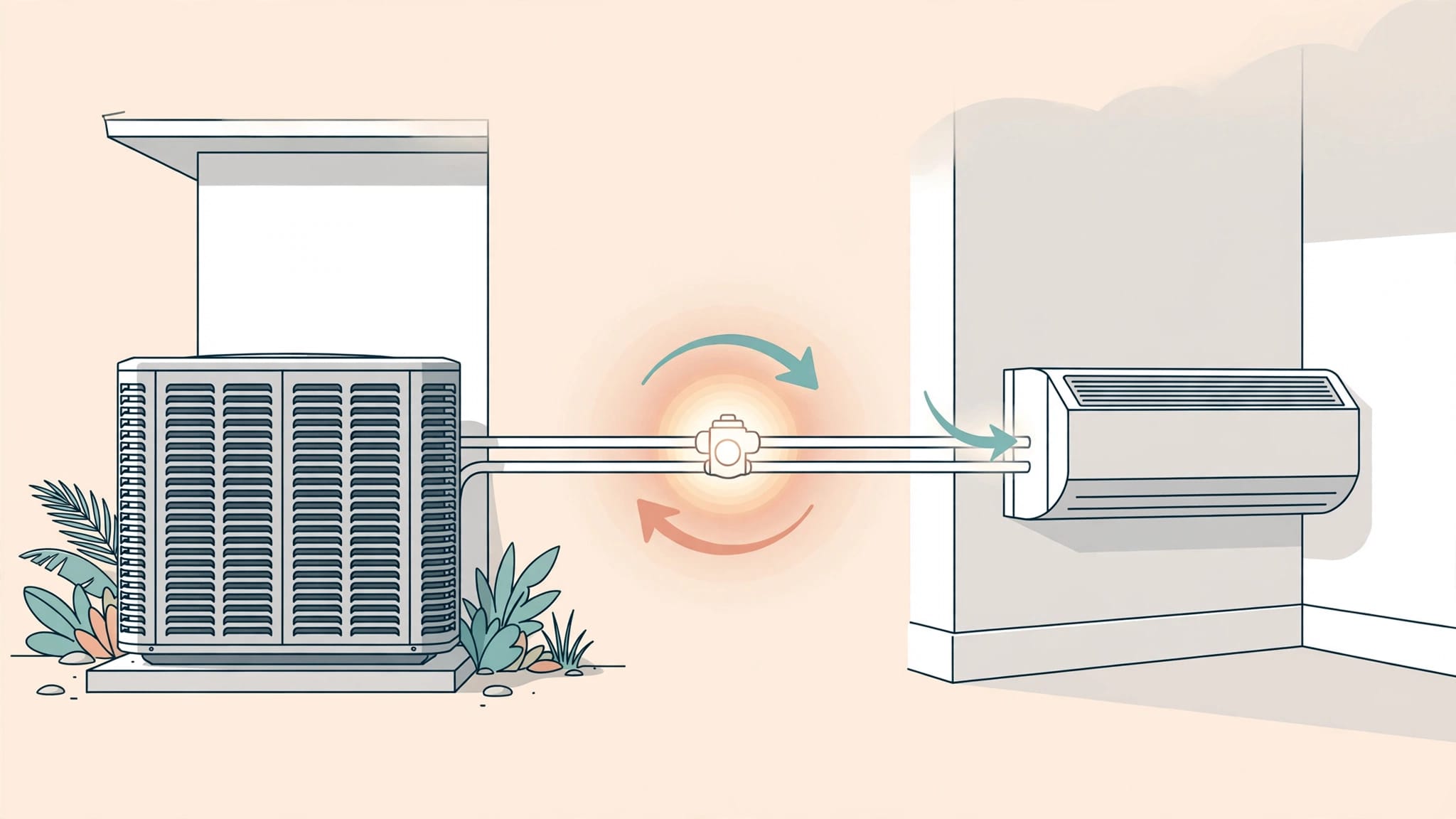
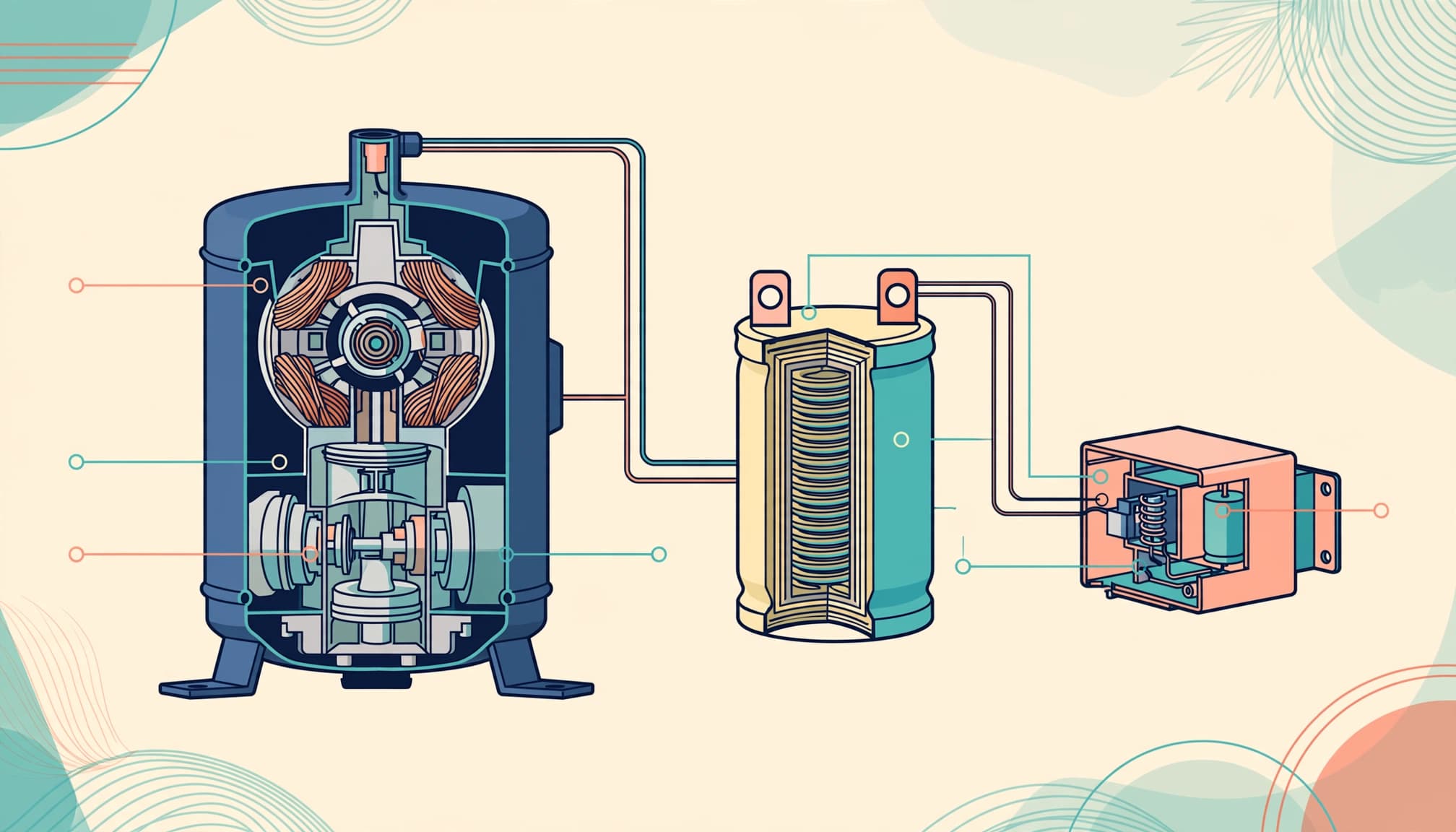
An air conditioner's compressor is the outdoor component that pumps refrigerant through the system. It usually needs more electrical power for a brief moment when starting than it does while running. A hard start kit adds a start capacitor and a switching component that provide temporary startup assistance.
The kit then drops out of the circuit after startup, depending on its design. This can help a compatible compressor start under certain conditions. It doesn't repair damaged windings, incorrect wiring, a failed run capacitor, poor airflow, low refrigerant, or a weak electrical panel.
Why compatibility matters
Manufacturers design air conditioners with specific electrical characteristics. A hard start kit that works on one system may be unsuitable for another. Some newer variable-speed or inverter systems use different controls and may require manufacturer-approved components.
The technician should record the outdoor unit's model and serial numbers, compressor information, voltage, existing capacitor ratings, and control setup. Those details help determine whether a kit is appropriate and which type meets the equipment requirements.
Older equipment deserves the same careful review. Aging systems may have worn capacitors, deteriorated wiring, or a compressor that is drawing excessive current. A hard start kit won't make an unsafe connection safe or restore a compressor that is already failing.
What the kit cannot prove
Installing a kit does not prove that the compressor is healthy. It also doesn't guarantee lower energy bills, longer equipment life, fewer breaker trips, or a permanent solution. Those outcomes depend on the original problem and the condition of the complete system.
For professional AC installation and repair in Southwest Florida, request an explanation of the test results before approving additional components.
Signs Your Florida AC May Need Electrical Testing
Startup symptoms can point to several different problems. A condenser that hums may have power, but the compressor or fan still may not be starting correctly. A breaker that trips can involve the compressor, capacitor, wiring, motor, airflow, or the breaker itself.
A hard start kit should follow a diagnosis, not replace one.
Humming, failed startup, and breaker trips
If the outdoor unit hums while the fan remains still, turn the system off and avoid repeated restart attempts. Each attempt can place more stress on parts that already may be struggling.
Other warning signs include:
- The thermostat calls for cooling, but the outdoor unit stays silent.
- The condenser clicks or hums, then shuts down.
- The breaker trips immediately when the system starts.
- The system trips the breaker after running for 10 to 20 minutes.
- The indoor blower runs, but the outdoor unit doesn't.
- The compressor starts only after several attempts.
The timing of a breaker trip matters, but it doesn't identify the fault by itself. Read more about why AC breakers keep tripping before assuming a hard start component is needed.
Capacitors, wiring, airflow, and compressor checks
A run capacitor helps motors operate after startup. If it has lost capacity, the compressor or condenser fan may start poorly or run hot. A technician can test its actual performance instead of relying only on its appearance.
The inspection should also include:
- Compressor amp draw during startup and normal operation
- Capacitor condition and ratings
- Contactor operation, which controls power to the outdoor unit
- Loose, overheated, or damaged wiring
- Condenser coil cleanliness and outdoor airflow
- Indoor filter, blower operation, and duct restrictions
- Refrigerant pressure and signs of compressor trouble
- Breaker and disconnect condition
A bad capacitor can look similar to a hard-start problem. The same applies to a dirty coil or restricted airflow. Sunset Gulf HVAC's guide to why AC capacitors fail in hot weather explains why replacing one part without checking the cause can lead to another failure.
How Florida Conditions Affect the Decision
Southwest Florida air conditioners work through long cooling seasons. In Babcock Ranch, Fort Myers, Cape Coral, Bonita Springs, Estero, and nearby communities, the system may run for extended periods to cool the house and remove moisture.
Heat and humidity can increase the workload, but they don't automatically mean a hard start kit belongs on the system. Frequent cycling, sometimes called short cycling, may indicate thermostat problems, restricted airflow, incorrect sizing, low refrigerant, or another issue. The cycling pattern needs evaluation before anyone selects a component.
Heat, humidity, and older equipment
High outdoor temperatures can make a compressor work harder during startup. Humid indoor conditions can also signal that the system isn't running long enough, has poor airflow, or has another performance problem.
Older systems may have more wear on capacitors, contactors, wiring, and compressors. However, age alone isn't proof that a hard start kit will help. A technician should compare the equipment's condition with the manufacturer's requirements and the readings taken during service.
Storm-related power interruptions
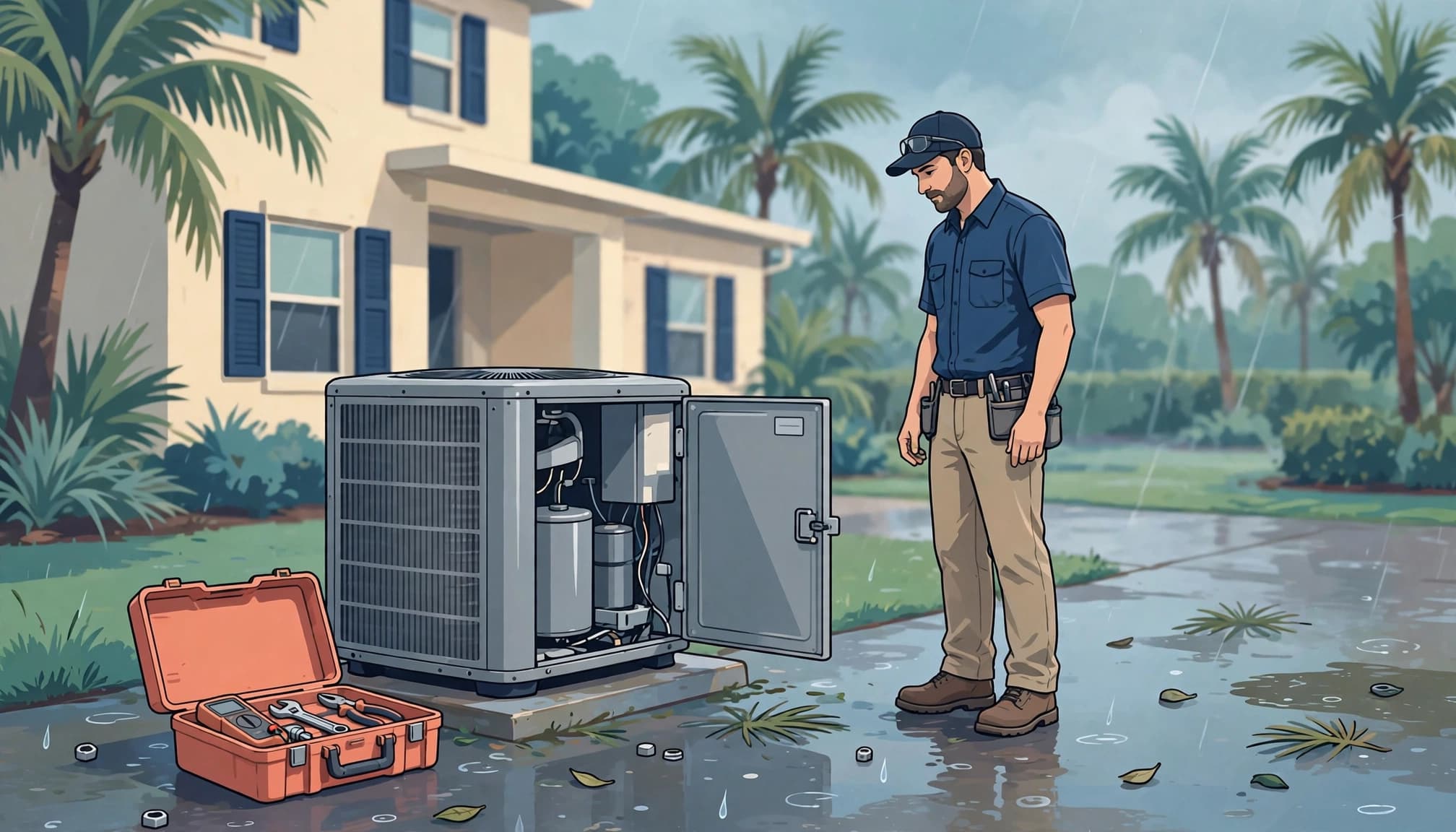
Florida storms can cause brief outages, voltage fluctuations, or repeated interruptions as power returns. If the AC won't start afterward, don't repeatedly reset the breaker or switch the system on and off.
Look for a tripped breaker, burning odor, visible wiring damage, smoke, arcing, or water near electrical equipment. Turn the system off and arrange professional service when those signs appear.
When to Call an HVAC Technician
Call for service when the outdoor unit hums without starting, the breaker trips more than once, or the system struggles to restart. A homeowner can check that the thermostat is set to Cool, replace a dirty filter, and confirm that supply vents are open. Checking the breaker once is reasonable, but repeated resets are not a repair strategy.
Electrical components inside the condenser can hold a dangerous charge even after the power is switched off. Don't remove the panel, test wires, discharge a capacitor, or install a hard start kit yourself.
Seek urgent help for smoke, burning smells, arcing, exposed wiring, or a breaker that trips immediately. Sunset Gulf HVAC lists emergency HVAC service in Southwest Florida for after-hours situations by request.
A professional visit should end with a clear diagnosis, not pressure to approve a part immediately. If the compressor, electrical system, or refrigerant circuit has a serious fault, repair or replacement may be more appropriate than adding a starting component.
Questions to Ask Before Approving Installation
A written explanation can help you compare the proposed work with the actual condition of your system. Ask the technician to show the relevant readings and identify the equipment information used to select the component.
Is the kit compatible with my system?
Ask which manufacturer and model requirements were checked. The answer should account for the compressor, voltage, capacitor arrangement, control type, and any requirements for variable-speed or inverter equipment.
Also ask whether the component is manufacturer-approved for the system. Compatibility isn't determined by the condenser's age or size alone.
What problem is the kit solving?
Ask whether the technician found a weak capacitor, high startup current, damaged wiring, a failing compressor, a breaker problem, or another issue. The recommendation should connect to a measured symptom.
You can also ask what happens if the kit isn't installed. If the answer involves a safety concern or a failing compressor, the conversation may need to focus on a larger repair rather than a quick add-on.
What will the service record include?
Request the model and serial numbers, test readings, installed component information, warranty details, and maintenance recommendations. If a new system is installed instead, ask for startup documentation showing electrical load, airflow, refrigerant performance, drainage, thermostat operation, and system readings.
Permits and inspections may apply to larger AC replacement work in Fort Myers and surrounding communities. Requirements vary by location and project scope, so ask who handles them before work begins.
Maintenance That May Reduce Repeat Problems
Routine maintenance won't prevent every capacitor, contactor, wiring, or compressor failure. It can help identify developing problems before the home loses cooling during a humid afternoon.
Schedule service before the hottest part of the season when possible. A spring visit prepares the system for extended summer operation, while a later inspection can catch wear after months of heavy use.
Keep the outdoor condenser accessible and free of leaves, grass, and stored items. Replace filters according to the equipment and household conditions. A clogged filter can reduce airflow and make the system work harder, but changing it won't correct an electrical fault.
Biannual tune-ups are practical for many Florida homes. Sunset Gulf HVAC's HVAC maintenance membership includes scheduled system checks, priority service, and repair discounts through its Bronze, Silver, and Gold plans.
AC Hard Start Kit FAQ
Can a hard start kit fix a compressor that won't start?
It may help a compatible compressor with a verified startup problem, but it cannot repair every no-start condition. A failed compressor, damaged wiring, bad capacitor, control fault, or electrical panel problem needs a different repair.
Does every Florida AC need one?
No. Florida heat, humidity, and long cooling seasons increase system workload, but they don't establish that every air conditioner needs a hard start kit. The equipment's design and test results should guide the decision.
Can I install one myself?
No. Installation involves high-voltage electrical equipment and stored electrical energy. A qualified HVAC professional should verify compatibility, shut down the system safely, make the connections, and test the equipment afterward.
Will it stop my breaker from tripping?
It might not. A breaker can trip because of a hard-starting compressor, failed capacitor, overheated motor, restricted airflow, damaged wiring, or a weak breaker. Repeated trips require diagnosis rather than repeated resets.
Conclusion
AC hard start kits can be useful components for some Florida air conditioners, but they aren't a universal answer for startup trouble. The safest decision comes from testing the compressor, capacitor, wiring, airflow, controls, and electrical supply first.
If your outdoor unit hums, fails to start, or trips the breaker, stop repeated restart attempts and call a qualified HVAC professional. In Southwest Florida, honest diagnosis matters more than adding a part before anyone confirms the problem .
Recent Posts