Sunset Gulf HVAC • June 11, 2026

AC Freezing Up in Fort Myers Summers: Why It Happens and What to Do

Share this article

AC Freezing Up in Fort Myers Summers: Why It Happens and What to Do

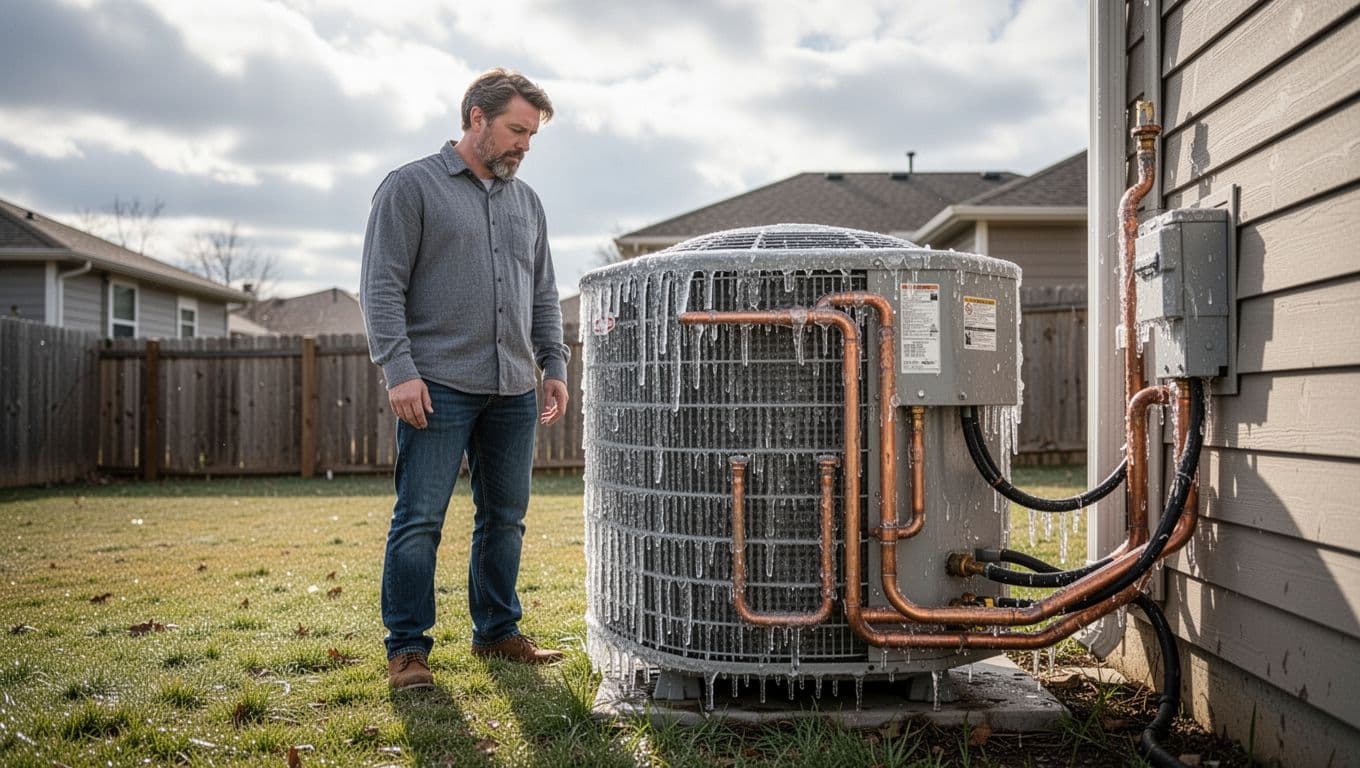
A frozen AC in a Fort Myers summer feels backward, but it happens more often than most homeowners expect. The air outside can be blistering, yet the coil inside your system can still turn into a block of ice.

When an AC is freezing up in Fort Myers, the cause is usually airflow, refrigerant, or both. High humidity makes the problem worse because the system has to pull water out of the air while it cools it.

The good news is that a few safe checks can keep a small issue from becoming a bigger repair. Start with the basics, then pay attention to what the system does after it thaws.

Why an AC Freezes Up Even in Hot Weather

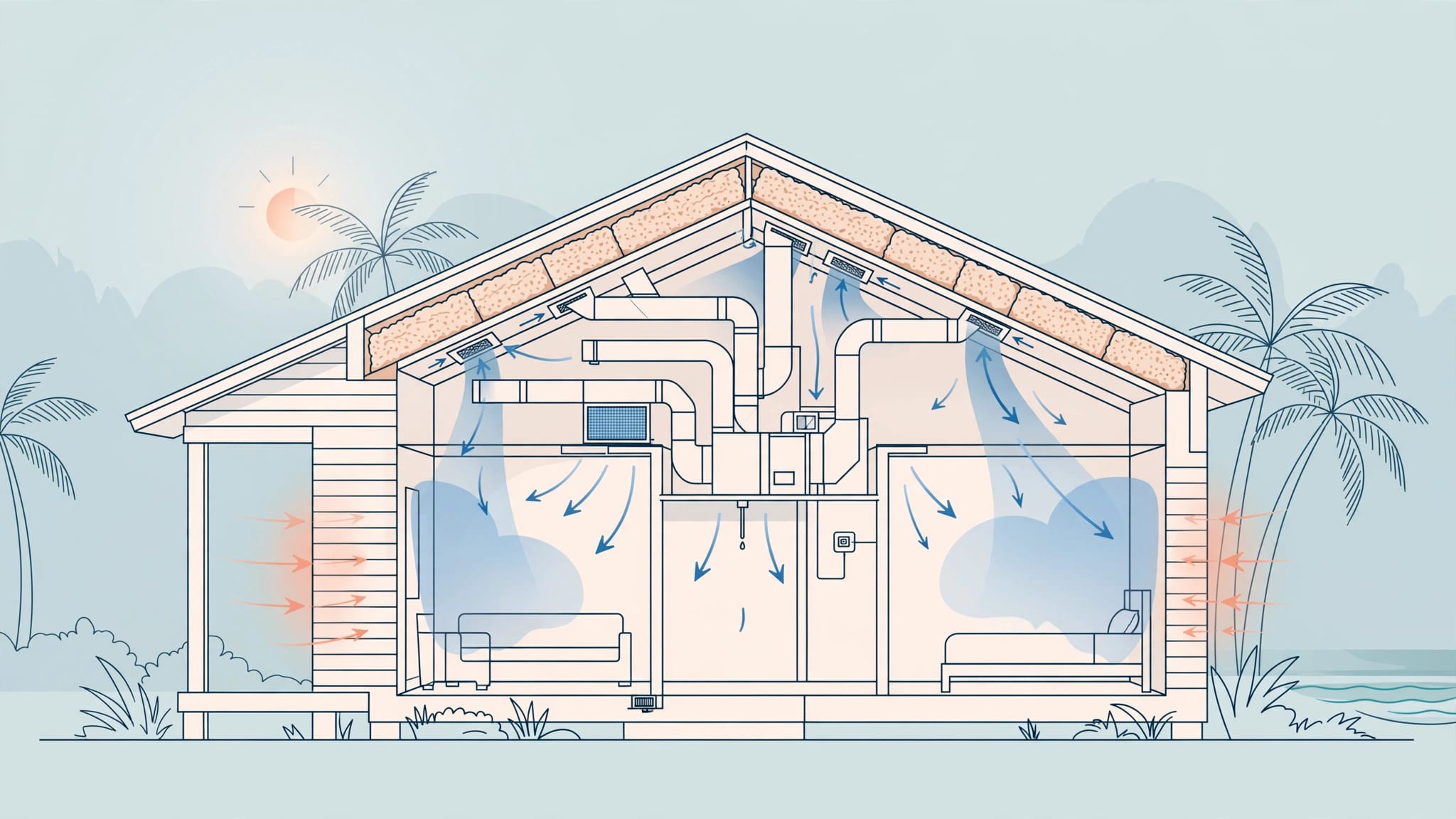
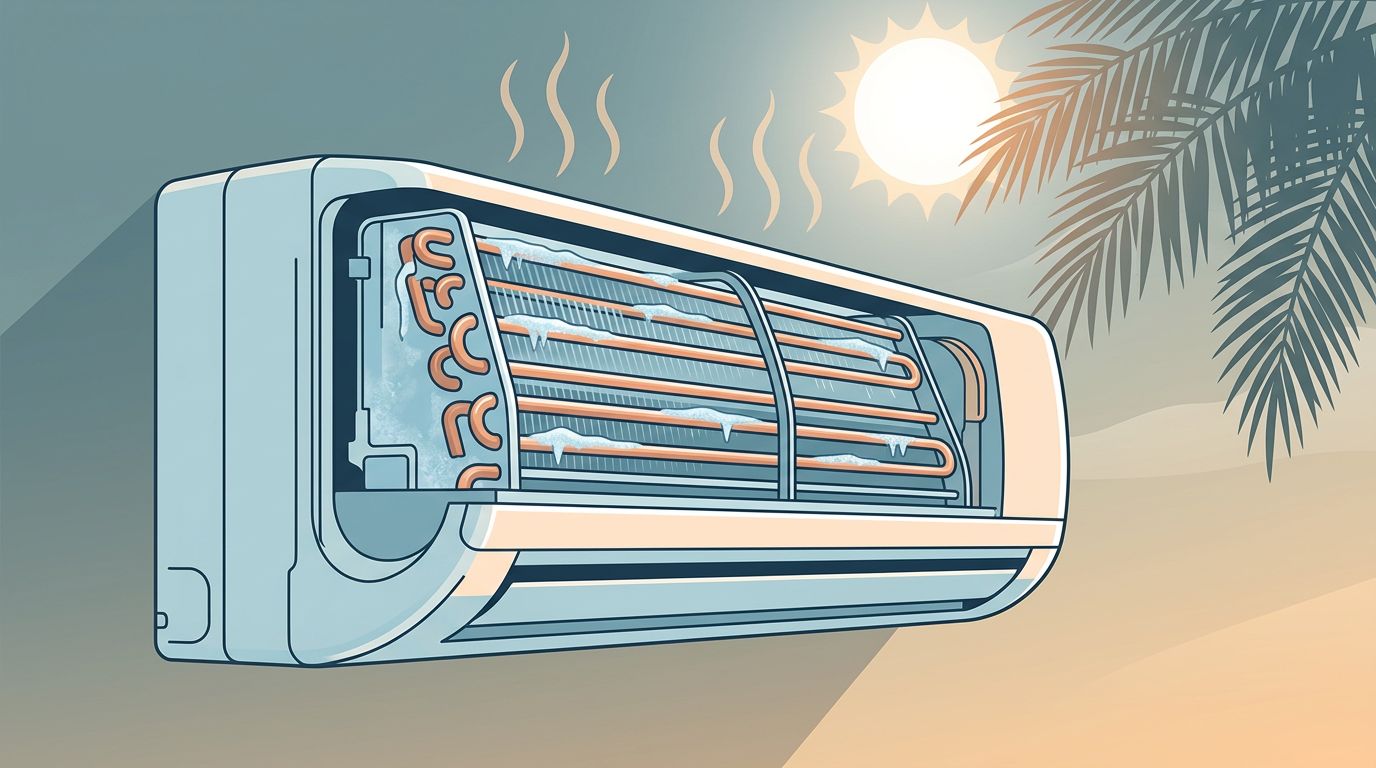
Inside your AC, the evaporator coil does the heavy lifting. Warm indoor air passes over that coil, and the system removes heat and moisture from the air.

If the coil gets too cold, the water on it freezes. That can happen when airflow drops or when refrigerant is low. Once ice starts building, the coil gets even less air, so the freeze spreads fast.

Dirty filters are one common cause. So are blocked return vents, closed supply vents, a dirty indoor coil, or a blower that is not moving enough air.

In Fort Myers, humidity adds extra strain. The air already carries a lot of moisture, so the system has to work harder just to keep indoor comfort steady. A small airflow problem that might be minor elsewhere can turn into a full ice buildup here.

Once ice forms, cooling drops fast. The system may keep running, but it can no longer move enough air to do its job. That is why a frozen unit can feel like it came out of nowhere.

Fort Myers Heat and Humidity Make the Problem Show Up Faster

Summer in Southwest Florida keeps air conditioners running for long stretches. The system may work through the hottest part of the day, then start again before the house has fully cooled down.

That constant demand leaves little room for weakness. A filter with too much dust, a coil with grime on it, or a vent that is blocked by furniture can push the system over the edge.

Humidity matters even more. When indoor air is damp, the AC has to remove heat and moisture at the same time. If airflow falls behind, the coil can get cold enough for that moisture to freeze.

A few local conditions make the strain worse:

  • Long cooling cycles mean the unit rarely gets a break.
  • Heavy humidity puts more water on the coil to remove.
  • Coastal air and dust can build up on outdoor and indoor parts.
  • Afternoon storms can lead to power dips, extra use, and fast thermostat changes.

A frozen coil is often a warning sign, not the main problem. The ice is the result, not the cause.

When the system runs under stress for hours, it can start to fall behind. The house may still feel warm, so the thermostat stays set low, and the AC keeps working harder. That cycle can turn a simple maintenance issue into a freeze-up.

Safe Checks You Can Try Before You Call for Help

Before you call for service, use a few safe checks. They can protect the system and tell you whether the issue is simple or persistent.

  1. Turn the cooling off right away.
    Leave the thermostat on, but switch the system out of cooling mode so the ice can stop growing.
  2. Set the fan to On.
    This helps move air across the coil and speeds up thawing.
  3. Check the air filter.
    If it looks dirty, replace it. A clogged filter is one of the easiest airflow problems to fix.
  4. Make sure vents and returns are open.
    Move boxes, rugs, or furniture away from grilles and return openings.
  5. Let the unit thaw fully.
    This can take several hours. Do not try to force it.
  6. Restart the system only after the ice is gone.
    Watch it closely. If the airflow is weak or the coil freezes again, stop there.

Do not chip ice off the coil or pour hot water on it. That can bend parts and create a bigger repair.

A wet patch near the indoor unit after thawing is normal for a short time. A steady leak or a new puddle is different. That points to a drain problem or another issue that needs attention.

When the Problem Needs an HVAC Technician

Some signs go beyond a filter change or an open vent. Those signs usually mean the system has a deeper problem.

What you notice What it may point to Best next step
Ice comes back after thawing Refrigerant leak or airflow problem Schedule service
Air feels weak at the vents Blower issue or dirty coil Have it inspected
Ice shows on the copper line Low refrigerant or a restriction Turn it off and call a pro
Breaker trips or the unit hums Electrical fault or failing part Leave it off
Frozen coil happens again and again Unresolved system problem Get a technician diagnosis

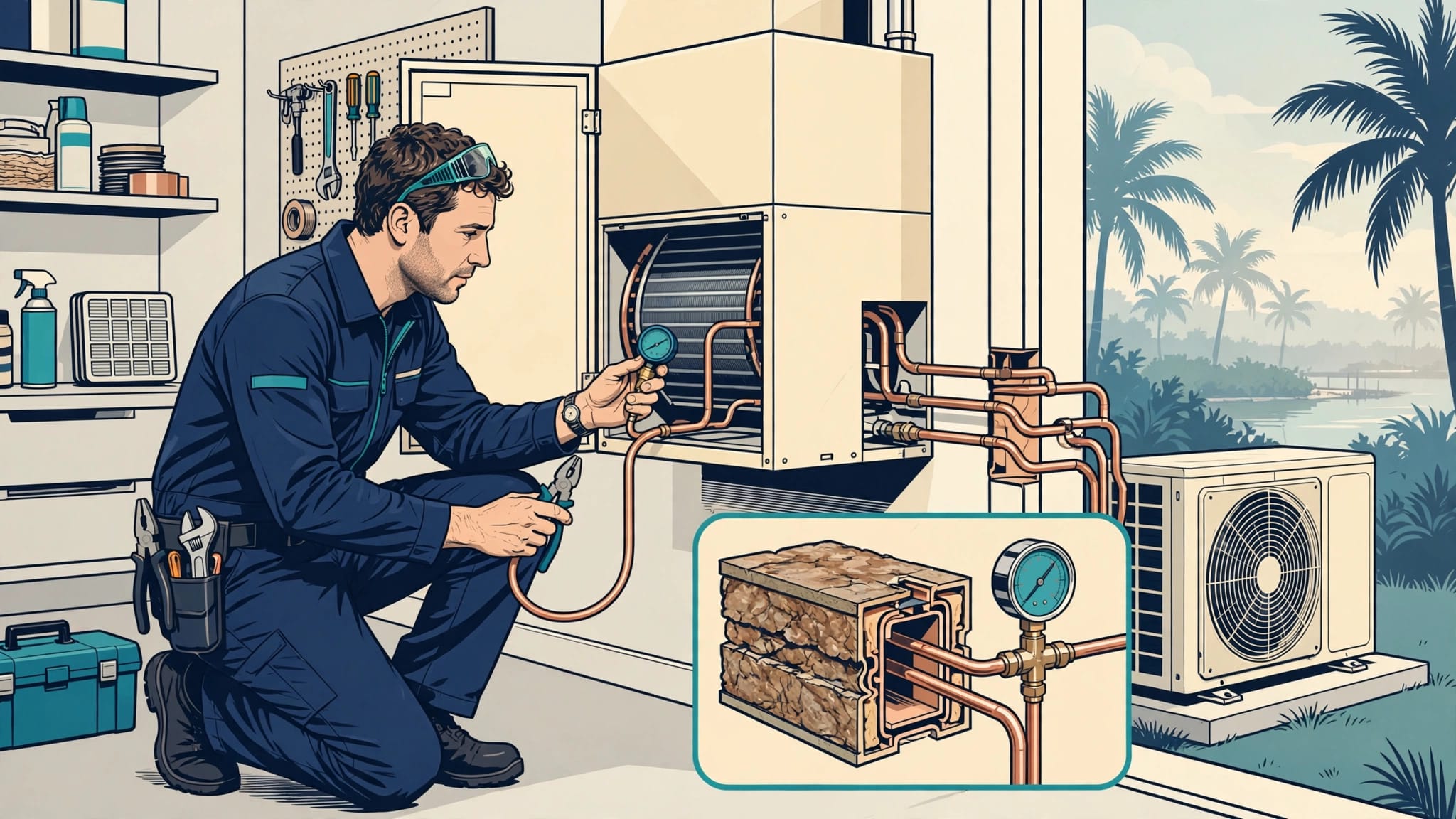
Low refrigerant is not a homeowner fix. If the charge is low, there is usually a leak that needs to be found and repaired.

Coil problems also need care. A dirty coil can sometimes be cleaned, but a damaged coil, a restriction in the line, or a hidden airflow issue needs proper testing. Guessing can waste time and stress the compressor.

Electrical faults are another reason to stop. If the unit trips a breaker, hums without starting, or shuts down oddly, keep it off until a technician checks it.

Repeated freezing is the clearest warning sign. One freeze can come from a dirty filter. Two freezes usually mean the root cause is still there.

How to Keep It from Freezing Up Again

Once the system is thawed and running normally, a few habits can lower the risk of another freeze-up.

  • Change the filter on schedule. In Fort Myers, that often means checking it monthly during peak summer.
  • Keep returns and supply vents clear. Good airflow starts with open paths.
  • Watch the thermostat setting. Big temperature drops can keep the system running too long.
  • Keep the outdoor unit free of leaves and debris. The system needs room to breathe.
  • Schedule regular maintenance. A tune-up can catch weak airflow, dirty coils, and drain trouble before they become bigger issues.

A clogged drain line can also add stress by holding too much moisture in the system. That is one more reason regular service matters in Southwest Florida. The AC has to fight heat, humidity, and long run times all at once.

If your home cools unevenly, or if the unit seems to cycle strangely, pay attention. Those small changes often show up before ice does.

Conclusion

A frozen AC in Fort Myers usually starts with a simple strain on the system, then humidity makes it worse. The ice is a clue that the unit needs attention, not a sign to keep running it.

The safest response is simple, turn it off, switch the fan on, replace a dirty filter, open the vents, and let it thaw fully. If the problem returns, or if you see signs like weak airflow, tripped breakers, or repeat icing, it needs a technician.

In a Fort Myers summer, quick action protects the rest of the system and gets the cool air back sooner.

Recent Posts

By Sunset Gulf HVAC June 10, 2026
If your AC runs all day in Babcock Ranch, the problem may not be a mystery. Southwest Florida heat, humidity, and a few small system issues can keep a unit working long after it should have cycled off. A thermostat set too low, a clogged filter, or a hidden duct leak can stret...
By Sunset Gulf HVAC June 9, 2026
Salt air can age an HVAC system faster than many homeowners expect. On Sanibel, the outdoor unit sits in a mix of salt, humidity, and wind-blown debris almost every day. That mix leaves a film on metal parts, holds moisture in place, and makes rust spread faster. For coastal F...
By Sunset Gulf HVAC June 8, 2026
Southwest Florida air conditioners don't get much of a break, and Babcock Ranch homes feel that pressure fast. Heat, humidity, pollen, and storm debris all push a cooling system harder than many homeowners expect. A smart AC tune-up checklist catches small problems before they...