How Nitrogen Pressure Testing Protects a New AC Installation
A new air conditioner can look ready to run while a refrigerant-line connection is still leaking. For homeowners in Babcock Ranch and across Southwest Florida, that hidden joint matters : a leak can leave the system struggling with heat and humidity soon after installation.
Nitrogen pressure testing helps an installer find leaks before adding refrigerant to the field-installed piping. It belongs in a careful sequence of testing, evacuation, charging, and startup checks.
Why test refrigerant lines before charging a new AC?
The copper lines between an indoor coil and an outdoor unit must form a sealed path. Installers make connections during replacement, even when they reuse an existing line set. A fitting that looks sound may still leak under pressure.
To check that work, a technician introduces dry nitrogen into the part of the system being tested. Nitrogen contains no refrigerant, so the crew can investigate a suspected line leak before charging that piping. If they find a fault, they can repair the connection and repeat the test.
This matters because refrigerant doesn't get used up during normal AC operation. Adding more to a leaking system won't fix the opening. A new installation deserves a verified repair before the homeowner has to deal with weak cooling, long run times, or a return service visit.
Pressure testing also has limits. It checks the integrity of the tested refrigerant circuit under the conditions of the test. It doesn't measure airflow through the ducts or prove that every other part of the installation is working correctly.
How nitrogen pressure testing works
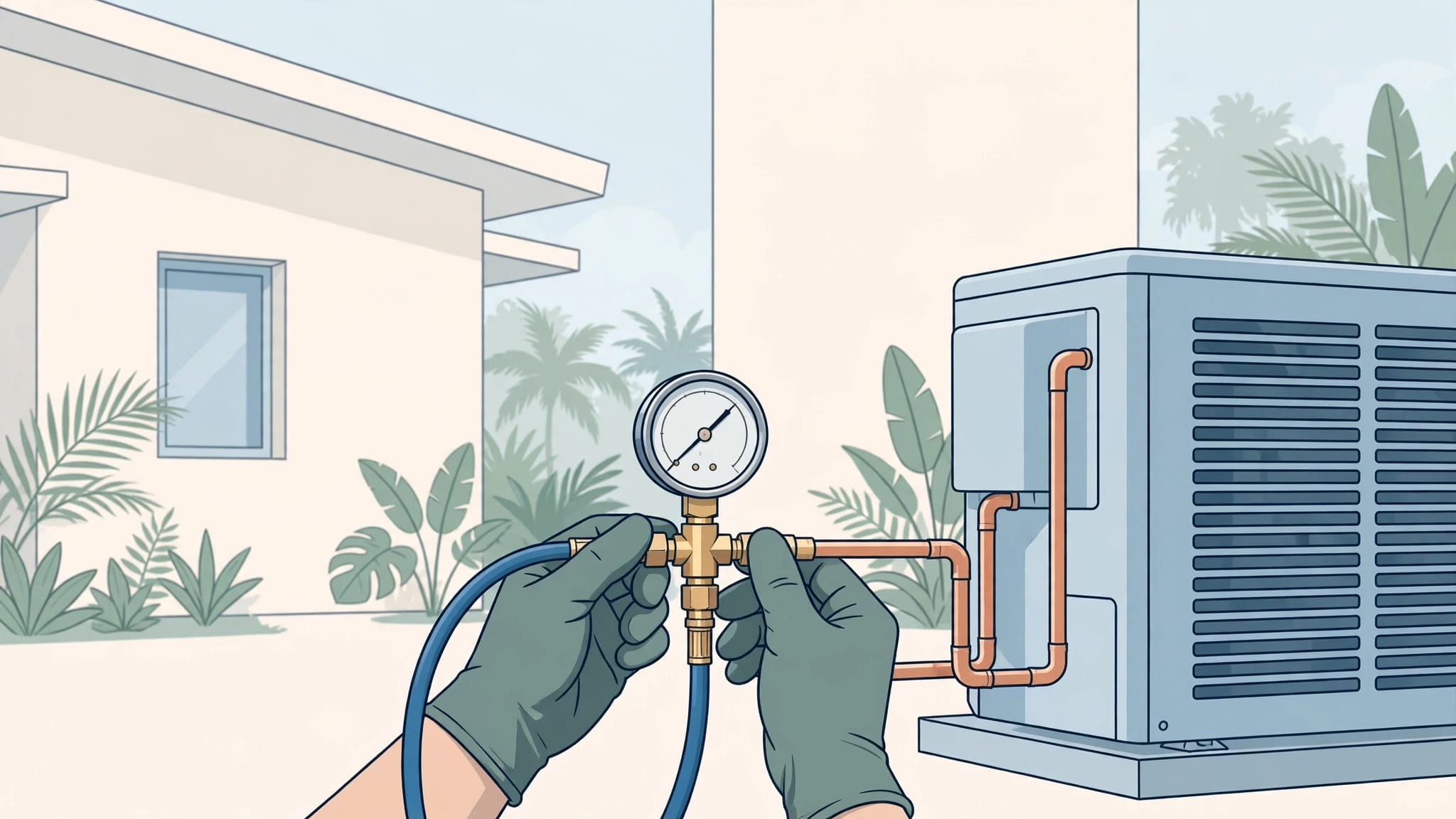
A technician connects a cylinder of dry nitrogen through an appropriate regulator and gauges. The regulator controls the pressure entering the system; opening a cylinder directly into refrigerant piping would be unsafe.
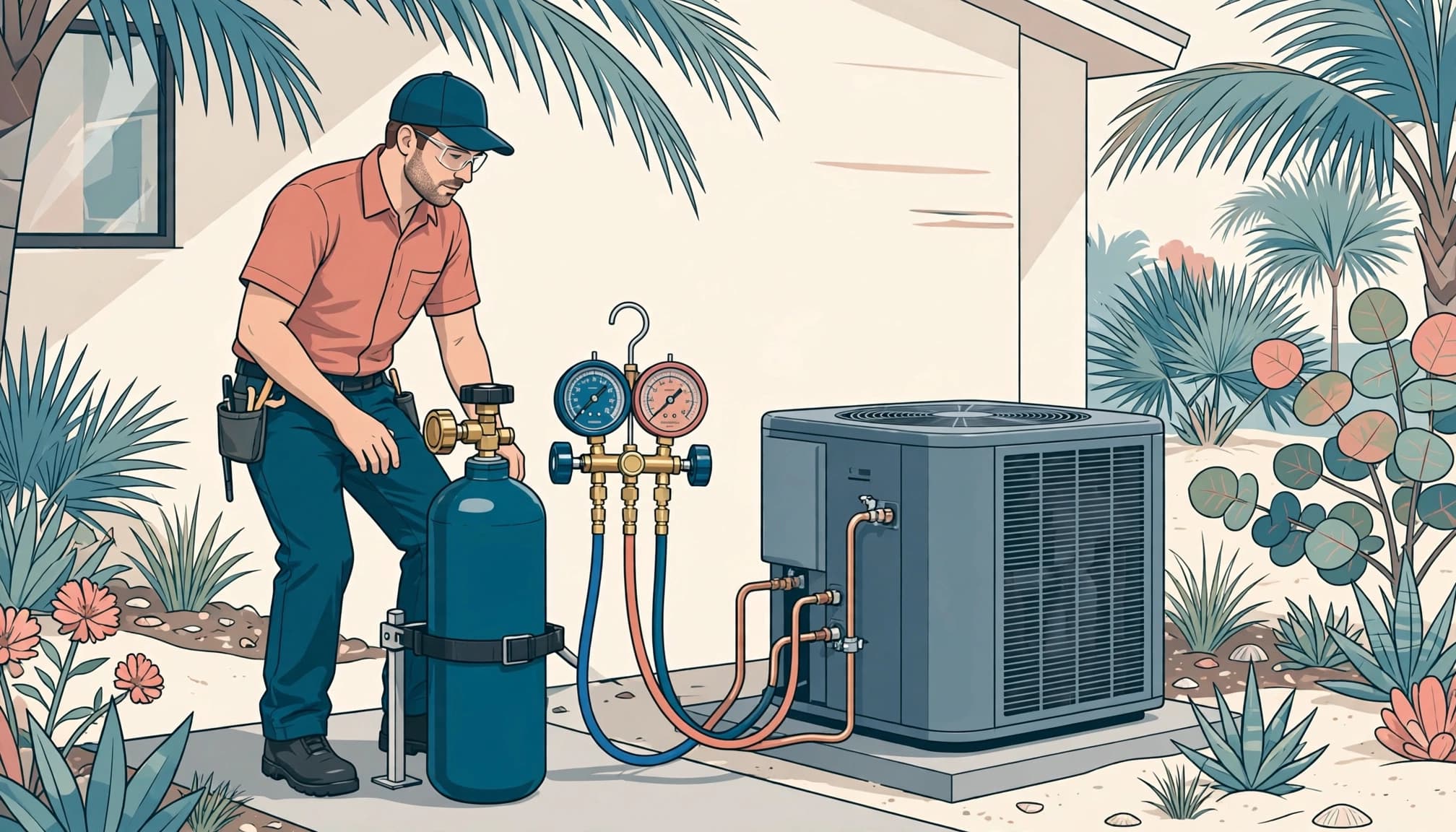
The circuit is isolated and brought up to the specified pressure
Before the test, the installer identifies which components and lines will receive pressure. A new outdoor unit may arrive with its refrigerant charge already inside, so the crew must follow its instructions for isolating the equipment and testing the field-installed connections.
The technician then raises pressure according to the equipment manufacturer's procedure. The permitted pressure depends on the components in the circuit. There is no universal pressure setting or hold time that homeowners should expect on every job.
Gauges and connections are checked during the hold
The crew observes the test pressure as directed by the manufacturer and checks its own hoses and fittings. A loose gauge connection can resemble a leak in the new AC piping.
Temperature matters, too. Nitrogen pressure can change as the gas warms or cools, even without a leak. A technician evaluates a change rather than treating every gauge movement as proof of one. For more on this step, see pressure-testing refrigerant lines before charging.
What a pressure test can reveal
A pressure change gives the technician a reason to investigate. Finding the actual opening takes another step, especially when several connections were made during installation.
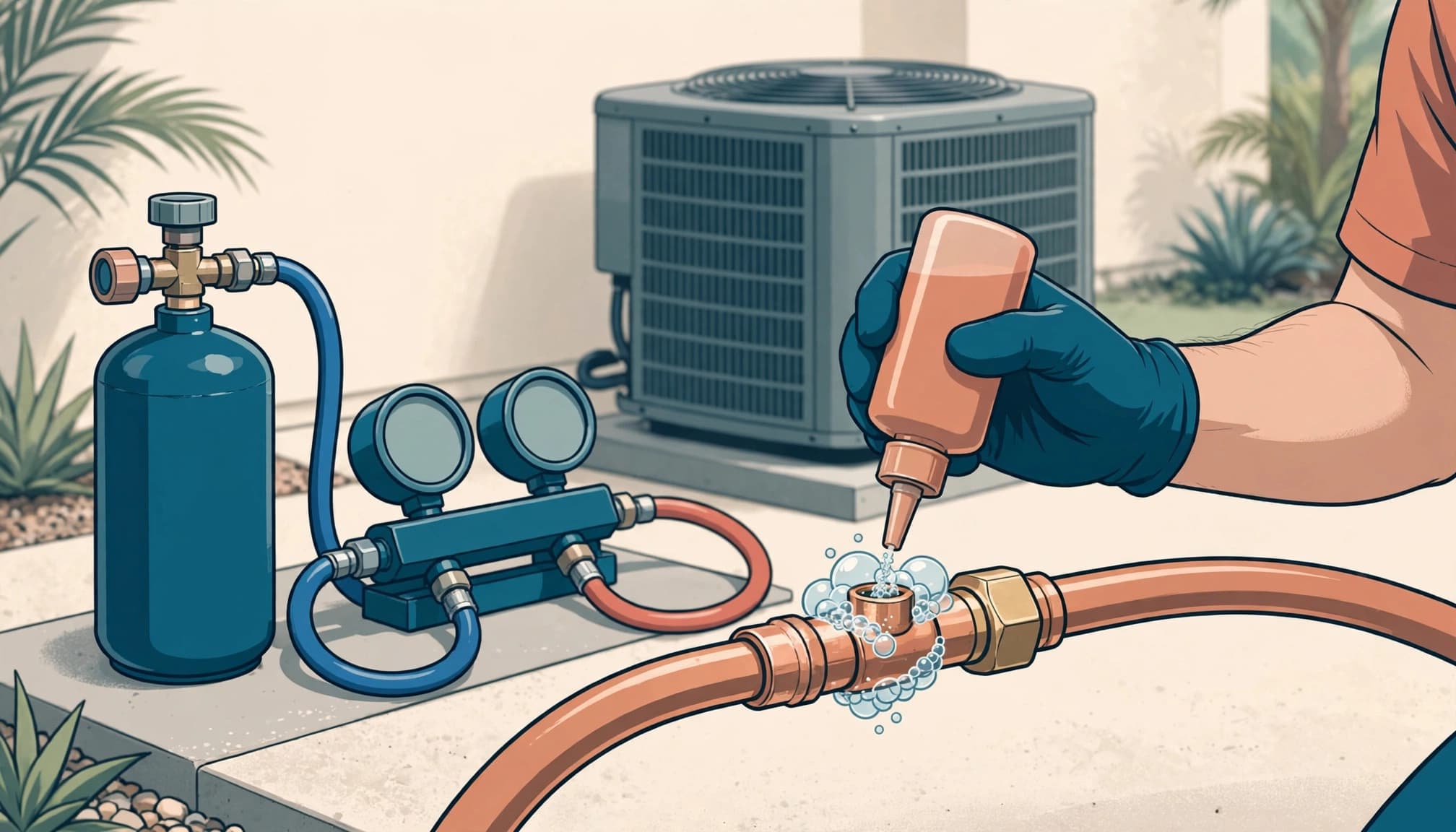
New joints and accessible fittings
Installers can check accessible flare fittings, brazed joints, service connections, and other points in the tested circuit. An appropriate bubble solution can reveal escaping gas at a reachable joint. If bubbles form, the technician repairs the fault and tests again.
A gauge reading alone doesn't identify which connection needs work. Locating the opening before charging keeps the repair focused on the source rather than on a later symptom, such as an AC that no longer cools well.
Damage along a line set
Copper tubing can also have damage away from a new connection. That possibility deserves attention when an installation reuses lines that pass through a wall, attic, or other concealed space.
Some sections may be hard to reach. A pressure test helps the installer assess the circuit, but it cannot make a hidden section visible or guarantee that a future leak will never develop.
A passing pressure test supports the decision to continue installation. It doesn't replace evacuation, correct charging, or a measured startup.
Why the gas and manufacturer instructions matter
Pressure testing puts the equipment under controlled stress. The technician needs the right gas, a suitable regulator, properly rated test equipment, and the procedure for the installed components.
Use dry nitrogen, never oxygen or compressed air
Dry nitrogen is appropriate because it doesn't add the moisture that ordinary compressed air can bring into refrigerant piping. Moisture inside the circuit can cause problems that a leak-free connection alone won't prevent.
Oxygen must never be used to pressure-test an AC refrigerant system. It creates a serious fire and explosion hazard when combined with oils and other materials found in HVAC work. Compressed air isn't a substitute for dry nitrogen either. Homeowners should leave cylinder handling, pressure testing, and refrigerant work to a qualified HVAC technician.
Match the test to the equipment
The indoor coil, outdoor unit, line set, and any manufacturer-approved accessories all affect how the installation must be tested. Instructions may specify the pressure, sequence, and checks required before the system can proceed to evacuation.
That is why a pressure or hold time borrowed from another installation isn't reliable. If a result falls outside the manufacturer's requirements, the crew needs to find the cause, correct it, and retest. Simply waiting longer or adding refrigerant doesn't repair a leak.
Reused refrigerant lines need attention, too
Replacing the outdoor unit doesn't automatically replace the copper lines running through the home. Reusing them may be possible, but their condition and compatibility with the new equipment need evaluation.
An installer should inspect the accessible tubing, connections, and insulation. A line set with damage, contamination, or an unsuitable size may need more work or replacement. After connections are made, pressure testing helps check the assembled piping before refrigerant enters it.
This is particularly important when much of the line set is hidden. A homeowner can't judge its condition by looking at the short section beside the condenser. For a closer look at the decision, read about reusing refrigerant lines during AC replacement.
Pressure testing and evacuation answer different questions
After the circuit passes the required pressure checks, the installer releases the nitrogen as directed and uses a vacuum pump to evacuate the refrigerant piping. These are separate steps, with different tools and readings.
Pressure helps find openings
Nitrogen pressure testing helps reveal leaks before the field-installed circuit receives refrigerant. A failed test calls for investigation and repair, followed by another test. It isn't a shortcut for cleaning moisture out of the lines.
An installation record is more useful when it shows the result rather than saying only "checked." The technician should be able to explain which circuit was tested and whether a repair was necessary.
Vacuum helps remove air and moisture
Evacuation removes air and moisture that shouldn't remain in the refrigerant circuit. A vacuum reading uses microns , not the pressure units used for a nitrogen test. Sunset Gulf HVAC's discussion of refrigerant lines describes evacuation to 500 microns or lower, followed by a hold test. The technician must still follow the applicable manufacturer's procedure for the actual equipment.
Passing a nitrogen test doesn't mean evacuation can be skipped. Likewise, reaching a vacuum reading doesn't tell the homeowner that every installation and startup check has been completed.
The new AC still needs a measured startup
Once the piping has passed testing and evacuation, the crew can complete charging as required by the manufacturer and start the system. Sunset Gulf HVAC places pressure testing and evacuation in step nine of its AC installation and repair process, before commissioning and performance checks.
Charge must match the installed system
The amount and method of charging depend on the equipment and installation. Line length and the manufacturer's instructions matter. A technician may use operating pressures alongside line temperatures, superheat, or subcooling, depending on the system.
One pressure reading cannot confirm a correct charge on its own. Indoor conditions, outdoor temperature, and airflow all affect what the technician measures while the AC runs.
Cooling performance needs its own checks
The installer should also verify airflow, temperatures, thermostat operation, and condensate drainage. These checks can catch problems that a nitrogen test cannot, such as a blocked drain or poor air movement across the indoor coil.
For a Southwest Florida home, removing humidity matters alongside reaching the thermostat setting. Documented startup readings give the homeowner a clearer picture of how the system operated at handoff.
What to ask before the installation crew leaves
You don't need to read a gauge or choose a test pressure. You can ask the installer to walk you through what happened:
- Was the field-installed refrigerant circuit pressure-tested with dry nitrogen under this equipment's instructions?
- If the pressure test found a leak, where was it repaired, and did the crew retest?
- Was the system evacuated before charging, and what startup measurements were recorded?
- Did the crew check airflow, drainage, and thermostat operation after the AC started?
Keep the answers with your installation paperwork. A record of the tested circuit, any repairs, and startup results can help if a comfort problem appears later. It also distinguishes a completed installation from one that received only a quick cooling check.
Key takeaways
- Dry nitrogen pressure testing helps find leaks before refrigerant enters the tested piping .
- The equipment manufacturer's instructions determine the test pressure, procedure, and acceptance criteria.
- Oxygen and compressed air must never replace dry nitrogen for this work.
- A passing pressure test is followed by evacuation, proper charging, and startup checks.
Conclusion
A new AC shouldn't have to develop a cooling problem before a leaking connection gets attention. Nitrogen pressure testing gives the installer a chance to find and repair that connection before charging the piping.
For lasting comfort in Southwest Florida, the full installation sequence matters . Pressure testing protects one part of the job; evacuation and measured startup checks complete the picture.
Frequently asked questions
Is nitrogen pressure testing the same as an HVAC static pressure test?
No. A nitrogen test checks the sealed refrigerant piping for leaks before charging. An HVAC static pressure test measures resistance to airflow through the equipment and ducts, usually with a manometer. The two tests address different parts of your cooling system.
Does a passing nitrogen test guarantee my new AC won't leak?
No test can promise that a leak will never develop. A passing result shows that the tested circuit met the applicable procedure at the time. The crew still needs to complete evacuation, charging, and startup checks.
Can a homeowner check refrigerant lines for leaks after installation?
You can look for visible damage to line insulation and note symptoms such as weak cooling or ice. Those signs have several possible causes. Don't open service ports, attach gauges, or add refrigerant; arrange a professional diagnosis instead.
Recent Posts