HVAC Generator Sizing for Babcock Ranch Power Outages
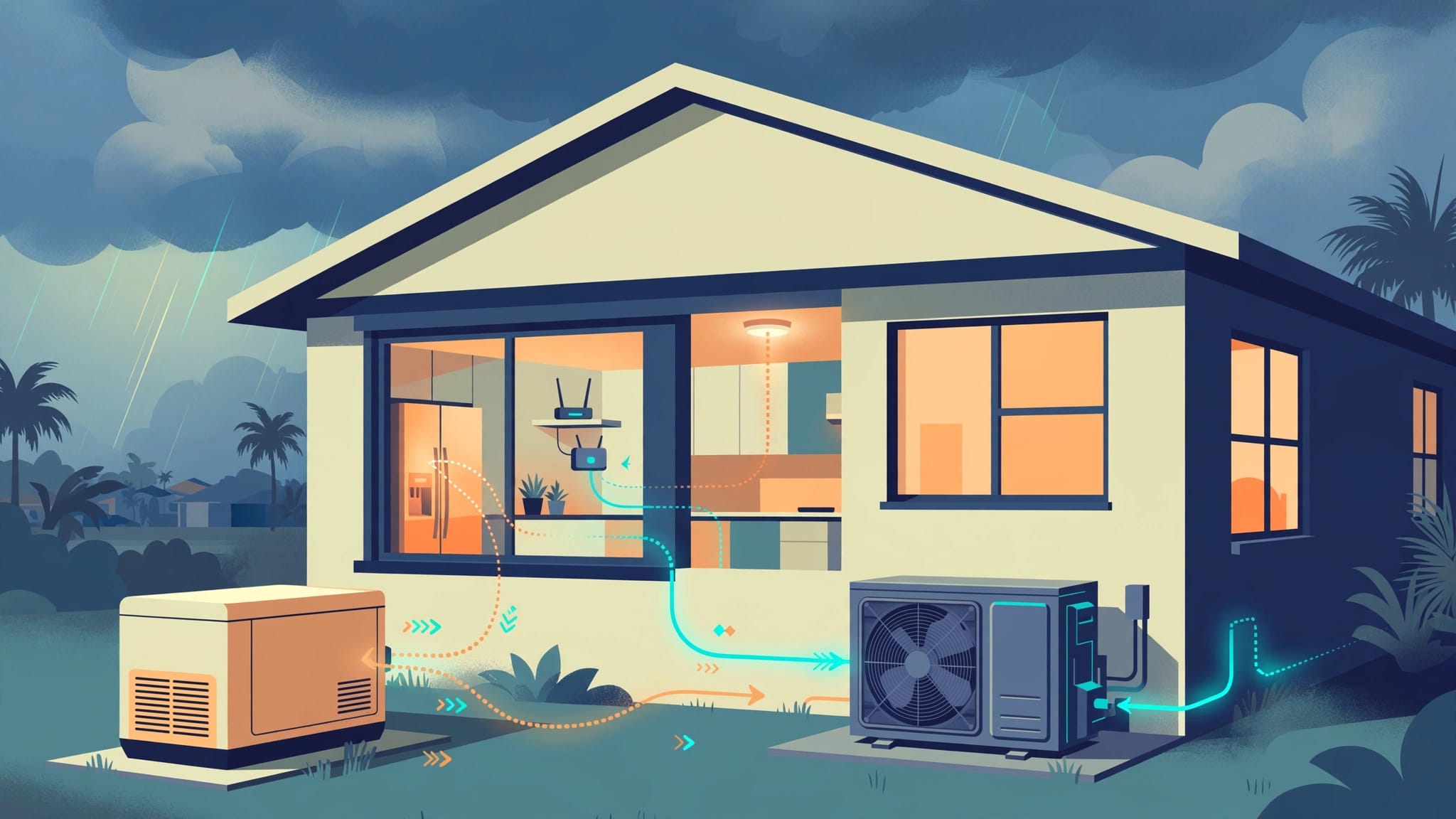
A Babcock Ranch power outage can turn a comfortable home into a hot, humid space within hours. Your generator may need to start the central AC or heat pump while also powering refrigerators, lights, internet equipment, and other essentials.
Good HVAC generator sizing starts with the equipment data plate, not the home's square footage or a generic generator chart. The correct capacity depends on startup demand, running demand, indoor blower power, electric heat strips, and the household loads you want to use at the same time.
Key Takeaways
- Running watts describe the electricity equipment needs after it starts.
- Starting watts account for the brief surge required by compressors and motors.
- A 3-ton AC label doesn't identify one universal generator requirement.
- Variable-speed equipment often starts more smoothly than fixed-speed equipment, but the nameplate still controls the calculation.
- Heat pump auxiliary heat strips can add 5,000 to 15,000 watts.
- A transfer switch or listed interlock is required to prevent dangerous backfeeding.
- Generator installations may require electrical, building, gas, or mechanical permits.
- Manufacturer data plates and a professional load calculation take precedence over estimates.
Why HVAC Generator Sizing Is Different During an Outage
A utility connection can supply substantial current without asking you to calculate every appliance's startup demand. A portable or standby generator has a fixed output. If the HVAC compressor starts while several other devices are already running, the generator may overload, trip, or shut down.
Running watts versus starting watts
Running watts describe the steady electrical demand after a motor or compressor reaches operating speed. Starting watts describe the short surge at startup. That surge can last only a fraction of a second, but it still matters.
Fixed-speed central AC and traditional heat-pump compressors may briefly draw about five to seven times their running amps. A common estimate places this surge at roughly 100 to 300 milliseconds. Generator specifications often list both continuous output and surge output because both figures affect HVAC operation.
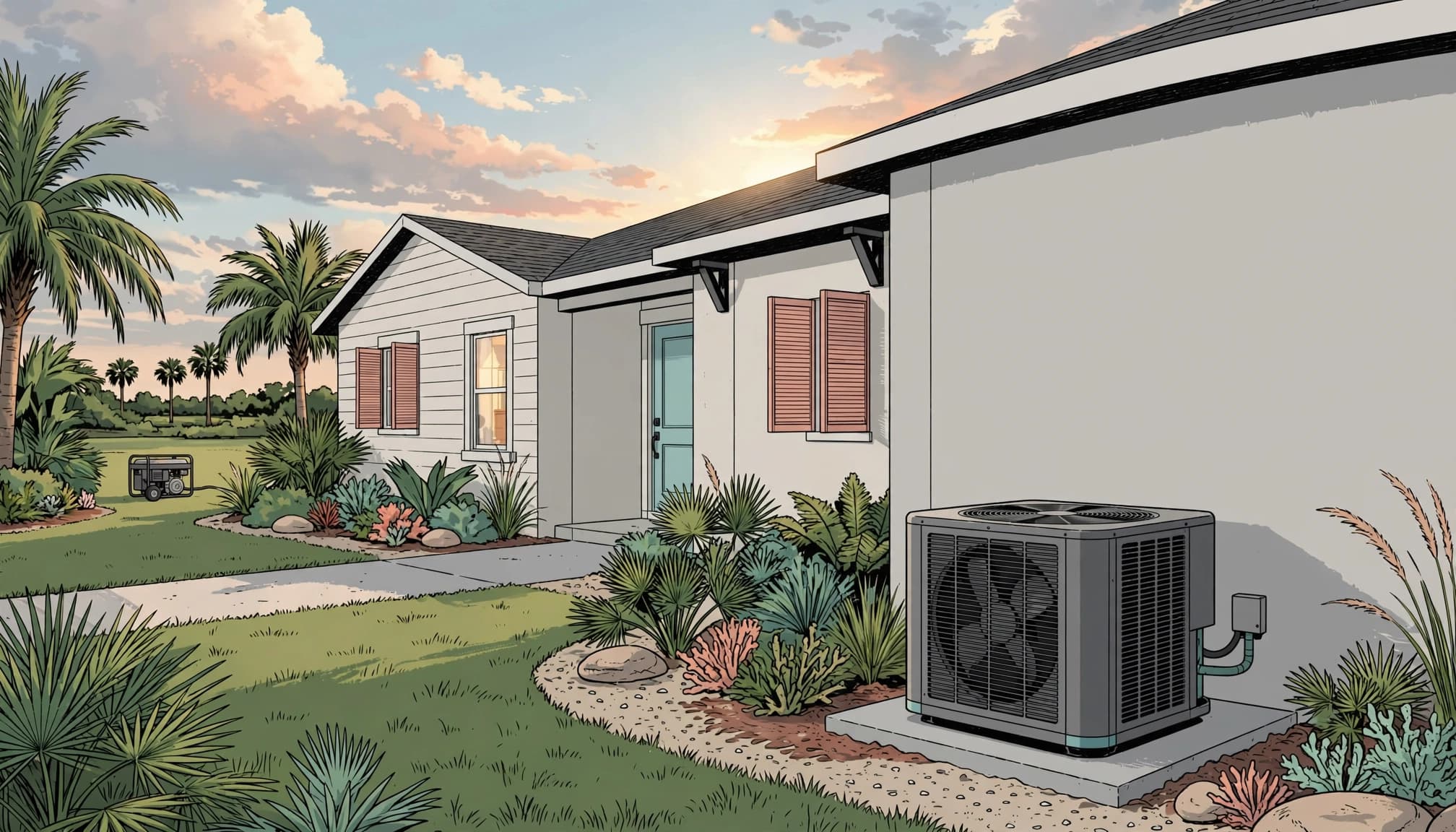
A 3-ton, single-phase central AC example may operate at 240 volts and 17.5 amps, with about 3,500 watts of running demand. The same example lists an 82-amp locked-rotor current, which can equal approximately 19,680 volt-amperes during startup. That is one equipment example, not a universal requirement for every 3-ton system.
Why generic startup charts disagree
Online estimates for a 3-ton system can vary widely. One calculator may show 10,500 starting watts, while another estimates approximately 8,600 to 14,400 watts. Equipment age, compressor design, voltage, power factor, refrigerant conditions, and the source's assumptions can change the result.
Use charts for general planning only. They should never replace the outdoor-unit data plate, the indoor air-handler information, or a professional load calculation.
Start HVAC Generator Sizing With the Equipment
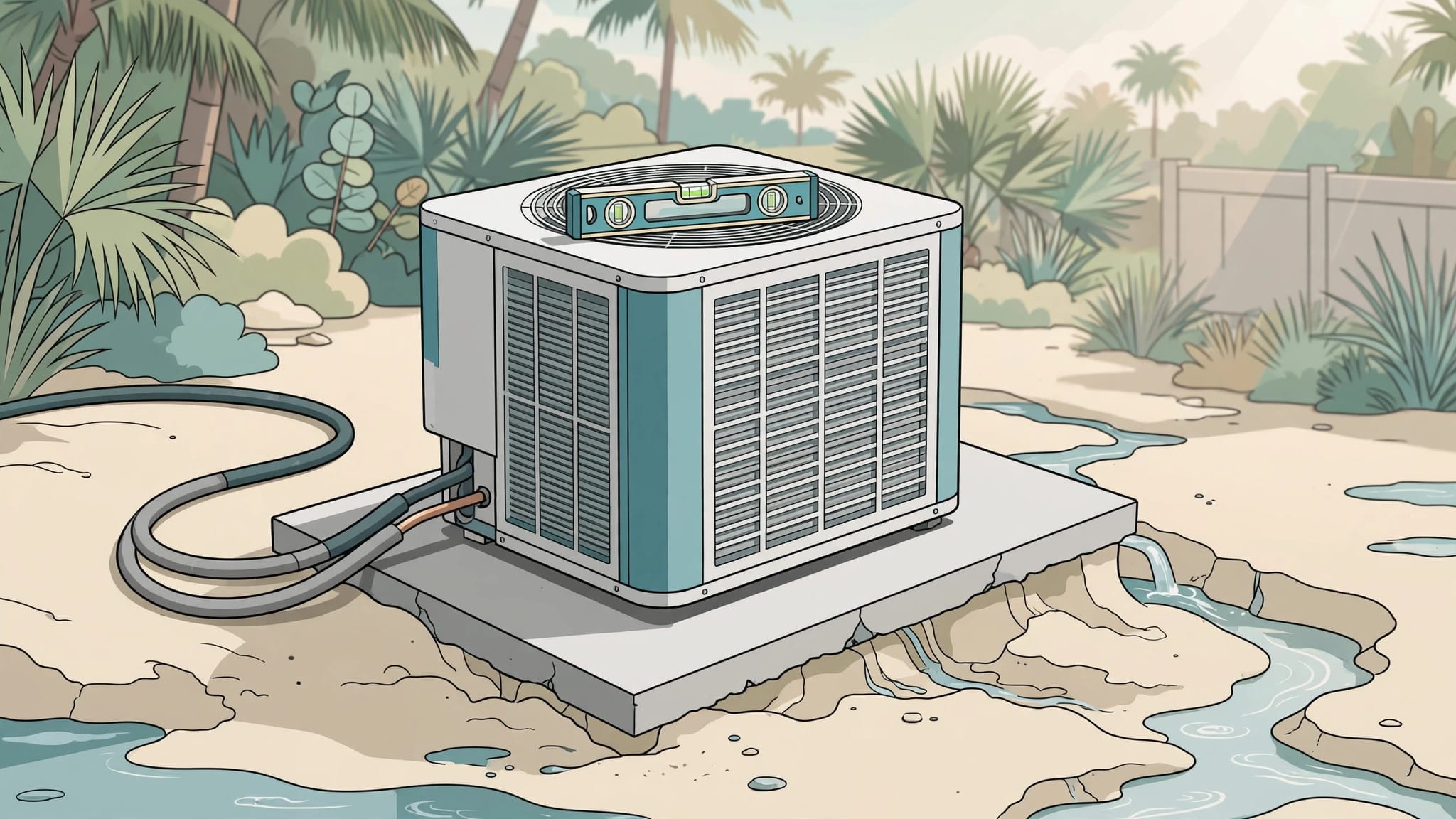
Before comparing generators, gather the model and electrical information for every HVAC component. Take clear photos of the outdoor condenser or heat-pump data plate, indoor air handler, electric heat kit, and main electrical panel.
Fixed-speed AC and heat pumps
A conventional central AC or heat pump usually has a larger startup surge than its normal running demand. The data plate may show RLA, which means rated-load amps, and LRA, which means locked-rotor amps.
LRA is especially important because it indicates the compressor's potential starting current. It doesn't automatically translate into the exact wattage a generator must provide, but it gives the electrician and HVAC technician an important design value.
Central AC running demand can range from roughly 1,800 to 7,200 watts depending on tonnage and equipment design. A cited 2-ton example may use approximately 2,200 to 3,200 watts, including the indoor blower. Those figures still don't establish the required generator size without the startup rating and other household loads.
Variable-speed and inverter systems
Variable-speed compressors use electronic controls to adjust output. They generally start with a lower and more controlled surge than many fixed-speed systems. That can make them easier for some generators to support.
However, lower startup demand doesn't mean every inverter HVAC system works with every generator. The outdoor unit may have specific voltage, frequency, grounding, and generator compatibility requirements. The installation also needs to account for the indoor blower and communicating controls.
If your home has variable-speed equipment, provide the complete model numbers to the professionals performing the generator and HVAC assessment. Don't assume the word "inverter" eliminates the need for a load calculation.
Indoor blowers and auxiliary heat
The outdoor compressor is only part of the HVAC load. The indoor air handler uses electricity for its blower, controls, and sometimes electric resistance heat.
A heat pump may operate normally with a moderate running load, then activate auxiliary heat strips when the thermostat calls for extra heat. Those strips can add approximately 5,000 to 15,000 watts. Southwest Florida homeowners may rarely need that much heating, but the possibility still affects generator planning.
Check whether the proposed transfer equipment can prevent auxiliary heat from operating during generator use. That decision requires coordination between the electrician, HVAC professional, and homeowner.
Compare Generator Capacity With the Real HVAC Load
A generator must handle the HVAC system and the other circuits you plan to operate. The goal isn't to match the number printed on the condenser. It is to account for continuous demand, startup demand, and load management.
Tonnage alone doesn't determine generator size
Tonnage describes cooling capacity, not a complete electrical requirement. Two 3-ton systems may have different compressors, efficiency ratings, motors, controls, and startup characteristics.
The home's ductwork and cooling load also remain important when replacing equipment. A proper HVAC assessment considers insulation, windows, sun exposure, air leakage, duct design, and humidity control. The same discipline applies to backup power: equipment specifications matter more than a broad tonnage rule.
For replacement planning, a Babcock Ranch AC installation and repair visit can help verify the existing system, electrical requirements, and equipment condition before you choose a generator connection.
Read the ratings carefully
Ask for a comparison of these values:
| Information | Why it matters |
|---|---|
| Running watts or rated amps | Shows the continuous HVAC demand |
| LRA or starting amps | Helps estimate compressor startup surge |
| Generator continuous watts | Shows what the generator can supply over time |
| Generator surge watts | Shows its short-term startup capacity |
| Voltage and phase | Must match the home's equipment and wiring |
| Auxiliary heat rating | May add 5,000 to 15,000 watts on a heat pump |
A soft-start device may reduce compressor startup demand in some installations. One cited estimate suggests that a 5,000-watt portable generator might support certain equipment after a compatible soft-start installation. That is not a guarantee. The technician must verify the compressor, kit, generator, wiring, and transfer equipment as a complete system.
Account for Other Household Loads
An HVAC-only calculation can look reasonable until you add the rest of the home. During an outage, many homeowners want refrigeration, lighting, internet access, garage-door operation, medical equipment, sump or drainage equipment, and selected receptacles.
Make a priority load list
Write down what must run, what would be helpful, and what can remain off. Include each device's running and startup information when available. Refrigerators, freezers, pumps, and motors may also create a startup surge.
Avoid assuming that every circuit can operate at once. A load-management system may temporarily disable selected equipment while the HVAC compressor starts. This can allow a smaller generator to support priority circuits, but the design must be calculated and installed correctly.
Consider heat-pump operating modes
A heat pump can cool during the long warm season and provide heating during occasional cold weather. Its electrical demand changes with operating mode. Auxiliary heat may also activate because of thermostat settings or control logic.
Review the thermostat and backup-heat configuration before installation. A compatible control strategy can prevent unnecessary electric heat from consuming generator capacity. Homeowners replacing a thermostat should also review this heat pump thermostat compatibility guide.
Transfer Switches, Permits, and Backfeeding Safety
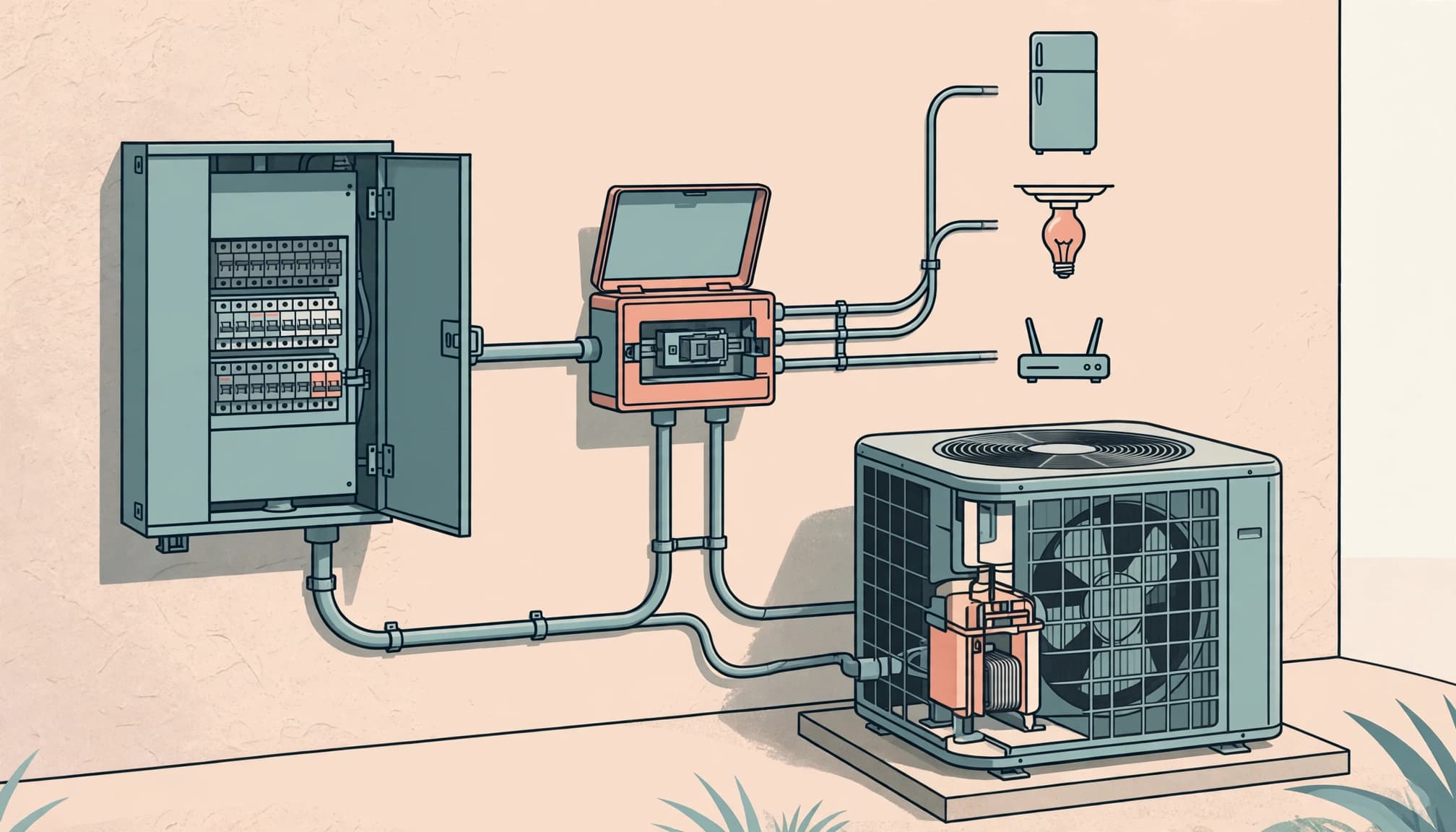
A generator connection is an electrical installation, not a matter of plugging a large appliance into a convenient outlet. The transfer equipment must isolate the home from utility power when the generator operates.
Why a transfer switch matters
A transfer switch or listed interlock prevents the generator and utility from energizing the home's wiring at the same time. Without that separation, generator power can travel backward through utility lines and endanger line workers. Utility power returning unexpectedly can also damage the generator and connected equipment.
Never connect a generator to a wall outlet with a homemade cord. That practice can energize circuits in unpredictable ways and create fire, shock, and backfeed hazards.
Florida electrical guidance references NEC 702.5 for transfer equipment and NEC 702.4(B)(2) for automatic transfer-switch sizing. When generator output is lower than the home's main-breaker capacity, load management may be required.
Permits and professional installation
A standby installation commonly involves several permit categories. Electrical permits may cover the transfer switch, wiring, disconnects, and connections. A building permit may apply to the generator pad. Gas or mechanical permits may be required for fuel-line work, depending on the project and local authority.
Local requirements can change, so confirm the current rules with the authority having jurisdiction before work begins. A licensed electrician should handle the generator connection and transfer equipment. An HVAC professional should confirm the system's electrical requirements and operating limits.
Run the generator only outdoors, away from doors, windows, soffit vents, and other openings. Never operate it in a garage, enclosed porch, shed, or inside the home, even when doors are open. Carbon monoxide is colorless and odorless, and ventilation is not a safe substitute for outdoor placement. Follow the generator manufacturer's clearance instructions and use carbon-monoxide alarms inside the home.
A Babcock Ranch Homeowner Sizing Checklist
Use this information before requesting a generator proposal:
- Photograph the outdoor unit, indoor air handler, heat kit, electrical panel, and thermostat model information.
- Record the HVAC system type, tonnage, voltage, RLA, LRA, and auxiliary-heat rating.
- List the refrigerator, freezer, pumps, medical devices, internet equipment, lighting, and other priority loads.
- Decide which loads can remain off during an outage.
- Ask for continuous and surge generator ratings, not one wattage number.
- Request a written load calculation that includes HVAC startup and other selected circuits.
- Confirm whether the plan uses load management, a soft-start device, or both.
- Verify the transfer equipment, permits, fuel supply, grounding, clearances, and final inspection.
A seasonal service visit can also identify weak capacitors, dirty coils, airflow restrictions, and electrical issues before an outage. Use this Babcock Ranch AC tune-up checklist as a starting point for routine preparation.
HVAC Generator Sizing FAQ
Can I choose a generator by AC tonnage?
No. Tonnage provides cooling capacity, but it doesn't show the compressor's startup demand, indoor blower load, or other circuits. Use the manufacturer data plate and a professional load calculation.
Is a 5,000-watt generator enough for central AC?
It may support some systems under limited conditions, especially when a compatible soft-start device reduces startup demand. It may not support a fixed-speed compressor, auxiliary heat, or several household loads at the same time. The generator's continuous and surge ratings must match the calculated load.
Does an inverter HVAC system need less generator capacity?
Variable-speed systems often have a more controlled startup, but exact requirements vary. The equipment still needs compatible voltage, frequency, grounding, and controls. Review the full nameplate data rather than relying on the inverter label.
What should I do if the AC won't start after power returns?
Set the thermostat correctly and check the HVAC breaker once if it clearly tripped. If it trips again, the outdoor unit hums without starting, or you smell burning, shut the system off and call for service. This guide on an AC outdoor unit humming but not starting explains why repeated resets can make an electrical problem worse.
Choose Capacity From Evidence, Not a Guess
Babcock Ranch homeowners need backup power that fits the actual HVAC equipment and the way the home will operate during an outage. Running watts, starting watts, LRA, blower demand, auxiliary heat, and other household loads all affect the result.
A generic chart can help you begin a conversation, but the final decision belongs to the equipment data plates, a professional load calculation, and properly permitted transfer equipment. Safe HVAC generator sizing protects comfort without creating a larger electrical or carbon-monoxide hazard.
Recent Posts