How to Check HVAC Drain Pan Safety Before Summer
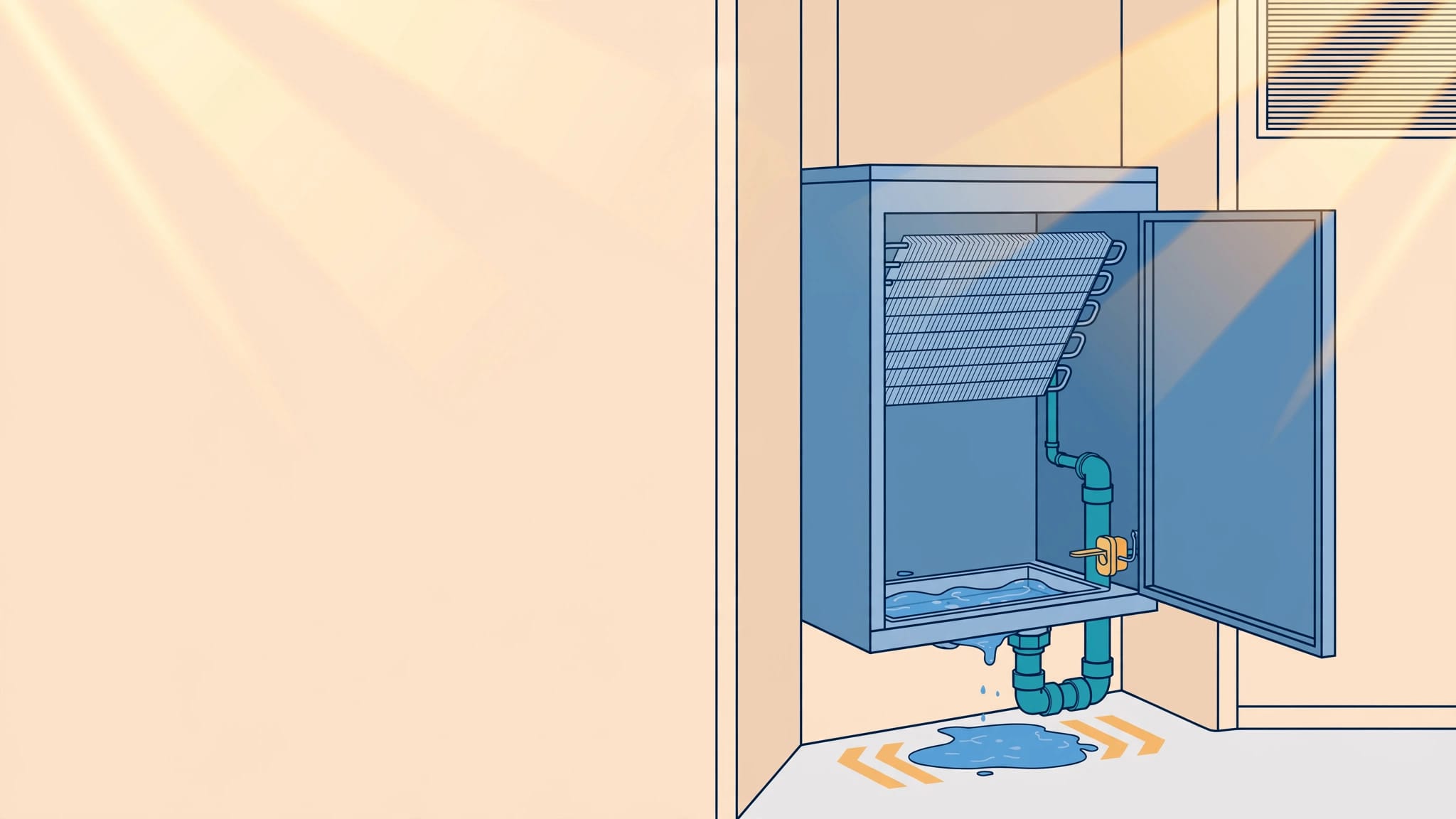
Checking HVAC drain pan safety before summer can help you catch water damage before Florida's longest cooling season begins. A clogged condensate line, cracked pan, or faulty overflow switch can shut down the air conditioner or send water into a closet, ceiling, or finished floor.
Homeowners in Babcock Ranch and throughout Southwest Florida can perform a careful visual inspection without opening sealed components or touching electrical wiring. Equipment-specific instructions and local codes always take priority. Start with the power off, inspect only accessible areas, and call a qualified HVAC professional when the signs point beyond basic observation.
Why HVAC Drain Pan Safety Matters Before Summer
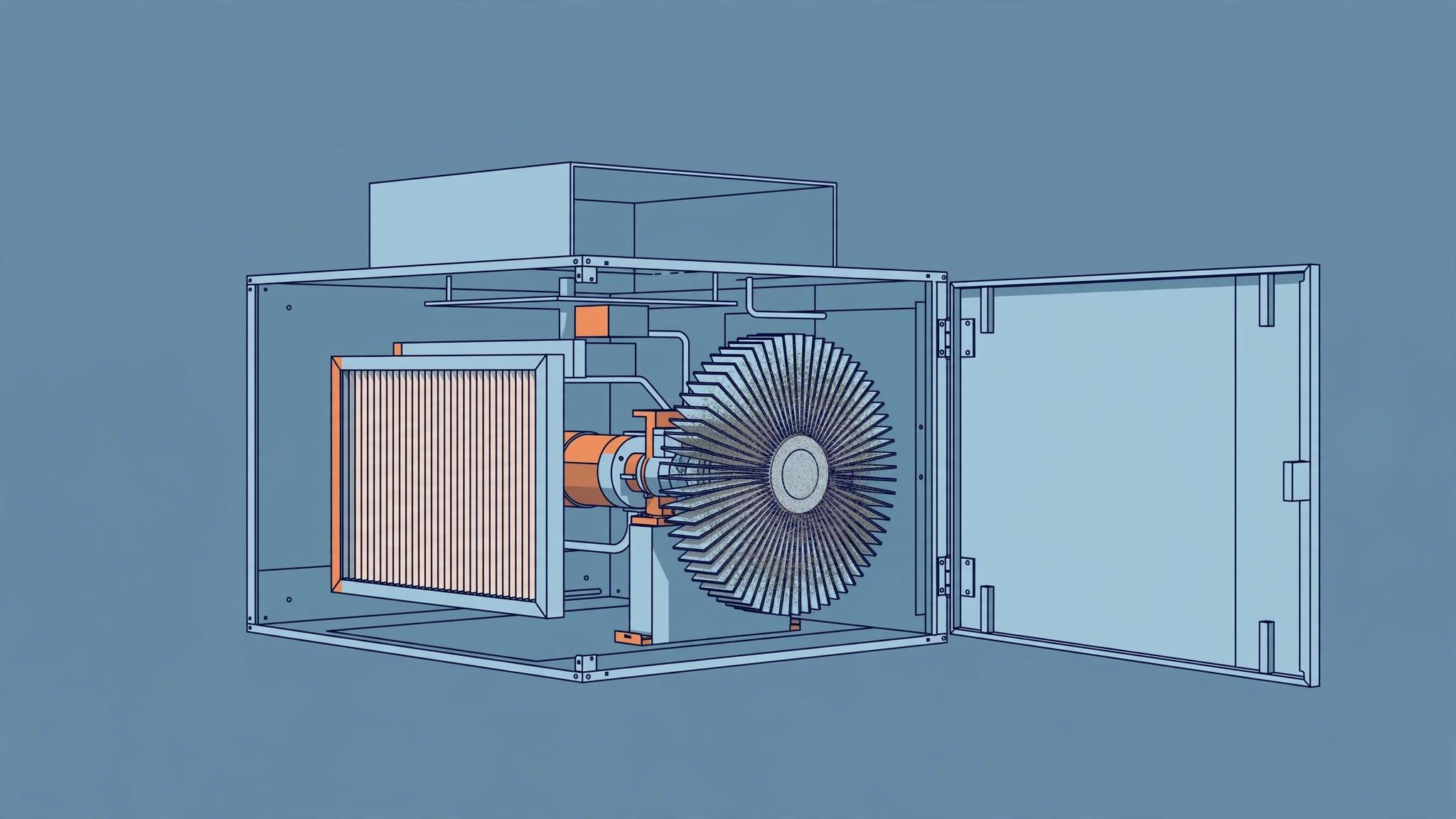
Your air conditioner removes moisture while it cools. Warm indoor air passes over the cold evaporator coil, and condensation falls into a drain pan. A PVC condensate line carries that water away from the air handler.
Florida's heat and humidity can make the system produce more condensate during long cooling cycles. A partial restriction may let water drain for several hours before the pan fills. That can make a float switch seem unpredictable, especially during a stretch of heavy humidity.
Some systems include a secondary pan, overflow path, or float switch. These features can interrupt cooling when water reaches an unsafe level. The switch is a warning device, not a repair. Resetting it may restore cooling briefly, but the water will return if the blockage, leak, or equipment problem remains.
A float switch that shuts off the air conditioner is responding to a drainage problem, not creating one.
Water near the air handler deserves attention even when the system still cools. A small puddle can damage drywall or flooring, while repeated moisture can contribute to odors and material deterioration. For a broader seasonal review, use this Babcock Ranch AC tune-up checklist.
How to Inspect HVAC Drain Pan Safety Without Taking Risks
Keep the inspection visual and limited to areas you can reach safely. You don't need to remove an access panel, handle wiring, test a switch, or reach into the drain line.
1. Shut off power before looking inside accessible areas
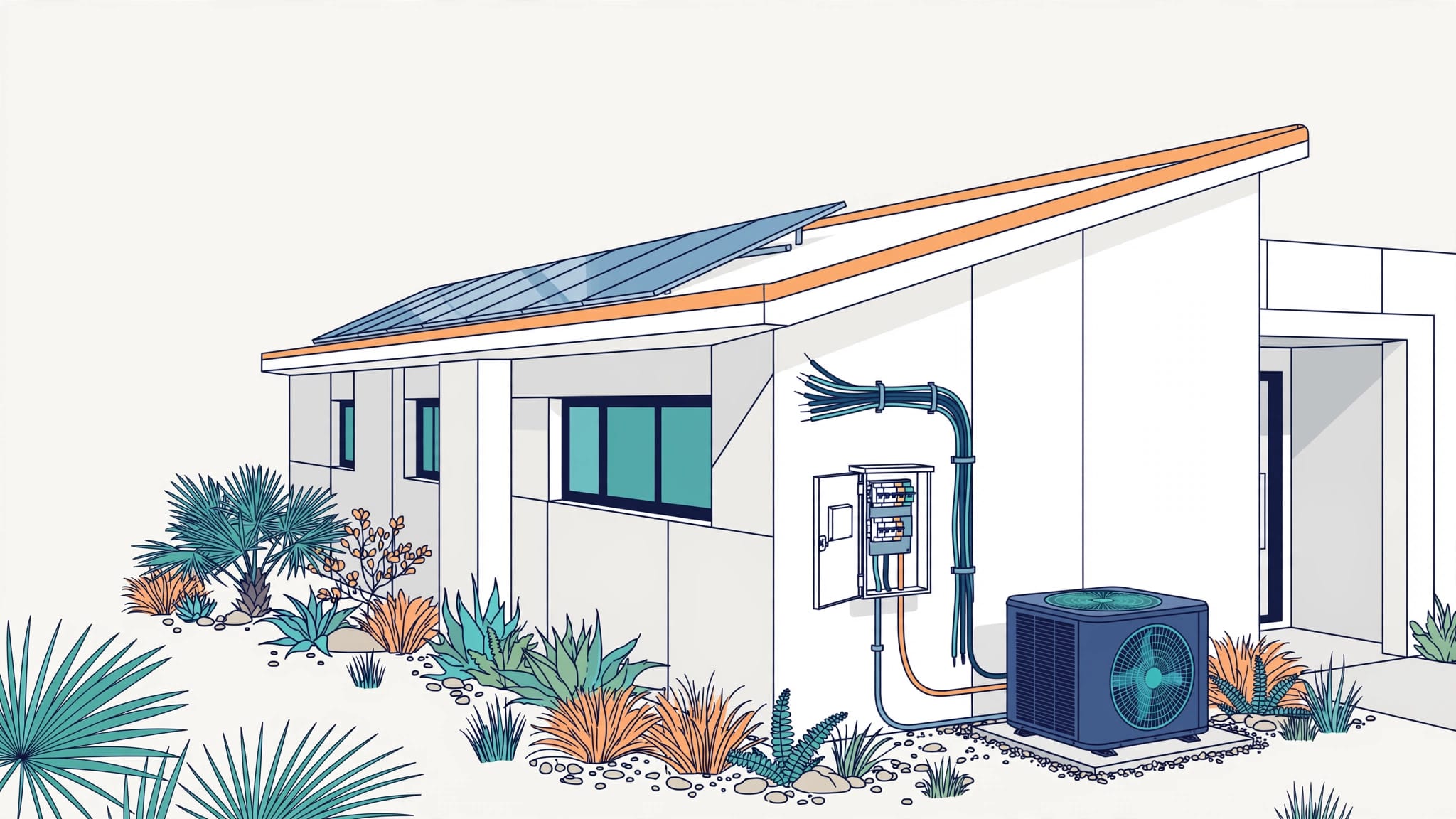
Turn the thermostat off, then use the labeled electrical disconnect or breaker if you can identify it safely. Follow the equipment manual and never open an electrical compartment to find a disconnect.
If you see exposed wiring, water near electrical parts, smoke, a burning smell, or melted insulation, stay clear and arrange professional service. Don't restore power simply to see whether the system starts.
2. Find the air handler and visible drain components
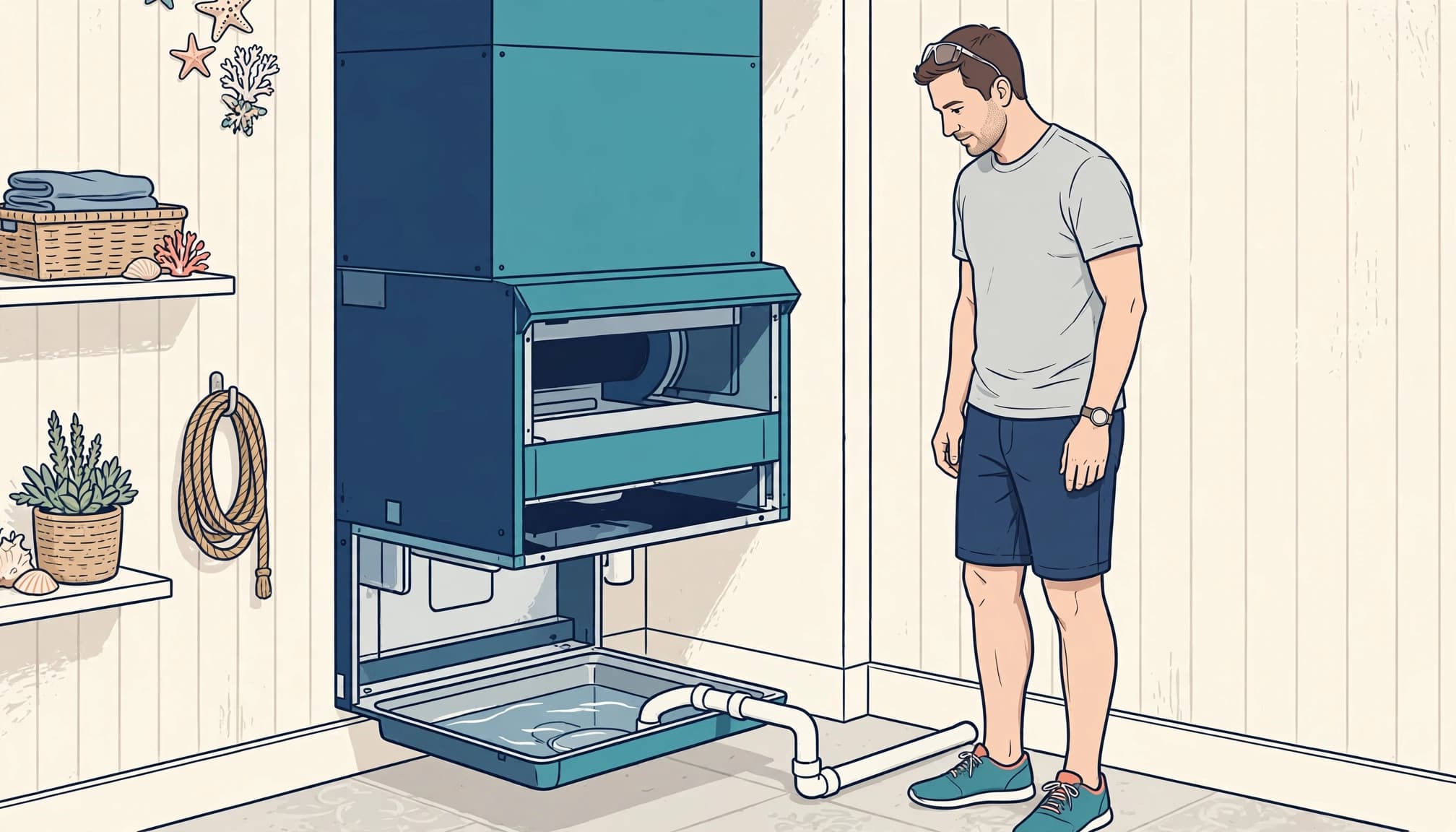
The indoor air handler may be in a closet, garage, attic, or utility room. Look for the accessible pan beneath or beside the unit, the PVC condensate line, and any visible secondary drain or overflow tubing.
Don't move the air handler, lift insulation, climb into an unsafe attic area, or remove sealed covers. Keep boxes, chemicals, laundry products, and wet materials away from the unit. The area should remain dry and accessible.
3. Look for water, stains, and buildup
Use a flashlight from a safe position. Check for standing water, fresh drips, rust-colored marks, algae-like residue, or staining on the pan, nearby wall, ceiling, or floor.
A visible drain opening should not look blocked or slimy. Don't push a wire, screwdriver, hose, or other object deep into the opening. That can worsen a restriction or damage the line.
4. Check the outdoor discharge point
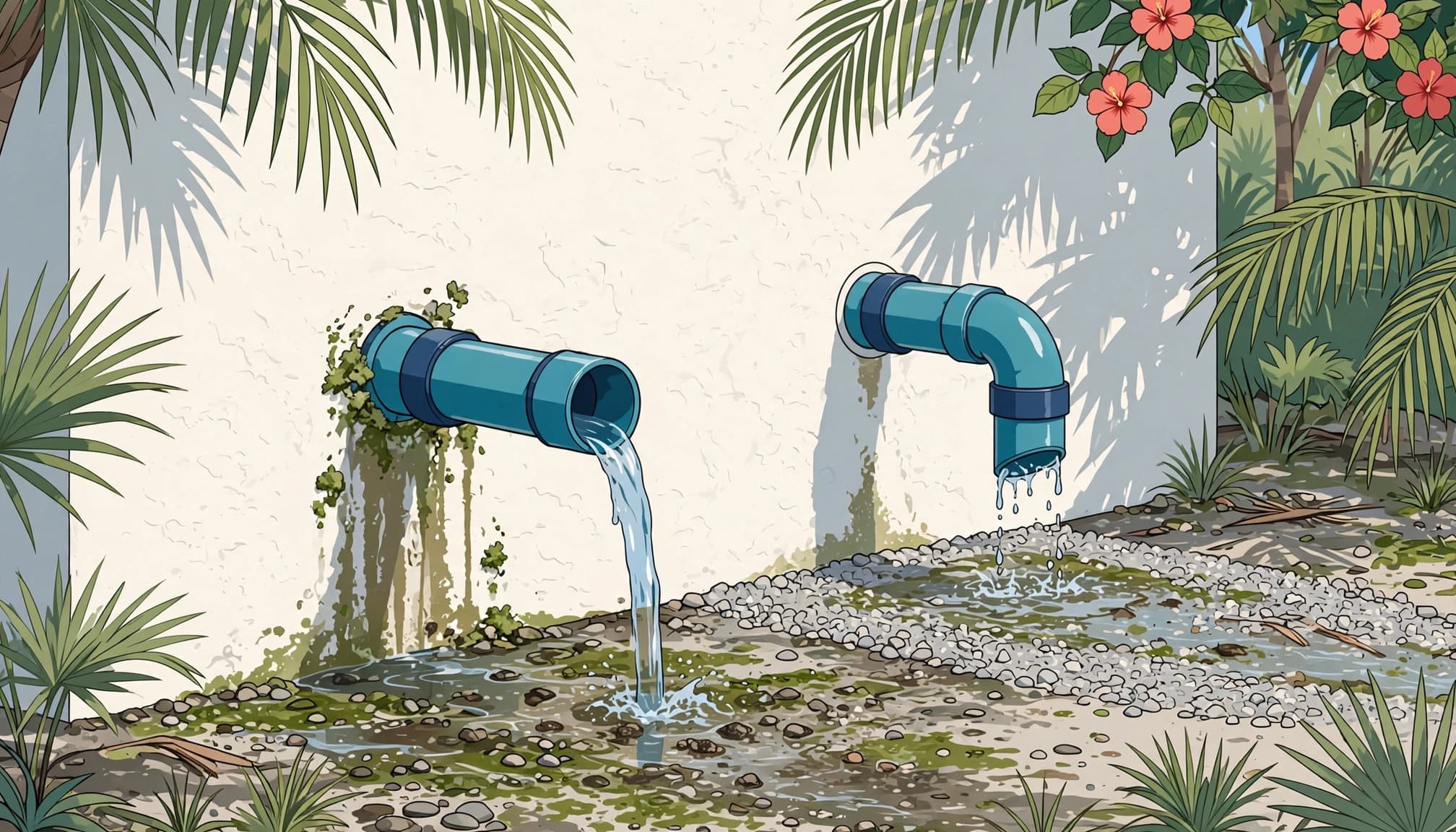
If you can safely reach the condensate outlet, confirm that water has a clear place to drain. Remove only loose leaves or surface debris around the outlet. Don't cut, disconnect, or alter the PVC line.
Take a note of anything unusual, including no visible discharge during a cooling cycle, a slow drip, a clogged-looking opening, or water collecting against the home. Your equipment manual or HVAC technician can confirm whether the line has the correct slope, support, and termination.
Warning Signs Around the Condensate Drain
A safe pan should remain intact, reasonably clean, and free of standing water when the system is operating normally. Several warning signs call for more than routine observation.
Standing water or repeated float-switch shutdowns
Water in the pan can come from a blocked drain, poor drainage, a damaged pan, a condensate pump problem, or another equipment issue. The timing can offer a clue. A shutdown after several hours may point to slow drainage, while an immediate shutdown can indicate water that was already present or a switch or pump problem.
Don't hold down a float, tape it in place, connect wires together, or bypass the safety control. Those actions remove the warning system and can allow an overflow to continue unnoticed.
If the air conditioner turns off because of a float switch, turn off the system and request service. Repeated resets don't clear the cause.
Rust, cracks, shifting, or water outside the pan
Drain pans can rust, crack, or move out of position. A loose drain connection can also allow water to escape before it reaches the line. Older air handlers may be more likely to show these problems, especially in attics, closets, and utility spaces where leaks are easy to miss.
Look for water trails below the pan, damp insulation, peeling paint, soft drywall, or stains that return after the area dries. These are useful clues, but a homeowner shouldn't seal, reposition, or replace the pan without professional guidance.
Read more about damaged AC drain pan warning signs, especially if the system has leaked before.
Algae or slime at the line opening
Damp Florida conditions can support organic buildup inside or around a condensate line. Algae-like material may restrict flow, but its presence alone doesn't identify the exact cause or prove that the line is fully blocked.
Avoid pouring bleach, drain cleaner, or another chemical into the system unless the equipment manufacturer specifically directs it and a qualified person confirms the method. Cleaners can damage materials, create fumes, or move debris into a harder-to-reach section.
When to Stop the Homeowner Inspection
A visual check is useful when it helps you spot a developing problem. It becomes unsafe when you need to open equipment, test components, or work around water and electricity.
Call promptly for these conditions
Contact an HVAC professional when you notice:
- Water in the pan, around the air handler, or on the floor.
- A float switch that trips repeatedly or shuts off cooling.
- A cracked, corroded, shifted, or visibly leaking pan.
- A condensate pump that runs without moving water.
- Ice on the indoor coil or refrigerant line.
- Warm air, weak airflow, short cycling, or an air conditioner that runs constantly.
- A breaker that trips again after one reset.
- Burning smells, smoke, sparks, exposed wiring, or unusual electrical sounds.
Turn the system off when water reaches electrical components or you smell burning insulation. Keep children and pets away from damaged equipment until a technician arrives.
Sunset Gulf HVAC provides professional AC repair services for drain problems, float-switch concerns, frozen coils, and related cooling issues in Babcock Ranch and Southwest Florida.
Avoid repairs that require special training
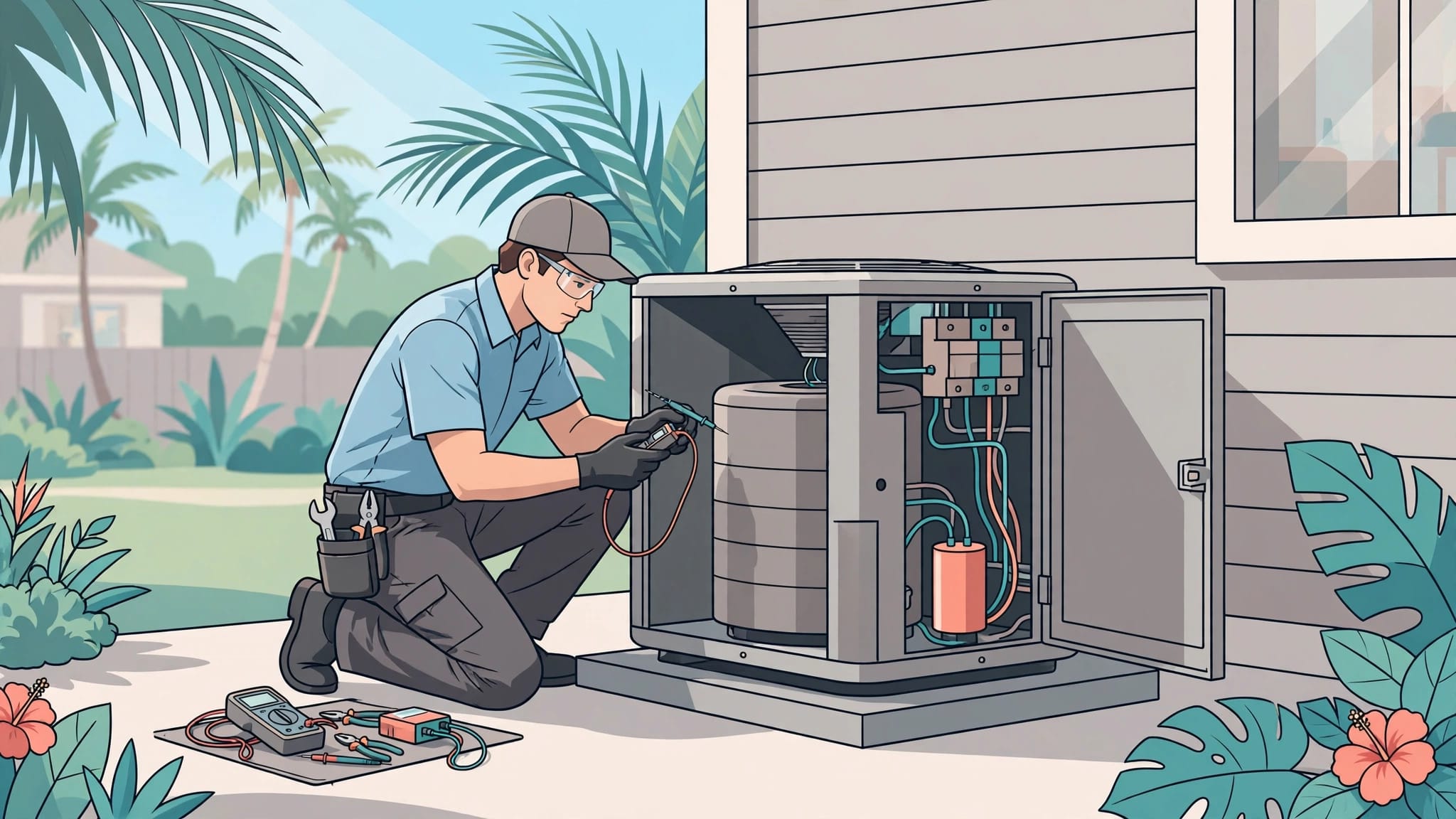
Don't open the condenser cabinet, remove sealed air-handler panels, add refrigerant, replace a capacitor, test live wiring, cut PVC, or move refrigerant lines. These tasks can involve high voltage, stored electrical energy, sharp components, or refrigerant under pressure.
A technician may inspect the primary and secondary drainage paths, test the float switch, check the pan and connections, review airflow and the filter, and examine the coil or condensate pump. The right repair depends on where water collects and why it cannot leave.
Preventive Maintenance for Florida Condensate Drainage
The safest prevention plan combines simple homeowner care with scheduled professional inspections.
Check the air filter monthly during heavy cooling use and replace it according to the filter and equipment manufacturer's guidance. Many homes need a replacement every one to three months, while pets, construction dust, and frequent indoor activity may shorten that interval.
Keep supply vents and return grilles open. Furniture, storage bins, or closed registers can restrict airflow and contribute to coil or drainage problems. Also keep the area around the air handler clear so a leak is easy to see.
Before summer, ask a technician to review the condensate drain, pan, overflow protection, coil, airflow, thermostat, electrical components, and outdoor coil. A complete visit can reveal a small drainage or airflow issue before it becomes a no-cooling call.
For homeowners who prefer scheduled reminders, the Comfort Club HVAC maintenance membership includes two precision maintenance visits each year, one for cooling and one for heating. Listed services include drain-line inspection, safety checks, electrical testing, thermostat calibration, filter inspection, and condenser-coil rinsing.
Regular maintenance can't prevent every failure. It can reduce the chance that a slow drain, dirty filter, weak component, or damaged pan goes unnoticed during peak demand.
Key Takeaways for a Safe Pre-Summer Check
- Turn off power before inspecting accessible drain areas.
- Follow the equipment manual and local codes before any maintenance.
- Look for standing water, stains, algae-like buildup, cracks, rust, and loose connections.
- Check that the visible outdoor drain outlet can discharge water safely.
- Don't poke deep into the line or bypass a float switch.
- Never open sealed HVAC components or handle wiring.
- Treat repeated shutdowns and visible leaks as service issues.
- Keep filters, return grilles, and the air-handler area clear.
- Schedule professional maintenance before the system faces its longest cooling cycles.
FAQ About HVAC Drain Pan Safety
How often should I check the drain pan?
Check the accessible area before heavy summer use and whenever the air conditioner runs for long periods. Also look after a storm, a service visit, or any change in cooling performance. A professional should inspect the drainage system during routine maintenance.
Can I clean a clogged condensate drain myself?
Homeowners can remove loose debris around a visible outdoor outlet, but they shouldn't push objects deep into the drain or use chemicals without equipment-specific guidance. A recurring clog needs professional diagnosis because the cause may involve the pan, drain slope, pump, coil, airflow, or another component.
Why does the air conditioner shut off after running for hours?
A partial blockage may allow some water through while the system produces condensate. After several hours, the pan can fill enough to activate a float switch. A dirty filter, frozen coil, pump problem, or other drainage fault can create similar symptoms, so repeated shutdowns need service.
Is water in the drain pan always an emergency?
It always deserves attention, but the response depends on the amount and location. Turn the system off and call promptly if water is overflowing, reaching electrical components, damaging the home, or returning after drying. Smoke, burning smells, sparks, or repeated breaker trips require immediate shutdown and professional help.
Protect Your Home Before the Humid Season
A safe visual inspection can reveal water, staining, restricted drainage, or pan damage before those problems affect a finished room. The most important step is knowing where the homeowner check ends.
Keep the equipment powered down during inspection, avoid sealed and electrical components, and treat repeated float-switch activity as a service call. In Southwest Florida, dependable HVAC drain pan safety starts with early warning signs and continues with professional maintenance before the system works through its longest cooling cycles.
Recent Posts