How to Check Whether Your Outdoor AC Unit Is Level in Fort Myers
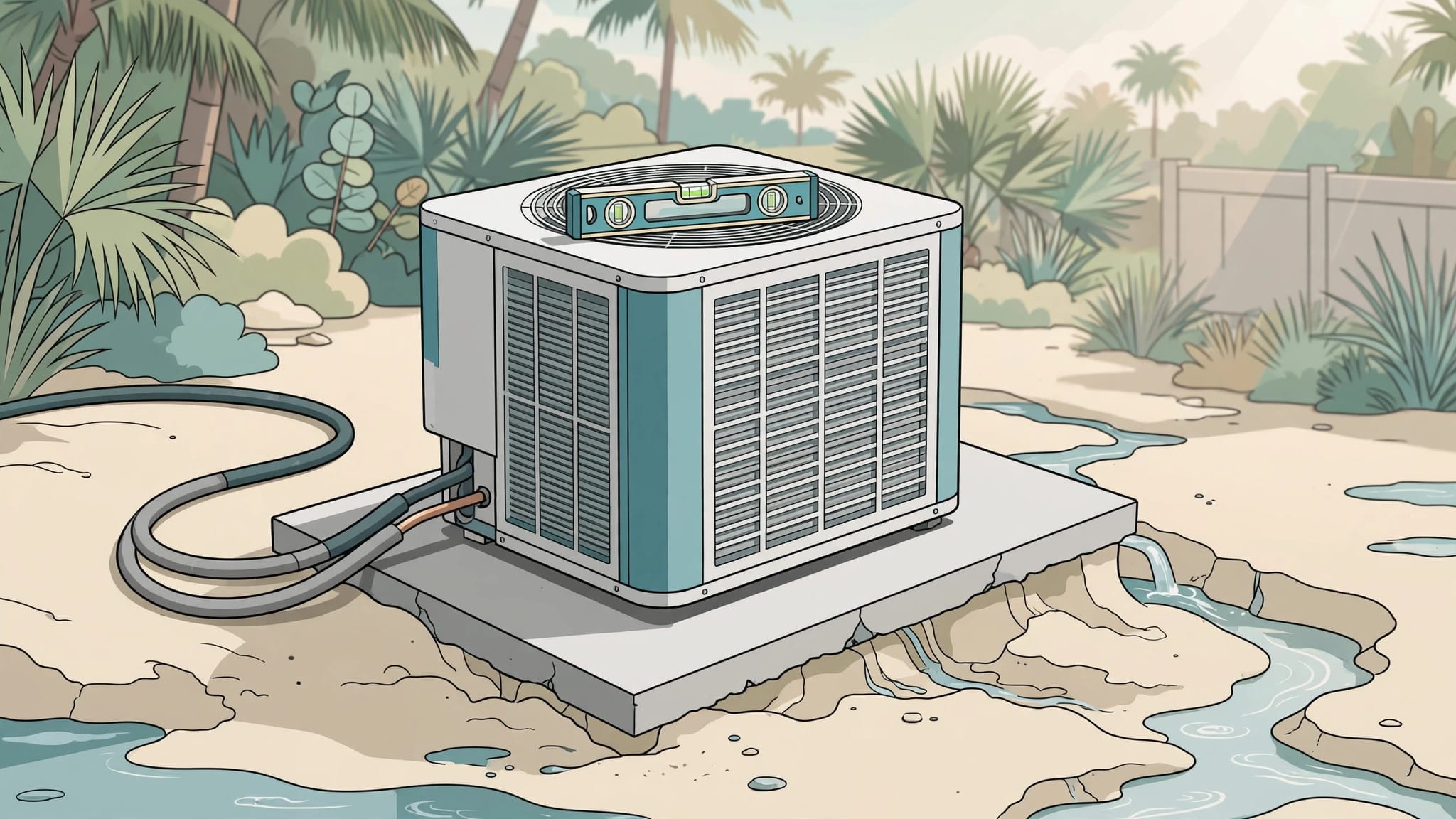
A level outdoor AC unit should sit firmly on its pad, with no visible rocking, sinking, or strain on the refrigerant lines. In Fort Myers, sandy or shifting soil, heavy rain, flooding, and storm runoff can change the ground around a condenser over time.
You can perform a careful visual check without opening the cabinet or touching electrical parts. The inspection can show whether the unit or pad appears uneven, but re-leveling and repairs belong to a licensed HVAC technician.
What a Level Outdoor AC Unit Should Look Like
The outdoor condenser should sit evenly on a stable concrete pad or approved equipment stand. The cabinet should appear upright, and the base should make consistent contact with the surface below it.
A slight visual concern doesn't automatically mean the compressor is damaged. However, a new lean, a sinking pad, or stressed refrigerant lines deserves attention before the problem grows.
Check the condenser and pad separately
Stand several feet away and view the unit from the front, back, and both sides. Look at the cabinet first. Does it appear to lean, or is the cabinet itself straight while the pad looks uneven?
Next, inspect the pad. Watch for:
- Cracks, broken edges, or a pad that has tilted
- Gaps between the pad and the surrounding soil
- Soil washed away from one side
- Mulch, leaves, or debris hiding the base
- Standing water beneath or beside the condenser
- A cabinet that rocks or shifts when the system runs
Don't push the cabinet to test it. Even a small movement can place stress on connected lines or wiring.
Why a visible lean deserves attention
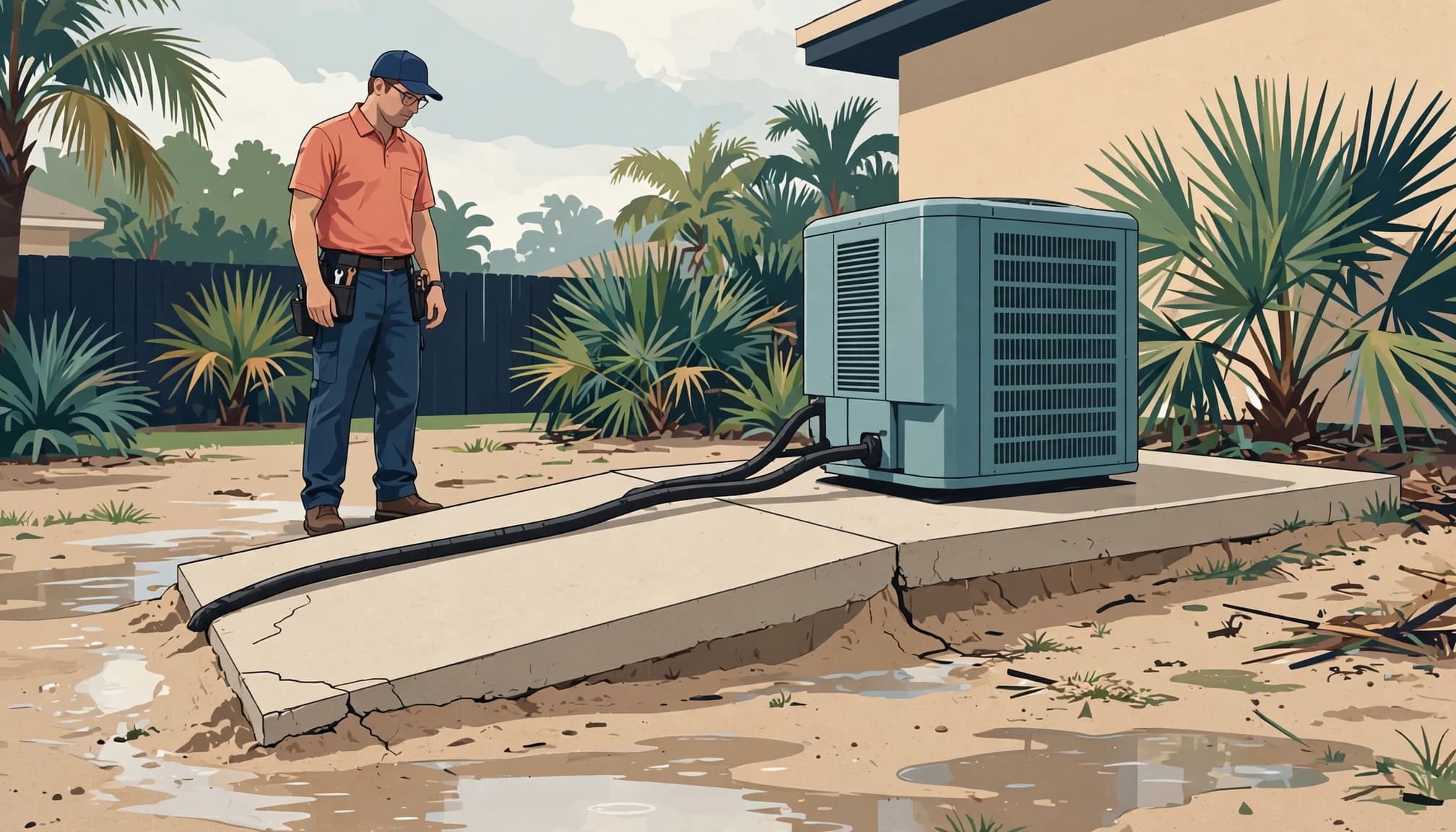
A sloped unit may indicate movement below the equipment rather than a problem with the condenser itself. For example, rainwater can wash soil away from one side of the pad. Saturated ground can also settle after repeated storms.
The concern increases if the unit has changed position since installation, makes new vibration noises, or appears to pull on the insulated refrigerant line. A visual check cannot confirm the condition of the compressor, electrical parts, or refrigerant circuit.
A spirit level can show that a surface is uneven, but it cannot prove that the equipment or foundation is safe.
How to Check a Level Outdoor AC Unit Safely in Fort Myers
Choose a dry, calm period for the inspection. Avoid working around the condenser during lightning, standing water, or active rain.
Before looking closely, turn the thermostat to "Off" and wait for the outdoor fan to stop. Then disconnect power at the nearby outdoor disconnect only if it is clearly intact and you know how to operate it safely. Otherwise, turn off the appropriate HVAC breaker and contact a technician.
Keep clear of electrical components
Never open the condenser cabinet, remove the top grille, or reach through the fan guard. The unit can contain high-voltage components and stored electrical energy even after the thermostat is turned off.
Don't touch capacitors, wiring, the disconnect box interior, exposed conduit, or control parts. Keep dry hands away from the equipment, and stop immediately if you see damaged wiring, a cracked disconnect, smoke, burning odors, or floodwater exposure.
A safe inspection stays outside the cabinet. You are checking position, ground conditions, and visible damage only.
Use a small spirit level without pressing on the cabinet
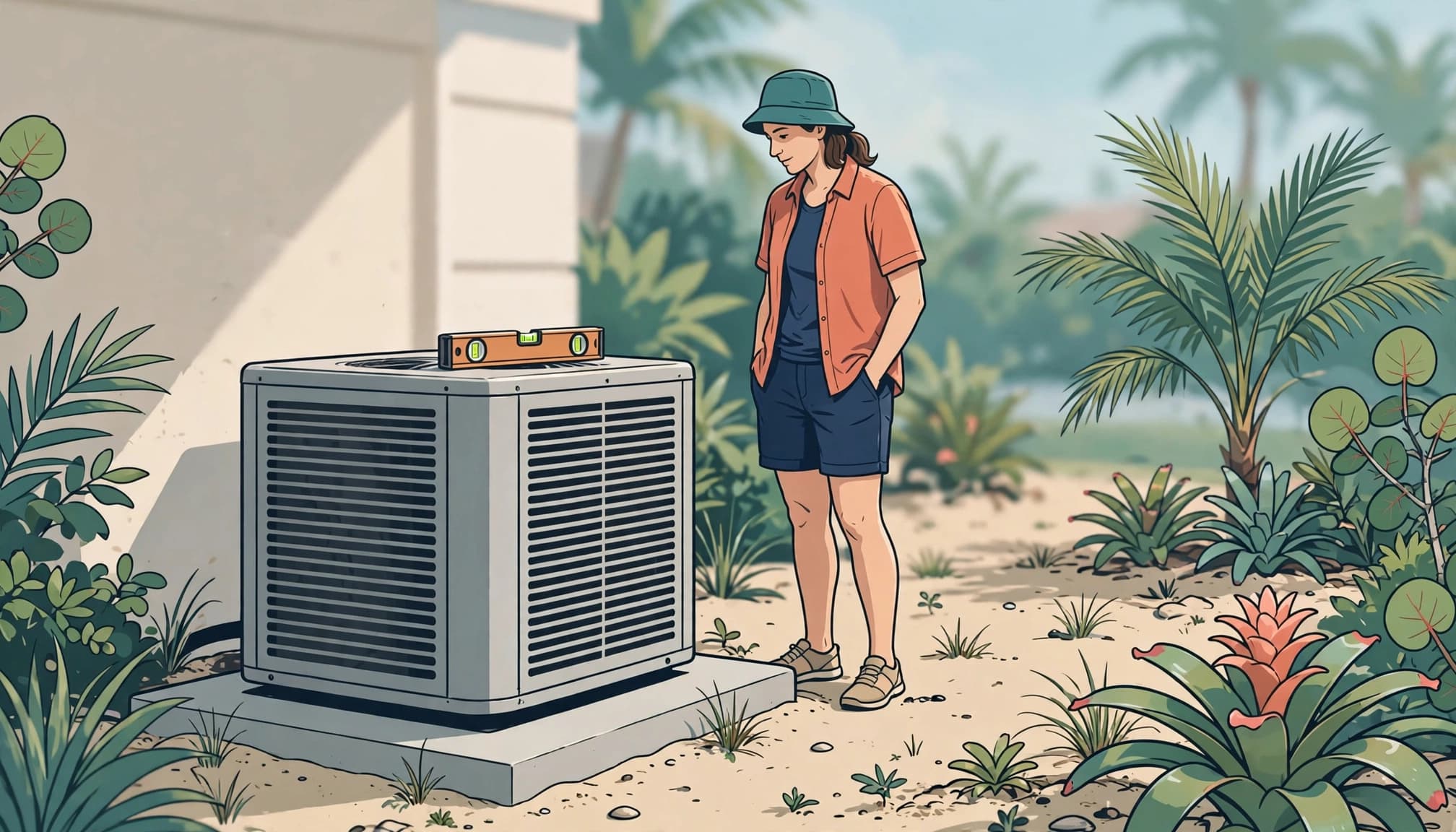
Place a small spirit level gently on a flat section of the top panel, if the surface is accessible without leaning over the fan guard. Don't climb on the unit, place tools on the grille, or press down on the cabinet.
Check the bubble in one direction, then rotate the level 90 degrees and check again. If the bubble moves noticeably, record which side appears low. You don't need to calculate a precise angle or decide whether the equipment meets a manufacturer's tolerance.
The reading is only one clue. A top panel may not provide a perfect reference for the pad, so compare it with the visible base and ground around the condenser.
Inspect the area around the base
Look for fresh erosion, soft soil, cracks, or a low spot that collects water. Check whether roof runoff, irrigation spray, or a downspout directs water toward the pad.
Also inspect the exposed refrigerant line insulation. It should look intact and should not appear sharply bent, pulled tight, or separated where it enters the wall. Don't move the line or try to straighten it.
For a light exterior cleaning, homeowners can follow a guide to how to rinse an outdoor AC unit. Cleaning is separate from leveling, however. Water cannot correct a settled pad, refrigerant concern, electrical fault, or structural damage.
When You Shouldn't Correct the Unit Yourself
A condenser can be heavy, awkward, and connected to lines that cannot safely tolerate sudden movement. Never attempt to lift, slide, jack up, wedge, or re-level the unit alone.
Even placing blocks or shims under one side can create a new problem. The correction may affect the refrigerant lines, electrical conduit, condensate arrangements, vibration, or equipment clearance.
Uneven soil and storm-related settlement
If the pad has sunk, cracked, or tilted, a technician should inspect the equipment and the support beneath it. This is especially important after a period of heavy rain, flooding, drainage changes, or major yard work.
Don't operate a flood-exposed condenser until a qualified professional checks it. Floodwater can affect electrical and refrigeration components even when the cabinet looks clean afterward.
The technician may need to determine whether the issue involves soil movement, pad damage, improper support, drainage, or equipment placement. The right correction depends on what caused the movement.
Refrigerant lines that appear strained
The insulated copper line set connects the outdoor condenser to the indoor equipment. If the condenser moves, the line may bend or pull at connection points.
Call for service if you notice torn insulation, an abrupt bend, oil residue, a loose line support, or a wall penetration that appears damaged. Don't handle the tubing or add insulation as a quick fix.
A visible lean also doesn't automatically mean you need a new air conditioner. If replacement comes up, ask whether the indoor coil, refrigerant, controls, blower, and outdoor condenser are a compatible matched system. Read about Fort Myers outdoor AC unit replacement before approving an outdoor-only replacement.
When to Call an HVAC Professional
Call a licensed HVAC technician when the unit is visibly leaning, the pad has shifted, or the inspection reveals damaged lines, wiring, corrosion, or flood exposure. Professional service is also appropriate when the AC runs but the home stays warm or humid.
Sunset Gulf HVAC lists refrigerant leaks, failed capacitors, dirty condenser coils, poor airflow, frozen coils, drain clogs, and high humidity among common Southwest Florida concerns. A tilted condenser may be unrelated to those issues, so diagnosis is safer than guessing.
Information to give the technician
Write down what you observed before the appointment. Useful details include:
- When you first noticed the lean or uneven pad
- Whether the change appeared after heavy rain or a storm
- Which side of the unit appears low
- Whether the cabinet vibrates, hums, or rocks during operation
- Whether the system cools normally
- Whether you saw standing water, erosion, exposed wiring, or damaged insulation
Take photos from several sides without moving anything. A picture of the pad, surrounding soil, and line set can help the technician prepare.
Watch for separate cooling or electrical symptoms
Turn the system off and request service if the breaker trips repeatedly, the condenser hums without cooling, or the compressor struggles to start. Warm air, short cycling, unusual mechanical noise, and ice on refrigerant lines also require more than a level check.
Emergency service is appropriate for smoke, burning insulation, sparks, violent mechanical noise, or a breaker that trips immediately after startup. Keep people away from damaged equipment, and don't open the cabinet.
For broader local support, Sunset Gulf's Fort Myers AC installation and repair service covers diagnosis, repairs, and system replacement decisions.
Fort Myers Maintenance and Hurricane Preparation
Fort Myers homeowners deal with long cooling seasons, high humidity, salt air in some areas, heavy rain, and seasonal storm risk. These conditions make the ground and outdoor equipment worth checking throughout the year.
A quick walk around the condenser can reveal changes before they become an urgent service call. Keep grass, vines, mulch, leaves, stored items, and patio equipment away from the cabinet. Maintain the clearance specified by the equipment manufacturer.
Protect the pad and surrounding ground
Correct roof runoff and irrigation spray that wash toward the condenser. Keep the pad visible so you can spot new cracks, erosion, or standing water.
Don't build a fence, storage area, or improvised shelter around the unit. The condenser needs open airflow, and technicians need safe access for inspections and repairs.
After heavy rain, look for new soil movement, ant trails, standing water, or debris against the cabinet. If floodwater reaches the unit, shut off power only if you can do so safely and leave the system off until it receives professional inspection.
Prepare before hurricane season
Before a storm threatens Fort Myers, remove patio chairs, grills, toys, planters, tools, and loose branches from the condenser area. Trim nearby vegetation, but don't strike the cabinet or refrigerant lines.
Make sure the outdoor disconnect remains accessible. Follow local emergency guidance, and never approach outdoor HVAC equipment during lightning or flooding.
Storm preparation should include an inspection when the system already shows vibration, settlement, poor cooling, or corrosion. Scheduled service can include coil condition, electrical components, refrigerant performance, condensate drainage, thermostat operation, and airflow. Homeowners who prefer recurring visits can review scheduled air conditioner maintenance through Sunset Gulf HVAC.
Key Takeaways
- Inspect the condenser and its pad from several sides.
- Use a small spirit level only after power is off and without opening the cabinet.
- Look for erosion, cracks, soft soil, standing water, and gaps beneath the pad.
- Never lift, slide, shim, or re-level the condenser yourself.
- Treat strained refrigerant lines, damaged insulation, electrical concerns, and flood exposure as professional-service issues.
- Prepare the area before hurricane season by clearing loose objects and keeping access open.
- A level reading cannot confirm safe operation or diagnose compressor, refrigerant, or electrical problems.
Frequently Asked Questions
Can I level my outdoor AC unit myself?
You can perform a visual check, but you shouldn't lift or reposition the condenser yourself. The unit is heavy and connected to refrigerant tubing, electrical wiring, and other components. A technician should inspect the cause of the uneven position and choose a safe correction.
How do I know whether the pad or the unit is tilted?
View the condenser from multiple sides and compare the cabinet with the pad and surrounding ground. A spirit level can provide another clue, but it cannot identify the cause. Cracks, soil washout, gaps, or standing water point toward a support or drainage concern.
Is a slightly tilted condenser an emergency?
It isn't automatically an emergency, but a new or worsening lean deserves prompt attention. Turn the system off and request service if you also notice vibration, poor cooling, unusual sounds, damaged lines, exposed wiring, repeated breaker trips, or floodwater exposure.
Should I cover the outdoor unit before a hurricane?
Don't cover a running condenser with plastic, a tarp, or sealed material. Clear loose objects from the area and follow local storm guidance. If the equipment is damaged or flooded, keep it off until a qualified technician inspects it.
Conclusion
A safe homeowner check focuses on what you can see: the cabinet position, the pad, surrounding soil, drainage, line insulation, and signs of storm damage. Turn off power before looking closely, avoid electrical parts, and leave all lifting or re-leveling to a licensed HVAC professional.
In Fort Myers, a few minutes spent checking after heavy rain or before hurricane season can reveal movement early. When the unit leans, vibrates, struggles to cool, or shows water or electrical damage, professional diagnosis protects both the equipment and your home.
Recent Posts