Sunset Gulf HVAC • June 9, 2026

How Salt Air Causes Corrosion in Sanibel HVAC Systems

Share this article

How Salt Air Causes Corrosion in Sanibel HVAC Systems

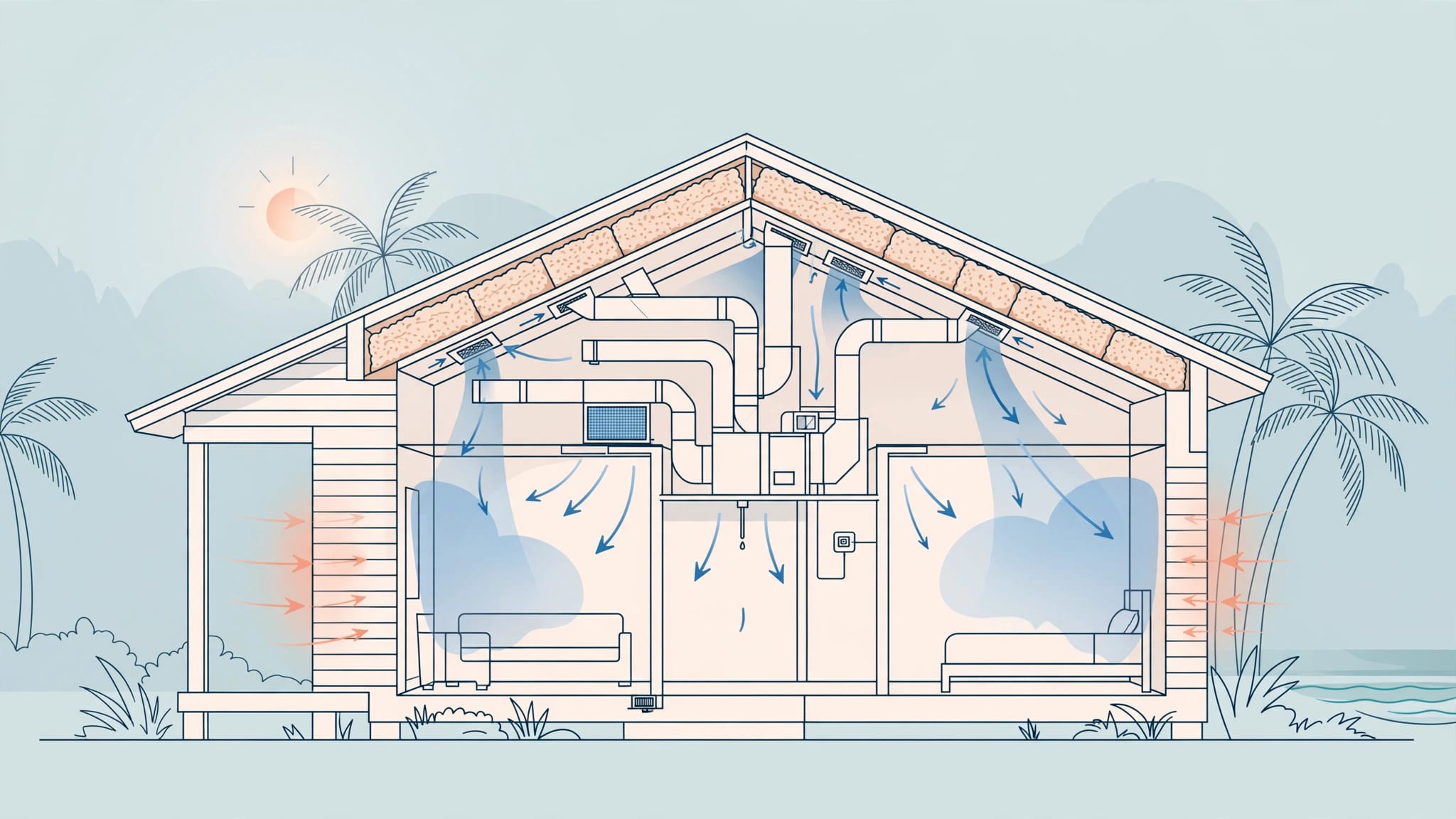
Salt air can age an HVAC system faster than many homeowners expect. On Sanibel, the outdoor unit sits in a mix of salt, humidity, and wind-blown debris almost every day.

That mix leaves a film on metal parts, holds moisture in place, and makes rust spread faster. For coastal Florida homeowners, Sanibel HVAC corrosion often starts small, then shows up as weak cooling, stained panels, and more repair calls. The first signs are easy to miss, so it helps to know where the trouble starts.

How salt air starts the damage

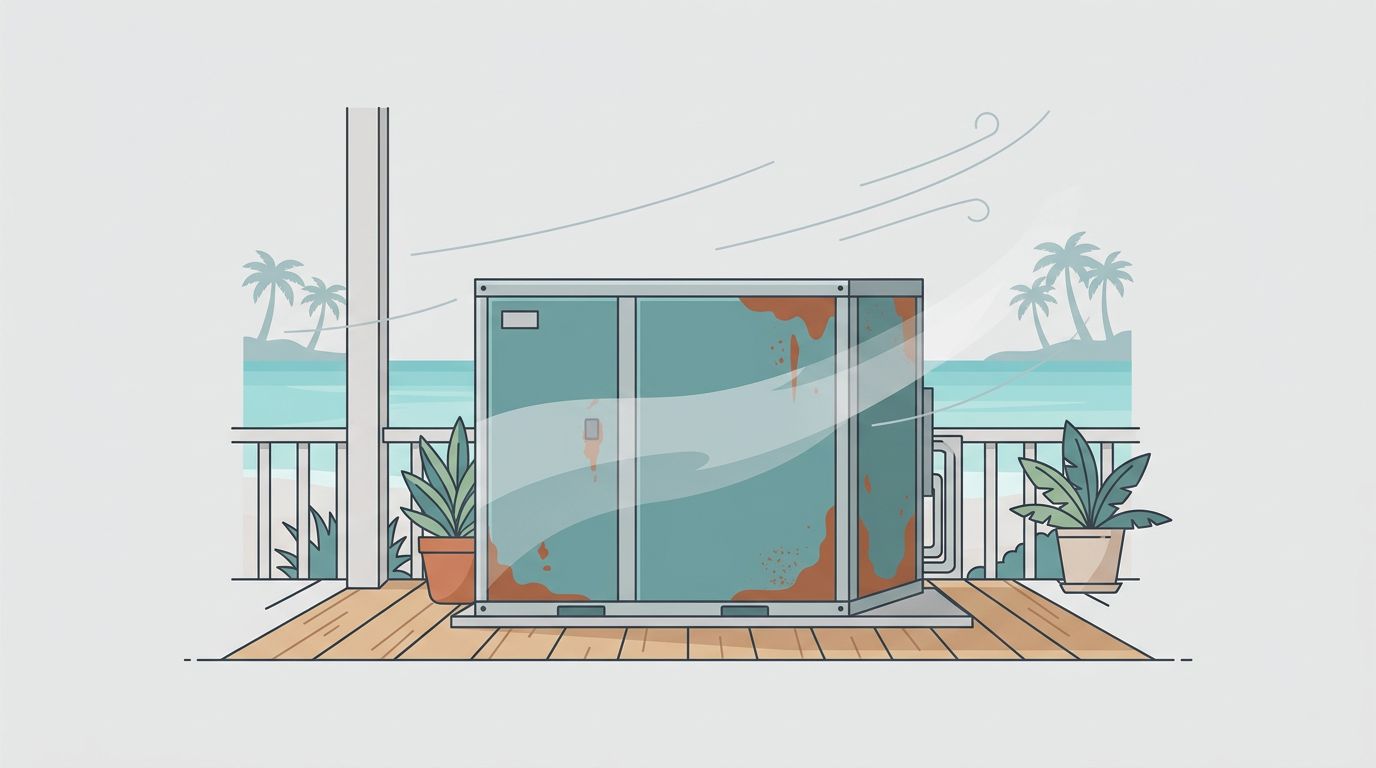
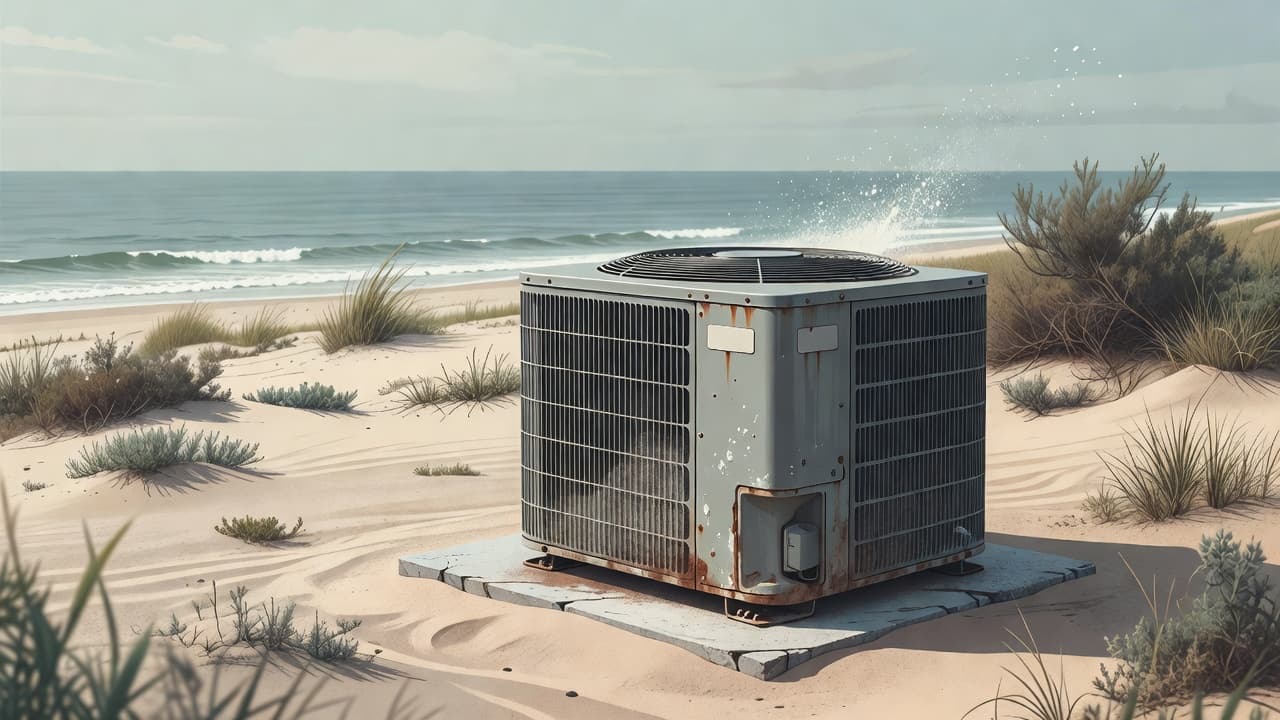
The ocean breeze that feels great on the porch can be rough on an outdoor unit. Salt does not need to soak metal to cause harm. Tiny salt particles settle on the cabinet, coils, and fasteners, then moisture keeps them active.

Humidity makes the problem worse. When the air stays damp, salt does not dry out and fall away. Instead, it clings to the unit and keeps working on the metal surface.

Storms add another layer of stress. Wind pushes salty spray farther inland, and rain can drive debris into the fins and fan housing. After a storm, the unit may look fine from a distance, but the surface can still be coated with a thin, corrosive film.

That is why coastal wear often feels slow at first. A system might cool normally for a while, then lose efficiency little by little. By the time the cabinet shows rust, the inside parts may already be under strain.

Salt air does not need a big opening to get in, it only needs time and moisture.

The biggest issue is that the outdoor unit never gets a true break. Even on calm days, salt hangs in the air. Then the next humid afternoon helps it stick again.

The HVAC parts that wear out first

Some parts take more abuse than others. The outdoor coil sits at the front line, but it is not the only piece that suffers.

Part How salt air hurts it What you may notice
Coils and fins Salt sticks to the metal and speeds up pitting and rust Longer run times, weaker cooling
Cabinet and fasteners Screws, panels, and brackets corrode and loosen Rattling, orange stains, loose covers
Electrical parts Moisture and salt film stress connections Hard starts, tripped breakers, intermittent issues
Fan motor and blades Corrosion adds drag and strain Noisy operation, poor airflow

The table shows why Sanibel HVAC corrosion is more than a cosmetic issue. A rusty panel can turn into a loose panel. A loose panel can let in more moisture. Then the cycle keeps going.

Coils and fins

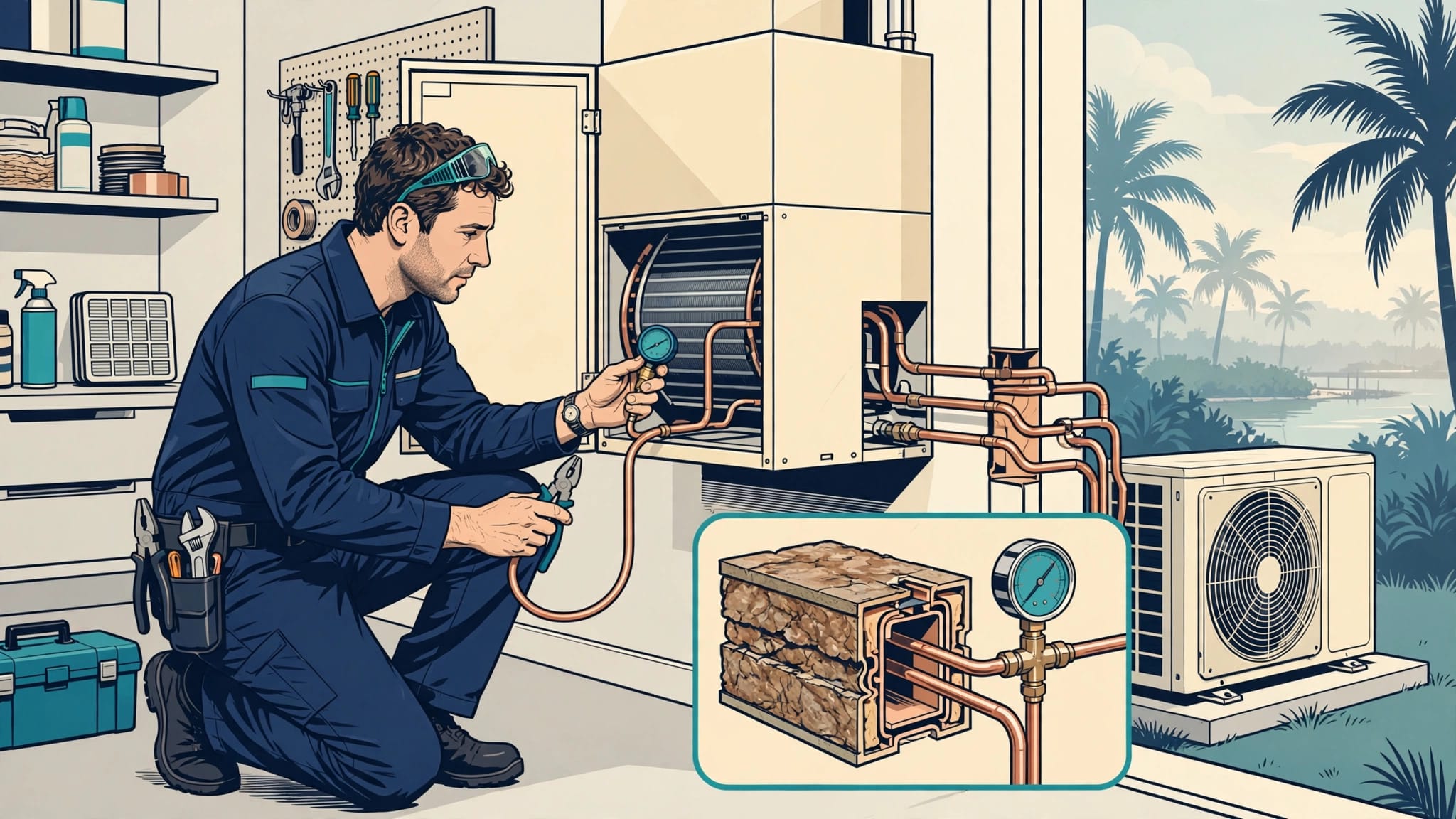
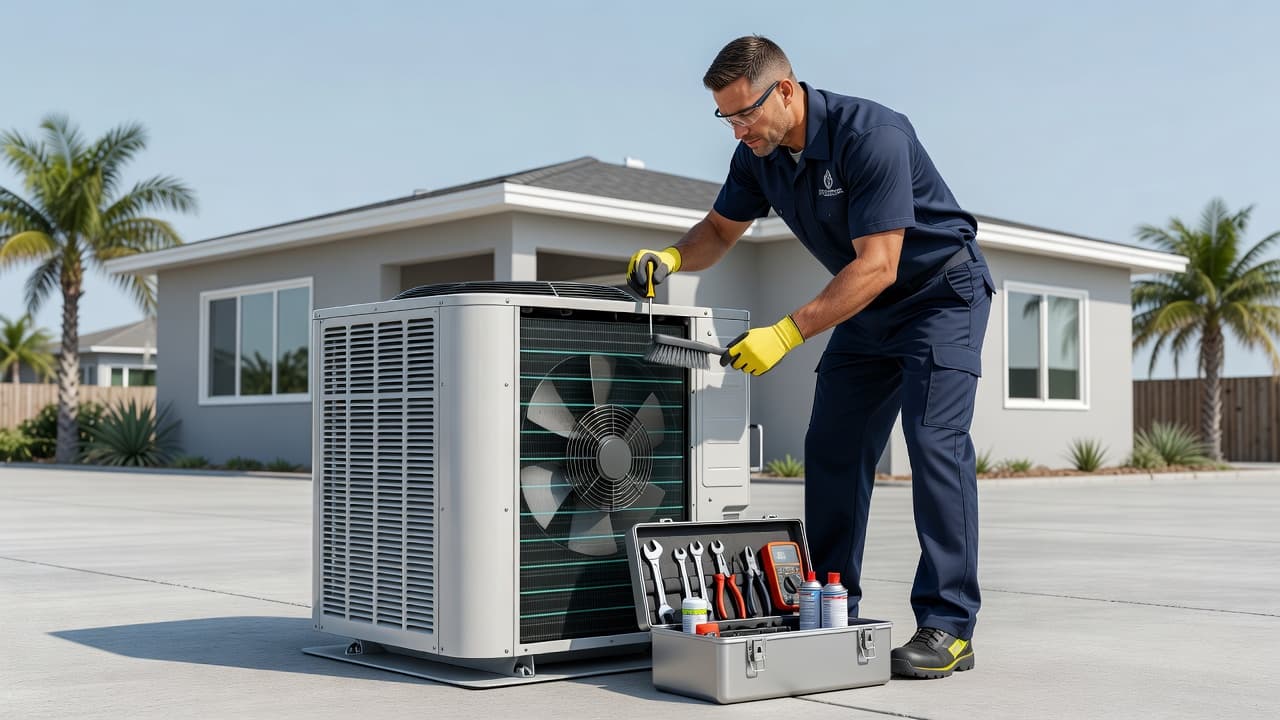
The coil is where your system gives off heat. When salt and grime coat the fins, airflow drops. Heat cannot leave the system as easily, so the unit runs longer.

That extra run time raises wear on other parts too. In a coastal climate, a dirty coil can become a problem faster than many homeowners expect.

Cabinets, fasteners, and mounts

Rust often shows up first on screws, screws heads, and corners of the cabinet. Once corrosion starts there, the metal can stain, flake, and weaken. Loose hardware also makes the unit vibrate more, which adds stress to the whole system.

Electrical parts and controls

Salt and moisture are hard on electrical connections. Contacts can pit, wires can corrode, and small control parts may fail without much warning. That is one reason coastal HVAC systems can have sudden breakdowns after looking fine for months.

Warning signs you can see and feel

The earliest clues are often simple. A homeowner might notice:

  • The house takes longer to cool.
  • Rooms feel muggy even when the thermostat is set low.
  • The outdoor unit starts, stops, or hums more than usual.
  • Rust appears around the cabinet, screws, or base.
  • The breaker trips after a storm or a hard start.
  • Airflow from the vents feels weaker than before.

These signs matter because they point to reduced efficiency and higher breakdown risk. A system that has to fight salt, humidity, and dirt at the same time will work harder just to keep up.

If the house feels sticky on a normal day, do not blame the weather alone. A corroding coil or a stressed electrical part can leave the system short on cooling power. That often shows up first as longer cycles and uneven comfort in different rooms.

A bad odor, too, can be part of the picture. Moisture trapped in a dirty or corroded unit can create a stale smell when the system starts up. It is not always a sign of major failure, but it is worth checking.

Why storms speed up the wear and tear

Sanibel storms do more than bring wind. They push salt deeper into the unit, scatter leaves and sand around the base, and leave behind extra moisture. After heavy weather, a system can shift from normal wear to accelerated damage.

The danger is not only the storm itself. It is what happens after. Debris blocks airflow, wet insulation traps moisture, and a bent fin can keep the coil from shedding heat the way it should. Even a short power outage can lead to hard starts when service returns, which is rough on older electrical parts.

That is why post-storm checks matter. A quick look at the outdoor unit can catch a loose panel, a clogged coil, or standing water before the problem spreads. If the unit was hit by branches, spray, or flooding, it deserves attention right away.

Simple ways to slow Sanibel HVAC corrosion

The good news is that coastal wear can be slowed. You cannot stop salt air, but you can reduce the damage it causes.

Routine care makes the biggest difference. A system that is cleaned, inspected, and kept clear of debris has a better shot at staying efficient through humid seasons.

A few habits help a lot:

  • Clean the coil on a schedule . Salt film and dust should not sit on the fins for long.
  • Ask about protective coatings . Anti-corrosion coatings can help exposed parts hold up better in a coastal setting.
  • Replace filters on time . A clogged filter makes the system run longer, which adds strain.
  • Keep plants and debris away . Trim vegetation back so the unit can breathe and dry out faster.
  • Check the unit after storms . Look for bent fins, loose panels, and leaves packed around the cabinet.
  • Inspect electrical and mounting parts often . Rust on screws and brackets is easier to deal with early.

A post-storm check should start outside, then move inside. Make sure the thermostat responds normally, the vents are pushing steady air, and the breaker has not tripped. If you hear new noises or see fresh rust, the unit needs a closer look.

The safest routine is simple and steady. Clean the outdoor unit, keep the area open, and do not ignore small changes in cooling. Coastal systems do best when problems are caught early, not after a season of salt buildup.

Conclusion

Salt air on Sanibel does not attack one part of your HVAC system, it works on all of them at once. Coils corrode, cabinets rust, electrical parts weaken, and efficiency slips before many homeowners notice a clear failure.

The best defense is regular attention. Clean the coil, keep the area clear, check the unit after storms, and act fast when rust or weak cooling shows up. That steady care can slow Sanibel HVAC corrosion and help your system stay reliable in a coastal climate that never stops testing it.

Recent Posts

By Sunset Gulf HVAC June 8, 2026
Southwest Florida air conditioners don't get much of a break, and Babcock Ranch homes feel that pressure fast. Heat, humidity, pollen, and storm debris all push a cooling system harder than many homeowners expect. A smart AC tune-up checklist catches small problems before they...
By Sunset Gulf HVAC June 7, 2026
When your AC starts acting up in Southwest Florida, the question is rarely whether you need cool air. The real question is whether a repair will carry you through another long cooling season, or whether it's time to replace the system. In places like Babcock Ranch, Fort Myers,...
By Sunset Gulf HVAC June 6, 2026
A clogged AC drain line can do more than leave a puddle on the floor. In Cape Coral, it can stop your system on a scorching afternoon and send water into places it should never reach. That risk is higher here because your AC works hard for long stretches. Humidity, dust, algae...