Should You Cover Your AC Unit During a Florida Winter?
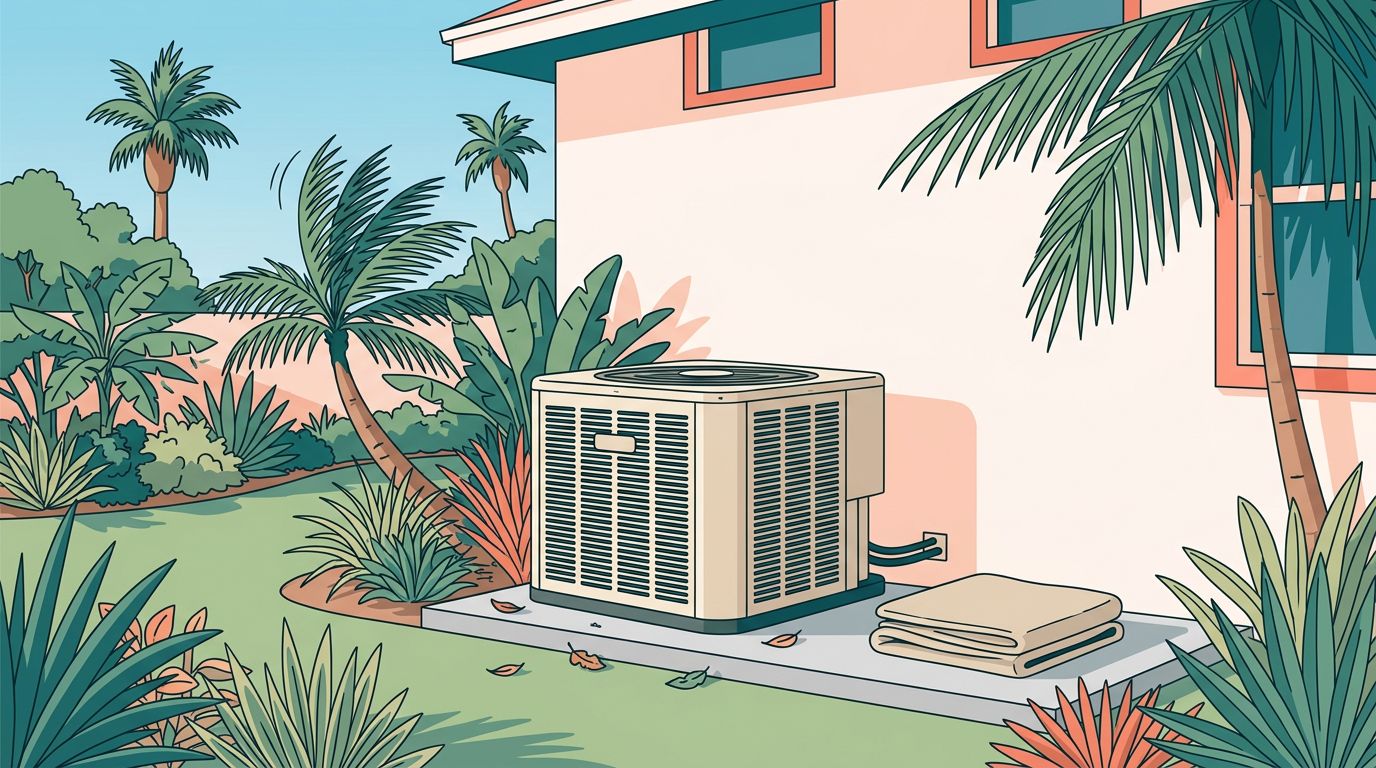
Florida winters may bring cool nights, but they rarely bring the long, freezing conditions seen in northern states. If you've searched "cover AC unit winter," you may be wondering whether a cover will protect your outdoor equipment from rain, debris, and occasional cold weather. For most Florida homes, a full winter cover isn't necessary and can create new problems.
Your outdoor condenser may also need to run during winter, especially when indoor temperatures rise or when your home uses a heat pump. Before covering anything, identify your system, check the manufacturer's instructions, and consider advice from a qualified HVAC professional.
Key Takeaways
- Most Florida air conditioners should remain uncovered during winter.
- A full cover can trap moisture, encourage corrosion, and restrict airflow.
- Heat pumps must stay uncovered because they can run in heating mode.
- Clean debris around the condenser, but don't block its airflow.
- Use only a manufacturer-approved cover when the equipment will stay off for an extended period.
Florida Winters Usually Don't Require a Covered AC Unit
An air conditioner in Babcock Ranch or Southwest Florida faces a different winter environment than one in Minnesota. Temperatures can drop, but extended freezes are uncommon. Your outdoor unit is designed to sit outside through rain, humidity, sunlight, and changing weather.
The condenser cabinet protects the electrical and mechanical components under normal conditions. It doesn't need a blanket for a few cool nights. In fact, covering it may hold moisture against the metal cabinet and coil after rain or heavy dew.
Florida's winter weather can also change quickly. A cool morning may turn into a warm afternoon when your home needs air conditioning. If the condenser has a full cover in place, someone must remember to remove it before turning on the system. Running an air conditioner with a cover over the outdoor unit can restrict airflow and cause overheating or mechanical damage.
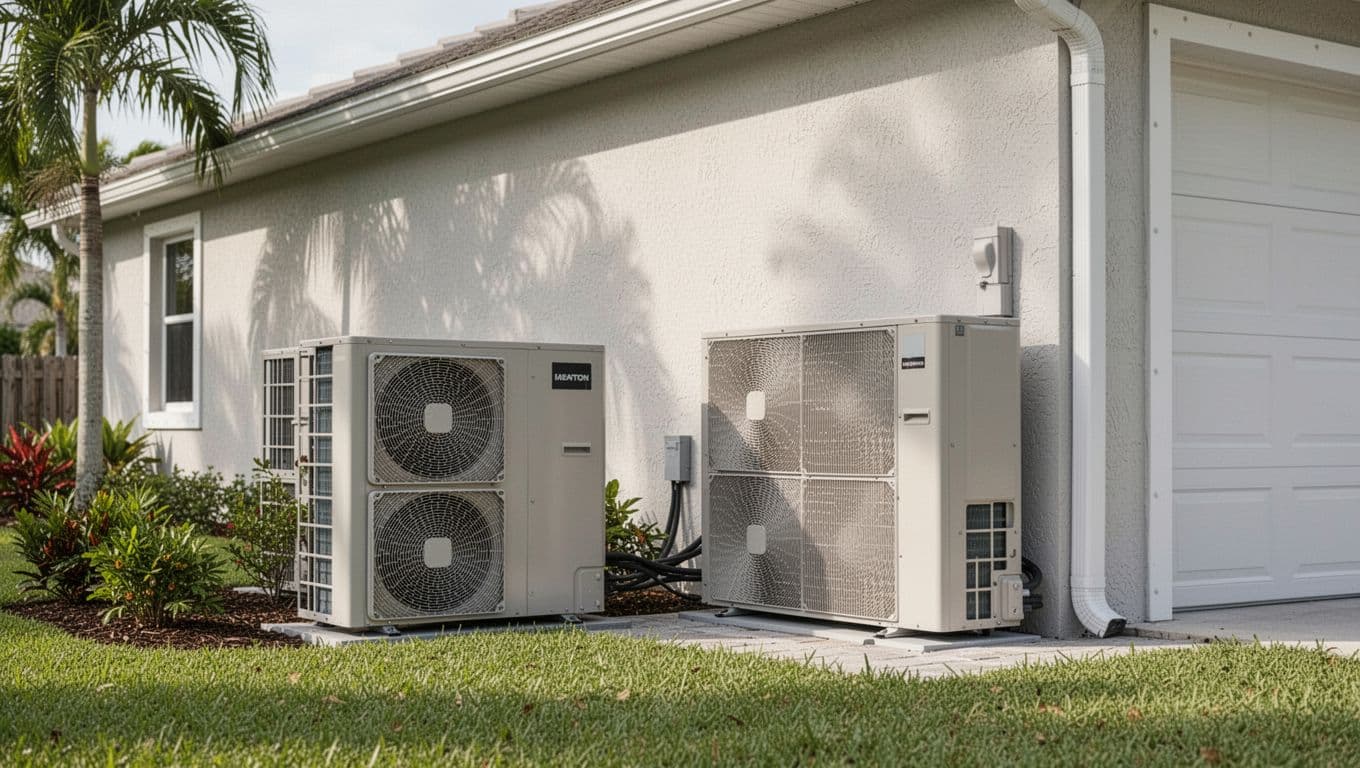
In coastal areas, salt air deserves more attention than cold weather. Salt deposits can contribute to corrosion on coils, fasteners, and electrical connections. A cover won't solve salt exposure, especially if it traps damp air inside. Regular cleaning and professional maintenance provide better protection.
Keep at least the manufacturer's recommended clearance around the condenser. Remove leaves, palm fronds, grass clippings, and other debris before they collect around the cabinet. Also trim plants that have grown close to the unit, but don't use landscaping to hide or enclose it.
Should You Cover AC Unit Winter? Start With the System Type
The right answer depends on whether you have a standard air conditioner or a heat pump. These systems can look similar outdoors, but they don't operate the same way during cooler weather.
A standard central air conditioner usually provides cooling only. If you don't need cooling for a short period, the outdoor condenser can remain uncovered. Its cabinet and coil are built for outdoor exposure, and normal Florida rain won't damage a properly installed unit.
A heat pump can provide both cooling and heating. When your thermostat calls for heat, the outdoor unit runs in winter. Covering it could block the airflow required for heat transfer. It may also cause the system to overheat, shut down, or suffer damage.
Check your thermostat, indoor equipment, and outdoor cabinet for clues. The word "heat" on the thermostat doesn't always confirm that you have a heat pump, because some homes use electric heat strips with a standard air conditioner. Your installation paperwork or equipment model number can provide a clearer answer.
When you're unsure, ask an HVAC technician before putting a cover over the unit. A professional can identify the system, check its operating condition, and explain whether any seasonal protection is appropriate. Follow the installation manual rather than relying on a generic cover sold for another model.
If the outdoor unit can run in heating mode, keep it uncovered and clear of leaves, furniture, decorations, and other obstructions.
Homeowners who leave Florida for several weeks may wonder whether a vacant property needs different treatment. The safest approach depends on the thermostat settings, plumbing, security arrangements, and HVAC equipment. Don't shut off power or cover the condenser without confirming the correct procedure for your system.
Why a Full AC Cover Can Cause Problems
A cover sounds protective because it keeps leaves and rain away. However, a sealed or non-breathable cover can create a damp pocket around the condenser. That moisture may remain after storms, overnight condensation, or high humidity.
Over time, trapped moisture can contribute to:
- Rust on the cabinet and mounting hardware
- Corrosion on copper tubing, coils, and electrical connections
- Mold or mildew growth inside the covered area
- Pest activity from insects or small animals seeking shelter
- Reduced airflow if the cover remains in place during operation
Plastic tarps are particularly risky. They can trap water, flap against the cabinet in strong wind, and tear loose during a storm. A tight wrap can also hide damage that should be found during a visual inspection.
Some covers are marketed as universal protection for outdoor condensers. Universal sizing doesn't mean universal compatibility. The cover may block required ventilation, fit poorly, or conflict with the manufacturer's instructions.
A top-only shield can also create confusion. It may keep some falling debris off the unit, but it can still trap moisture if the sides are enclosed. It may also blow into the fan area during a windy day. If you believe your equipment needs a special shield, have a qualified HVAC professional verify the product and installation.
The best winter protection is often simple: keep the area clean, allow airflow, and schedule maintenance before the next season of heavy cooling.
How to Prepare an Outdoor AC Unit for Florida's Cooler Months
Winter preparation doesn't require wrapping the condenser. A short inspection and cleanup can help you spot problems before they become summer breakdowns.
First, look around the unit. Remove leaves, branches, toys, tools, and other loose items. Maintain clear space around the condenser based on the manufacturer's requirements. Don't place storage bins or patio furniture beside it during the cooler season.
Next, inspect the cabinet and the refrigerant lines without opening electrical panels. Look for heavy rust, damaged insulation, bent coil fins, loose panels, or signs of animals. If you see exposed wiring, oil residue, or physical damage, keep clear and contact an HVAC professional.
You can remove light debris from the exterior with the power turned off, but use care around the coil fins. They bend easily, and aggressive cleaning can reduce airflow. Never spray water into electrical components or remove service panels unless you're qualified to do so.
Check the thermostat and air filter as well. A dirty filter can reduce indoor airflow and make the system work harder whenever cooling resumes. If your home uses a smart thermostat, review its schedule so the temperature doesn't trigger unnecessary heating or cooling while you're away.
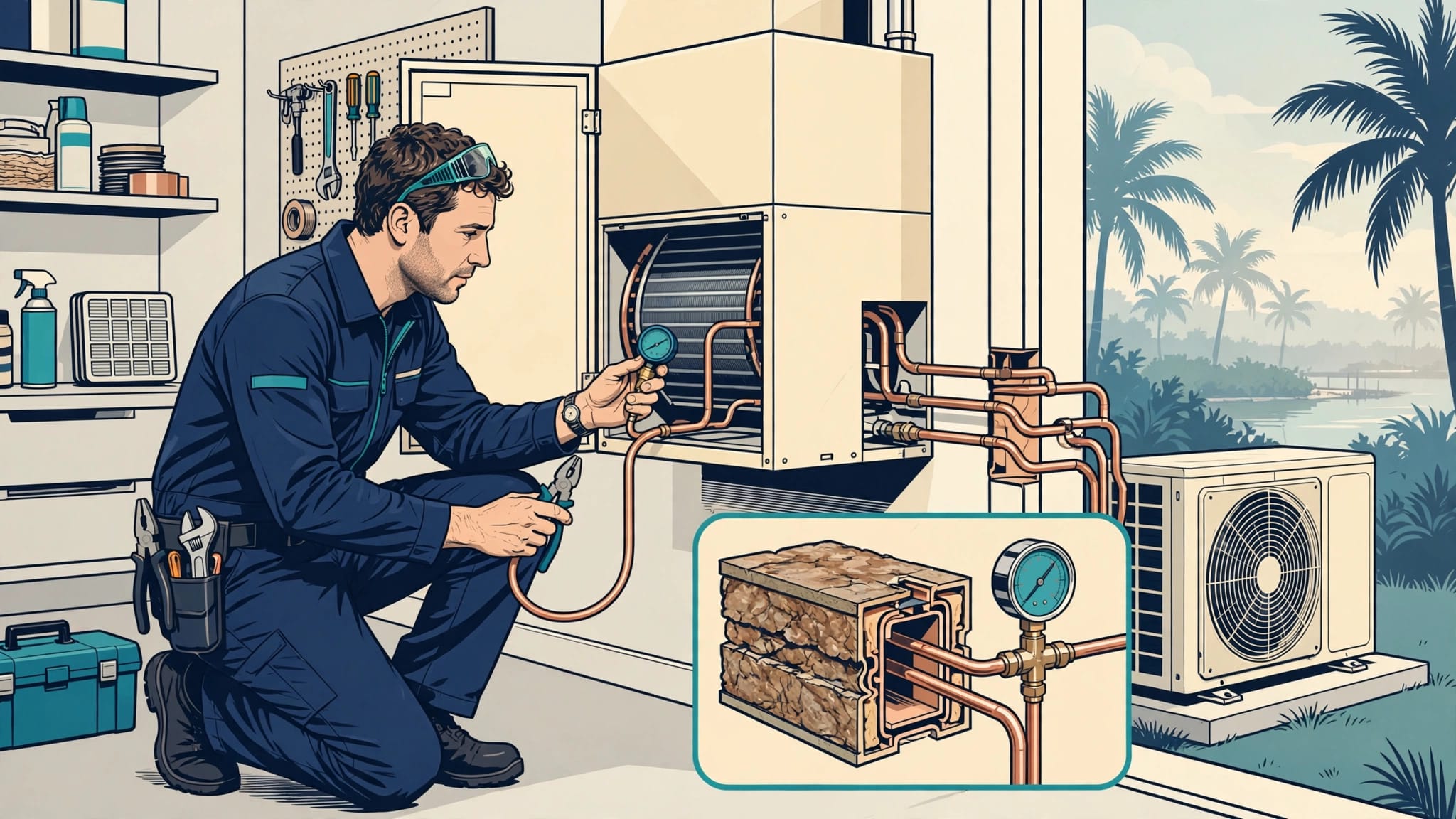
A professional tune-up can include condenser coil cleaning, electrical and capacitor testing, thermostat checks, drain-line inspection, and filter review. Sunset Gulf HVAC's year-round HVAC maintenance program is one local option for homeowners who want scheduled service and priority support.
Finally, make sure the outdoor disconnect and system controls remain accessible. Don't build a cover, fence, or storage area around the condenser. Technicians need safe access for diagnosis and repairs, and the system needs open air to operate correctly.
When an AC Cover May Make Sense
There are limited situations where a cover may be appropriate. For example, a property owner might leave a standard cooling-only system shut down for an extended vacancy in a region with unusual conditions. Even then, the cover should match the equipment and the manufacturer's requirements.
A suitable cover should be approved for the specific unit , breathable, correctly sized, and installed according to the product instructions. It should never be a plastic sheet, sealed wrap, or improvised tarp.
Ask a qualified HVAC professional before covering the condenser if:
- The system will remain off for an extended time
- You own a vacation property or vacant home
- The unit sits beneath heavy tree cover
- Salt air or storm exposure has caused visible corrosion
- You aren't sure whether the system is a heat pump
- Your manufacturer's instructions are missing or unclear
A professional may recommend leaving the equipment uncovered while addressing the actual concern, such as corrosion, poor drainage, damaged insulation, or inadequate clearance. If a cover is appropriate, ask how often you should remove it for inspection and what to check before restarting the system.
Never turn on the air conditioner while any cover remains in place. Before operation, remove the cover completely, inspect the top and sides, and confirm that no animal, nest, standing water, or debris has entered the cabinet.
What to Do Before You Run the AC Again
Florida doesn't always provide a clean break between heating and cooling seasons. Your air conditioner may sit unused for days and then become necessary during a warm spell. Before switching the thermostat to cooling, walk outside and inspect the condenser.
Confirm that the fan area is clear and that no cover, bag, branch, or decoration rests on the unit. Check that the cabinet looks intact and that the refrigerant-line insulation hasn't deteriorated. Inside, replace a dirty filter and make sure supply vents aren't blocked.
Start the system at a normal temperature setting rather than forcing a dramatic temperature change. Listen for unusual grinding, rattling, buzzing, or repeated clicking. Watch for water where it shouldn't be, burning smells, short cycling, or air that remains warm.
Turn the system off and call a qualified HVAC technician if you notice a damaged wire, smoke, a strong electrical odor, refrigerant concerns, or repeated breaker trips. Don't remove panels or attempt electrical repairs yourself.
These simple checks help prevent a forgotten cover from becoming an expensive mistake. They also give a technician useful information if the unit needs service.
Conclusion
For most Florida homeowners, the answer to "cover AC unit winter" is no. A standard outdoor condenser can usually remain uncovered, while a heat pump must stay open because it may operate during cooler weather.
Keep the unit clean, dry, accessible, and free of obstructions. Follow the manufacturer's instructions, and contact a qualified HVAC professional when the system type or seasonal shutdown procedure isn't clear. In Florida, proper airflow and routine care protect your AC better than a full winter cover.
Recent Posts