Sunset Gulf HVAC • June 6, 2026

7 Signs Your AC Drain Line Is Clogged in Cape Coral

Share this article

7 Signs Your AC Drain Line Is Clogged in Cape Coral

A clogged AC drain line can do more than leave a puddle on the floor. In Cape Coral, it can stop your system on a scorching afternoon and send water into places it should never reach.

That risk is higher here because your AC works hard for long stretches. Humidity, dust, algae, and mold can all build up inside the condensate line. A small blockage can turn into a shutoff, a leak, or both.

The good news is that your system usually gives warning signs first. If you know what to look for, you can catch the problem before it damages drywall, flooring, or your air handler.

Why Cape Coral homes see drain line clogs so often

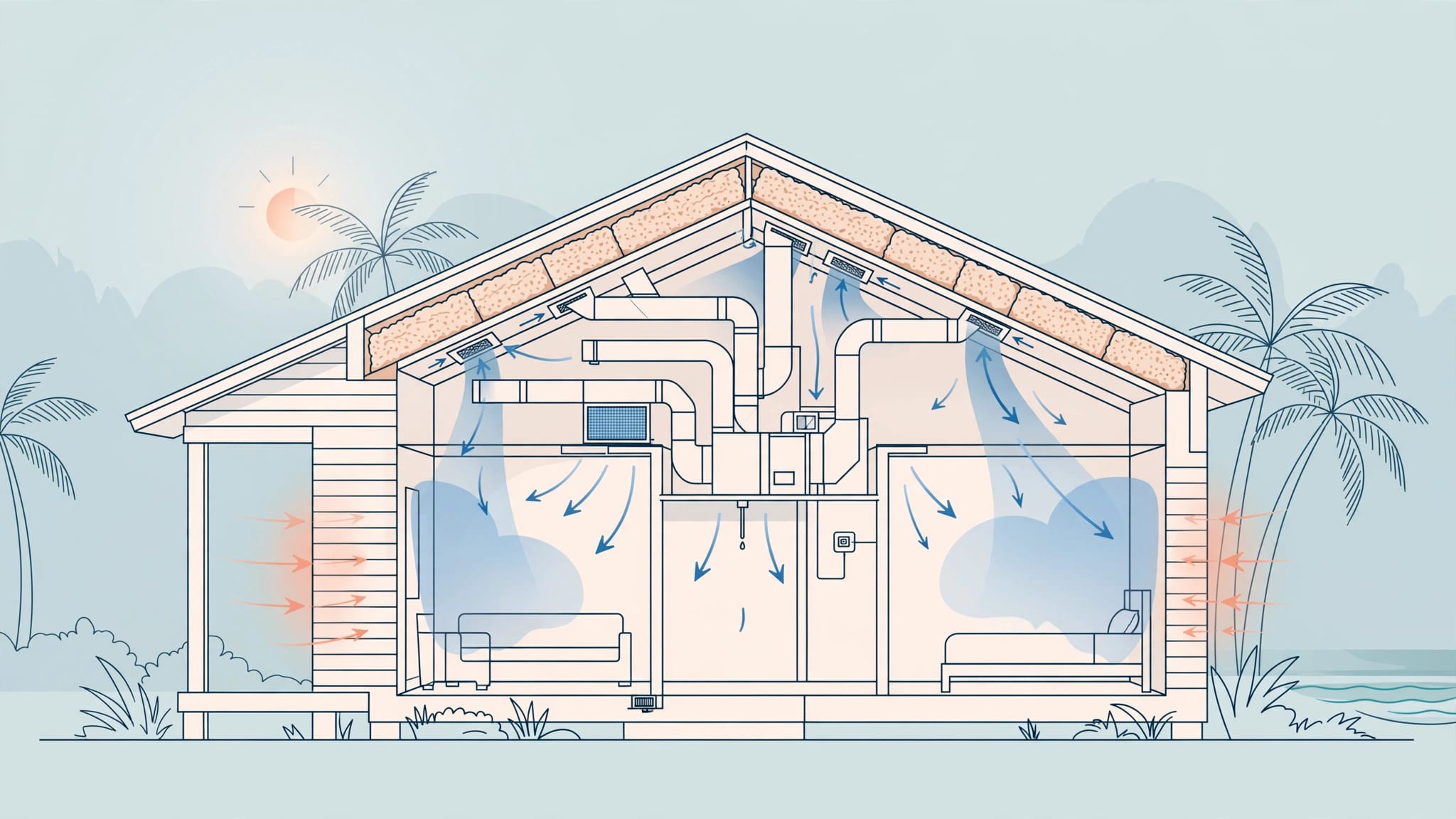
Your AC pulls moisture from the air every time it runs. That water collects on the indoor coil, then drains through a narrow line that leads outside or to another drain point.

In Southwest Florida, that line has a tough job. The AC runs for months at a time, and the constant moisture creates a perfect place for algae and slime to grow. Dust, pet hair, and tiny bits of debris can also wash into the line and slow it down.

A drain line rarely fails all at once. It usually clogs little by little, then gives you a messy surprise.

Once that buildup starts, water has nowhere to go. Then the warning signs begin.

1. Water pooling around the indoor unit

The clearest sign is water where it should not be. You may see a puddle near the air handler, a wet drain pan, or damp flooring around the unit.

This happens when condensate cannot move through the line fast enough. Instead of draining away, it backs up and spills over. In a Cape Coral home, that can happen fast because the AC may produce a lot of water on sticky afternoons.

The damage can spread beyond the unit. Water can stain ceilings, soak insulation, and warp wood trim. If you notice active pooling, turn the system off and check whether the drain pan is full. If the leak comes back, schedule service right away.

2. Your AC shuts off by itself

A clog can trigger the float switch, a safety device that turns the system off when water rises too high. That shutdown protects your home, but it also tells you something is wrong.

If your AC keeps stopping for no clear reason, a backed-up drain line is one possible cause. The system may restart after a reset, then stop again once the pan fills. That cycle puts stress on the equipment and leaves you without cooling when you need it most.

Don't keep resetting the unit over and over. If you see water in or near the drain pan, or if the shutdown happens on a humid day, the drain line needs attention. Repeated shutoffs usually mean the problem is still there.

3. You smell musty air near the vents or air handler

A sour, damp, or musty smell often points to standing water somewhere in the system. When the drain line slows down, moisture can sit in the pan or around the coil long enough for algae and mold to grow.

That smell may be strongest near the indoor unit, but you can sometimes notice it in the rooms too. It can make the whole house feel stale, even when the temperature is comfortable.

The smell matters because it can affect indoor air quality. If your filter is clean and the odor still returns, the drain line may be holding water. A technician can clear the blockage and look for any growth around the coil or pan.

4. The house feels sticky even when the AC is running

A healthy AC does more than cool the air. It also removes humidity. When the drain line is clogged, the system may not pull moisture out as well as it should.

You may notice that the thermostat says the home is cool, but the rooms still feel damp or clammy. Closets may feel humid, and sheets may feel slightly wet or heavy. That extra moisture is a problem in Cape Coral, where indoor humidity can jump quickly on hot days.

Too much humidity can feed mold growth on walls, furniture, and inside the air handler closet. If your home feels sticky for longer than usual, don't ignore it. It can be one of the earliest signs that drainage is backing up.

5. You see water stains, peeling paint, or soft drywall

A slow clog often causes damage before it causes a full puddle. Water may seep into nearby drywall, ceiling panels, or trim and leave stains behind.

Look for yellow marks, bubbling paint, warped baseboards, or soft spots near the air handler closet or ceiling below the unit. These signs mean moisture has been hanging around for a while.

That kind of damage gets expensive fast. Drywall repairs, paint, and insulation work can cost more than a simple drain cleaning. If you spot stains, find the source before you patch the wall. Otherwise, the moisture usually comes back.

6. You hear gurgling, bubbling, or dripping sounds

Drain line problems often make noise before they make a mess. A partially blocked line can trap air and water, which creates gurgling or bubbling sounds near the indoor unit.

You may also hear a faint dripping sound that keeps going after the system should have settled down. That can mean condensate is moving through the line slowly, then backing up again.

Those sounds matter because they often show up before a full overflow. In other words, your AC is already struggling to drain. If the noise is new, note when it happens and how long it lasts. A tech can use that detail to track down the blockage faster.

7. You see little or no water dripping outside during heavy AC use

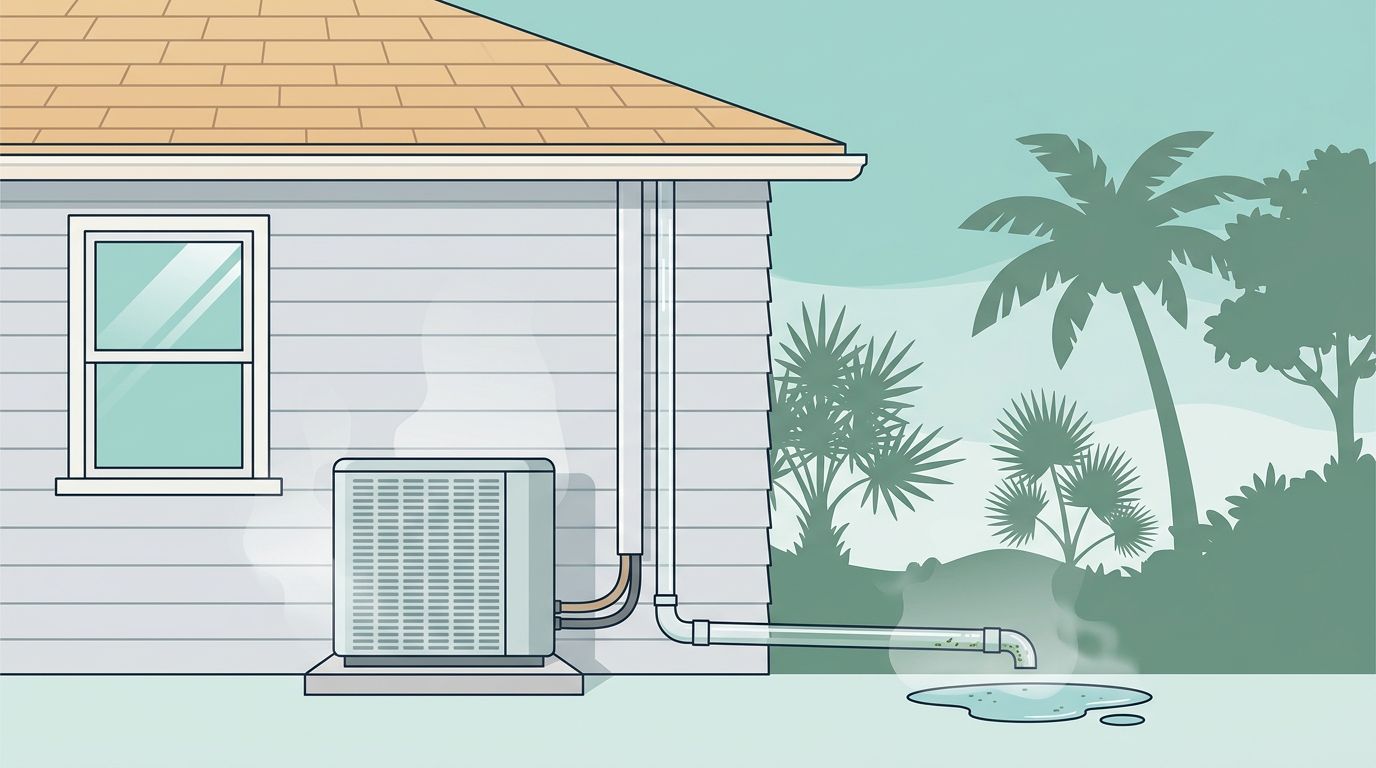
Many Cape Coral homes have an exterior drain outlet where you can see condensate drip out during long cooling cycles. On humid days, that flow should usually be visible at least some of the time.

If the system has been running hard and the outlet stays dry, the line may be blocked. The water is still being made, but it may be sitting inside the unit instead of draining out. That hidden backup is what leads to ceiling stains, float-switch shutoffs, and pan overflow.

This sign is easy to miss because nothing looks dramatic at first. Still, it matters. If the AC is running and you never see drainage outside, look for other clues inside the house. One dry outlet by itself is not proof, but paired with smell, noise, or humidity, it points to trouble.

Simple prevention you can do safely

A few small habits can help keep a drain line clear. They won't replace professional maintenance, but they can lower the chance of a surprise clog.

  • Change your air filter on schedule, since a dirty filter can send more debris through the system.
  • Keep the area around the air handler clean and dry so dust and dirt do not collect near the drain.
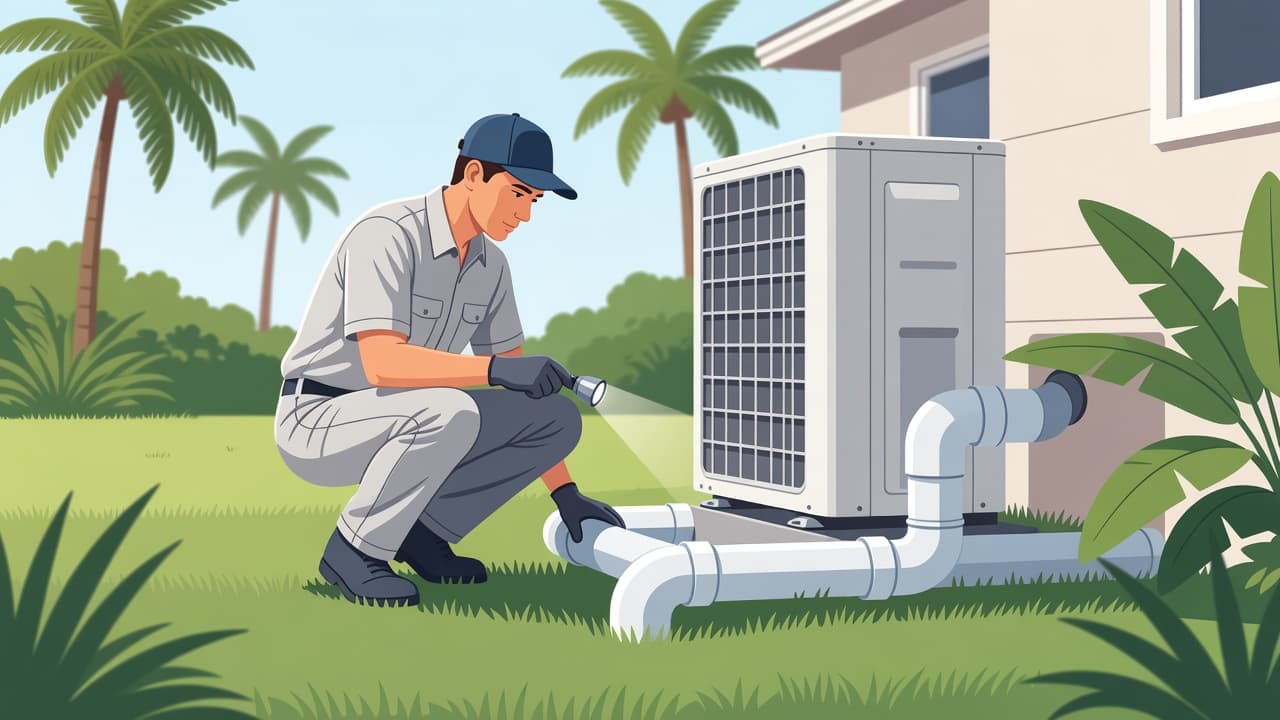
  • Glance at the exterior drain outlet now and then during peak cooling season to see whether water is moving.
  • Schedule regular AC maintenance before the hottest months hit, when the system works the hardest.

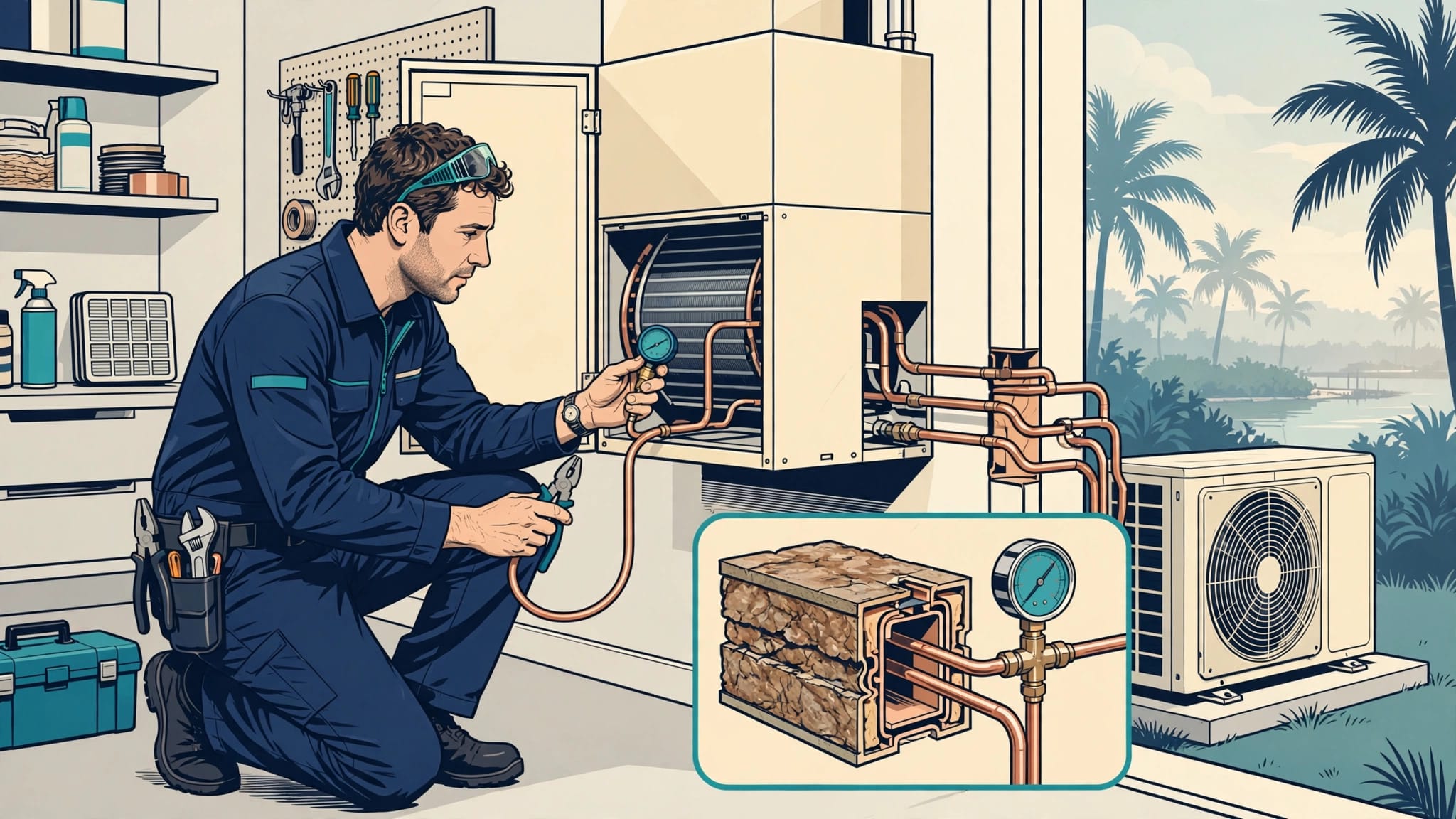
You don't need to open the unit or try a risky repair at home. Hidden drain lines, float switches, and coil parts are easy to damage if you guess wrong. A professional cleaning and inspection is the safer choice when signs keep coming back.

Protect your home before a small clog turns into water damage

A clogged drain line usually starts with small clues, then grows into a bigger mess. In Cape Coral, where your AC works hard and humidity stays high, those clues can show up fast.

If you notice water leaks, a system that shuts off, or a clog that keeps returning, contact a professional. A quick repair now is far easier than dealing with soaked drywall, mold, or a house that loses cooling on the hottest day of the week.

Recent Posts

By Sunset Gulf HVAC June 5, 2026
Your AC filter does more work than most homeowners realize. In North Fort Myers, most homes should check the filter every month and replace it every 30 to 90 days , depending on the system, the season, and what's happening inside the house. That range matters because Southwest...
By Sunset Gulf HVAC June 4, 2026
Florida air can feel heavy even when the temperature looks mild on the thermostat. That sticky feeling comes from humidity , and it can make a clean, cool home feel uncomfortable fast. For Southwest Florida homeowners, the problem often starts outside but gets worse inside. Th...