R-410A vs R-454B: Florida AC Guide
A refrigerant change is reshaping air conditioning options for homeowners in Babcock Ranch and across Southwest Florida. If your current AC uses R-410A , you don't need to replace it solely because newer systems use R-454B.
The right choice depends on your system's age, repair history, efficiency, home comfort, and replacement plans. Understanding the difference can help you avoid an unnecessary replacement or an unsafe refrigerant mismatch.
Key Takeaways
- Existing R-410A systems can still receive professional service with available reclaimed refrigerant.
- R-454B is designed for new HVAC equipment and is not a drop-in replacement for R-410A.
- R-454B has a much lower global warming potential, but it carries an A2L mild-flammability classification.
- Southwest Florida homes need equipment selected for heat, humidity, salt air, drainage, and storm conditions.
- A professional HVAC assessment should come before deciding between repair and replacement.
Why Florida homeowners are hearing about R-454B
R-410A became common in residential air conditioning after replacing older R-22 equipment. It operates at high pressure, uses POE oil, and has an A1 safety classification, which means it isn't classified as flammable under the applicable safety standard.
However, R-410A has a global warming potential, or GWP, of 2,088. Environmental rules now favor refrigerants with a GWP below 750 for new residential systems. R-454B has a GWP of 466, which is about 78% lower than R-410A.
The transition affects new equipment more than existing homeowners. In Florida, new residential HVAC equipment using R-410A could no longer be manufactured after January 1, 2025. Remaining equipment inventory had to be installed by January 1, 2026. As of July 2026, R-454B is the standard refrigerant many manufacturers use for new residential systems.
Brands including Carrier, Trane, Lennox, Rheem, and Amana have introduced equipment designed for R-454B. Some product lines market the refrigerant as Puron Advance or Opteon XL41, depending on the manufacturer and supplier.
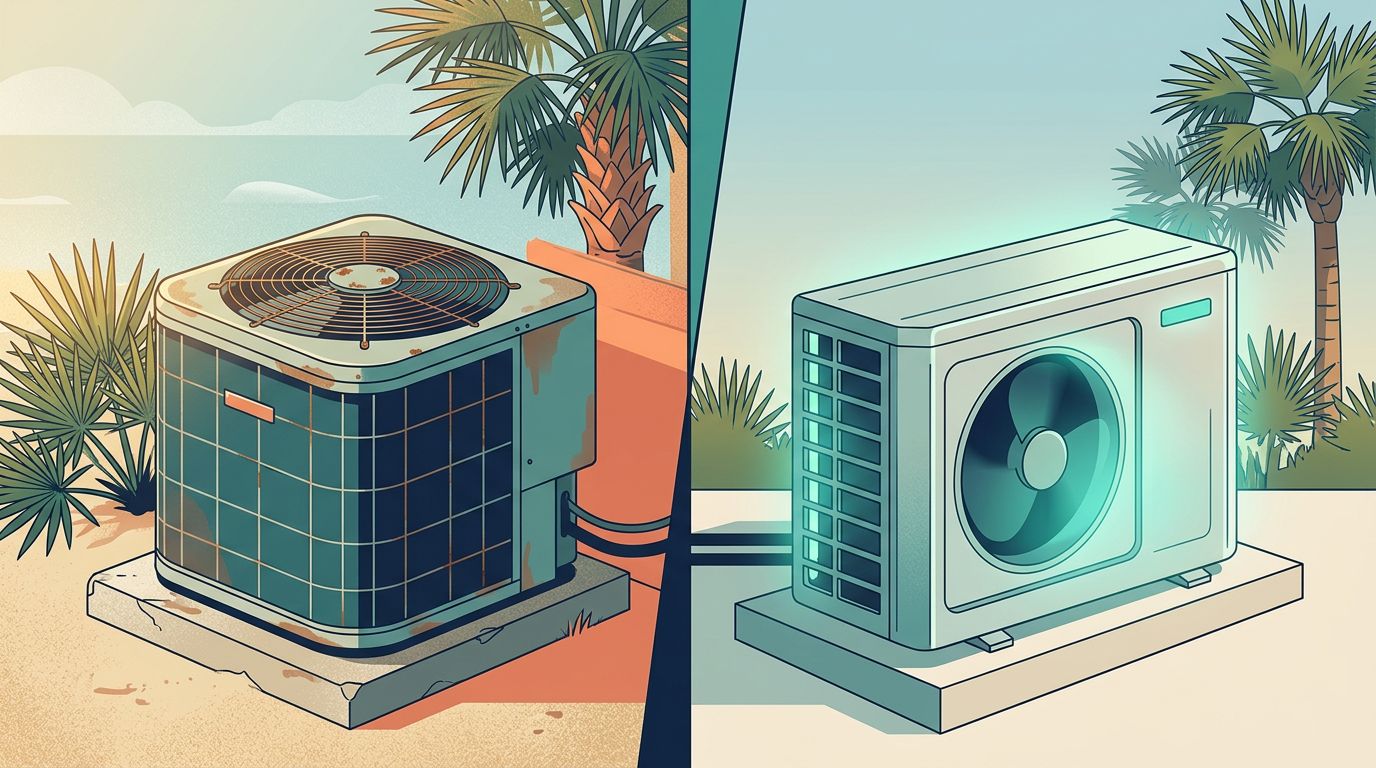
This change doesn't make every R-410A system outdated. A well-maintained unit may continue cooling your home for years. The important distinction is whether you're servicing an existing system or installing new equipment .
R-410A vs R-454B at a glance
The refrigerants have similar operating characteristics, but they aren't interchangeable. This table shows the practical differences homeowners should discuss with an HVAC contractor.
| Feature | R-410A | R-454B |
|---|---|---|
| Typical use in 2026 | Existing systems | New residential systems |
| Global warming potential | 2,088 | 466 |
| Safety classification | A1, non-flammable | A2L, mildly flammable |
| Equipment design | Existing R-410A equipment | Purpose-built R-454B equipment |
| Drop-in replacement? | No | No |
| Service status | Existing units can be serviced | Widely available for new installations |
| Efficiency in comparable equipment | Baseline | Often about 3% to 5% higher |
| Approximate equipment premium | Older model pricing varies | Often $200 to $600 more, before project-specific costs |
The lower GWP is R-454B's main environmental advantage. Its efficiency can also be slightly better in comparable equipment, although the home's ductwork, airflow, sizing, and installation quality often affect energy use more than the refrigerant alone.
R-454B is an A2L refrigerant, so it has mild flammability characteristics. New systems include safety controls such as leak detection and must follow equipment instructions, ASHRAE 15 requirements, and applicable Florida Building Code provisions. Qualified technicians need the right training, tools, recovery equipment, and installation procedures.
What servicing an existing R-410A AC involves
If your current air conditioner cools reliably, replacing it because of the refrigerant transition may not make financial sense. Technicians can still service legacy R-410A equipment, and reclaimed R-410A remains available for repairs. The EPA has not set an end date for servicing existing R-410A systems.
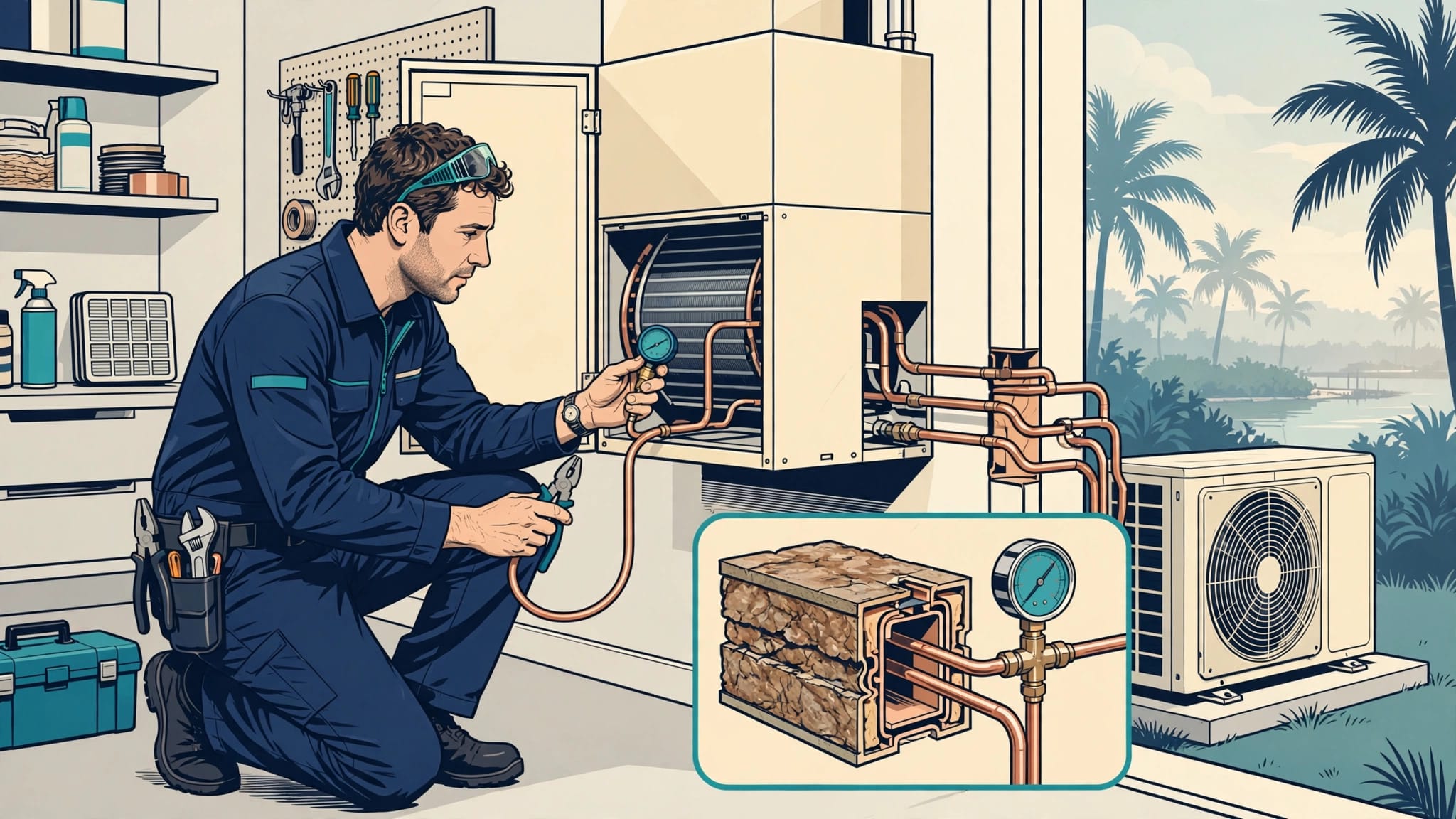
A refrigerant shortage isn't always the reason an AC needs refrigerant. Low refrigerant usually indicates a leak, poor installation, or a previous service problem. A proper repair should include leak testing, correcting the source, recovering refrigerant when required, and charging the system according to the manufacturer's specifications.
Adding R-454B to an R-410A unit is unsafe and can damage the system. The refrigerants have different composition and safety requirements, so R-454B isn't a substitute for a service charge. Your technician should identify the refrigerant printed on the equipment data plate before connecting gauges or recovery equipment.
Repair often makes sense when the system is relatively young, the coil and compressor are in good condition, and the needed work is limited. Replacement deserves more attention when the unit has repeated refrigerant leaks, major coil damage, a failed compressor, severe corrosion, or high repair costs.
Before authorizing work, ask for:
- The confirmed cause of the cooling problem
- The refrigerant type and estimated amount needed
- The age and remaining condition of the equipment
- A repair price compared with a replacement estimate
- Any warranty coverage that may apply
Routine care also helps an older R-410A system last longer. A maintenance visit can include condenser coil cleaning, electrical testing, drain inspection, thermostat calibration, airflow checks, and filter evaluation. Homeowners who prefer scheduled service can review preventative AC maintenance plans before the next cooling season.
What installing a new R-454B system changes
A new R-454B installation requires equipment listed and designed for that refrigerant. The outdoor condenser, indoor coil, metering device, controls, safety sensors, and installation procedures must work as one matched system.
Because R-454B has an A2L classification, a contractor must follow the manufacturer's requirements for refrigerant charge, leak detection, airflow, clearances, and service access. Local code and permit requirements can vary by project. A qualified HVAC company should handle recovery, charging, testing, and documentation.
An R-454B system may offer improved efficiency compared with an older R-410A unit, but the rating depends on the complete system. A high-efficiency condenser paired with poor ductwork won't deliver its rated performance. Incorrect sizing creates other problems, including short cycling, weak dehumidification, uneven rooms, and high electric bills.
R-454B also isn't a reason to replace every part of an existing installation. In some projects, the existing copper line set may be reusable if it passes inspection and the new manufacturer's instructions permit it. The contractor still needs to check its size, condition, cleanliness, insulation, routing, and connection requirements.
The indoor coil and outdoor unit must be matched. An R-454B condenser cannot be connected casually to an older R-410A coil or air handler. Mixing components without approved compatibility can create safety, performance, and warranty problems.
For a replacement quote, compare the complete scope rather than the refrigerant name alone. The estimate should identify equipment efficiency, model numbers, labor, electrical work, pad or stand, drain improvements, permits, startup testing, warranty terms, and disposal of the old system.
Southwest Florida details that affect equipment choice
Babcock Ranch and nearby Southwest Florida communities place heavy demands on air conditioning. Long cooling seasons keep equipment running for many hours, while high humidity creates a separate comfort problem. Your AC must remove moisture, not only lower the thermostat reading.
Correct sizing matters. An oversized system may cool the air quickly and shut off before removing enough humidity. That can leave rooms feeling clammy, encourage musty odors, and increase strain on the equipment. A load calculation gives the contractor a better basis for selecting capacity than the old unit's tonnage.
Salt air is another concern for homes near the Gulf Coast. Salt deposits can speed up corrosion on condenser coils, cabinet fasteners, electrical connections, and supports. Ask about coil protection, equipment placement, regular rinsing, and corrosion-resistant hardware when those features fit the property.
Storm preparation matters as well. The outdoor unit should sit on a stable, code-compliant base with suitable clearance and drainage. Electrical protection, disconnect access, and hurricane-related installation requirements depend on the home, location, and current code.
Humidity control also depends on the rest of the house. Leaky ducts in a hot attic, poor return airflow, damaged insulation, and air leaks around doors can reduce comfort even with new equipment. An HVAC assessment should look beyond the condenser and identify problems that affect performance.
Equipment availability, refrigerant supply, pricing, permit rules, and contractor practices vary across Southwest Florida. A quote in Babcock Ranch may differ from one in Fort Myers, Cape Coral, or Naples because labor, access, electrical needs, and local project conditions aren't identical.
How to decide between R-410A service and R-454B replacement
Start with the facts about your current system. Find the installation date, model number, refrigerant type, repair records, energy concerns, and rooms that remain uncomfortable. Then ask a licensed HVAC professional to inspect the system before you make a replacement decision.
Repair may be the sensible option when the unit has a sound compressor, minimal corrosion, and a manageable problem. It can also give you time to plan for replacement instead of making a rushed decision during a July breakdown.
Replacement may be more practical when repair costs keep rising or the system has a major failure. In that situation, compare a properly sized R-454B system with more than one complete installation quote. Ask each contractor how the design addresses humidity removal, duct condition, salt exposure, drainage, and electrical capacity.
Efficiency ratings deserve attention, but they shouldn't be the only deciding factor. A reliable installation with correct airflow and commissioning can outperform a higher-rated system that has poor duct connections or incorrect charge.
R-454B is the direction of new residential equipment, but R-410A service remains a valid option for an existing system in good condition.
A professional assessment gives you a clearer answer than a refrigerant label. It helps separate a repairable problem from a system that has reached the point where replacement provides better value.
Conclusion
The R-410A vs R-454B decision depends on whether you own an existing system or need new equipment. R-410A units can still receive professional service, while R-454B systems require purpose-built equipment and A2L-compliant installation practices.
For Southwest Florida homeowners, refrigerant choice is only one part of the decision. Sizing, humidity control, salt-air protection, drainage, ductwork, pricing, availability, and local code all affect the result. Schedule an HVAC assessment before approving major work, so your next system fits both your home and the climate around it.
Recent Posts