AC Float Switch Tripping in Babcock Ranch Homes
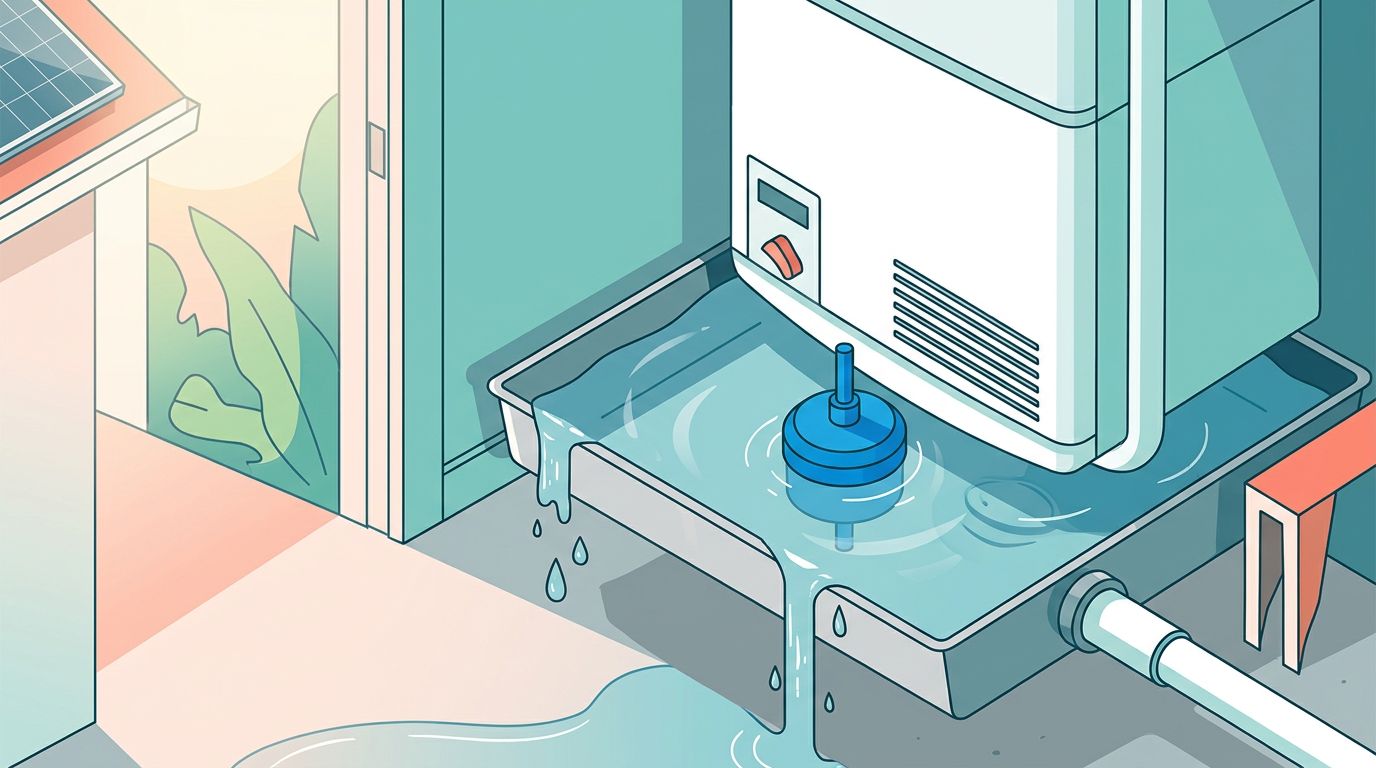
AC float switch tripping can shut off your cooling system on a hot Southwest Florida day. The switch usually responds to rising condensate water, which means the drain system needs attention before the water reaches your ceiling, wall, or flooring.
Babcock Ranch homes run air conditioning for long periods, especially during humid weather. That creates steady condensation inside the indoor unit. Understanding why the switch activates helps you handle safe checks at home and recognize when a licensed HVAC professional needs to step in.
AC float switch tripping: what the safety control detects
Your air conditioner removes humidity as it cools indoor air. Warm air passes over the cold evaporator coil, and moisture collects on the coil's surface. That water falls into a drain pan and exits through a PVC condensate drain line.
Most systems have a primary drain and some form of secondary protection. A float switch may sit in an auxiliary pan or attach to the drain line. When water rises past a set level, the switch opens the low-voltage cooling circuit. The thermostat may still appear normal, but the outdoor unit and indoor blower may stop running.
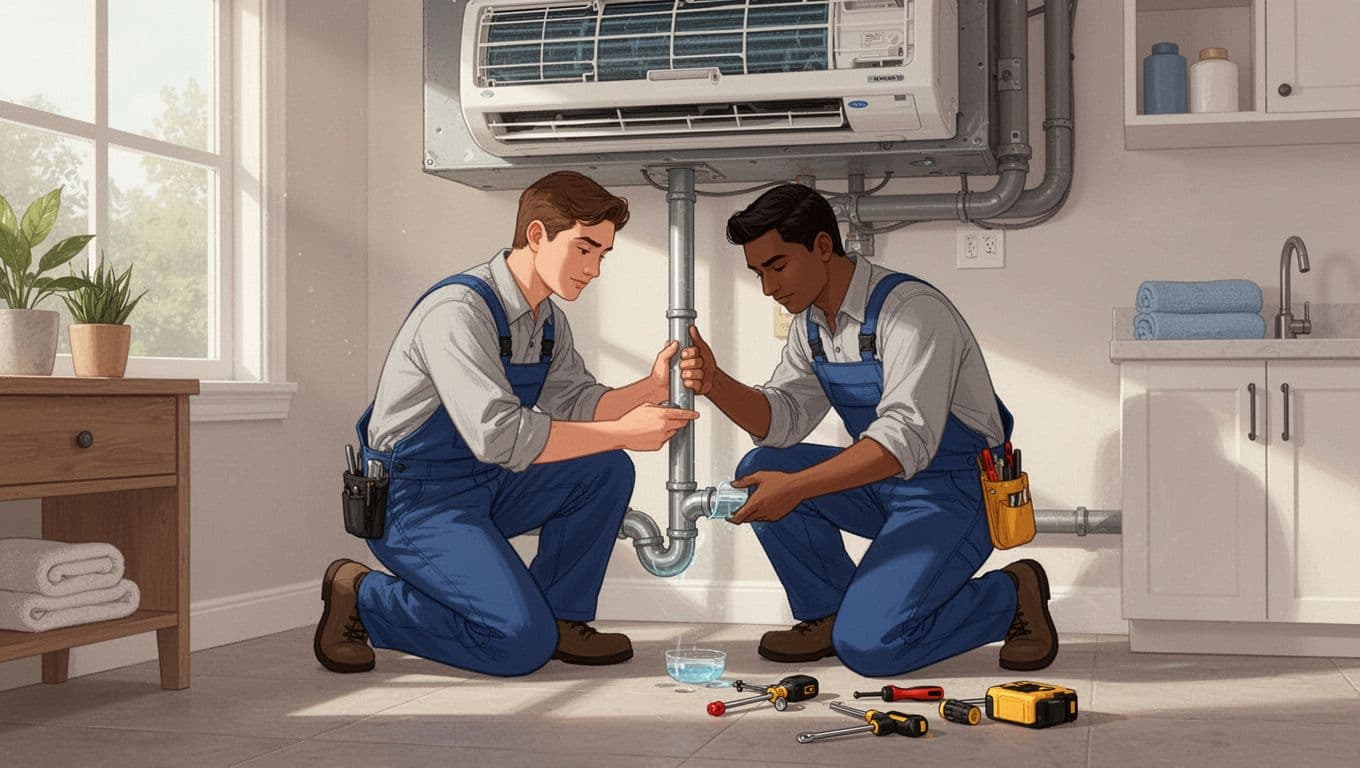
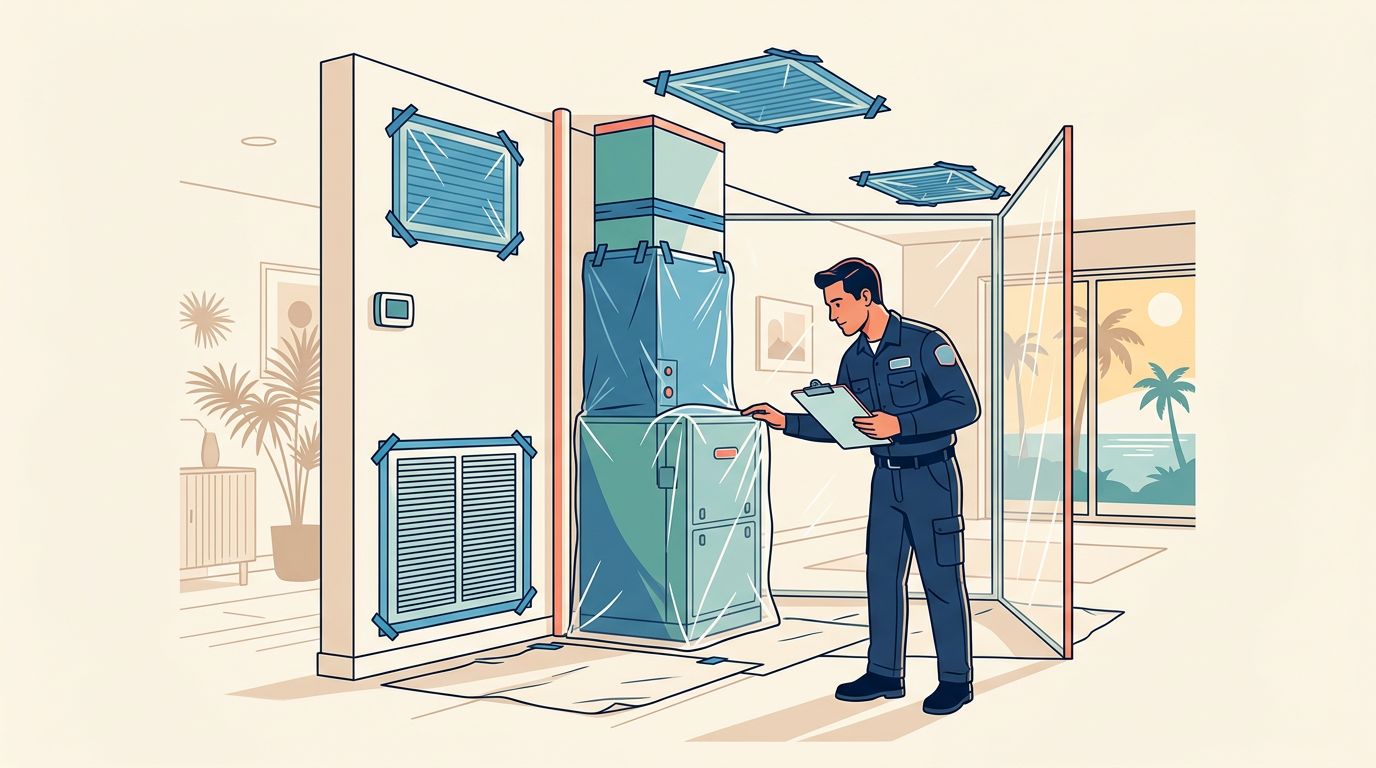
An HVAC technician checking the condensate drainage system near an indoor air handler.
The switch isn't usually the original problem. It is a safety device that reacts to water staying where it shouldn't. Resetting it can restore cooling for a short time, but the water level will rise again if the blockage, overflow, or equipment problem remains.
Babcock Ranch's warm, humid conditions increase the amount of condensate an AC system produces. Longer cooling cycles also give a partially blocked drain more time to fill the pan. A small restriction that goes unnoticed during mild weather can trigger the switch during a stretch of heavy humidity.
Common reasons a float switch keeps activating
Several problems can produce the same symptom. The timing of the shutdown, visible water, and condition of the air filter can help narrow down the cause.
A clogged condensate drain line
Algae, dust, sludge, and small debris can collect inside a condensate line. Florida humidity gives organic buildup a favorable environment, especially when the line stays damp between cooling cycles.
A partial blockage may allow some water through, so the AC can run for hours before the pan fills. That pattern often looks random. In reality, the drain is simply slower than the amount of water the system produces.
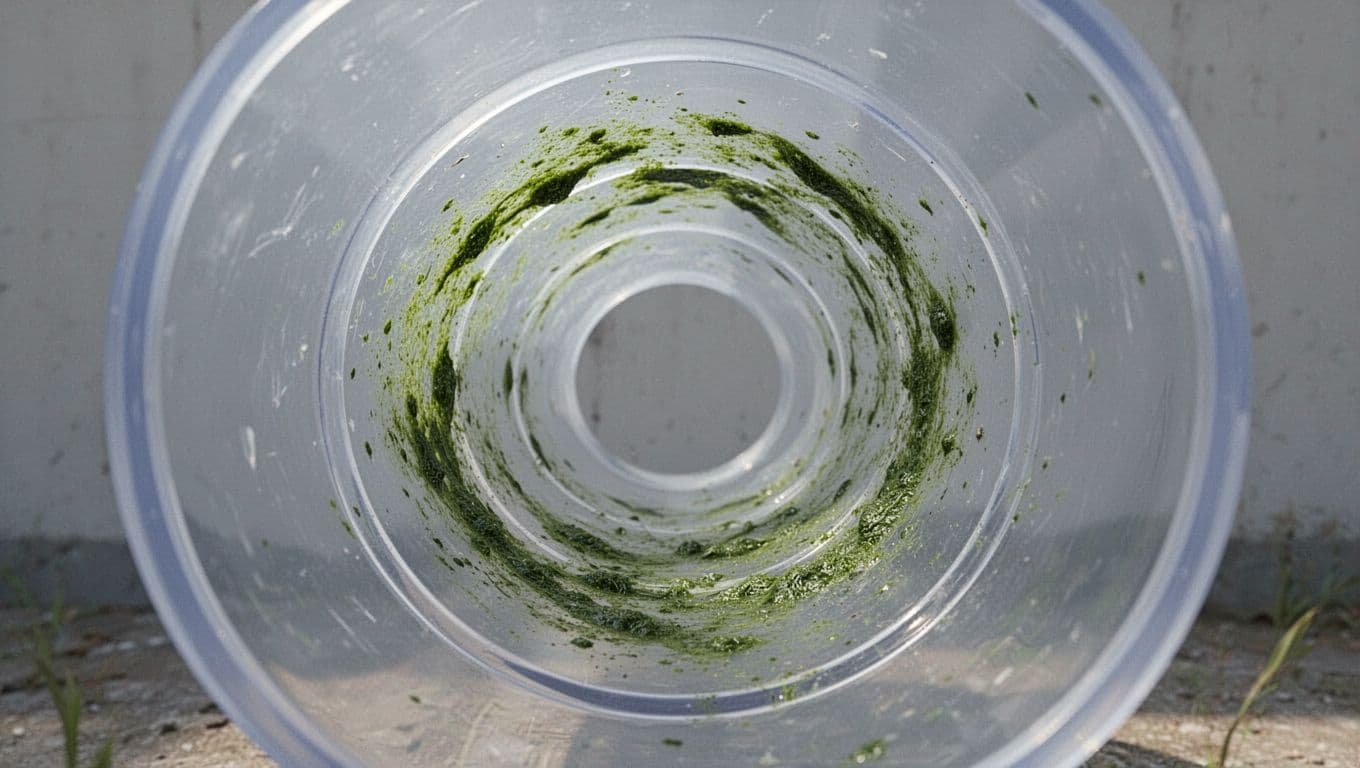
Algae buildup inside a condensate drain can restrict water flow and raise the float.
The drain outlet may also become blocked by dirt, insects, or landscaping debris. A damaged or sagging section of PVC can hold water and create another restriction. If the drain was installed with poor slope, water may move too slowly even without heavy buildup.
A dirty filter or restricted airflow
A clogged return-air filter reduces the amount of air moving across the evaporator coil. When airflow drops far enough, the coil can become too cold and freeze.
Once the system shuts off, the ice melts. The resulting surge of water can overwhelm the drain pan or a restricted drain line. You may notice ice on the refrigerant tubing, weak airflow from the vents, or water appearing after the system stops.
Replacing a dirty filter may help prevent another freeze, but it doesn't remove ice immediately. Running the system while the coil remains frozen can add stress and hide the underlying problem.
A dirty coil or blower problem
A heavily coated evaporator coil has less room for air to pass through. A dirty blower wheel, blocked return grille, or failing blower motor can create a similar airflow problem.
These issues usually require more than a filter change. The indoor coil sits inside the air handler, and cleaning it may involve electrical components, refrigerant lines, or areas with standing water. A technician should inspect the system if the coil freezes or airflow remains weak after you replace the filter.
Drain pan, pump, or float switch trouble
The drain pan can crack, corrode, or shift out of position. Water may then bypass the primary drain and collect near the equipment. Some air handlers also need a condensate pump because gravity cannot carry water to the final drain point.
A pump may stop working because of a power interruption, a blocked outlet, a stuck reservoir float, or a failed motor. Homes with pump-based drainage can see an overflow soon after a storm or outage.
The float switch itself can also become dirty, misaligned, or defective. Persistent AC float switch tripping may point to a faulty switch, but replacing the switch without checking the pan and drain can leave the actual cause in place.
What homeowners can check safely
Start with the thermostat. Set the system to "Off" and wait before inspecting the air handler. If you see water near electrical components, keep the area dry and avoid opening the equipment cabinet.
A short homeowner checklist can help you collect useful information:
- Check the filter and replace it if it looks loaded with dust, using the correct size and type for your system.
- Look for standing water around the air handler, drain pan, or condensate pump without touching wiring.
- Inspect the visible drain outlet outside for leaves, mud, insects, or other loose debris.
- Notice whether the system has weak airflow, ice on the copper line, unusual pump noises, or a musty odor.
- If the drain outlet is safely accessible, remove loose debris around it. A wet/dry vacuum may clear a simple blockage when used at the outlet, but follow the equipment manufacturer's guidance.
- Write down when the switch trips, such as shortly after startup, after several hours, or when the AC turns off.
Homeowners can replace filters and clear loose debris around an accessible drain termination. They can also keep return grilles and supply vents open, since blocked airflow can contribute to coil freezing.
Repairs require a different level of care. Don't open a live air handler, move refrigerant lines, test electrical parts, cut PVC, or add chemicals to the drain without instructions for your equipment. Bleach and other cleaners can damage materials, create fumes, or flow into places they shouldn't.
Most importantly, don't bypass the float switch . Tying the switch out of the circuit or taping it down removes the warning system. Repeatedly resetting the switch can send more water into the pan, while bypassing it can allow an overflow to continue unnoticed.
When repeated AC float switch tripping needs professional help
Call a licensed HVAC professional when the switch trips again after a reset, water returns, the coil freezes, or the system won't restart. Service is also appropriate when you cannot identify the drain outlet or when the air handler is in a tight attic or utility space.
Persistent AC float switch tripping can involve several connected faults. A proper diagnosis may include:
- Inspecting the primary and secondary drain paths for blockage or poor drainage.
- Checking the pan for cracks, corrosion, overflow marks, or incorrect positioning.
- Testing the float switch and its low-voltage wiring.
- Examining the filter, evaporator coil, blower, and return airflow.
- Checking a condensate pump for power, operation, and discharge flow.
- Testing for refrigerant or control problems if the coil freezes without an airflow restriction.
A technician may clear the drain with appropriate equipment, flush the line, correct the drain slope, replace a damaged pan, or install a new float switch. The correct repair depends on where the water is collecting and why it cannot leave.
Sunset Gulf HVAC provides professional AC repair services for Babcock Ranch homeowners who need help with drain problems, frozen coils, float switches, or recurring shutdowns. A clear diagnosis matters because the switch, drain, and cooling system can affect one another.
A float switch that trips only after the AC runs for several hours often points to slow drainage, while immediate trips may indicate standing water, a pump problem, or a switch fault.
How to reduce future float switch problems
A clean filter is the simplest place to start. Check it each month during heavy cooling use, then follow the filter manufacturer's replacement guidance. Homes with pets, construction dust, or frequent door activity may need more frequent changes.
Keep the indoor return area clear. Furniture, boxes, and stored items can restrict airflow or block access to the air handler. If your system uses a condensate pump, keep its outlet and surrounding area free of clutter.
Schedule routine maintenance before the hottest part of the cooling season. A maintenance visit can include drain inspection, pan inspection, coil and blower checks, electrical testing, filter review, and float-switch testing. Sunset Gulf HVAC's Comfort Club maintenance membership includes scheduled tune-ups and drain-line inspection as part of its year-round HVAC care options.
After a major storm or power interruption, watch for pump-related drainage problems. If the system has been off and the indoor area is damp, leave the cooling off until the drain and equipment receive attention.
A recurring switch trip also deserves a record. Note the weather, runtime, filter condition, visible water, and any changes after a repair. Those details can help a technician find an intermittent problem faster.
Conclusion
An AC float switch trips because condensate water is rising beyond its safe level. In Babcock Ranch homes, heavy humidity, long cooling cycles, clogged drains, airflow restrictions, pump failures, and pan problems can all contribute.
Replace a dirty filter and clear loose debris only when you can do so safely. If AC float switch tripping returns, water is present, or the coil freezes, leave the switch in place and arrange professional service. That small safety control can prevent a much larger water-damage problem when you treat it as a warning instead of a nuisance.
Recent Posts