AC Warranty Registration Florida: New Homeowner Guide
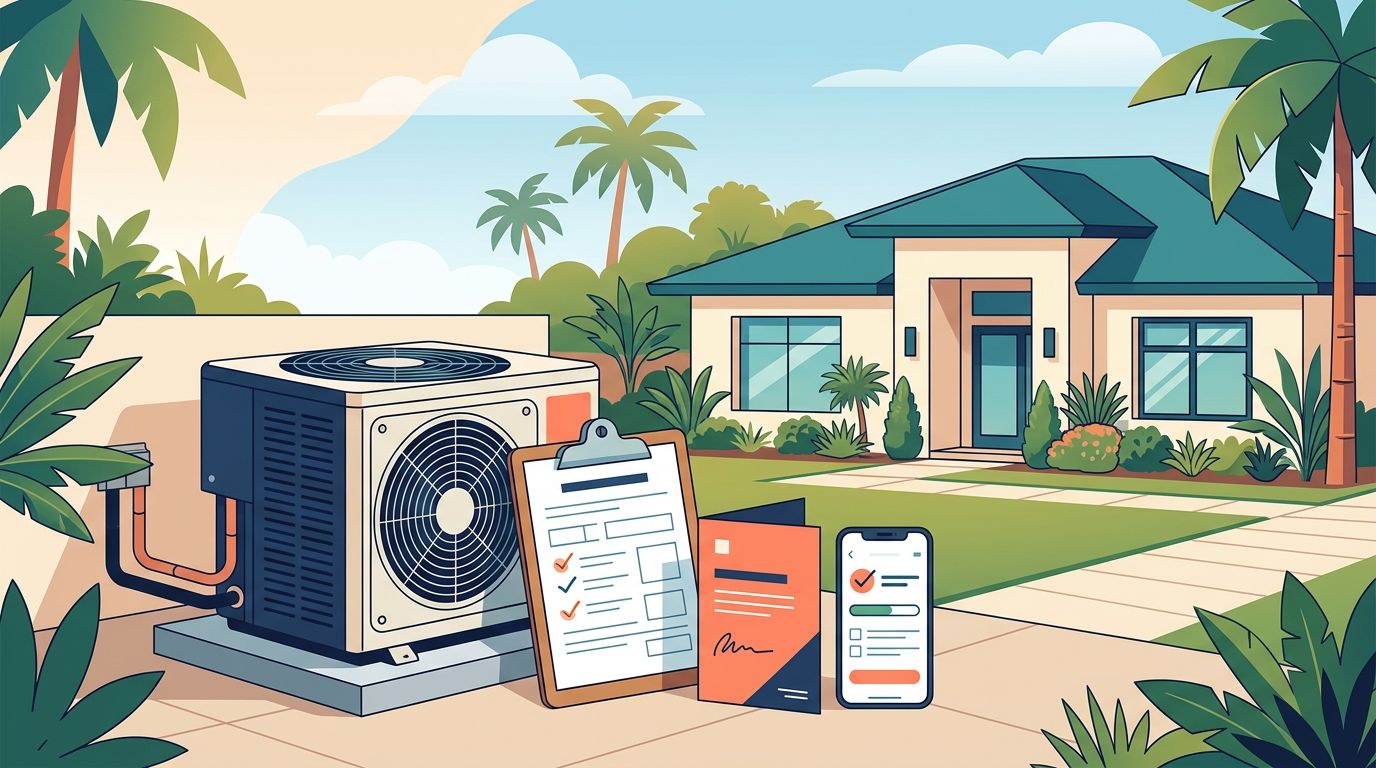
Buying a home in Florida often means inheriting an air conditioning system you didn't choose. Before Southwest Florida's heat exposes a weak part, complete AC warranty registration Florida homeowners can use to protect their records and understand available coverage.
Registration is usually handled through the equipment manufacturer's website, but the deadline, required information, coverage, and transfer rules depend on the brand and model. Your closing documents may mention the system, yet they rarely replace the manufacturer's warranty paperwork.
A few organized steps now can save time when you need service later. Start by identifying the equipment, confirming the warranty terms, and saving proof of registration in more than one place.
Key Takeaways
- Find the model and serial numbers on the indoor and outdoor equipment before registering.
- Manufacturer deadlines vary, and late registration may change certain warranty terms.
- Registration doesn't automatically extend coverage or cover labor, refrigerant, maintenance, or every repair.
- Confirm whether the warranty transfers to you as the new homeowner.
- Keep invoices, service records, registration confirmation, and closing documents together.
Why AC Warranty Registration Matters in Florida
An air conditioner warranty is a contract between you and the manufacturer. It may cover selected parts for a stated period, but it doesn't function as complete repair insurance. Registration helps the manufacturer connect the equipment to your name and home, which can make future claims easier to document.
Some manufacturers offer different warranty terms for registered and unregistered equipment. Others require registration within a specific period after installation. The result can depend on the product family, installation date, original purchaser, and local warranty rules.
Registration can support a warranty claim, but it doesn't guarantee that the manufacturer will pay the entire repair bill.
Florida's climate adds practical concerns. Air conditioners run for long hours, indoor humidity can stress components, and coastal air may contribute to corrosion around outdoor equipment. A warranty may cover a failed component, while labor, diagnostic fees, refrigerant, access charges, or related damage may remain your responsibility.
If your system came with the house, first determine whether it was installed recently or has been operating for several years. The installation invoice often provides the best starting point because it may include the exact model, serial numbers, installation date, and installing contractor.
Sunset Gulf HVAC can also help homeowners understand equipment details during an inspection or service visit. If you need ongoing care after moving in, review the Comfort Club maintenance membership for scheduled tune-ups and service benefits.

How to Find the Information You Need
You don't need to guess at the equipment details. Most residential systems have identification plates that list the model and serial numbers.
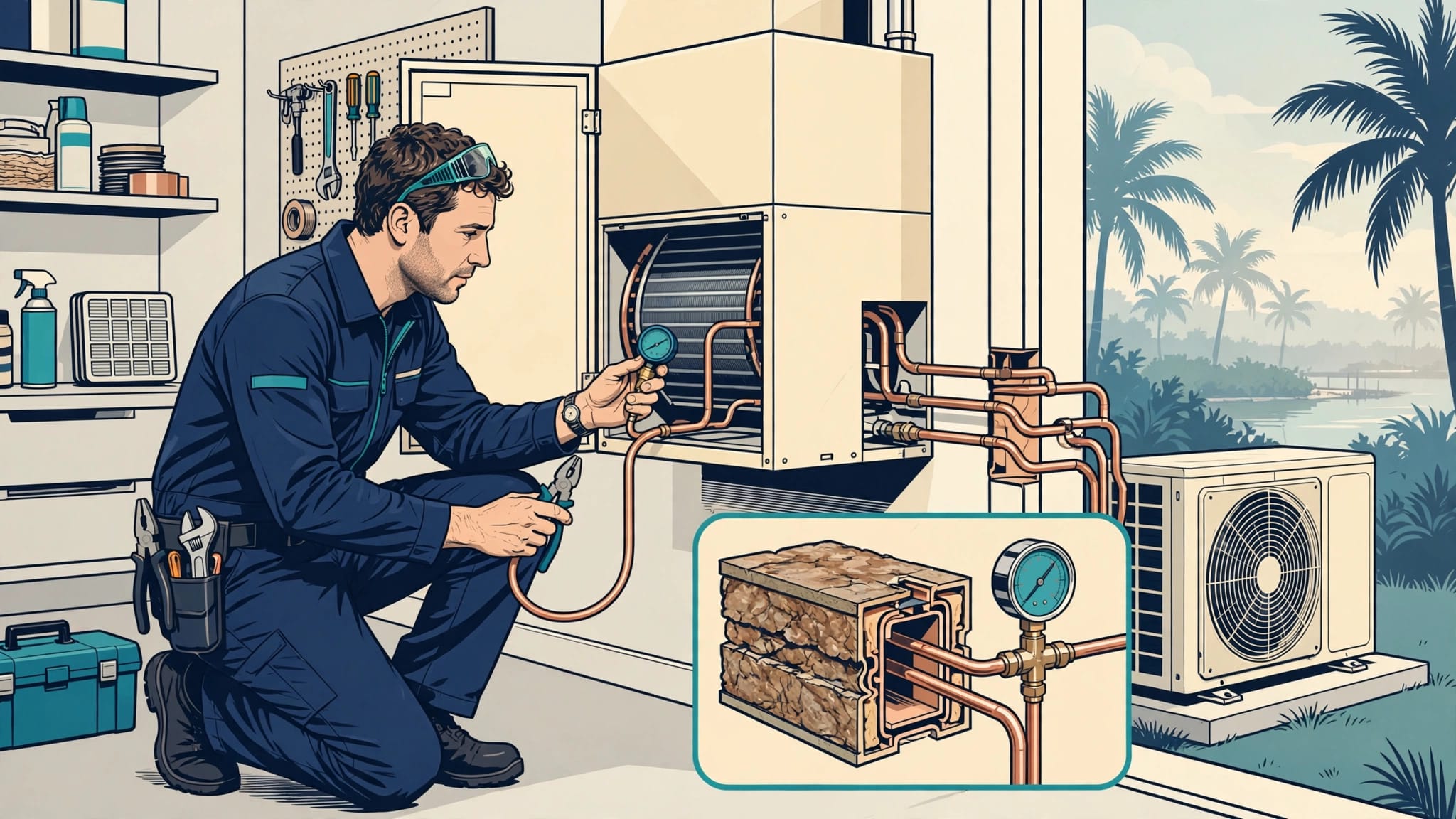
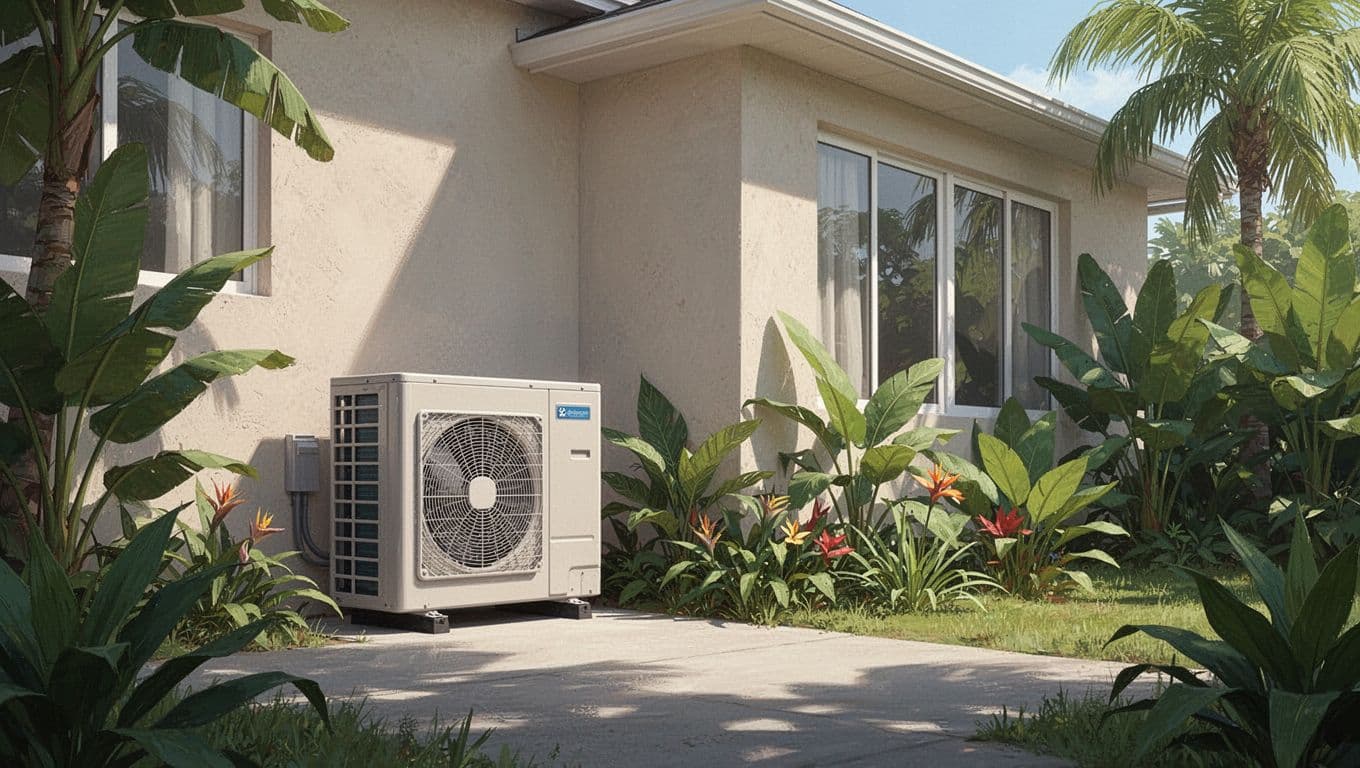
Look for one label on the outdoor condenser and another on the indoor air handler or furnace. The outdoor unit is usually beside the home, while the indoor equipment may sit in a garage, closet, attic, utility room, or mechanical space. Take clear photographs of both labels before entering any information online.
Gather these records:
- Manufacturer and product type
- Outdoor unit model and serial number
- Indoor unit model and serial number
- Installation date, if available
- Original installation company
- Home address
- Your name, phone number, and email address
- Purchase or closing documents
- Previous owner's warranty information, if available
A model number identifies the equipment design. The serial number identifies the particular unit. You normally need both, and entering one incorrectly can create problems when a contractor or manufacturer verifies the claim.
Don't rely on the home's inspection report alone. Inspectors may record the system's age and condition without capturing every number needed for registration. If a label is faded, damaged, or difficult to reach, ask an HVAC technician to document it safely.
You should also check whether the home has more than one system. A larger Florida house may have separate equipment for different floors, additions, or living zones. Each system may require its own registration and warranty record.
Completing AC Warranty Registration Florida Homeowners Can Use
Once you have the equipment information, use the manufacturer's official website or the registration instructions included with the system. Avoid entering personal information on an unfamiliar third-party page that promises warranty help.
Brands such as Carrier, Trane, Lennox, Rheem, Goodman, and Daikin each set their own procedures. The same brand may also apply different rules to different product lines. Read the terms connected to your exact model rather than relying on a general statement about the brand.
The process usually follows this order:
- Locate the manufacturer's warranty registration page.
- Create an account if the manufacturer requires one.
- Enter your contact and property information.
- Add the indoor and outdoor model and serial numbers.
- Provide the installation date and contractor details when requested.
- Review the warranty terms and privacy information.
- Submit the registration.
- Save the confirmation page or email.
Before submitting, compare every number with your photographs. A single misplaced character can attach the record to a different product or prevent the system from being found later.
Some forms ask for the installing contractor's business name. Use the company listed on the invoice, permit record, or seller's paperwork. If you don't know the installer, follow the manufacturer's instructions instead of entering a guess.
Save the confirmation as a PDF, print a copy, and store the photographs with your home records. Emailing the documents to yourself creates another backup. If the website provides a warranty lookup tool, check the result after registration.
What if the deadline has passed?
Submit the information anyway if the manufacturer allows it. Late registration may still create a useful ownership record, even if certain enhanced terms are unavailable. However, don't assume late registration restores or extends coverage.
Contact the manufacturer or an authorized dealer when the form rejects your installation date, serial number, or ownership information. Keep the error message and any case number. Those details can help if you need to prove that you tried to register the equipment.
Check Coverage Before You Assume a Repair Is Free
A warranty document may list several types of coverage, and each one can have different conditions. The outdoor compressor, indoor coil, heat exchanger, control board, and other parts may not share the same warranty period.
Read the sections that address:
- Covered parts and excluded parts
- Labor responsibility
- Compressor or heat-exchanger terms
- Refrigerant and refrigerant-related charges
- Corrosion exclusions
- Maintenance requirements
- Installation and electrical requirements
- Transferability to a later homeowner
- Proof of purchase or installation
- Authorized service requirements
- Procedure for filing a claim
Parts coverage often doesn't include the complete cost of a repair. A technician may need to diagnose the issue, recover or add refrigerant, remove access panels, replace a component, test the system, and dispose of the failed part. The manufacturer may cover an eligible part while another party charges for labor and materials.
Coverage can also depend on correct installation and reasonable maintenance. A failed part isn't automatically covered if the warranty excludes damage caused by improper installation, neglect, voltage problems, flooding, storms, or unauthorized modifications.
Florida homeowners should pay close attention to corrosion language. Salt air can affect coastal properties, but a standard warranty may exclude certain corrosion damage or apply special limits. The exact wording in your documents controls.
A warranty isn't a substitute for service records. Keep invoices that show inspections, repairs, part replacements, and maintenance. Those records help a technician diagnose the system and may support a claim when the manufacturer asks for maintenance history.
If the unit stops working, avoid authorizing a major replacement before checking the warranty path. Ask the service company to identify the failed component and explain whether it appears eligible for manufacturer coverage. Emergency cooling problems still require prompt attention, especially during a Florida heat wave. Sunset Gulf's emergency HVAC service page provides a local option when the system fails outside normal planning.
Transferring an AC Warranty After Buying a Home
A warranty may belong to the original purchaser, the equipment, or the property. The answer varies by manufacturer and product. Some warranties transfer automatically, some require a transfer form, and some restrict coverage after a home sale.
Start by reading the transfer section in the warranty document. Look for a deadline, transfer fee, required proof of sale, and any change to the remaining coverage. The manufacturer may ask for a closing statement, deed, warranty certificate, or prior registration record.
Contact the manufacturer or an authorized dealer if the paperwork is unclear. Give them the home's address, equipment serial number, closing date, and your contact information. Ask for written confirmation of the current warranty status.
A practical homeowner file should include:
- The purchase or closing date.
- The equipment model and serial numbers.
- The original installation invoice.
- The manufacturer's registration confirmation.
- Transfer correspondence or an updated warranty certificate.
- All service and maintenance invoices.
Don't assume that a home warranty company offers the same coverage as the AC manufacturer. A home service contract has its own exclusions, service fees, approval rules, and contractor network. Compare those terms separately.
You also don't need to cancel manufacturer coverage because you have a home warranty plan. The two agreements may address different costs, but you should understand which provider requires authorization before work begins.
A Simple New-Homeowner Warranty Checklist
Complete these tasks during your first weeks in the home:
- Photograph every equipment label.
- Record the system's manufacturer, model, and serial numbers.
- Find the installation invoice and permit information.
- Search the manufacturer's official warranty page.
- Register each system separately when required.
- Confirm whether the warranty transferred to you.
- Save the confirmation and warranty documents.
- Record the installer's contact details.
- Schedule a professional inspection if the system's condition is unknown.
- Keep future maintenance and repair records.
A professional inspection can reveal problems that registration won't address, such as a blocked drain, weak capacitor, dirty coil, poor airflow, damaged insulation, or an aging system. Fixing small operating issues early may reduce strain during the hottest months.
Maintenance requirements also deserve attention. Some manufacturers don't demand a formal service plan, while others may require proof that the system received reasonable care. Follow the actual warranty language and keep receipts for completed work.
Homeowners in Babcock Ranch and nearby Southwest Florida communities should also record the thermostat type, filter size, and locations of shutoffs. Those details make routine service easier and help anyone responding to an urgent problem find the equipment quickly.
Conclusion
Completing AC warranty registration in Florida is a recordkeeping task with real value, but it isn't a promise of free repairs. Coverage, deadlines, labor costs, exclusions, and transfer rules depend on the manufacturer and the exact equipment.
Start with accurate model and serial numbers, then confirm every detail in your warranty documents. Keep the registration confirmation beside your closing papers and service invoices. When the Florida heat puts your system to the test, organized records can make the next step much clearer.
Recent Posts