Find Your AC Model Number and Serial Number in Babcock Ranch

When your air conditioner needs repair, installation, or maintenance, the technician may ask for two details before arriving. The AC model number identifies the equipment design, while the serial number identifies your specific unit.
Finding both numbers can help a Babcock Ranch homeowner locate compatible parts, check equipment age, and give the service team better information. The outdoor condenser is often the easiest place to start, but your indoor unit and service records may also have what you need.
Start with safety and the right information
Turn the system off first
Set your thermostat to Off before inspecting the equipment. Wait for the outdoor fan and indoor blower to stop completely.
Never remove an electrical access panel, open a disconnect box, or reach inside the condenser. Even after the system stops, electrical components can remain hazardous. If you can't see the identification label without removing a cover, leave it alone and ask a qualified HVAC technician to check it.
You can inspect visible labels with a flashlight, but keep your hands, tools, and phone away from wiring, fan blades, and electrical components.
Know which numbers you need
The model number describes the equipment type and configuration. The serial number belongs to that particular unit. Manufacturers use different formats, so the serial number may include letters, numbers, or a date code.
A typical split system has separate indoor and outdoor units. Each unit may have its own model and serial number. Record both sets when possible, especially if you're requesting a replacement estimate or troubleshooting a system with mismatched components.
Where to find the AC model number and serial number
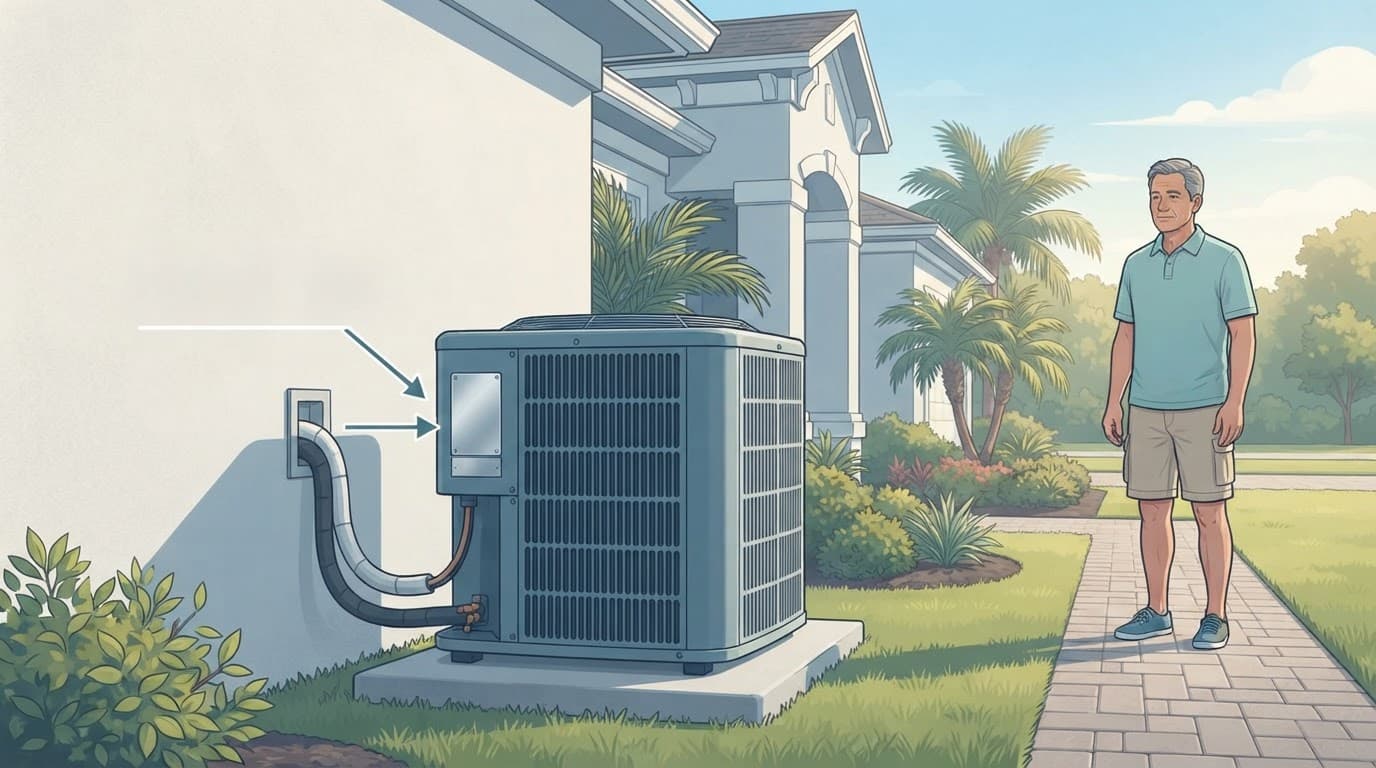
Look for the outdoor data plate
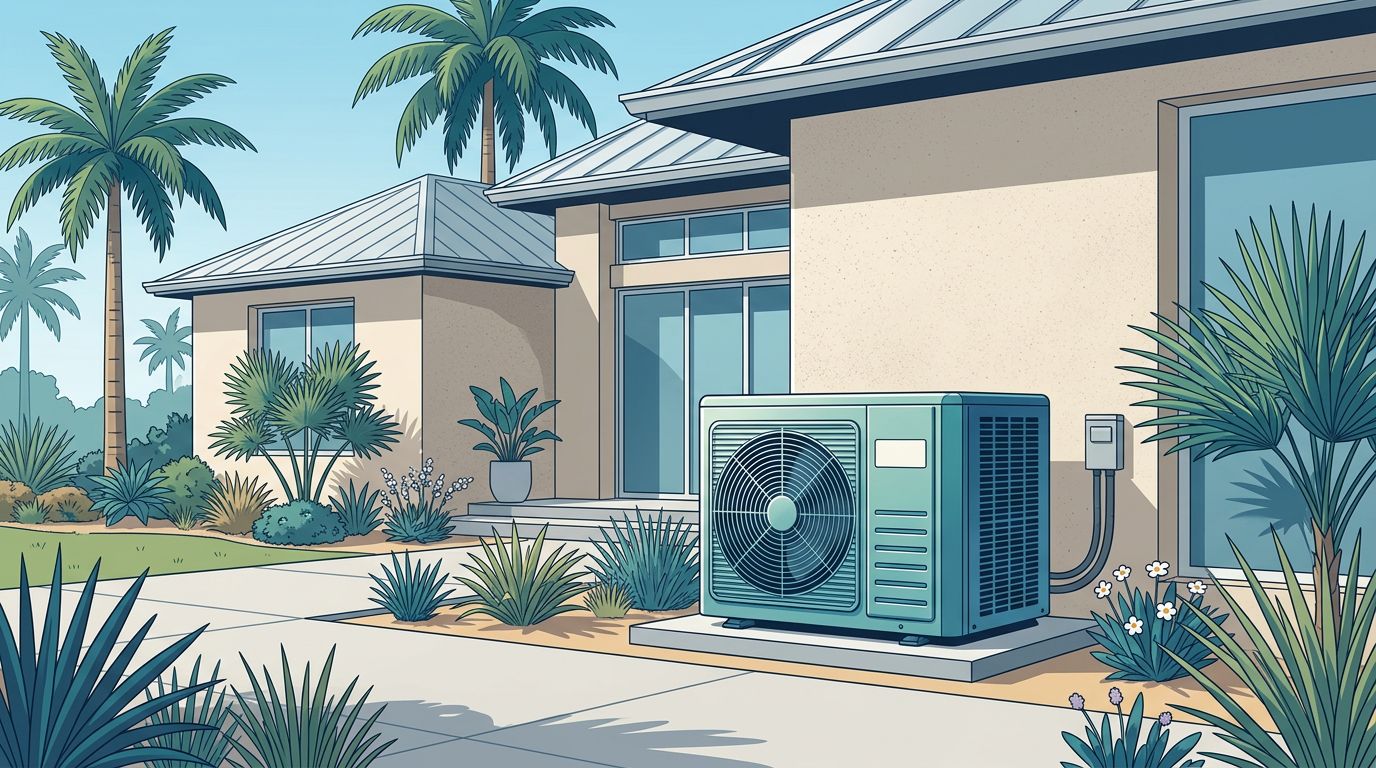
Walk around the outdoor condenser and inspect the cabinet sides. Most units have a metal plate, printed sticker, or durable label near the upper portion of the cabinet. It may be beside the service panel, near the refrigerant lines, or on a corner facing the home.
Look for headings such as:
- Model
- M/N
- Serial
- S/N
- Model number
- Serial number
Label locations and formats vary by manufacturer. Some plates show the model and serial numbers in separate rows. Others place several equipment details together in a tight block.
Use a flashlight and wipe away loose dirt with a dry, soft cloth. Avoid spraying water or cleaning products directly onto the plate. If the label is faded, don't scrape it or use abrasive material.
Record every character carefully
Write the numbers down exactly as they appear, including letters, zeroes, and hyphens. A letter "O" can look like a zero, while "I," "1," and "L" may look similar on a worn label.
Take a photo of the entire data plate before copying the information. A full image gives a technician useful context if one character is unclear. Take a second, closer photo if the print is small, but keep the complete plate in at least one picture.
A model number may appear on both units, but the indoor and outdoor units usually have different identification numbers. Record each one instead of assuming they match.
Don't try to determine the unit's age by decoding the serial number unless the manufacturer and format are known. Different brands use different systems, and an incorrect date can lead to the wrong replacement advice.
Check the indoor unit and your records
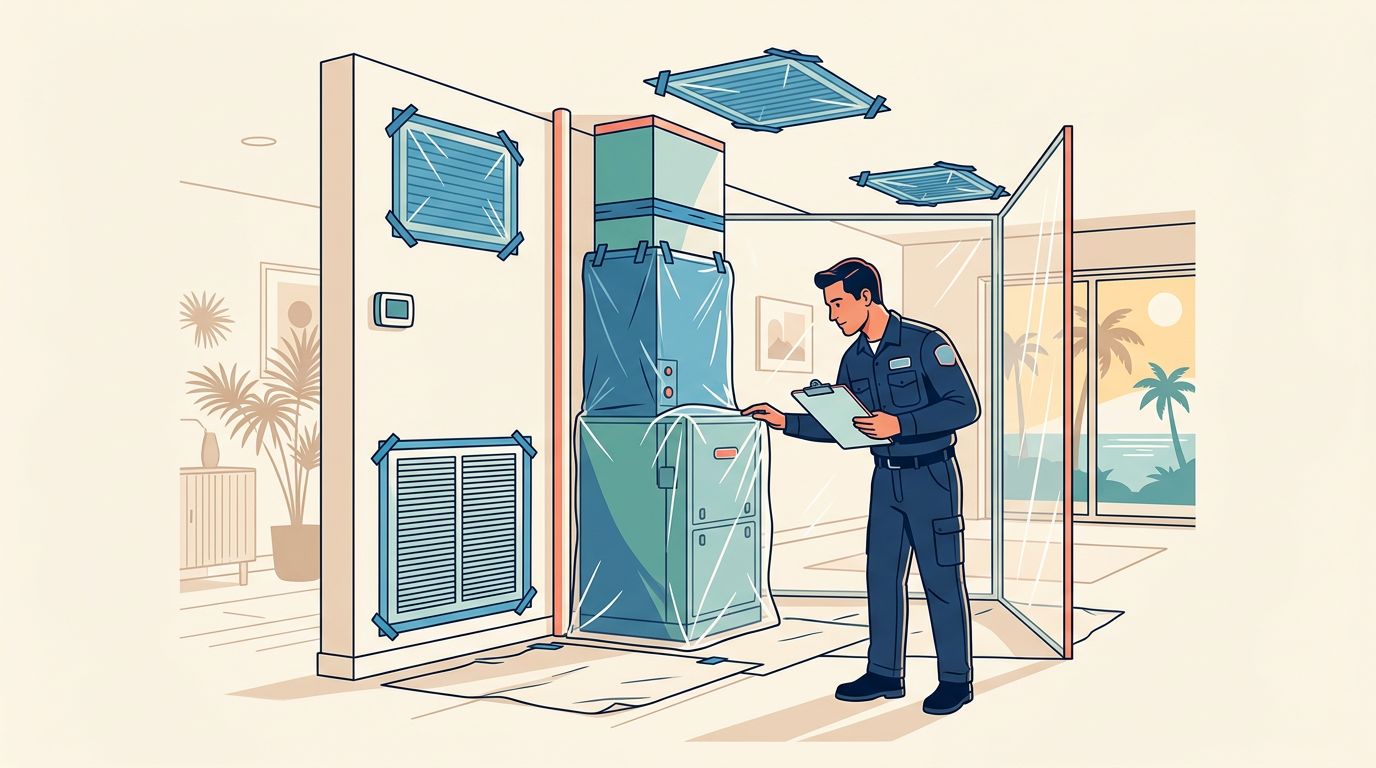
Inspect the air handler or furnace cabinet
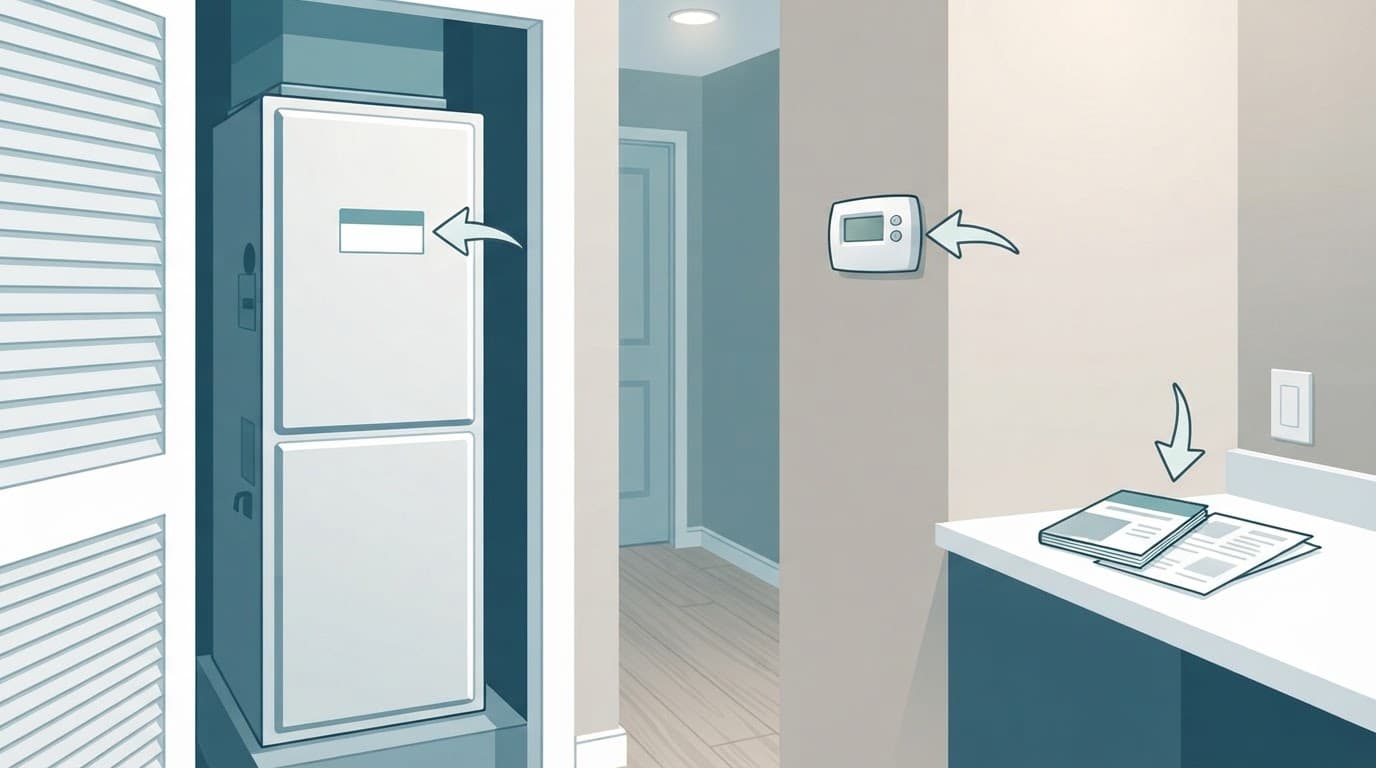
The indoor equipment is often in a utility closet, garage, attic, or dedicated mechanical area. Look along the outside of the air handler or furnace cabinet for another data plate or sticker.
The label may sit near the top, beside the filter area, or on an exterior cabinet panel. Some manufacturers place it behind an access door. Only inspect that location if the door opens without exposing electrical parts and doesn't require you to remove a panel.
Never open a panel that contains wiring, a blower assembly, or electrical controls. If the indoor label isn't visible, the outdoor unit's information and your paperwork may be enough for an initial service call.
Remember that a wall thermostat can have its own model number. That number identifies the thermostat, not the air conditioner or heat pump. Share it only when the issue involves thermostat operation, replacement, or compatibility.
Search paperwork and service records
Your closing documents, installation invoice, warranty paperwork, maintenance agreements, and previous repair invoices may list the equipment numbers. Check any digital records saved in email or a homeowner portal as well.
Service companies often record model and serial numbers during tune-ups. Look for them on inspection reports, maintenance checklists, replacement proposals, or invoices. These records can help when an outdoor label has faded or the equipment is difficult to reach.
Keep in mind that paperwork may describe only the outdoor condenser, only the indoor air handler, or the complete matched system. Compare the records with the labels when you can.
Give the technician useful information
Share the numbers and the symptoms
When requesting service, provide the model and serial numbers for the unit connected to the problem. If the AC isn't cooling, the outdoor unit won't start, or the indoor blower is weak, explain what you observed and when it began.
Include the following details in your request:
- The outdoor unit's model and serial numbers
- The indoor unit's model and serial numbers, if available
- Whether the system is an AC or heat pump
- The symptoms, sounds, or thermostat messages
- Any recent repairs, maintenance, or power interruptions
A clear photo of the data plate can prevent transcription errors. If you aren't sure whether a character is a "B" or an "8," send the photo instead of guessing.
For homeowners who need Babcock Ranch AC installation and repair, these details can help the technician prepare for the visit. They don't replace an on-site diagnosis, but they give the service team a better starting point.
Know when to stop inspecting
Stop immediately if you smell burning insulation, see exposed wiring, hear loud electrical buzzing, or find a breaker that keeps tripping. Leave the system off and request professional help.
Don't repeatedly reset the breaker or run the AC with a suspected electrical problem. Also, don't remove cabinet panels to chase a hidden label. A technician can identify the equipment safely and inspect the system at the same time.
If you're ready to schedule AC repair service, send the photos and written numbers with your request. Mention that the system is in Babcock Ranch and provide the address details requested by the service company.
Conclusion
The outdoor condenser is usually the fastest place to find your AC model number and serial number. Check the visible data plate first, then inspect the indoor cabinet without opening electrical panels. If the labels are faded or difficult to reach, review installation paperwork and service records.
Turn the system off before looking, photograph the full plate, and share both unit numbers when requesting service. Accurate information helps your HVAC technician identify the equipment and prepare for the right next step.
Recent Posts