Why HVAC Disconnect Boxes Matter in Fort Myers Homes
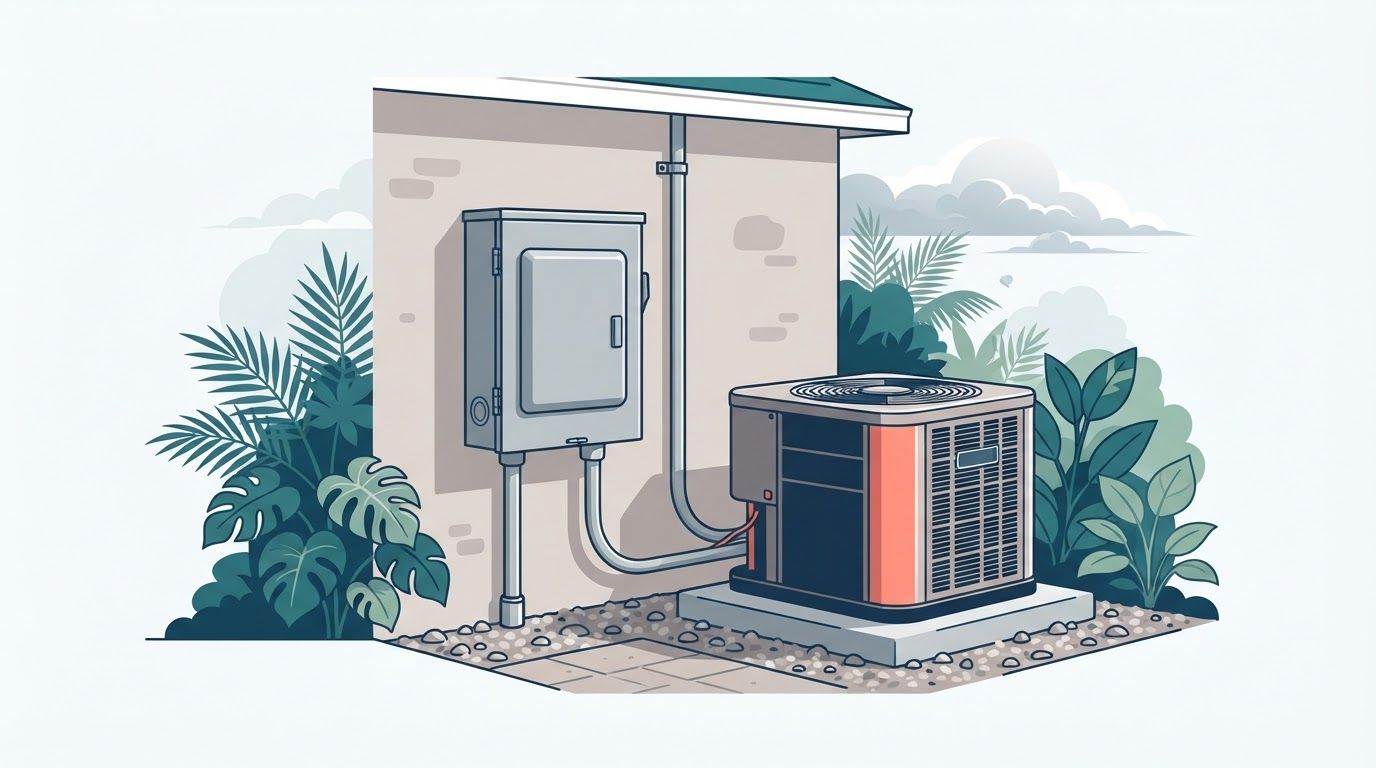
A small enclosure beside your outdoor AC can affect how safely the system is serviced. HVAC disconnect boxes give a technician a nearby way to shut off power at the condenser before electrical work begins.
Fort Myers weather puts that enclosure through intense heat, heavy rain, wind, humidity, and salt-laden air. When corrosion or storm damage affects the box, your air conditioner may become unsafe to operate or harder to repair. Knowing what to look for helps you call for service before a small issue becomes a no-cool emergency.
What HVAC disconnect boxes do at your Fort Myers home
Your outdoor condenser uses high-voltage electricity to run the compressor, fan motor, and other components. The disconnect box provides a local shutoff near that equipment, so a technician doesn't have to rely only on the main electrical panel inside your home.
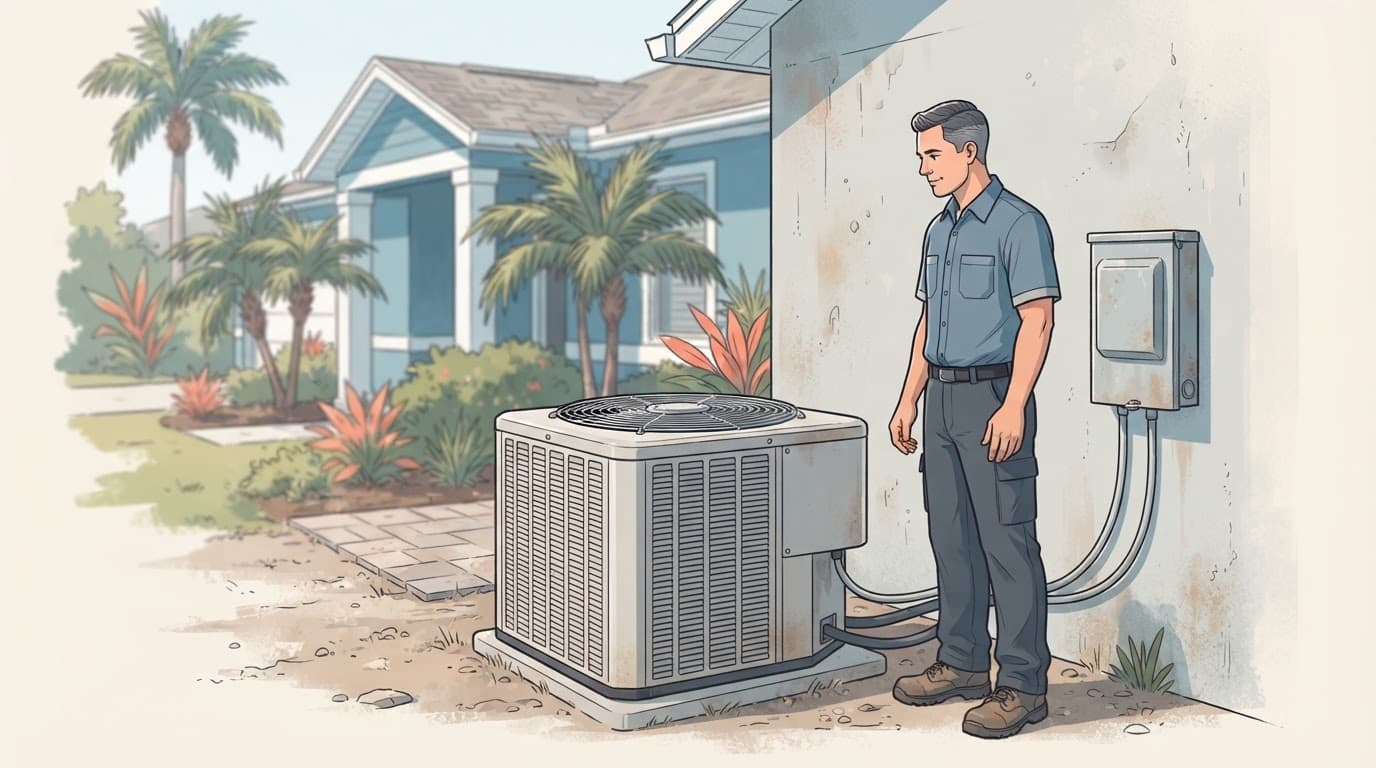
A local shutoff for safer service
Many residential disconnects contain a pull-out block or switch. Some units also use fuses. The exact design depends on the electrical installation and the HVAC equipment.
During service, a technician can use the disconnect to isolate power at the outdoor unit. However, the technician still needs to test for voltage and follow proper lockout and safety procedures. Disconnecting power doesn't remove every possible hazard. Capacitors inside an air conditioner can hold an electrical charge after the system stops.
The box isn't part of your thermostat's normal operation. You generally shouldn't use it as a daily on-and-off switch. Frequent switching can create unnecessary wear and may hide a problem that needs diagnosis.
Where the box is usually located
Look for a small enclosure mounted on an exterior wall, service post, or support near the outdoor condenser. It's usually within sight of the equipment and reachable by a service professional.
The box may have a hinged cover, handle, or removable pull-out section. It can blend into the wall or sit behind landscaping, especially in older Fort Myers homes.
You can identify its general location without opening it. Keep shrubs, stored items, hoses, and irrigation spray away from the enclosure and the condenser. If you can't find it, a technician can locate and inspect it during regular AC service.
Why Fort Myers weather affects outdoor disconnects
An HVAC disconnect box stays outdoors year-round. That exposure matters in Southwest Florida because the equipment faces long periods of heat and moisture, followed by sudden weather changes.
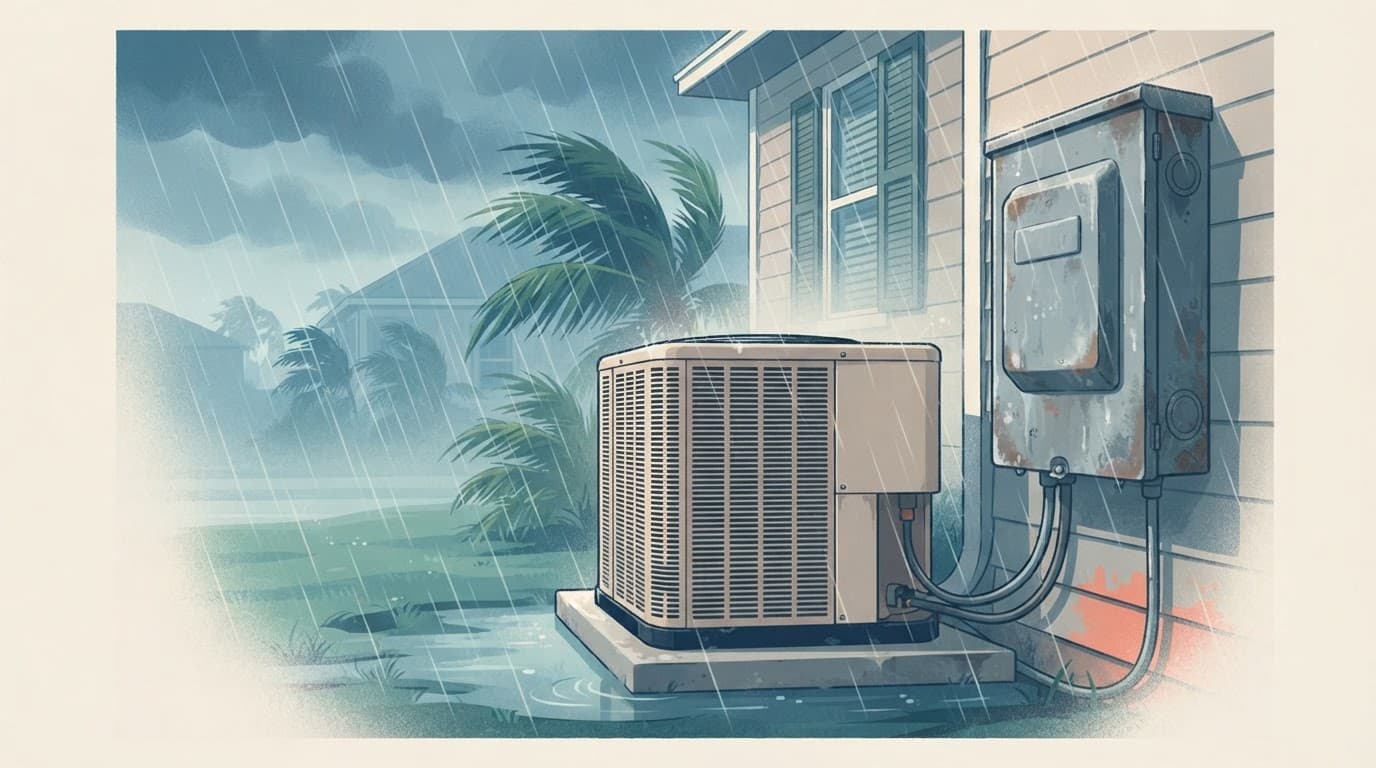
Heat and sunlight wear down the enclosure
Fort Myers summers keep outdoor HVAC equipment working hard. Direct sunlight can heat the disconnect enclosure, while ultraviolet exposure can make some plastic covers brittle over time. Repeated expansion and contraction can also affect seals, fasteners, and electrical connections.
High temperatures don't automatically mean your box needs replacement. Still, an older or damaged enclosure may lose its ability to keep moisture away from electrical parts. A technician can check whether the box, cover, conduit, and connections remain in suitable condition.
The condenser itself also produces heat during operation. If the box sits too close to hot discharge air or lacks proper protection, its components may experience additional stress.
Rain, wind, and flooding create new risks
Heavy rain can enter through a cracked cover, damaged gasket, loose conduit connection, or missing fastener. Wind-driven rain is more likely to reach places that normal rainfall doesn't.
Storm debris can strike the enclosure or bend the conduit feeding the outdoor unit. Lightning and power surges may damage HVAC components, although a disconnect box isn't a replacement for whole-home surge protection.
Floodwater requires extra caution. If water reaches the disconnect or outdoor unit, don't touch the box, condenser, or nearby standing water. Stay clear and arrange a professional inspection before anyone re-energizes the equipment.
Coastal corrosion can affect HVAC electrical connections
Salt-laden air speeds corrosion on outdoor metal parts. Homes near the Gulf Coast often experience more exposure, but moisture can carry salt inland as well. Fort Myers, Cape Coral, Bonita Springs, and other nearby communities all have outdoor equipment that must handle humid coastal conditions.
Corrosion doesn't always look severe at first
Surface rust on a screw may seem minor. However, corrosion can spread to hinges, latches, mounting hardware, conduit fittings, and the metal parts inside the enclosure.
Watch for orange or white residue, flaking metal, blistered paint, green discoloration around copper, or a cover that no longer closes evenly. A box can look acceptable from the yard while its electrical connections deteriorate inside.
Moisture and salt can also make connections less reliable. A loose or corroded connection may create heat when the system runs, which can damage terminals or insulation.
Damaged connections can affect AC performance
A disconnect problem may appear as an electrical symptom rather than visible rust. Your outdoor unit could fail to start, stop during a cooling cycle, or make a buzzing or clicking sound.
The disconnect may not be the cause. A capacitor, contactor, compressor, breaker, or wiring fault can create similar symptoms. That is why replacing a box without testing the complete system can leave the real problem unresolved.
A licensed professional should determine whether the box needs cleaning, repair, or replacement. Electrical components should never receive household cleaners or a garden hose.
Signs your HVAC disconnect box needs attention
Most homeowners shouldn't open the enclosure to investigate. Instead, observe the area from a safe distance and pay attention to changes in appearance, sound, or AC operation.
Exterior warning signs to take seriously
Call for professional service if you notice:
- A cracked, warped, loose, or missing cover.
- Heavy rust, corrosion, or water staining around the enclosure.
- Black marks, melted plastic, smoke, or a burning odor.
- Exposed conduit, damaged insulation, or loose wiring outside the box.
- A door or pull-out section that doesn't sit securely.
Don't touch a warm, buzzing, smoking, or damaged disconnect. Turn away from the equipment and keep children and pets clear. If you see active smoke or fire, leave the area and call emergency services.
AC symptoms may point to an electrical fault
An air conditioner that won't start can have several causes, including a thermostat issue, tripped breaker, failed capacitor, or damaged disconnect connection. A condenser that hums without starting needs prompt attention because repeated attempts can put more strain on the system.
If the breaker trips repeatedly, don't keep resetting it. Review the common causes of tripping AC breakers and arrange professional diagnosis. Likewise, a non-spinning outdoor fan, burning smell, or repeated clicking calls for service rather than trial-and-error repairs.
When should a disconnect box be inspected or replaced?
A disconnect doesn't have a universal replacement schedule. Its condition depends on its age, enclosure type, installation, exposure, and the condition of the connected HVAC system.
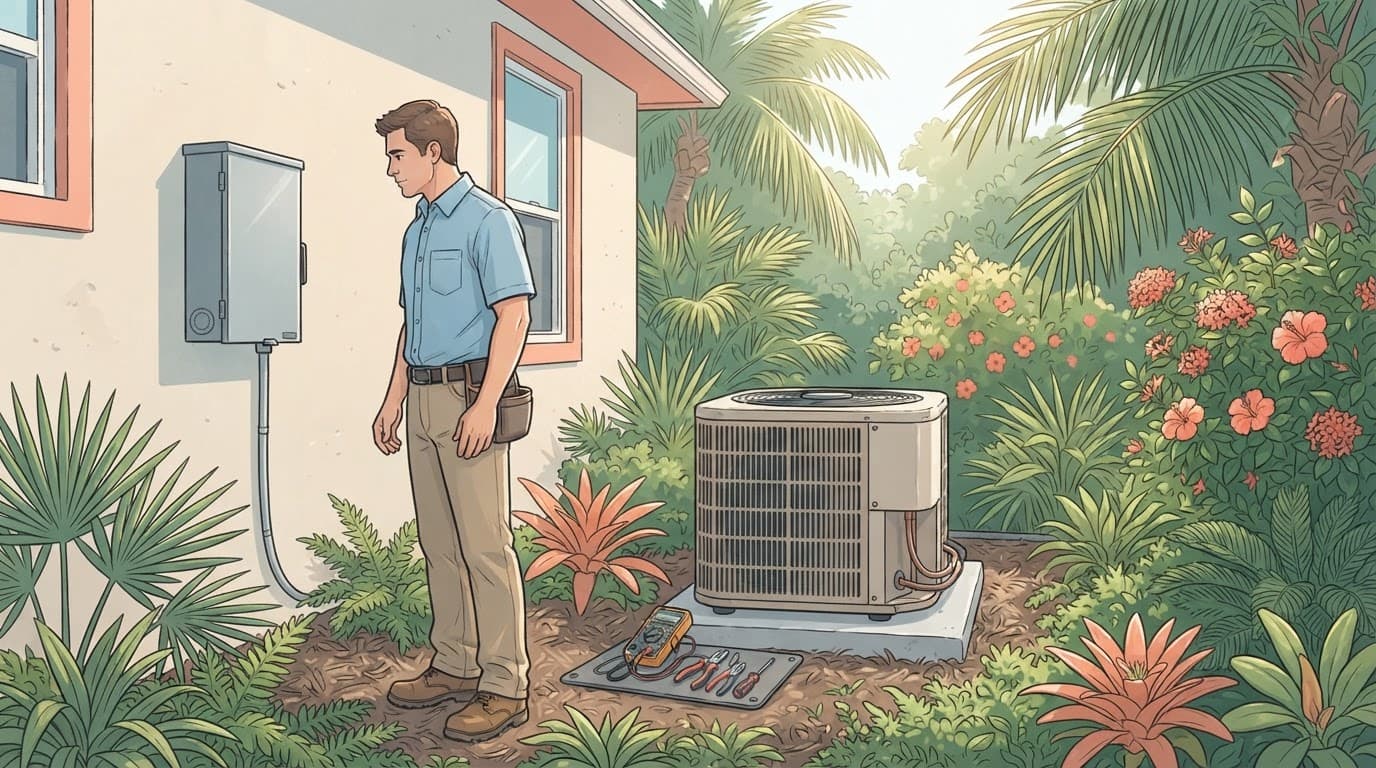
Replacement may be needed after damage
A professional may recommend replacement when the enclosure no longer closes properly, corrosion has affected the metal, heat has damaged the housing, or connections show signs of overheating.
Replacement can also make sense when the disconnect doesn't match the equipment or the installation has changed. A new condenser doesn't automatically make an older disconnect suitable. The technician should verify the equipment information, wiring, protection, and enclosure condition together.
If the box has been submerged, replacement may be safer than trying to dry or clean it. Water damage can affect hidden connections and insulation. Have a licensed professional assess the equipment before restoring power.
Schedule an inspection during major HVAC work
A disconnect inspection fits naturally with AC installation, system replacement, heat pump service, and seasonal maintenance. The technician can check the outdoor electrical connection while examining the condenser, refrigerant system, airflow, and controls.
An inspection also makes sense after a severe storm, landscaping work, exterior painting, roof work, or an irrigation change near the unit. These projects can damage conduit, cover the enclosure, or redirect water toward the equipment.
Ask the contractor to explain the condition of the box and whether the recommendation involves repair, replacement, or monitoring. A clear diagnosis helps you avoid paying for an unnecessary upgrade while still addressing a real safety problem.
How a professional evaluates the disconnect
A qualified HVAC technician approaches the disconnect as part of the complete electrical and mechanical system. The inspection should focus on safety, equipment compatibility, and the source of any symptoms.
What the technician may check
After following appropriate safety procedures, the technician can inspect the enclosure, cover, seals, conduit, mounting, terminals, and visible signs of heat or moisture damage. They may also test voltage, current draw, connections, and the outdoor unit's electrical components.
If the problem involves the branch circuit, service panel, grounding, or other household wiring, a licensed electrician may need to complete that portion of the work. HVAC and electrical responsibilities can overlap, so ask which professional will handle each repair.
A proper inspection looks for the reason behind the damage. For example, a burned connection may result from a loose termination, an overloaded component, damaged wiring, or another equipment fault.
Current compliance needs a local review
Disconnect placement, enclosure ratings, electrical protection, and other installation details can depend on the equipment, property, permit work, and current rules. Requirements can change, so general advice from an older installation shouldn't replace a current evaluation.
When you're installing a new system or changing an existing electrical setup, ask a licensed professional to verify current compliance for your home. This is especially important after renovations, storm repairs, or work on an older property.
What Fort Myers homeowners can safely do
You can reduce avoidable problems without touching electrical parts. Keep the area around the condenser and disconnect clear enough for inspection. Trim vegetation before it blocks the enclosure, but don't use tools close to wiring or the box.
Check the thermostat setting and look at the indoor electrical panel only if you can do so safely. If the AC breaker has tripped, don't reset it repeatedly. A single trip can happen for different reasons, but repeated trips, heat, smoke, or unusual sounds require service.
Never open, repair, bypass, tape shut, spray, or remove parts from the disconnect yourself. Don't replace fuses or pull out a disconnect handle as a test. Even a box that looks inactive can connect to dangerous voltage, and the outdoor unit may contain stored electrical energy.
If a storm, flood, or impact has affected the equipment, keep people away until a licensed professional checks it. Take a photo from a safe distance if needed, then describe what happened and what symptoms appeared.
Conclusion
HVAC disconnect boxes give technicians a nearby way to isolate outdoor AC equipment, but they also live in one of Florida's harshest home environments. Heat, rain, storm damage, flooding, humidity, and coastal corrosion can weaken the enclosure or its connections over time.
Look for visible damage and changes in AC operation, then call a licensed professional instead of opening the box. A careful inspection can identify whether the disconnect needs service, replacement, or no action, while also checking the rest of the system for related electrical problems.
Recent Posts