HVAC Inspection Naples: What to Check Before Closing
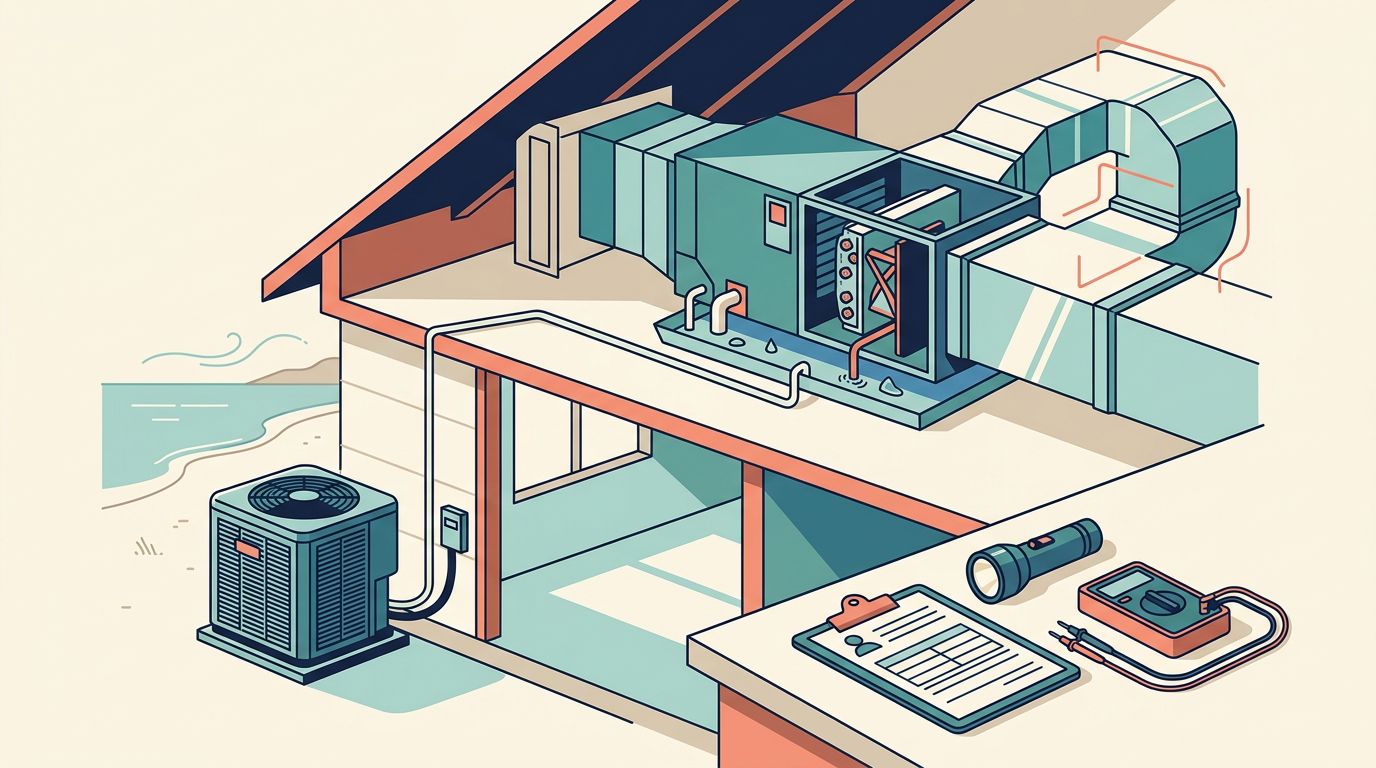
An HVAC inspection Naples homebuyers schedule before closing can uncover problems that a standard walkthrough won't show. A system may blow cold air while its drain pan overflows into an attic or its outdoor coil corrodes in salty Gulf air.
For buyers in Naples and nearby Southwest Florida communities, the right inspection checks cooling performance, moisture control, electrical safety, installation condition, and repair history. It also gives you facts to discuss before the inspection period ends. Start with the local conditions that make HVAC equipment worth a closer look.
Why an HVAC inspection matters before buying in Naples
An existing home's air-conditioning system can be one of its most expensive and heavily used mechanical systems. A quick visual check won't tell you whether the compressor is struggling, the evaporator coil is leaking, or the ductwork is sending cooled air into an attic.
Naples homes need reliable cooling for much of the year. The equipment also removes moisture during operation. A system that cools rooms but leaves the home sticky can point to airflow problems, poor sizing, short cycling, duct leakage, or a separate humidity-control issue.
The general home inspection may identify visible corrosion, water staining, or damaged equipment. However, a qualified HVAC professional can test system operation and inspect components that fall outside a general inspector's scope.
The inspection isn't a guarantee of future performance. It is a condition assessment that helps you understand what works, what needs attention, and what deserves further repair advice.
How Naples conditions stress HVAC systems
Southwest Florida creates several demands that are easy to overlook when a home feels comfortable during a showing. Heat, humidity, salt air, storms, and drainage conditions can affect separate parts of the system.
Heat and humidity keep equipment working hard
High outdoor temperatures increase the workload on the condenser and compressor. Long cooling cycles can expose weak capacitors, worn fan motors, dirty coils, restricted filters, and poor electrical connections.
Humidity adds another concern. The air conditioner must remove water while lowering the indoor temperature. If the unit runs for only a short time, has low airflow, or loses refrigerant, it may cool the room without removing enough moisture.
Ask the HVAC inspector to measure indoor relative humidity with a hygrometer or moisture meter. The EPA recommends keeping indoor humidity below 60 percent when possible, with an ideal range of 30 to 50 percent. The exact reading matters more than a thermostat setting alone.
Salt air, storms, and flooding leave different clues
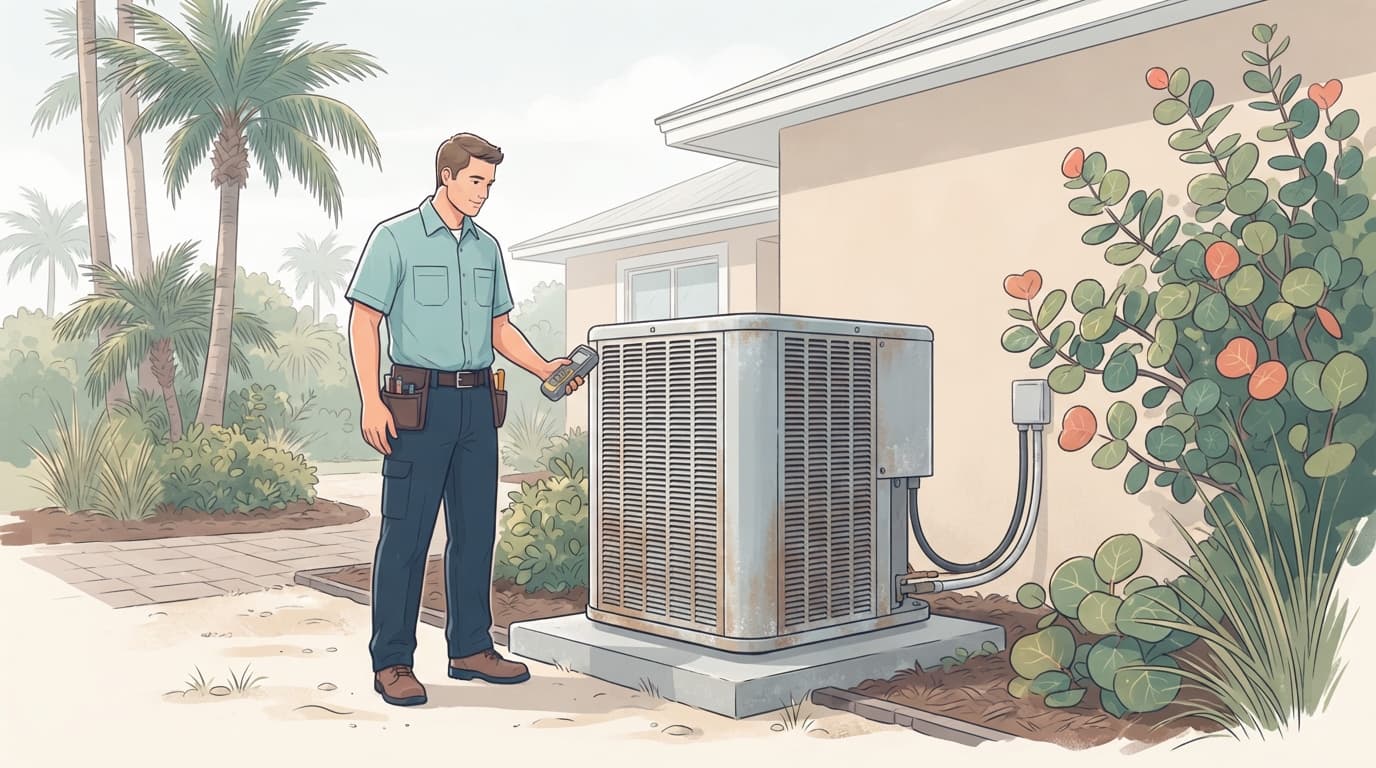
Salt carried by coastal air can corrode condenser cabinets, coil fins, copper lines, fasteners, disconnects, and electrical terminals. Look for pitted metal, white or green residue, rust, damaged fins, and brittle line-set insulation.
Storm exposure deserves its own questions. Wind-driven rain, flying debris, power surges, and heavy rainfall can damage condenser fan assemblies, equipment pads, duct penetrations, attic air handlers, and electrical disconnects.
Flood history matters even when the equipment looks dry today. Ask whether any air handler, duct insulation, thermostat wiring, condenser, or disconnect was exposed to standing water. Water damage can create later corrosion or mold problems if the affected material wasn't dried and cleaned properly.
HVAC inspection Naples buyers should request before closing
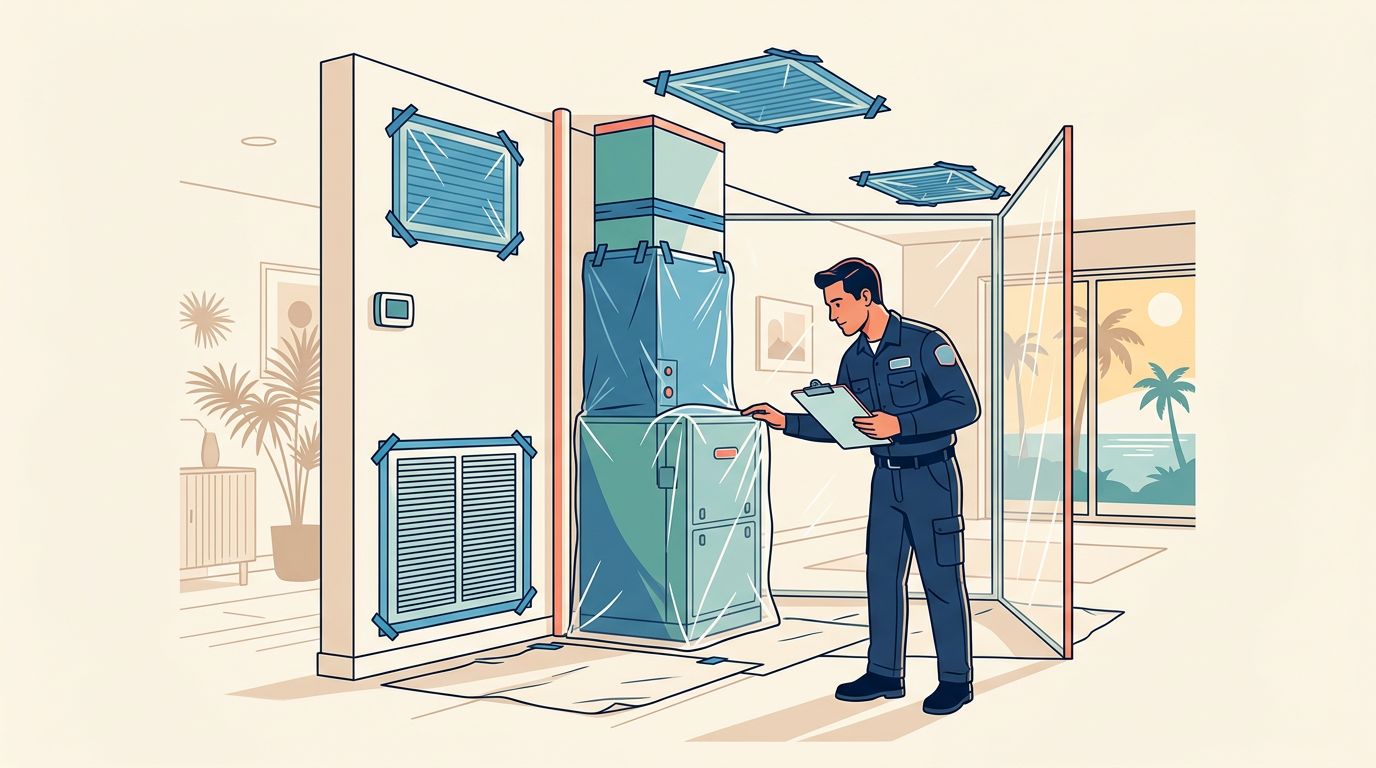
A detailed HVAC inspection Naples buyers arrange should go beyond checking whether cold air comes from the vents. Schedule the inspection with a qualified professional who regularly works on residential systems in coastal Florida.
Hire an independent HVAC professional
Choose the HVAC contractor yourself rather than relying only on the seller's service company. An independent professional should identify the equipment, operate the system when conditions allow, inspect accessible components, and explain defects in plain language.
Ask whether the professional will inspect both the indoor and outdoor units. Confirm that the appointment includes the condenser, air handler, evaporator coil area, ducts, electrical components, thermostat, refrigerant performance, airflow, and condensate drainage.
Give the technician access to attic spaces, closets, mechanical rooms, exterior equipment, and representative supply and return registers. Restricted access can limit the inspection and should appear in the report.
Require a written, usable report
The written HVAC inspection Naples buyers order should list the system's make, model, serial number, approximate age, and observed condition. It should also identify safety concerns, water damage, corrosion, performance problems, missing components, and areas the technician couldn't access.
Request photographs when they help show a defect. A clear report gives your real estate agent, home inspector, and repair professionals the same information.
A practical HVAC inspection checklist
Use this checklist when speaking with the HVAC professional and reviewing the report. The inspector may need to adapt the process to the equipment type and current weather.
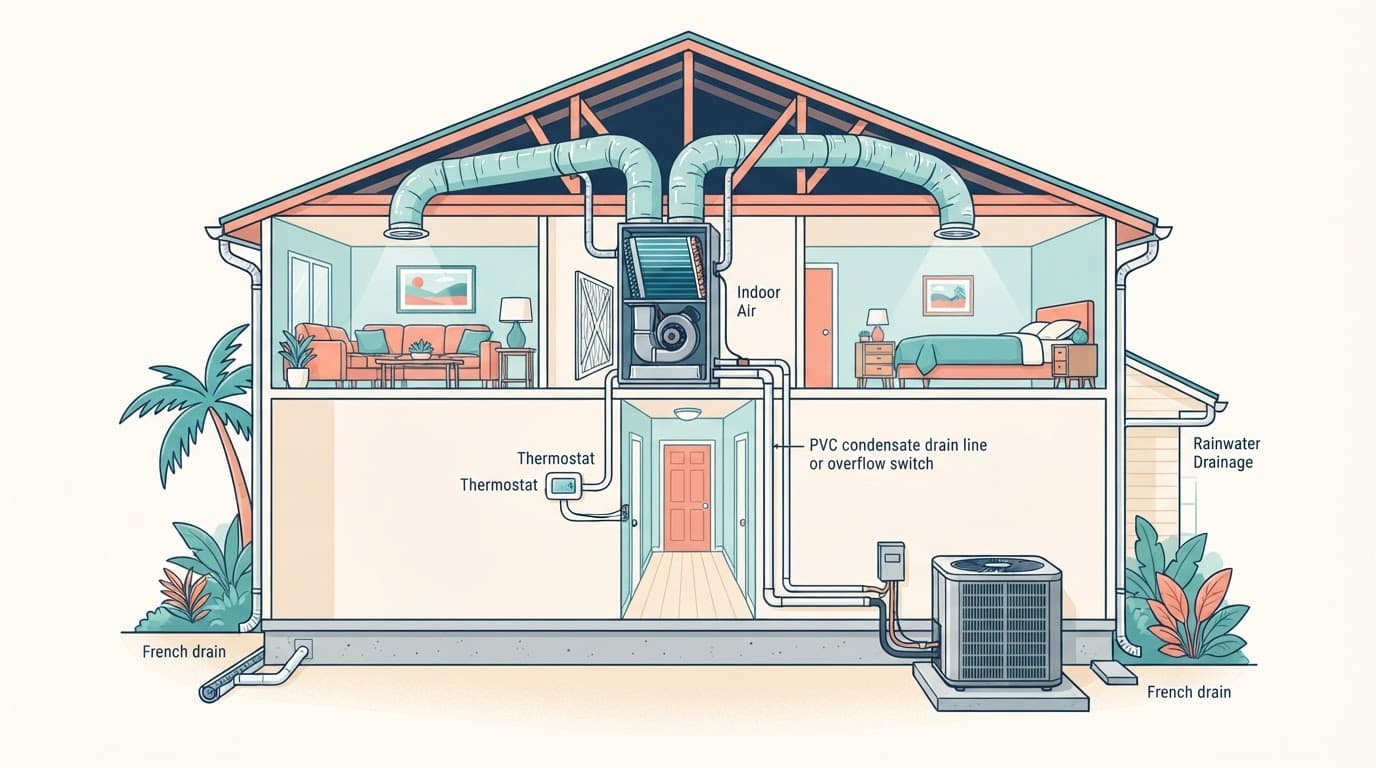
Check the outdoor condenser
- Record the unit's make, model, serial number, and estimated manufacture date.
- Inspect the cabinet, coil fins, copper refrigerant lines, fasteners, service valves, and line-set insulation for corrosion or physical damage.
- Confirm that the condenser sits level, has suitable clearance, and drains away from the home rather than sitting in recurring water.
- Run the system and listen for grinding, rattling, excessive vibration, delayed startup, or unusual cycling.
- Inspect the disconnect, wiring, conduit, and visible electrical connections for heat damage, corrosion, loose parts, or improper covers.
Check the indoor equipment and air delivery
- Inspect the air handler's attic or closet installation, platform, access, insulation, service clearance, and surrounding surfaces.
- Examine the evaporator coil area and blower compartment for dirt, rust, oil residue, biological growth, or signs of leakage.
- Check the primary drain pan, secondary pan, trap, drain line, float switch, and nearby framing for staining or overflow.
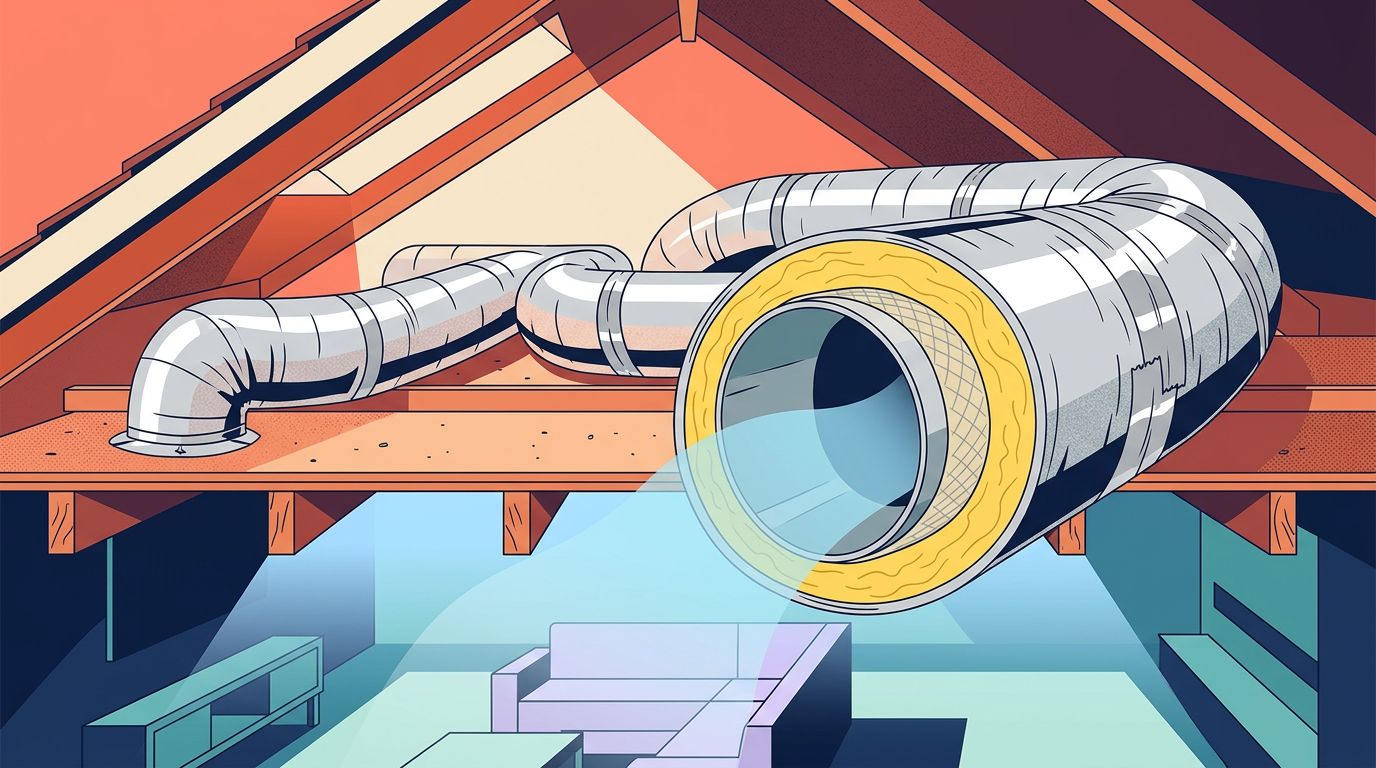
- Inspect accessible ductwork for crushed sections, disconnected joints, loose insulation, damaged seals, moisture, and visible mold-like growth.
- Measure airflow at representative supply and return registers, then note weak, noisy, or uneven delivery.
- Test the thermostat's operation, location, display, wiring, and response to a call for cooling.
- Evaluate refrigerant performance using operating readings and manufacturer information. Frost on a line alone doesn't prove the cause.
- Check the filter's condition, size, fit, and access. A filter that doesn't fit can allow dust into the blower and coil.
Control humidity, drainage, and mold risk
A cool house can still have excess moisture. In Naples, that distinction matters because damp air can damage materials and support mold growth even when the thermostat shows a comfortable temperature.
Inspect condensate drainage closely
The condensate system removes water collected at the evaporator coil. A blocked drain, damaged trap, failed float switch, or cracked pan can send water into an attic, closet, wall, or ceiling.
The EPA recommends keeping air-conditioning drip pans clean and drain lines unobstructed. Florida Building Code mechanical provisions also address condensate disposal, including flow to an approved location and a slope of at least 1/8 inch per foot where applicable.
Ask the HVAC professional to look for algae buildup, rust, standing water, overflow marks, clogged lines, and missing secondary protection. The line shouldn't discharge into a street, alley, or other nuisance area. Verify current requirements with the authority having jurisdiction, especially if the installation looks unusual.
Look for moisture history
Check the ceiling, attic decking, insulation, closet floor, drywall, baseboards, and areas beneath the air handler for staining or musty odors. Ask when any leak occurred, what caused it, and how quickly the affected materials were dried.
The EPA advises drying wet materials within 24 to 48 hours when possible. If floodwater entered the home, ask whether the air handler, duct insulation, wiring, and nearby building materials were evaluated for contamination and replacement.
If the home feels cool but damp, ask whether the system needs airflow correction, duct sealing, repair, or a dedicated dehumidification solution. Whole-home dehumidification options may be relevant, but the HVAC professional should diagnose the cause first.
A thermostat can show a comfortable temperature while indoor humidity stays high, so a measured humidity reading belongs in the buyer's inspection records.
Review system age, service records, and permits
System age is useful, but it doesn't tell the whole story. A well-maintained older unit may have a clearer history than a newer system with corrosion, missing records, or repeated repairs.
Ask for maintenance and repair records
Request invoices, tune-up reports, warranty documents, and replacement records. Look for evidence of:
- Condenser coil cleaning and corrosion treatment.
- Drain-line clearing and condensate pan repairs.
- Refrigerant additions, leak testing, or coil replacement.
- Capacitor, contactor, compressor, blower motor, or fan motor work.
- Duct repairs, insulation changes, or air-sealing work.
- Storm-related repairs or equipment replacement.
- Indoor humidity complaints, mold remediation, or repeated water damage.
Compare the service records with the equipment model and serial numbers. A record for a replacement that doesn't match the installed unit needs an explanation.
After closing, regular maintenance can help keep records current. Sunset Gulf HVAC's scheduled HVAC tune-ups include system inspection, drain-line review, condenser coil rinsing, electrical testing, thermostat calibration, and filter inspection.
Verify permits when work may have required them
Ask the seller for the HVAC permit number, final inspection sign-off, and mechanical documents for major replacements or modifications. Check whether the equipment size, location, ductwork, roof installation, slab, or mini-split addition changed.
Collier County's current building guidance identifies permit and plan-review situations that can include systems larger than 5 tons for single-family homes, roof-mounted equipment, a new slab, changed equipment size or location, changed ductwork, and mini-split installations. Its information also says air-conditioning repairs or replacements may involve a Notice of Commencement for improvements of $15,000 or more.
Permit handling depends on the property's jurisdiction. Confirm whether the home sits inside the City of Naples or in unincorporated Collier County. For Collier County questions, the Building Division lists 2800 Horseshoe Drive North, Naples, Florida 34104, and 239-252-2400. Verify current requirements and records with the appropriate local authority rather than relying on a seller's description.
For work permitted under Florida's 8th Edition (2023) Building Code, which took effect on December 31, 2023, confirm that the final inspection passed under the applicable code edition.
Coordinate HVAC findings with the general inspection
Share the HVAC report with the general home inspector and your real estate agent. A stained ceiling, damaged soffit, wet insulation, corroded disconnect, or poor attic platform may involve both the HVAC system and the home's structure or electrical work.
The general inspection covers the broader property, while the HVAC professional focuses on equipment operation and mechanical condition. Neither report should replace the other.
Ask focused questions before making decisions
Ask the HVAC professional:
- Which findings affect safety, current operation, or moisture control?
- Which items need repair before closing, and which are routine maintenance?
- Does the evidence suggest a past leak, flood exposure, refrigerant leak, or storm repair?
- Is any component inaccessible, untested, or likely to need a separate evaluation?
- Does the equipment age match the service records and permit history?
The written report can support a request for seller repairs, a credit discussion, or a decision to continue looking. Have a qualified repair professional explain options before you agree to work based only on a general inspection note.
Conclusion
A Naples home can feel comfortable during a showing while its HVAC system hides corrosion, poor airflow, high humidity, drainage trouble, or storm-related damage. A professional inspection checks the equipment and the conditions around it, including the condenser, evaporator coil, ducts, refrigerant, controls, wiring, and condensate system.
Schedule the HVAC inspection while you can still investigate the seller's records and coordinate findings with the full home inspection. The strongest purchase decision comes from knowing the system's actual condition, its moisture history, and the documentation behind its past work.
Recent Posts