
How Often Should Estero Homes Schedule Dryer Vent Cleaning?

A dryer that takes two cycles to dry ordinary clothes may be asking for more than patience. In many Estero homes, the cause is a restricted vent, not a failing dryer. Regular dryer vent cleaning helps remove lint and airflow blockages that can reduce efficiency and raise fire risk.
For most households, once a year is a practical starting point. Florida humidity, salt air, a large family, or frequent laundry may shorten that interval. Start with an annual baseline, then adjust it according to drying performance and use.
How often do Estero homes need dryer vent cleaning?
Most Estero homes should plan a full cleaning about once every 12 months. That fits a typical household with one or two adults who run laundry several times each week.
Use once a year as the starting point
An annual appointment lets a technician check the duct path, exterior termination, connection behind the dryer, and signs of lint restriction. The visit can also reveal a crushed hose or loose joint.
The calendar matters less than workload. Spring or fall is convenient, but a new home, remodeled laundry area, or recently moved dryer deserves an inspection sooner.
Shorten the interval when usage is high
Consider a six-month interval if you have a large family, run several loads most days, wash bulky bedding often, or use a shared laundry setup. If clothes stay damp after a normal cycle, schedule service instead of waiting.
Why Estero's climate can change the schedule
Estero's coastal conditions don't create a fixed rule. Combine local conditions with laundry habits, then set a schedule you can maintain.
Humidity and salt air
Southwest Florida air stays humid much of the year. Moisture can make lint cling inside a damp or poorly vented section, although humidity alone doesn't mean monthly cleaning.
Restricted airflow matters more because it leaves clothes wet longer and keeps the dryer running harder. Salt air can speed corrosion on exposed metal near an exterior vent, so look for rust, damaged screens, or a flap that won't open freely.
Household size and dryer use
Household size often matters more than home age. A family running six loads weekly creates more lint than a couple running two.
Pet hair, fleece, towels, and blankets can add to the load. Clean the screen after every cycle and track drying time for a month. The record helps you spot a gradual change.
The lint filter is not the whole vent system
Cleaning the lint filter is a routine chore. Dryer vent cleaning addresses the passage that carries warm, moist air outside the home. Both matter, but one can't replace the other.
What the lint filter does
The lint filter catches a large share of loose fibers before air leaves the drum. Remove lint after each load and check the screen for residue from dryer sheets or fabric softener.
When residue blocks the mesh, wash the screen with warm water and mild detergent, rinse it, and let it dry fully before replacing it. Vacuum lint around the filter opening when the dryer is cool and off.
What full vent cleaning reaches
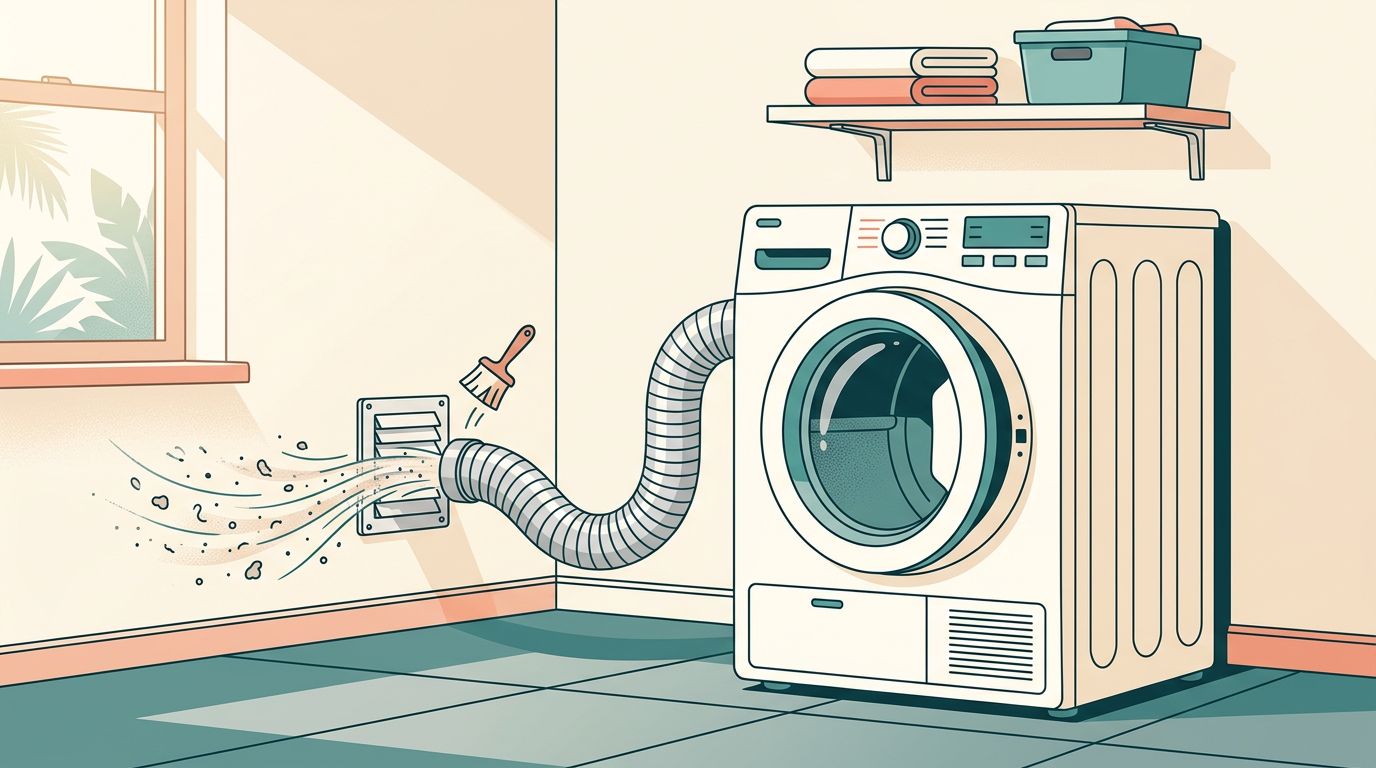
Full-system cleaning reaches the duct behind the dryer and the run leading to the outside wall or roof outlet. Lint can collect in bends, transitions, and crushed sections that a filter brush won't reach.
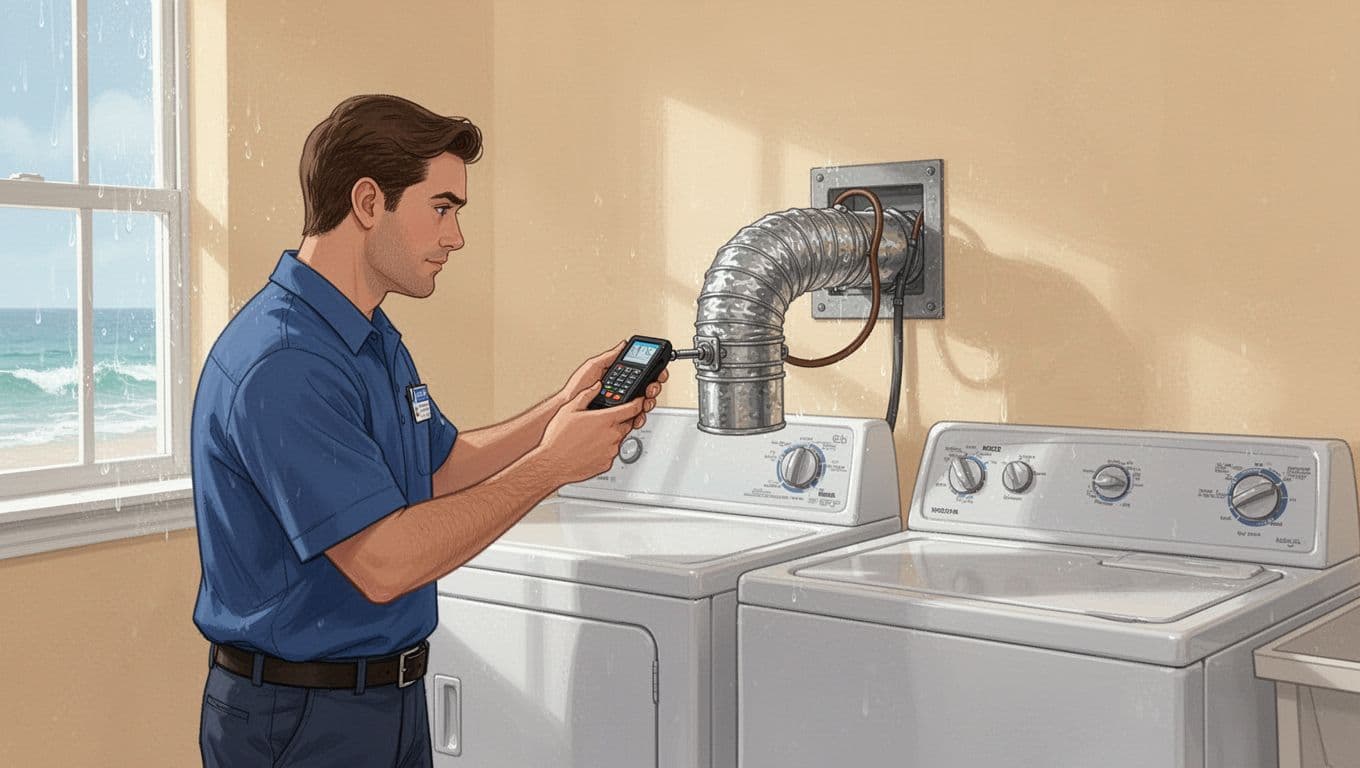
A technician can inspect the vent length, airflow, connections, and exterior flap, then explain whether cleaning, repair, or both are needed. Never assume a spotless filter proves the vent is clear.
Signs your dryer vent needs attention
Pay attention to changes in drying performance. A vent problem may develop slowly, so small clues matter before the dryer stops working.
- Clothes remain damp after a normal cycle.
- Drying takes longer than usual, even with similar loads.
- The dryer or laundry room feels unusually hot.
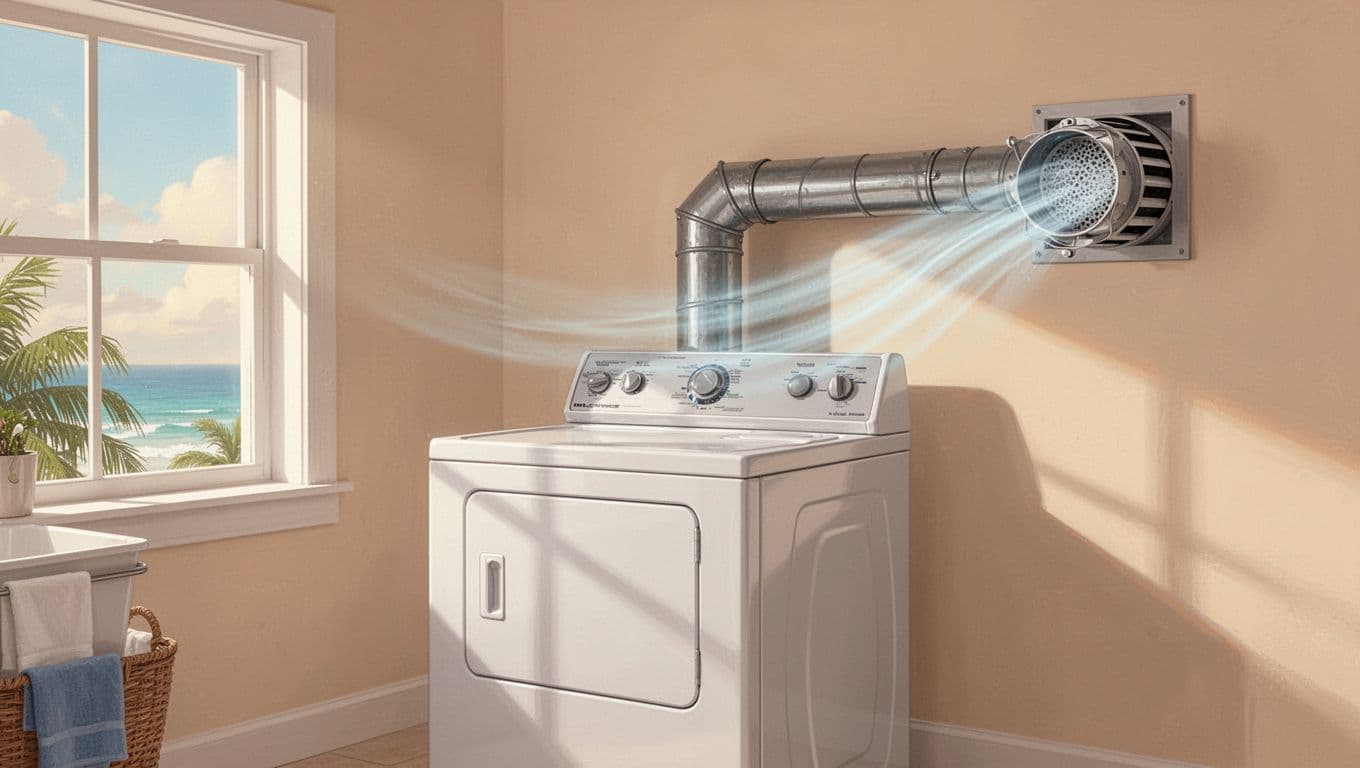
- The exterior vent flap barely opens, or no air comes out while the dryer runs.
- Lint appears around the dryer connection or outside the home.
- You notice a burning smell, unusual noise, or repeated overheating.
Stop using the dryer if you smell burning or see smoke. Have it checked before running another load. A burning odor can come from a vent restriction, belt, motor, or another appliance problem.
Safe maintenance between professional cleanings
Between professional cleanings, basic care keeps the system easier to monitor. Keep the laundry area clear, and never push the dryer tightly against the wall if doing so crushes the vent hose.
Steps homeowners can handle
Before cleaning anything, turn off the dryer and let it cool. Remove the lint screen, clear its opening with a narrow vacuum attachment, and check that the exterior flap moves freely.
Keep the outside termination free of leaves, mulch, and other debris. If you can safely reach the vent connection without moving a heavy appliance, look for a loose joint or visible lint.
Don't insert rigid tools deep into an unknown duct, and don't work on a roof outlet without proper access and fall protection.
When professional service is the safer choice
Professional service is the right choice when the vent run is long, access is difficult, airflow stays weak after filter care, or the dryer has a recurring overheating or odor issue. It also makes sense after a bird nest, pest entry, renovation debris, disconnected duct, or crushed hose.
A qualified technician can clean the full path and identify repairs that cleaning alone won't solve. For a recurring reminder, Sunset Gulf HVAC's Comfort Club HVAC maintenance listing includes one professional dryer vent cleaning per year with its Silver membership.
That option may fit households already planning regular HVAC maintenance, but your home still needs service based on actual symptoms and use.
Conclusion
Most Estero homeowners should begin with annual dryer vent cleaning , then shorten the interval when laundry volume, long duct runs, or warning signs call for it. Clean the lint filter after every load, but remember that the filter only protects one part of the system.
Better airflow can support shorter drying times and lower strain on the appliance. More importantly, regular inspection helps you address lint buildup and vent problems before they become serious.
Recent Posts