How to Document an AC Damage Insurance Claim in Cape Coral
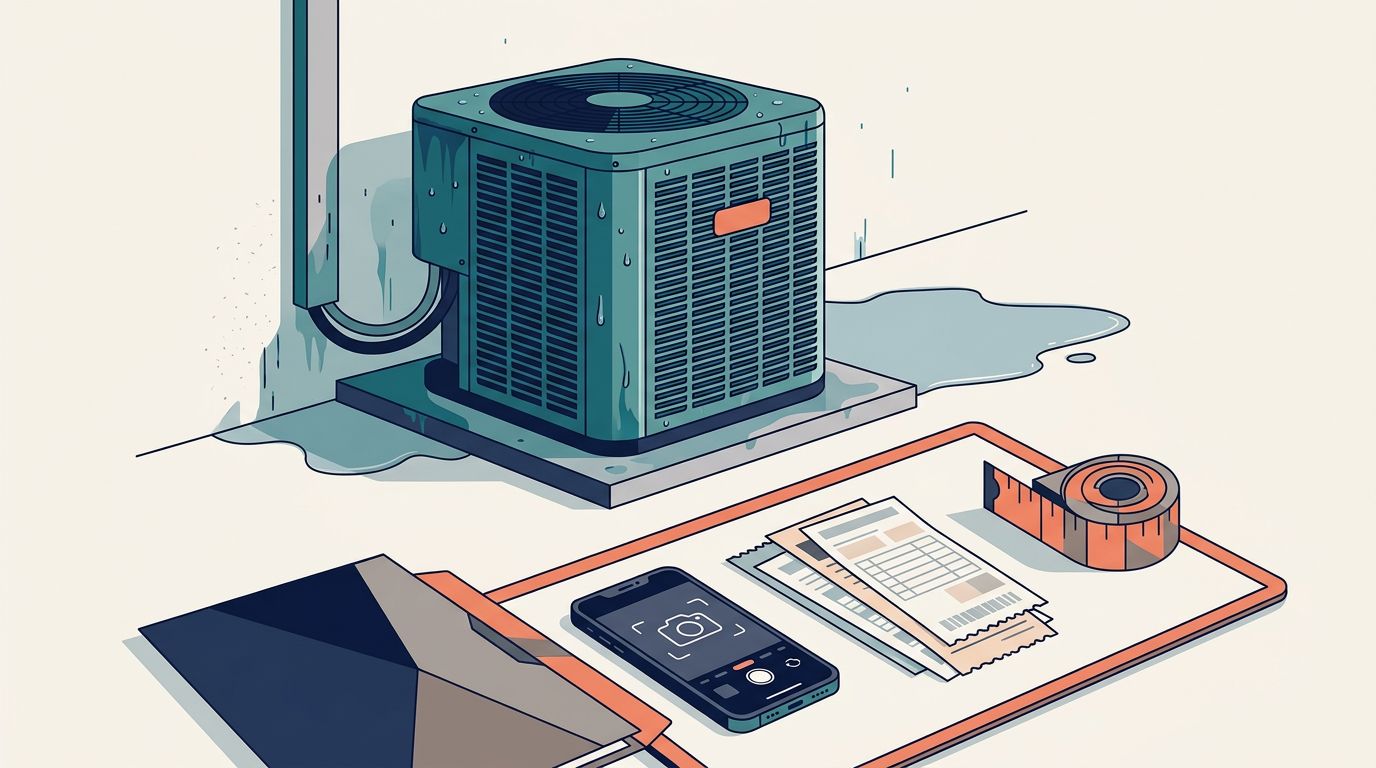
A well-documented AC damage insurance claim gives your insurer a clearer record of what happened, when it happened, and what the damage looked like before cleanup. In Cape Coral, heavy rain, lightning, high humidity, salt air, and hurricane conditions can all affect an air-conditioning system, but coverage depends on the cause and your policy terms.
Your first priorities are safety, prompt notice, reasonable emergency mitigation, and preserving evidence. Once the area is safe, create a complete file with photos, videos, technician findings, receipts, weather information, and every communication with the insurance company.
Start With Safety and Prompt Notice
Air-conditioning damage can create electrical hazards, standing water, ceiling damage, and mold concerns. Protecting your household comes before documenting the equipment.
Make the area safe before taking photos
If water is near electrical components, turn off the system at the thermostat. Shut off the breaker only if you can do so safely and without standing in water. If a condensate line or drain pan is leaking, stop the water source when possible.
You can take reasonable steps to prevent additional damage. Dry standing water, move furniture away from wet flooring, place containers under active leaks, and protect belongings with plastic sheeting. Keep fans or dehumidifiers away from wet electrical outlets and damaged wiring.
Don't open sealed electrical panels, handle exposed wires, climb onto a wet roof, or enter an unsafe attic. If the damage followed a storm, wait until the property is safe before inspecting exterior equipment.
Notify the insurer before major work
Call your insurance company or submit notice through its approved claim system as soon as you can. Tell the representative:
- The date you first noticed the damage.
- What happened before the problem appeared.
- Which AC components and parts of the home are affected.
- Whether water, smoke, lightning, wind, or a power event may be involved.
- What emergency steps you took to limit additional damage.
Ask for a claim number, the adjuster's contact information, and instructions for inspection. Follow up by email or through the insurer's online portal so you have a dated record.
Emergency mitigation can usually continue when it prevents further loss. However, avoid authorizing a major permanent repair, full replacement, or demolition before the insurer has a reasonable chance to inspect the damage. If an urgent repair cannot wait, ask the insurer for written instructions first when possible.
Florida property claims generally have a one-year notice deadline after the date of loss. Supplemental claims generally have an 18-month notice deadline, so don't wait for the situation to become worse before reporting it.
Photograph the Damage Before Cleanup
Photos often provide the clearest evidence of an AC-related loss. Take them as soon as the area is safe, even if you still need emergency drying or plumbing work.
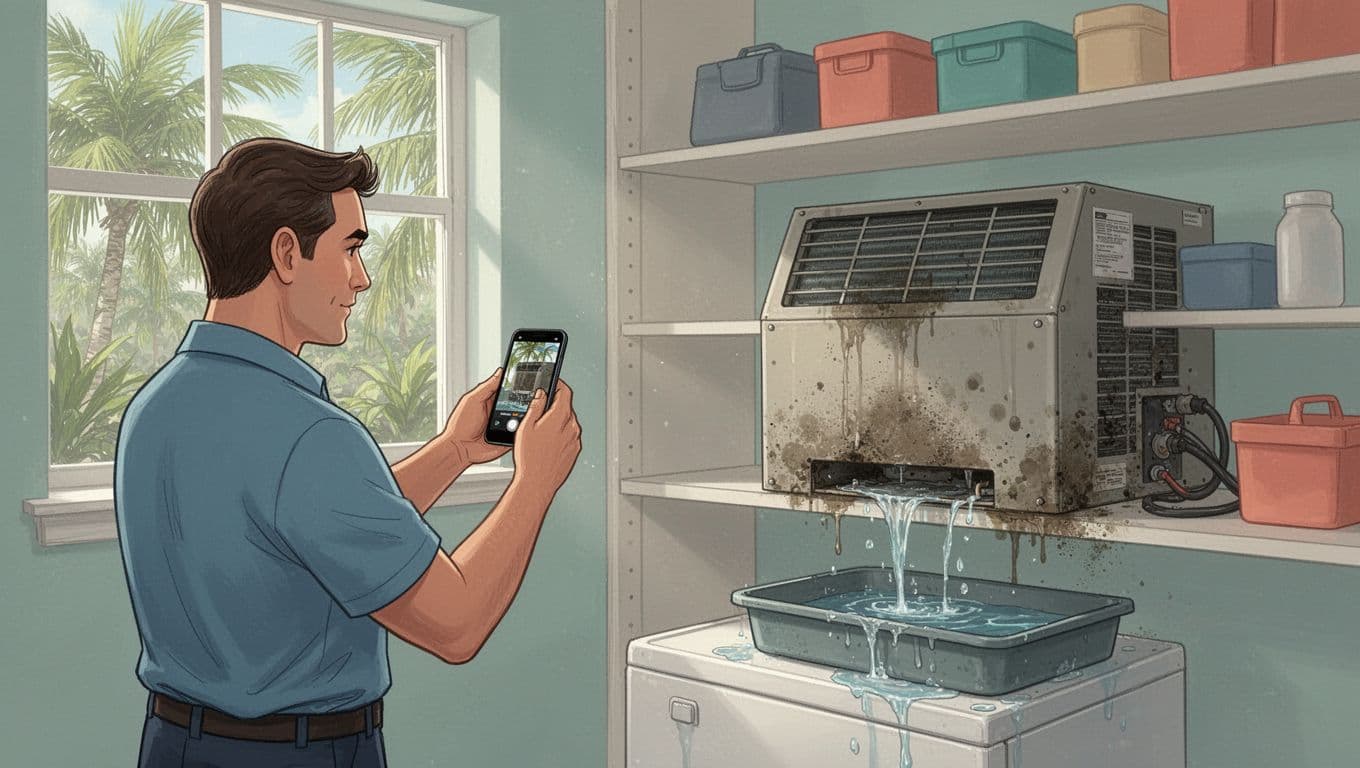
Capture context, then detail
Start with wide photos that show the AC system in relation to the room. Include the air handler, closet, nearby walls, ceiling, flooring, baseboards, furniture, and any visible water path. These images help connect the equipment problem to damage elsewhere in the home.
Next, take close-ups of the affected areas. Photograph the model and serial number plates, corroded wiring, cracked drain pans, damaged insulation, rust, water stains, blown components, disconnected lines, and visible debris. Include a ruler or measuring tape beside large stains, cracks, or damaged materials when you can do so safely.
Take photos in good light without moving or cleaning the damaged parts first. Use the original files rather than screenshots, and keep a backup in cloud storage or on an external drive. Don't edit the originals. If you add brightness or arrows to a copy, retain the unedited image as well.
Record a slow video walkthrough of the affected area. Narrate the date, location, and visible conditions in your own voice. Point out active dripping, standing water, unusual sounds, error codes, and areas where the system stopped operating. Avoid filming sensitive documents, account numbers, or unrelated personal information.
Connect the damage to the event
Your AC damage insurance claim may depend on whether the system failed because of a covered event or an excluded condition. Build a timeline while the details are fresh.
Write down when the storm, lightning strike, power surge, roof leak, or sudden water release occurred. Note when the AC last worked normally and when you first noticed the failure. If a roof or exterior opening allowed water to reach the equipment, photograph both the opening and the resulting interior damage.
Keep weather alerts, local storm notifications, outage messages, utility communications, and photographs of nearby storm damage. These records don't prove coverage by themselves, but they can help establish timing and possible cause.
Preserve the Equipment and Get Professional Findings
The damaged air conditioner is evidence. An insurer may need to inspect the failed part, compare its condition with your photographs, or determine whether the problem came from a sudden event or long-term deterioration.
Ask the HVAC technician for a written report
Request a detailed service record, not only a price for repair or replacement. The report should identify the system's make, model, approximate age, serial number, affected components, observed conditions, diagnostic tests, and recommended work.
Ask the technician to describe the likely physical cause when it can be determined. For example, the report might discuss water intrusion, a failed capacitor, lightning-related damage, corrosion, a blocked condensate drain, or a mechanical failure. The technician should separate observed facts from conclusions that require an insurance or engineering decision.
Keep the invoice, estimate, photographs, refrigerant information, permit details, and any parts removed during the visit. A technician can explain how the equipment failed, but the insurance company decides coverage under the policy.
Professional HVAC repair for Florida homes can help document system condition while you address an unsafe or nonworking unit.
Separate emergency mitigation from permanent repair
A temporary action may be necessary to stop additional damage. Drying wet drywall, removing soaked insulation, clearing a blocked drain, or securing exposed equipment can protect the home while the claim moves forward.
Permanent repairs require more care. Don't discard a failed compressor, control board, capacitor, drain pan, insulation, or other damaged component before the insurer has inspected it or given you permission. Place removed parts in a dry, secure location and label them with the date and room.
If a damaged system presents a safety risk or cannot remain in service, explain that to the insurer and document the reason. Take photographs before removal, request a written technician statement, and keep all invoices. For urgent service outside normal hours, emergency HVAC repair in Southwest Florida may help reduce additional property damage.
Avoid signing a broad repair authorization that allows work beyond the immediate emergency. Read the scope, pricing, cancellation terms, and payment responsibility before approving it.
Build a Complete Claim File
Good records reduce confusion when several people become involved. Keep one digital folder and one physical folder if possible.
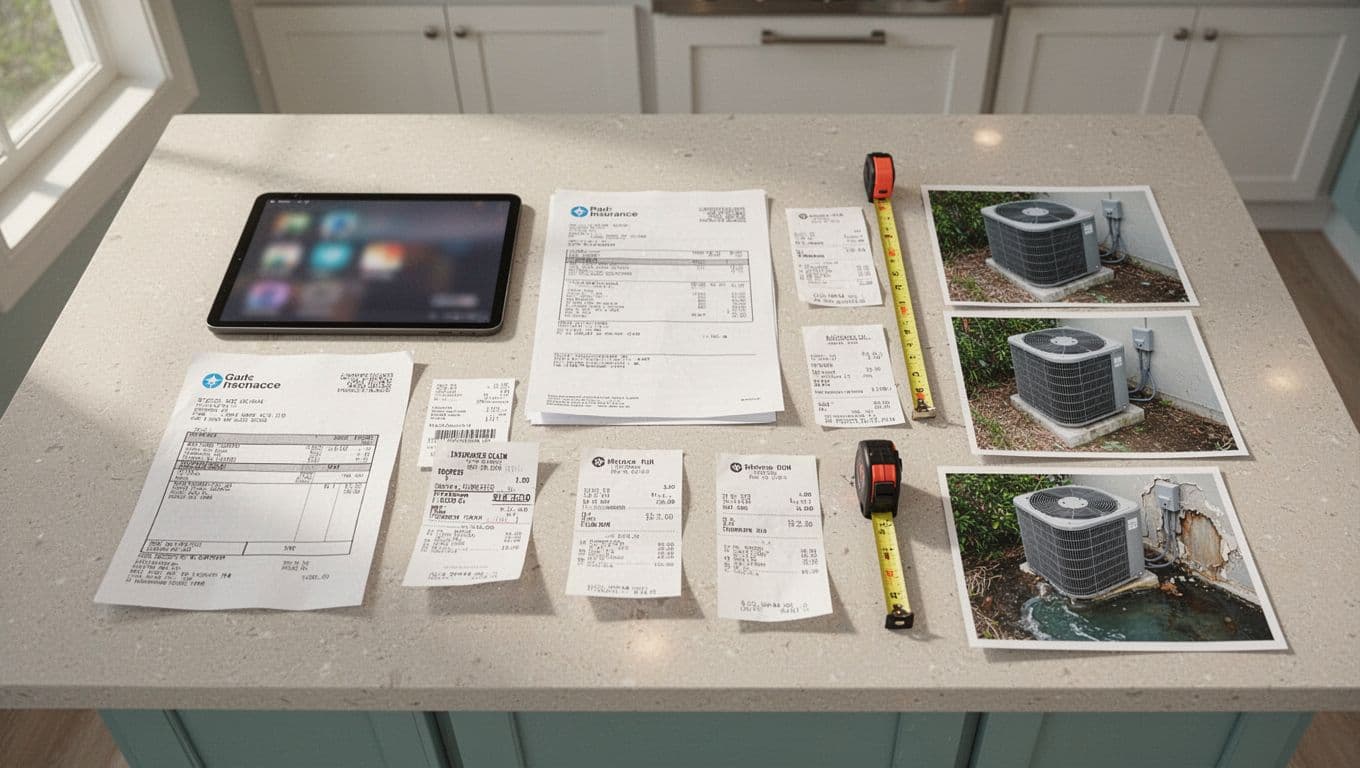
Save receipts, maintenance records, and prior history
Keep receipts for emergency drying, temporary cooling, replacement filters, protective materials, water removal, electrical work, and approved repairs. Record the date, vendor, service provided, and amount paid. Ask for itemized invoices rather than handwritten totals.
Maintenance history can help address questions about neglect or preexisting deterioration. Save tune-up invoices, filter purchases, condensate-line cleanings, coil cleanings, prior repair records, and warranty paperwork. If you recently replaced the system, include the installation invoice, permit information, inspection records, and manufacturer documents.
Cape Coral's humid, coastal conditions can increase corrosion and condensate problems. That doesn't decide coverage, but a regular maintenance record can show how you cared for the system before the loss.
Keep a dated communication log
Write down every call with the insurer, adjuster, contractor, mitigation company, electrician, and property manager. Include the date, time, person's name, claim number, topics discussed, promises made, and documents requested.
Save emails, portal messages, text messages, estimates, inspection notices, denial letters, payment explanations, and policy correspondence. Keep copies of everything you send. When someone gives verbal instructions, send a short written confirmation and ask them to correct it if your understanding is wrong.
Your file should contain:
- The policy declarations page and relevant endorsements.
- The claim number and date of first notice.
- Original photos and videos.
- Technician reports, estimates, and invoices.
- Receipts for mitigation and temporary measures.
- Maintenance and installation records.
- Weather, lightning, outage, or storm documentation.
- Notes from inspections and conversations.
- Any payment, reservation-of-rights, or denial letter.
Organize files by date and use clear names such as "2026-08-16-air-handler-water-stain.jpg." This makes it easier to show the sequence of events without relying on memory.
Know What Can Affect Coverage
An insurer doesn't decide an AC claim based only on the fact that the system stopped working. The policy, cause of loss, damage scope, deductible, exclusions, endorsements, and maintenance history all matter.
Cause matters more than the broken component
A policy may treat sudden lightning damage differently from a failed part caused by age. Wind-driven rain that enters through storm damage may raise different coverage questions than water released by a clogged condensate line.
Common issues in Florida AC disputes include wear and tear, mechanical breakdown, corrosion, faulty maintenance, neglect, preexisting damage, and water that did not result from a covered peril. Your documentation should show what happened before the failure, not only what the technician found afterward.
Coverage for the equipment may also differ from coverage for resulting damage to drywall, flooring, ceilings, or personal property. Never assume that a covered building loss automatically means every AC repair or replacement cost is covered.
Check deductibles and policy endorsements
Review your declarations page for the applicable deductible. A hurricane-related loss may involve a hurricane deductible instead of the standard all-perils deductible. The amount and conditions depend on the policy.
Look for endorsements involving equipment breakdown, water backup, service lines, mold limits, roof damage, or ordinance and law coverage. These additions can change the scope of protection, but they don't remove exclusions or prove that a particular loss qualifies.
Florida's property-settlement law includes rules about matching adjoining areas and covered damage caused during repair or replacement. Still, those rules don't override the policy's exclusions or settle the question of what caused the original AC failure.
Track Florida Deadlines and Claim Decisions
Florida Statutes section 627.70132 generally requires notice of a property claim within one year after the date of loss, with 18 months for a supplemental claim. Mark the first observable damage date and any later date when you discover additional damage.
For many new, reopened, or supplemental property claims involving damage to property only, Florida consumer guidance states that the insurer generally must pay or deny the claim within 60 days after receiving notice. Exceptions can apply when factors beyond the insurer's control delay the decision.
These deadlines don't replace the shorter notice requirements in some policies. Read the policy and report the loss promptly, even if you're still gathering photographs or waiting for a technician.
Ask for the Florida Homeowner Claims Bill of Rights if the insurer provides one with your claim materials. Keep it with the rest of your records. If the insurer disputes the cause, scope, or payment, request the position in writing and review the policy language that supports it.
Conclusion
A strong AC damage insurance claim starts with a safe home, quick notice, clear photographs, and preserved equipment. Reasonable emergency mitigation can prevent additional damage, while major permanent repairs should wait for insurer guidance when conditions allow.
Keep the failed parts, technician findings, receipts, maintenance history, weather records, and communication log together. In Cape Coral, the strongest file connects the AC failure to a dated event and separates sudden damage from ordinary wear, corrosion, or mechanical breakdown.
Recent Posts