How to Choose the Right Water Heater Size for Babcock Ranch Homes
The wrong water heater size can leave you with cold showers, higher energy bills, or equipment that takes up more space than necessary. Choosing correctly starts with your household's busiest hour, not the number printed on a product box.
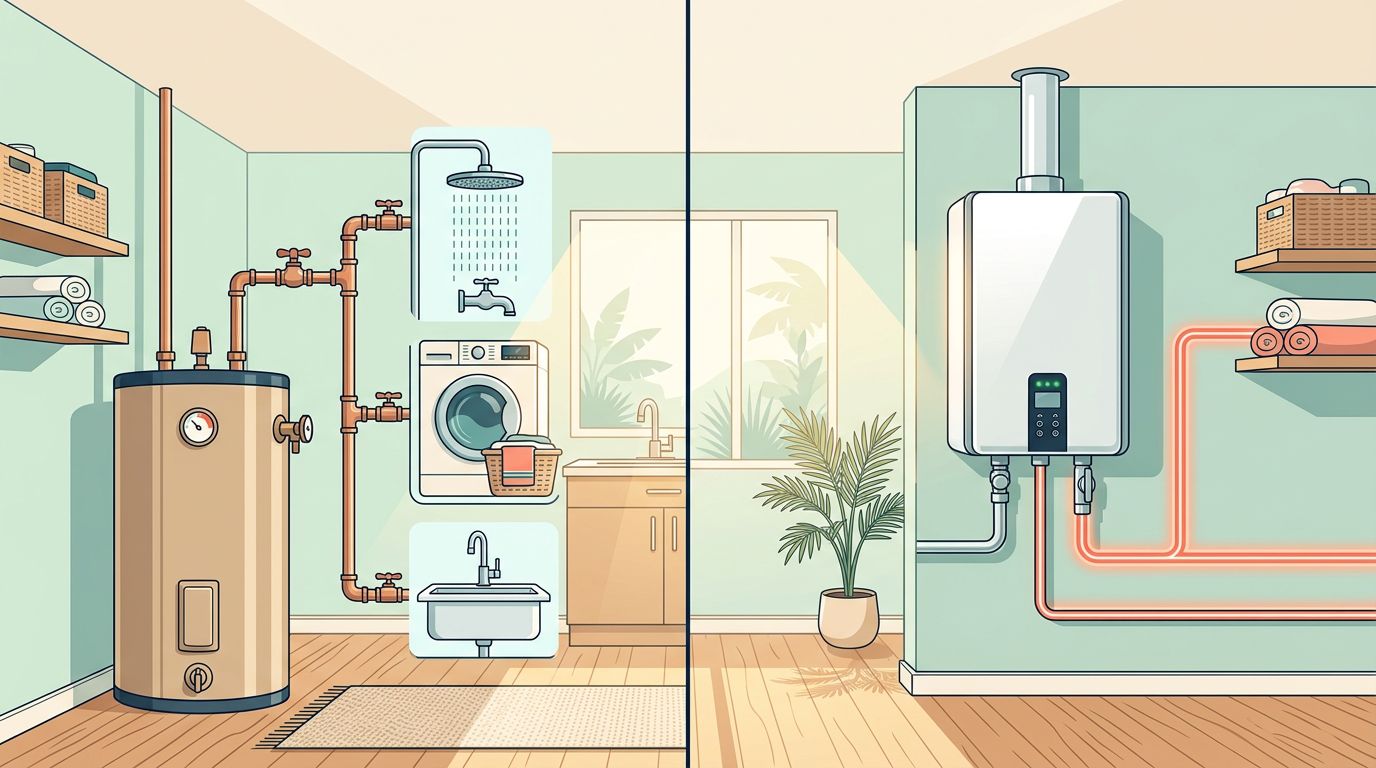
Babcock Ranch homeowners also need to choose between storage-tank capacity and tankless flow rate. Your family routine, available utilities, fixture flow rates, and installation space all affect the right fit. Start with your home's actual hot-water demand.
Why Water Heater Size Matters in Florida Homes
A water heater must handle the highest hot-water demand your household creates during a short period. That might happen before work and school, after guests arrive, or while someone runs laundry during the evening.
A storage-tank unit holds heated water in advance. Its capacity is measured in gallons, but its recovery rate also matters. Recovery rate describes how quickly the heater can warm new water after the tank begins to empty.
Tankless equipment doesn't store a large volume of hot water. Instead, it heats water as it passes through the unit. Its capacity is measured in gallons per minute, or GPM.
The right choice depends on more than household size. Two adults may use more hot water than a family of four if they take long showers, use a soaking tub, or run several appliances at once.
An undersized unit may recover before the next shower, but that doesn't help when multiple fixtures run together. An oversized tank can cost more to purchase, occupy valuable garage or utility-room space, and use energy to keep extra water hot.
The most useful sizing question is, "How much hot water does this household use during its busiest hour?"
How to Choose the Right Water Heater Size for a Storage Tank
For a standard tank water heater, begin with the busiest 60-minute period in your household. List every hot-water activity during that hour, then estimate the gallons each activity uses.
These figures provide a practical starting point:
| Household size | Common storage-tank starting point |
|---|---|
| 1 to 2 people | 30 to 40 gallons |
| 2 to 3 people | 40 to 50 gallons |
| 3 to 4 people | 50 to 60 gallons |
| 4 to 5 people | 60 to 80 gallons |
These ranges are only starting points. A high-demand household may need more capacity, while a low-use household may need less. Fuel type also affects recovery. Gas models often recover faster than standard electric tanks, while heat pump water heaters may use different recovery patterns.
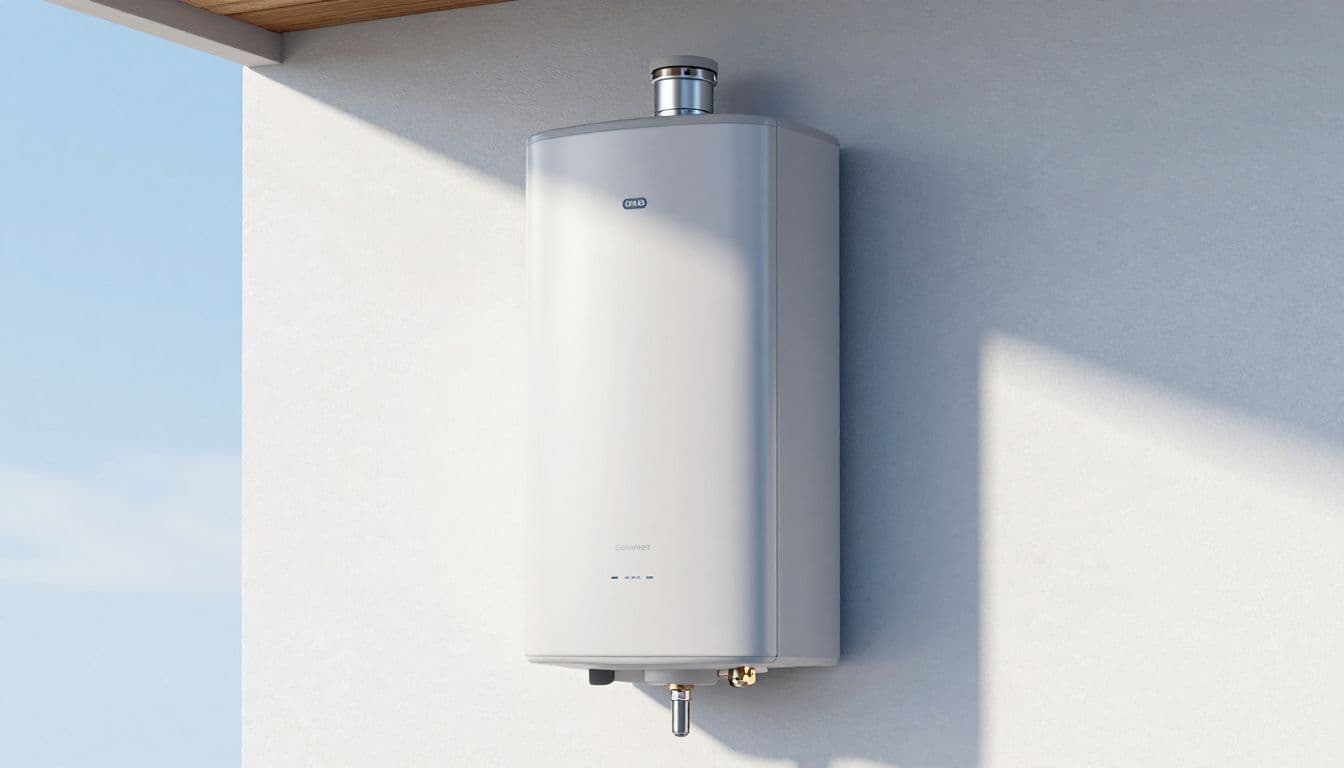
When comparing models, check the first-hour rating , often shown as FHR on the EnergyGuide label. This number estimates how much hot water the unit can deliver during the first hour, including the tank's stored supply and its recovery ability.
For example, two 50-gallon water heaters may have different first-hour ratings. The model with faster recovery could serve a busy household better without increasing tank capacity.
Suppose two people take eight-minute showers using 2.0 GPM showerheads. That demand equals about 32 gallons, before adding water for a dishwasher, kitchen sink, or washing machine. If those uses overlap, a 40-gallon tank may feel small even though it matches a basic household-size chart.
When you compare a replacement, record the current model's tank capacity, fuel type, first-hour rating, and temperature setting. Then ask whether the existing unit runs out during peak use. A larger tank isn't always the answer if the problem comes from a failing heating element, thermostat, dip tube, or sediment buildup.
Use This Simple Peak-Demand Checklist
Write down what happens during your home's busiest hour. Use actual routines instead of relying only on the number of people in the home.
- Count showers and note their typical length. A shower using 2.0 GPM for 10 minutes consumes about 20 gallons of mixed water.
- Add baths, especially if anyone fills a tub regularly. A tub can create a much larger one-time demand than a short shower.
- Include the dishwasher if it runs during the same period as bathing.
- Check whether the washing machine uses hot or warm cycles, since settings vary by appliance.
- Add kitchen and bathroom sink use when several people prepare for the day at once.
- Consider guests, teenagers, home-based work schedules, and weekend routines that create heavier demand.
- Note whether two or more fixtures operate at the same time.

A simple example might include two showers, a dishwasher cycle, and kitchen cleanup between 6:30 and 7:30 a.m. That pattern matters more than an occasional shower at noon because the water heater has less time to recover between uses.
Also, measure the actual fixture flow when possible. Place a one-gallon container under the shower or faucet and time how long it takes to fill. A container that fills in 30 seconds indicates about 2.0 GPM. This quick test can reveal why a household uses more hot water than expected.
If your current heater supplies enough hot water most days but fails during guest visits, you may not need a much larger unit. A professional can compare your demand with the first-hour rating and discuss options such as load scheduling, a larger tank, or a different recovery design.
How to Size a Tankless Water Heater by Flow Rate
Tankless sizing starts with simultaneous flow, not total daily usage. Add the GPM of every fixture likely to use hot water at the same time.
Typical fixture ranges include:
| Fixture | Approximate flow range |
|---|---|
| Shower | 1.5 to 2.5 GPM |
| Kitchen faucet | 1.0 to 2.0 GPM |
| Bathroom faucet | 0.5 to 1.5 GPM |
| Dishwasher | Varies by model and cycle |
| Washing machine | Varies by model and cycle |
A household with two 2.5 GPM showers and a 1.5 GPM kitchen faucet could need at least 6.5 GPM during overlap. The selected unit must deliver that flow at the required temperature rise, not merely advertise 6.5 GPM under easier test conditions.
Temperature rise is the difference between incoming water temperature and your desired hot-water temperature. Tankless performance changes when the incoming water is colder or when the household demands a hotter setting.
Florida's incoming water can be warmer than in many northern climates, but an installer still needs to account for seasonal conditions and the unit's published performance chart. Ask for the rated GPM at the temperature rise that matches your home.
Electric tankless systems may require substantial electrical capacity, dedicated circuits, and service-panel planning. Gas tankless systems may need proper gas-line sizing, venting, and combustion-air arrangements. The existing connection isn't automatically suitable for a larger model.
Tankless units also need enough flow to activate their heating system. A low-flow faucet may not trigger the heater by itself, especially when the unit has a higher minimum activation rate.
A properly sized tankless heater can provide continuous hot water, but it can't exceed its flow and temperature-rise limits. If several showers and appliances routinely overlap, two units or a storage-tank system may provide a better fit.
Babcock Ranch Factors That Can Change the Decision
Babcock Ranch homes differ in floor plan, occupancy, appliance placement, and utility setup. Start by checking where the water heater sits and how far it is from the bathrooms and kitchen.
A long distance between the heater and a fixture can create a wait for hot water. Increasing tank capacity won't necessarily shorten that wait. Pipe layout, insulation, fixture flow, and a properly designed recirculation system affect delivery time.
Garage installations also require attention to access and service clearance. Measure the available width, depth, and height before ordering a replacement. A taller or wider tank may not fit through the access path or leave enough room for future maintenance.
Water quality can affect maintenance needs. If your home has noticeable scale, cloudy hot water, or frequent valve problems, ask whether filtration or scale control makes sense for the equipment you are considering. Don't add treatment equipment without checking the home's water source and actual symptoms.
Florida weather can also affect utility reliability. During storm preparation, know whether your water heater depends on electricity, gas, or both. A tankless unit still needs power for controls, ignition, or pumps, depending on its design.
Finally, review the household's future plans. A new baby, additional residents, regular visitors, or a bathroom remodel can change the water heater size that makes sense today.
Check the Heater Before Ordering a Replacement
Find the data plate on the existing unit and record its model number, gallon capacity, fuel type, age, and first-hour rating if listed. Then compare that information with your peak-demand checklist.
If the heater runs out quickly, look for a pattern. Running out only when several fixtures overlap points toward capacity or recovery. Fluctuating temperatures, leaking water, tripped breakers, or discolored water may indicate a repair or replacement issue instead.
A professional should also verify connections, venting, electrical capacity, drain provisions, shutoff components, and the installation location. Requirements can vary by equipment type and home conditions, so avoid choosing a unit based on gallon capacity alone.
For homeowners planning several comfort upgrades, HVAC system installation and repair can be coordinated with water-heater work when electrical access, garage space, or broader equipment planning is involved.
Conclusion
The right water heater size comes from matching equipment to your busiest hot-water hour. Storage tanks require a careful look at gallons, recovery, and first-hour rating. Tankless systems require accurate flow-rate and temperature-rise calculations.
Before you buy, record your current unit's specifications, measure your fixtures, and list overlapping uses. That short review gives a Babcock Ranch homeowner a much better starting point than choosing a replacement by tank size alone.
Recent Posts