How to Find Your AC Filter Size in Naples Homes
An incorrectly sized filter can leave gaps around the frame, restrict airflow, or fall out of its slot. Finding the right AC filter size takes only a few minutes when you know where to look and what the numbers mean.
Naples homes often have filters in return grilles, hallway ceilings, utility closets, garages, or attic air handlers. Before buying a replacement, check the old filter, measure the opening if needed, and confirm the airflow direction. These steps help you avoid a filter that looks close but doesn't fit.
Why the AC Filter Size Matters in Naples Homes
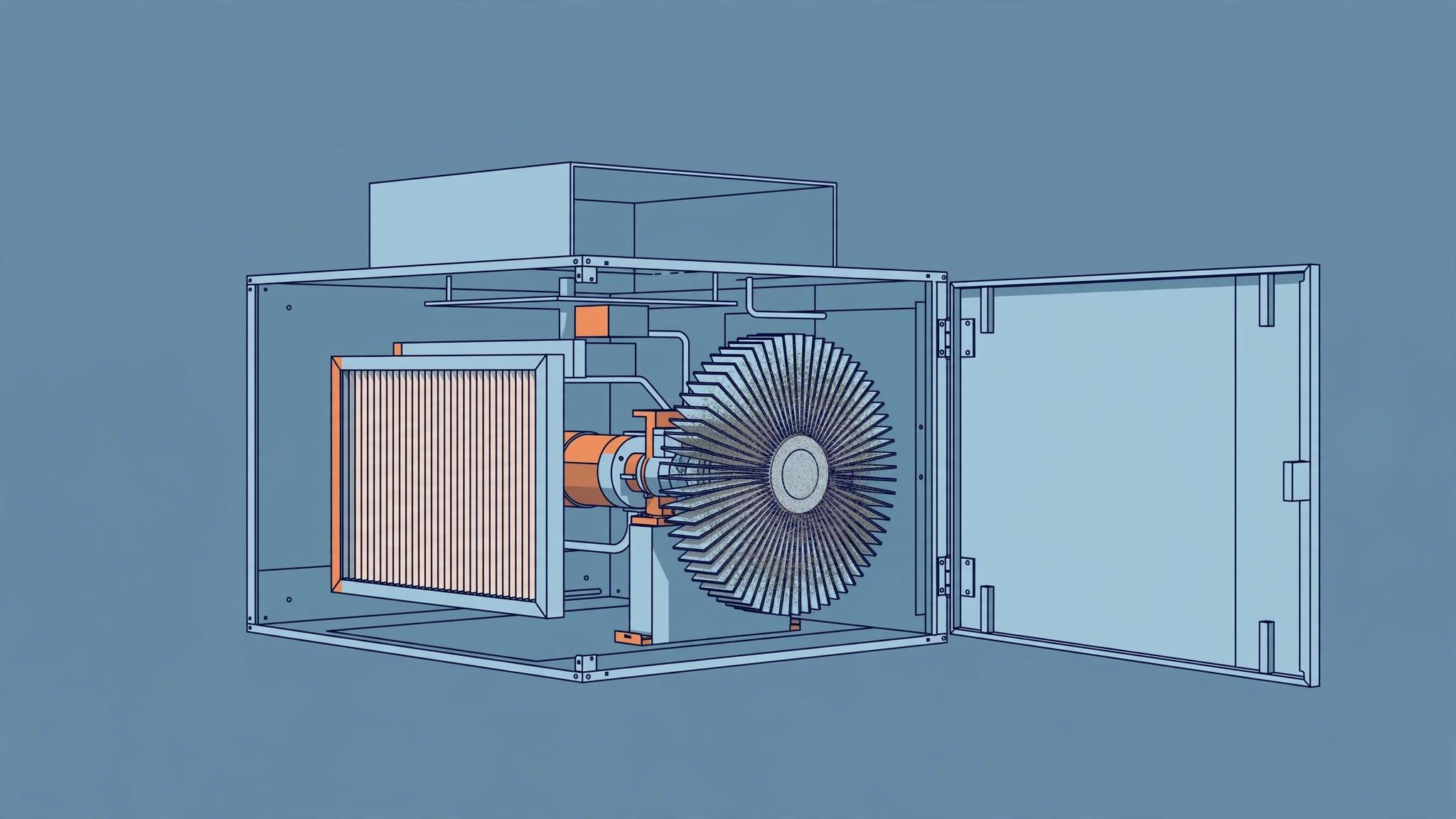
Your air filter protects the indoor coil and blower by catching dust, hair, pollen, and other particles before they enter the system. A filter that fits correctly covers the return opening without bending, collapsing, or leaving open edges.
An oversized filter usually won't slide into the housing. A filter that's too small can allow unfiltered air to pass around it. That dust may settle on the evaporator coil, where buildup can reduce airflow and make the system work harder.
Thickness also matters. A filter labeled 16x20x1
is not interchangeable with one labeled 16x20x2
. The second filter is twice as thick and may not fit a cabinet designed for a 1-inch filter. Forcing it into place can damage the frame or make removal difficult later.
Florida cooling systems also deal with long periods of operation, humidity, indoor dust, and occasional pollen. If your home has pets, recent construction, or frequent occupancy, the filter may load faster than it would in a lightly used home.
A filter should slide into its housing with light, even pressure. If you have to bend, crush, or force it, stop and verify the dimensions.
The correct size supports steady airflow. It also gives the filter media the space it needs to collect particles without placing unnecessary strain on the equipment.
How to Find Your AC Filter Size Step by Step
Follow these steps before ordering filters online or buying a multipack from a local store.
1. Turn off the thermostat
Set the thermostat to "off" before removing the filter. This stops the blower while you work and prevents loose dust from moving through the return.
You don't need to open the electrical panel for a routine filter change. Keep the thermostat off until the new filter is installed securely.
2. Locate every filter in the home
Start at the large return-air grilles. These are usually larger than supply vents and may be found in a hallway, central living area, bedroom, or ceiling.
Some Naples homes place the filter behind a hinged grille. Others use a slot beside the air handler in a closet, garage, or attic. Open each return grille and check whether it contains a filter.
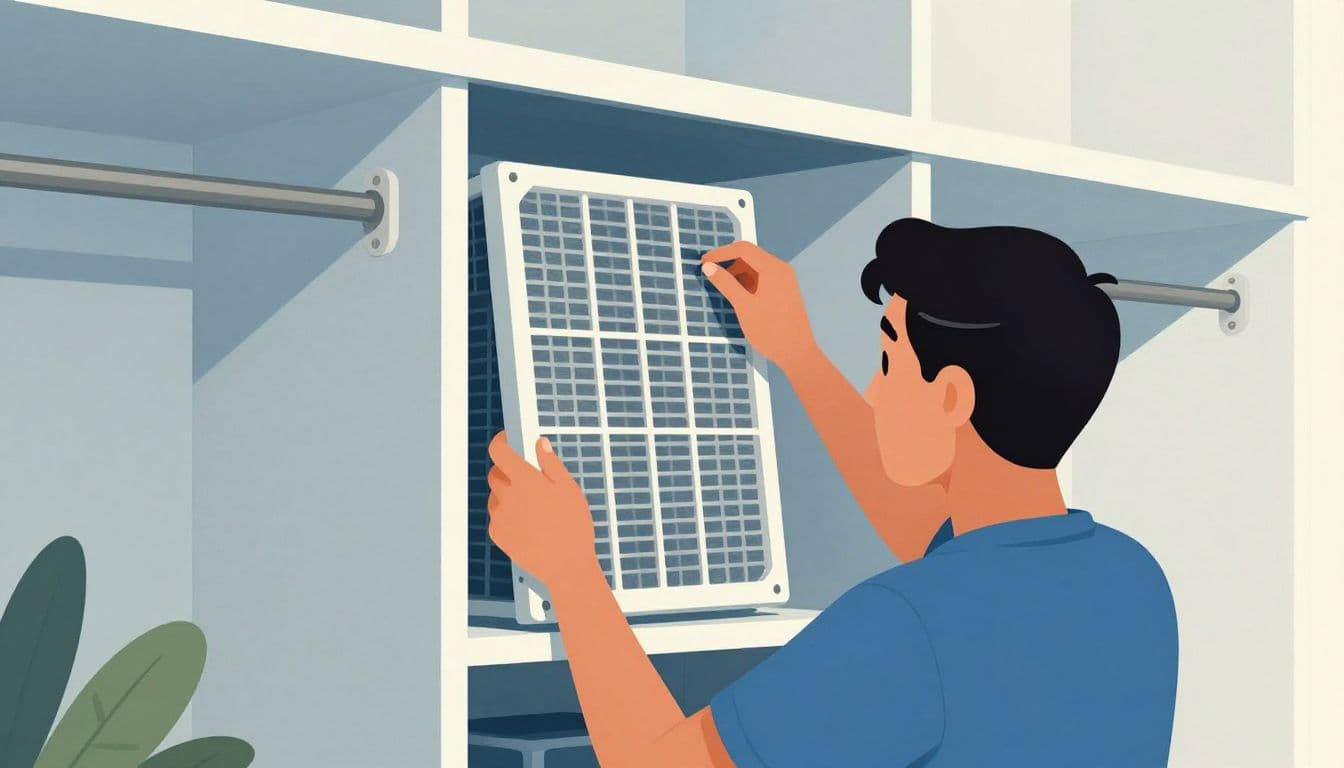
If the home has more than one return, each opening may use a different size. Don't assume every filter in the house matches the first one you find.
3. Look for the printed label
Slide the filter out carefully and inspect the cardboard frame. Manufacturers usually print the dimensions along one edge. Common label formats include:
-
16x20x1 -
20x20x1 -
16x25x1 -
14x20x1 -
12x24x1
The order usually means width x length x thickness
, measured in inches. A label reading 16x20x1
describes a filter with a nominal width of 16 inches, a nominal length of 20 inches, and a nominal thickness of 1 inch.
Write down the entire label, including any model number, MERV rating, or brand information. The dimensions identify the fit, while the rating describes the filter's particle-capture performance.
4. Measure the old filter or opening
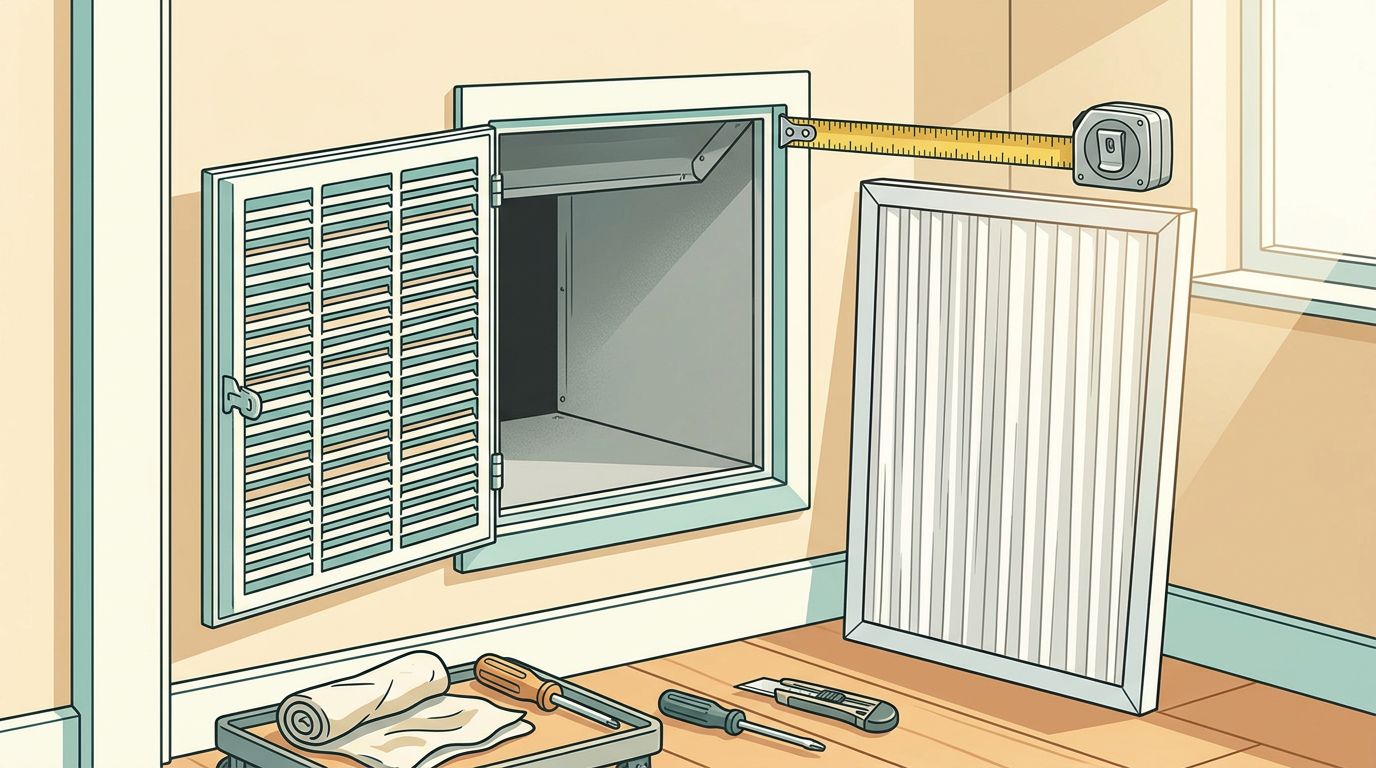
If the label is faded, missing, or hard to read, use a tape measure. Measure the filter's outside width, length, and thickness in inches.
Measure the filter frame rather than the filter media. The cardboard or plastic edge is the part that must fit inside the housing.
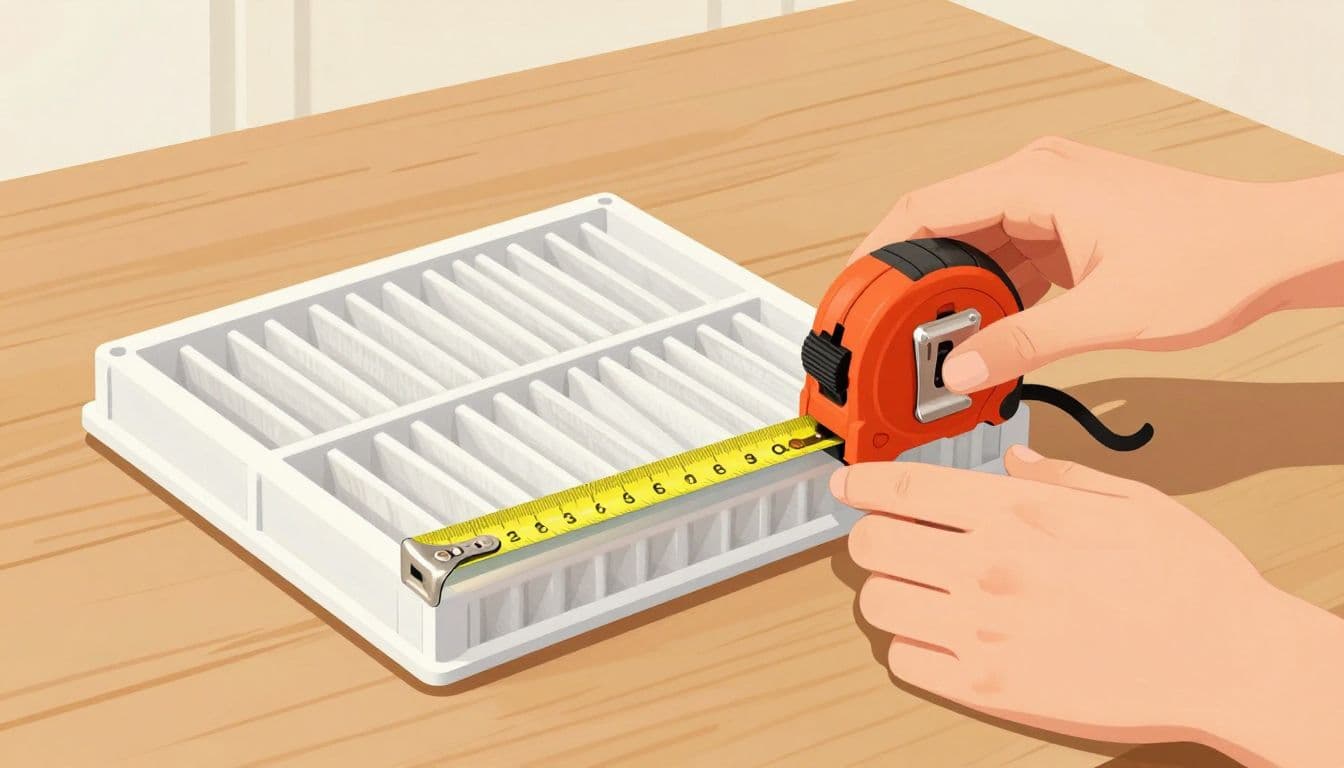
Take each measurement twice. Record the width first, the length second, and the thickness last. For example, a filter might measure approximately 15 1/2 inches by 19 1/2 inches by 3/4 inch, even though its package says 16x20x1
.
5. Compare the measurements with the housing
A replacement filter needs to fit the slot, not merely match a number found on a shopping page. Check the rails, clips, and access door for obstructions.
If the old filter fits well and its label is readable, buying the same nominal size is usually the simplest option. If the filter was loose, bent, or difficult to remove, measure the housing and ask an HVAC technician before changing sizes.
Understand Nominal and Actual Filter Dimensions
Filter labels use nominal dimensions for easier shopping. The actual filter is often slightly smaller so it can slide into the cabinet. However, the difference isn't identical across every manufacturer.
| Label format | What the label indicates | What to confirm |
|---|---|---|
16x20x1
|
16 inches wide, 20 inches long, 1 inch thick | Actual frame dimensions |
20x20x1
|
20 inches wide, 20 inches long, 1 inch thick | Grille or cabinet fit |
16x25x1
|
16 inches wide, 25 inches long, 1 inch thick | Filter direction and clearance |
12x24x1
|
12 inches wide, 24 inches long, 1 inch thick | Slot depth and frame support |
A nominal 16x20x1
filter may measure close to 15 1/2 by 19 1/2 by 3/4 inch. Treat that as a common example, not a guaranteed measurement. Read the package's actual dimensions when the fit is tight.
The thickness is especially easy to overlook. A 1-inch filter has a shallow frame, while a 4-inch media filter needs a deeper cabinet. Never substitute a thicker filter because it appears to offer better filtration. The system must be designed to handle that depth and airflow resistance.
Measure the opening if there is no old filter available. The opening should provide enough room for the filter frame to sit flat and seal around the edges. If the dimensions seem unusual, the home may use a custom filter or a cabinet with a manufacturer-specific size.
Avoid These Common Filter Replacement Mistakes
Choosing a size based on the vent cover
The grille's outside dimensions don't always match the filter dimensions. Decorative trim can extend beyond the filter slot, so measuring the visible cover may lead to the wrong purchase.
Remove the filter and measure its frame. If you can't remove it without force, inspect the clips or ask for help rather than bending the grille.
Installing the wrong thickness
A filter labeled 16x20x2
won't replace a 16x20x1
filter unless the housing has enough depth. The extra inch can block the access panel or reduce airflow.
Your HVAC system needs a filter size and thickness that match the cabinet. A higher-rated filter also may create more resistance, especially in an older system. If you want better filtration, check the equipment requirements first.
Ignoring the airflow arrow
Every pleated filter has an arrow showing the intended airflow direction. Point the arrow toward the air handler, furnace, or blower.
For a filter in a return grille, the arrow typically points into the duct and away from the room. For a filter beside the air handler, follow the path toward the equipment. Installing the filter backward can reduce its effectiveness and may cause the media to bow under pressure.
Forcing an incorrect filter into place
Don't fold the filter, crush its corners, or push it past a tight obstruction. A damaged frame won't seal correctly, and loose material can enter the return.
Remove the filter and check the measurements again. If the housing itself appears damaged or the slot doesn't match the old filter, an HVAC professional can identify the correct replacement without risking the equipment.
How Often Should You Change the Filter?
Many 1-inch pleated filters are replaced every 30 to 90 days, but that range is only a starting point. Check the filter once a month during heavy cooling use. Hold it near a light source and look for a layer of dust covering much of the media.
Replace it sooner when the filter looks loaded, the home has pets, or someone has allergies. Renovation dust can clog a filter quickly, even when the work takes place in another room.
A clogged filter can reduce airflow at the supply vents and make rooms feel unevenly cooled. It may also contribute to coil icing, although several other problems can cause that symptom. If airflow stays weak after you install a clean filter, the issue may involve the ductwork, blower, coil, or system capacity.
Regular maintenance can help catch those problems before a hot afternoon turns into an emergency. Sunset Gulf HVAC's Comfort Club maintenance membership includes filter inspection along with scheduled system checks.
When You Can't Find the Right Size
Some homes have several return grilles, and each one may use its own filter. Label each grille after measuring it so you know which size belongs in each location.
If there is no filter in the grille, look near the air handler. A central filter cabinet may sit in a utility closet, garage, or attic. The cabinet door can have a latch, sliding panel, or removable cover.
Homes with upgraded filtration may use a 4-inch or 5-inch media cabinet instead of a standard 1-inch filter. These systems require the correct cabinet size and replacement media. Don't insert a loose 1-inch filter into a deep cabinet unless the manufacturer specifically designed it for that setup.
A missing filter can point to a larger problem. The previous filter may have been removed during service, the return grille may use a different access point, or the system may have an improperly configured housing. Take clear photos of the cabinet, label, and opening before calling for help.
Homeowners who want improved particle control should also consider the system as a whole. Sunset Gulf HVAC provides indoor air quality and filtration options for homes that need more than a basic replacement filter.
Conclusion
Finding your AC filter size
is a matter of locating every filter, reading the label, and confirming the measurements in inches. A label such as 16x20x1
tells you the nominal width, length, and thickness, but the actual frame still needs to fit the housing.
Install the replacement with the airflow arrow pointing toward the air handler, and never force a filter that doesn't slide into place. The right filter protects the system and keeps routine maintenance simple, even during a long Naples cooling season.
Recent Posts