How to Spot a Failing AC Compressor in Estero
A failing air conditioner can turn an ordinary Estero afternoon into an uncomfortable, expensive problem. If you searched for "failing AC compressor Estero," your system may already be showing warning signs that deserve attention.
The compressor is the part that moves refrigerant through the cooling system. When it struggles, your AC may blow warm air, trip the breaker, make unusual sounds, or stop cooling altogether. Some of these symptoms also point to a bad capacitor, low refrigerant, or electrical trouble, so accurate testing matters.
Failing AC Compressor Estero: Warning Signs to Watch
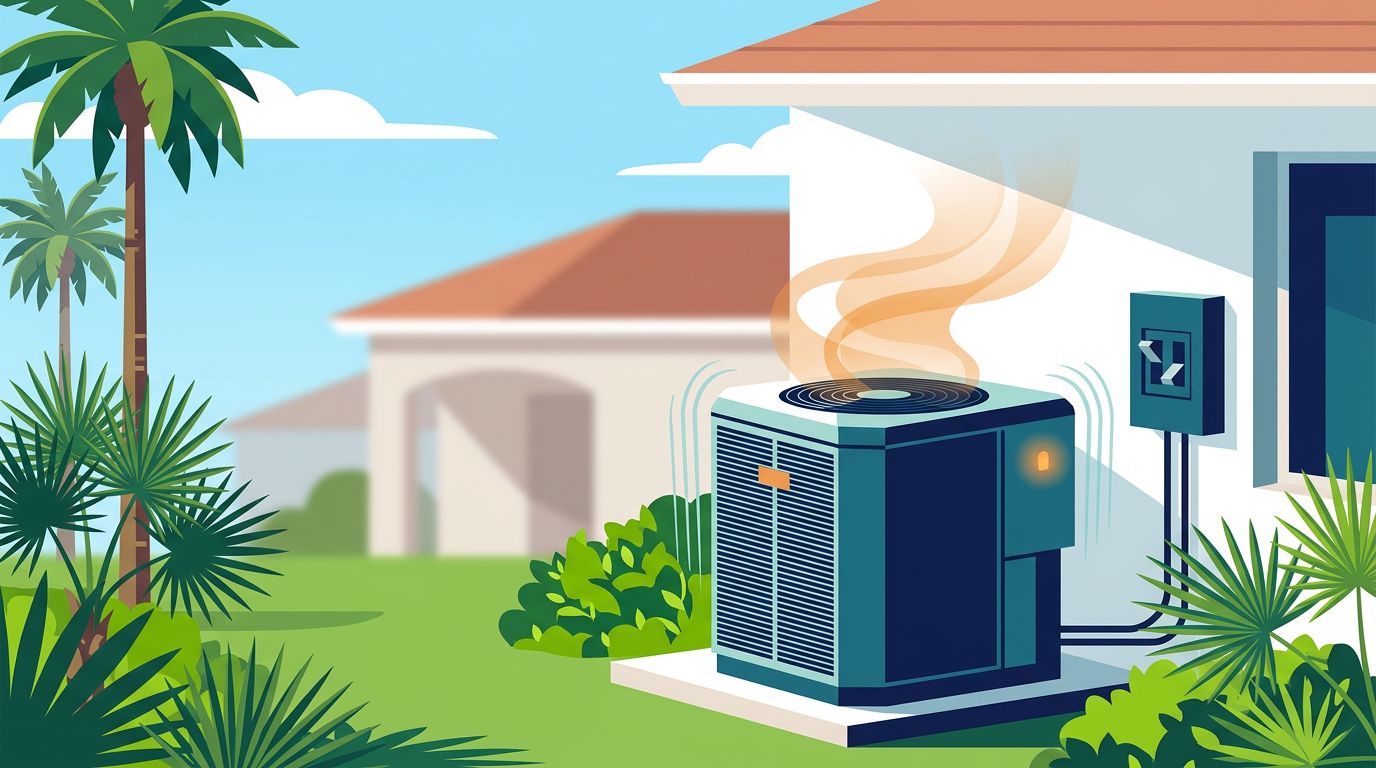
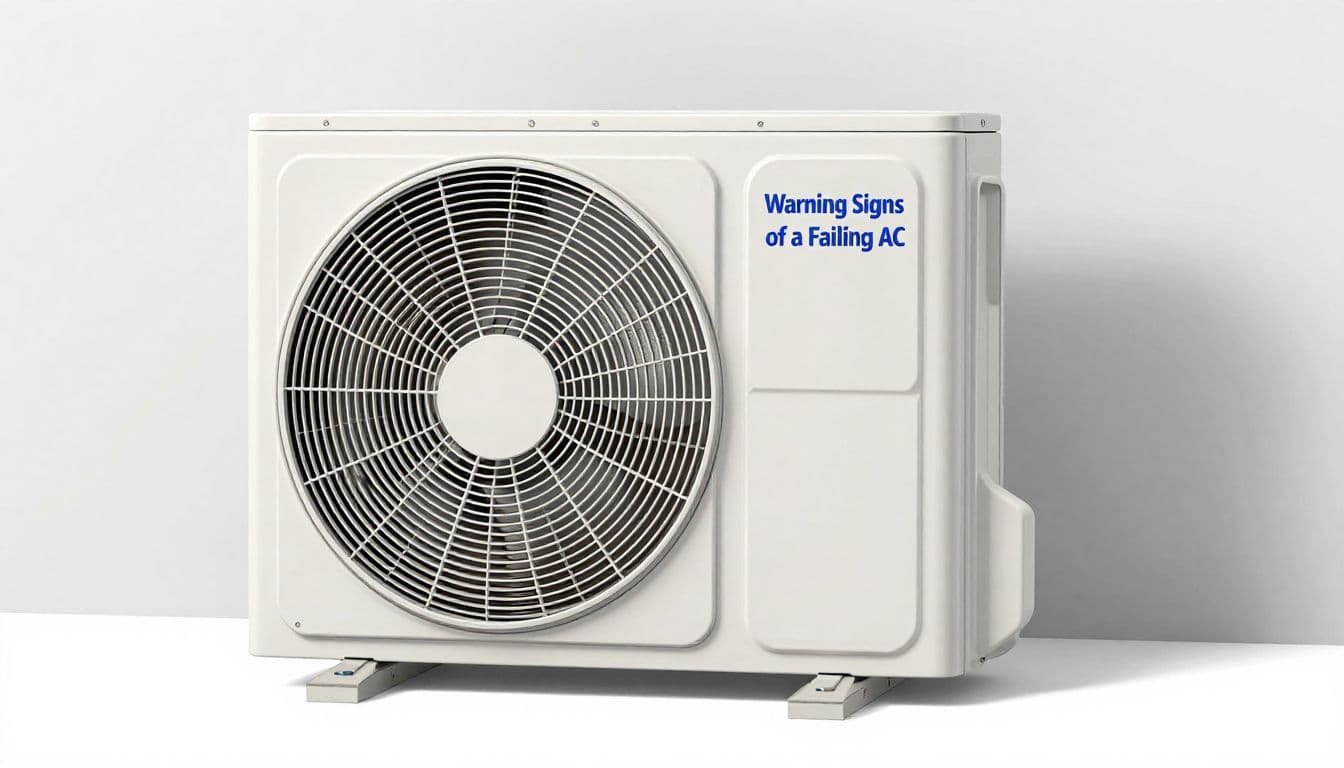
The outdoor compressor sits inside the condenser cabinet. You won't see the compressor itself because the component is sealed, but you can notice changes in how the system runs.
Warm air from the vents
Your thermostat may say "cool," while the indoor air stays warm or only slightly cooler than the room. A compressor that can't build the correct refrigerant pressure won't remove enough heat from your home.
Check the air at several supply vents. If every room feels warm, the issue may involve the compressor, refrigerant charge, or outdoor electrical components. If only one room feels warm, a closed vent, duct problem, or airflow restriction may be more likely.
The outdoor unit hums but won't start
A low humming sound without normal compressor operation often points to a failed start capacitor or a compressor that has locked up. The outdoor fan may run while the compressor remains inactive, which leaves the system unable to cool the house.
Don't stand close to the cabinet or remove its cover to investigate. The equipment contains high-voltage components, and the capacitor can hold an electrical charge even after power shuts off.
Loud or unfamiliar noises
A healthy outdoor unit makes a steady operating sound. Grinding, rattling, hard buzzing, or repeated clicking can indicate a failing compressor, loose parts, a damaged fan motor, or a failing contactor.
A brief click when the system starts is normal. Repeated clicking every few seconds is not. Turn the system off at the thermostat if the sound continues, then schedule an inspection.
Breakers trip when the AC starts
A compressor that draws excessive current can trip the circuit breaker. However, the compressor isn't the only possible cause. A weak capacitor, damaged wiring, shorted motor, or breaker problem can create the same symptom.
Never keep resetting the breaker. Repeated attempts can damage the equipment and increase electrical risk. Sunset Gulf HVAC's guide to why AC breakers keep tripping covers related warning signs and the safe response.
Short cycling or long, strained cycles
Short cycling happens when the system starts and stops before completing a normal cooling cycle. A struggling compressor can cause this pattern, but an oversized system, dirty filter, frozen coil, low refrigerant, or thermostat issue can also be responsible.
Long cycles with little temperature change are another concern. When the compressor runs continuously during moderate weather, the system may have a mechanical or refrigerant problem.
A warm home and a running outdoor fan don't automatically prove compressor failure. Testing separates a compressor problem from a capacitor or refrigerant issue.
How Compressor Problems Differ From Common AC Issues
Many air conditioner problems look alike. The right diagnosis prevents you from paying for a compressor replacement when a smaller repair could restore cooling.
A dirty filter or blocked return vent usually causes weak airflow at the indoor registers. The system may run for long periods, but the outdoor unit often sounds normal. Replacing the filter with the correct size and clearing furniture away from return grilles are safe first steps.
Low refrigerant can also produce warm air and long run times. You may notice ice on the refrigerant line or indoor coil, although ice can also result from restricted airflow. Refrigerant work requires proper equipment and certification, so don't try to thaw, recharge, or open the system yourself.
A failed capacitor often causes a loud hum, hard starting, or an outdoor unit that shuts off quickly. The compressor may still be healthy. A technician can test the capacitor, measure current draw, and check whether the compressor starts under normal electrical conditions.
A bad contactor or damaged wiring can prevent the compressor from receiving power. These problems can also cause clicking, burning smells, or repeated breaker trips. Leave the disconnect and electrical panel alone if you notice a hot plastic smell, scorched wire, smoke, or visible damage.
The following comparison can help you describe the problem when you call for service.
| Symptom | Possible causes | Safe homeowner response |
|---|---|---|
| Warm air from every vent | Compressor, refrigerant, capacitor, or airflow issue | Turn cooling off if it continues and request service |
| Outdoor fan runs, but no cooling | Compressor, capacitor, contactor, or refrigerant problem | Don't remove the panel; schedule diagnosis |
| Ice on the indoor coil | Low airflow or low refrigerant | Turn off cooling and run the fan only if needed |
| Breaker trips repeatedly | Electrical fault, weak capacitor, or compressor overload | Leave the breaker off and call a professional |
| Grinding or loud buzzing | Compressor, fan motor, or loose component | Shut the system off and arrange an inspection |
The main takeaway is simple: symptoms identify a problem, but electrical and pressure tests identify the cause .
What to Do When You Suspect Compressor Failure
Start with observations, not repairs. Write down when the issue began, whether the system cools at all, how long it runs, and whether the outdoor fan operates. Note any noises, odors, ice, water, or breaker activity.
Check the thermostat setting and replace a visibly dirty filter. Make sure supply vents are open and the outdoor cabinet has clear space around it. Grass, leaves, and stored items can restrict airflow, although they usually don't explain a compressor that won't start.
Next, turn the system off if it makes loud noises, trips a breaker, smells burned, or blows warm air for an extended period. If your home becomes hot, use fans and close blinds while waiting for service. Avoid running the AC repeatedly to "see if it improves."
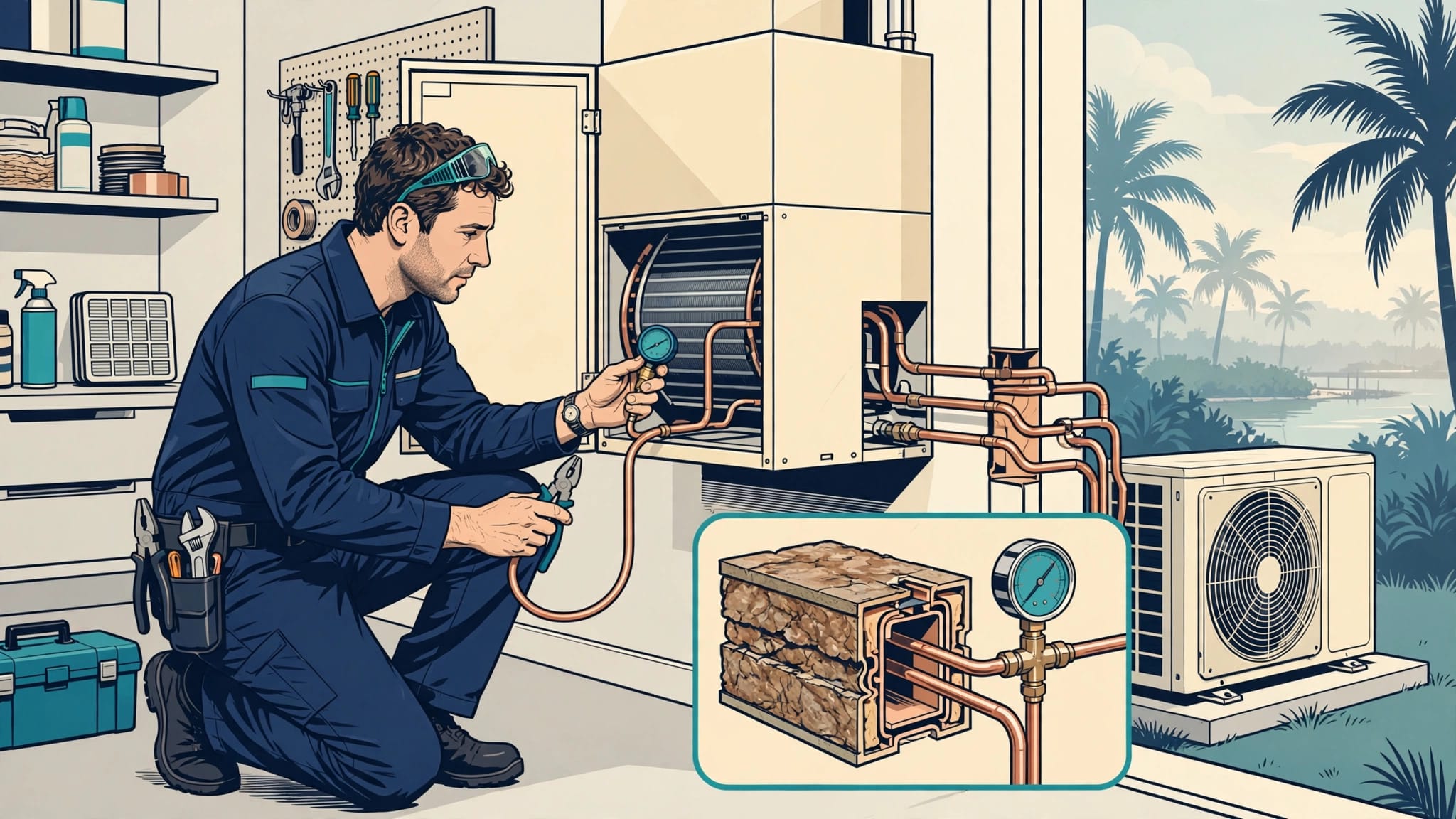
A qualified HVAC technician will inspect the electrical components, test voltage and amperage, check refrigerant pressures, examine airflow, and evaluate the compressor's starting and operating performance. Those measurements matter because a compressor can appear to run while drawing abnormal current or failing to move refrigerant.
If the compressor has failed, ask whether the rest of the system is worth repairing. The answer depends on the unit's age, refrigerant type, repair cost, warranty coverage, condition of the coil, and expected service life. A compressor replacement can be a reasonable choice for a newer system. An older unit with several worn components may make replacement more practical.
Ask for an upfront explanation of the diagnosis and the available repair options. You should know whether the recommendation involves a capacitor, contactor, wiring repair, refrigerant leak, compressor replacement, or complete system replacement.
Why Estero's Climate Can Stress an AC System
Estero air conditioners work through long, hot cooling seasons. High outdoor temperatures make the compressor work harder because the system must release indoor heat into already-warm outdoor air.
Humidity also affects comfort and runtime. A system may continue operating while it removes moisture, especially when the house has air leaks, poor insulation, or duct problems. Longer operating periods increase wear on electrical and mechanical components.
Salt air near the Gulf can speed corrosion on outdoor coils, electrical connections, and cabinet hardware. Storm debris, insects, vegetation, and standing moisture create additional problems around condenser equipment. These local conditions make outdoor inspection and routine maintenance more important.
Preventive service doesn't guarantee that a compressor will never fail, but it can catch issues before they create a larger repair. A maintenance visit may include coil cleaning, drain inspection, capacitor testing, electrical checks, thermostat calibration, and filter evaluation. Homeowners who want scheduled care can review Sunset Gulf HVAC's Comfort Club maintenance membership for tune-ups, priority scheduling, and repair discounts.
Keep the area around the outdoor unit open, change filters on the schedule recommended for your home, and respond to unusual sounds early. Small airflow or electrical problems can place extra strain on the compressor when they remain unresolved.
When to Schedule Professional AC Service
Call for HVAC service when the system blows warm air after basic thermostat and filter checks, the outdoor unit hums without cooling, or the compressor repeatedly struggles to start. A prompt appointment is also appropriate when the breaker trips, the system short cycles, or unfamiliar noises continue.
Emergency service makes sense when you smell burning insulation, see smoke, hear violent mechanical noise, or find that the electrical breaker trips immediately after startup. Turn the system off and keep people away from damaged equipment until a technician arrives.
Don't open the condenser cabinet, test live wiring, add refrigerant, or replace a capacitor yourself. These repairs involve high voltage, stored electrical energy, and refrigerant under pressure. A professional can diagnose the system without turning a manageable issue into an injury or a larger equipment failure.
Conclusion
A failing AC compressor in Estero may show up as warm air, hard starting, loud sounds, long cycles, or repeated breaker trips. Those signs deserve attention, but they don't prove the compressor is bad because capacitors, wiring, refrigerant, airflow, and fan motors can create similar symptoms.
If your search is "failing AC compressor Estero," the safest next step is to turn off a malfunctioning system and schedule professional HVAC service. Early testing can protect your home from extended heat, prevent further equipment damage, and clarify whether you need a small repair or a larger decision.
Recent Posts