Tankless vs Tank Water Heaters in Babcock Ranch
A cold shower often starts with the wrong water heater size, not a faulty fixture. Choosing between tankless vs tank water heaters affects hot-water capacity, installation requirements, maintenance, and long-term cost.
Babcock Ranch homeowners should compare real household demand, available electrical or gas capacity, water quality, and the total installation price. The right choice depends on how your home uses hot water, so start with the two systems' basic differences.
Tankless vs tank water heaters: how the systems work
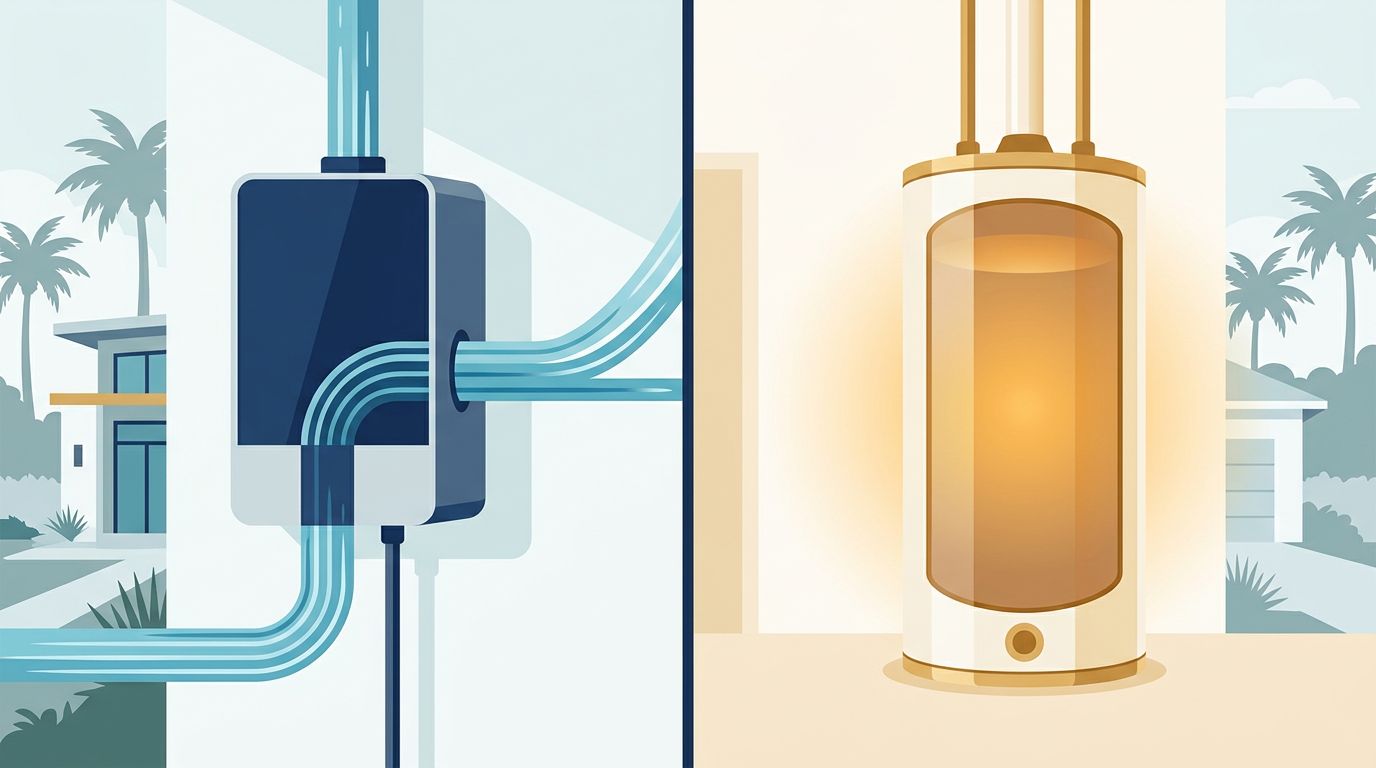
Both designs can provide dependable hot water, but they deliver it in different ways. A tank stores heated water, while a tankless unit heats water as it moves through the system.
How conventional tank heaters work
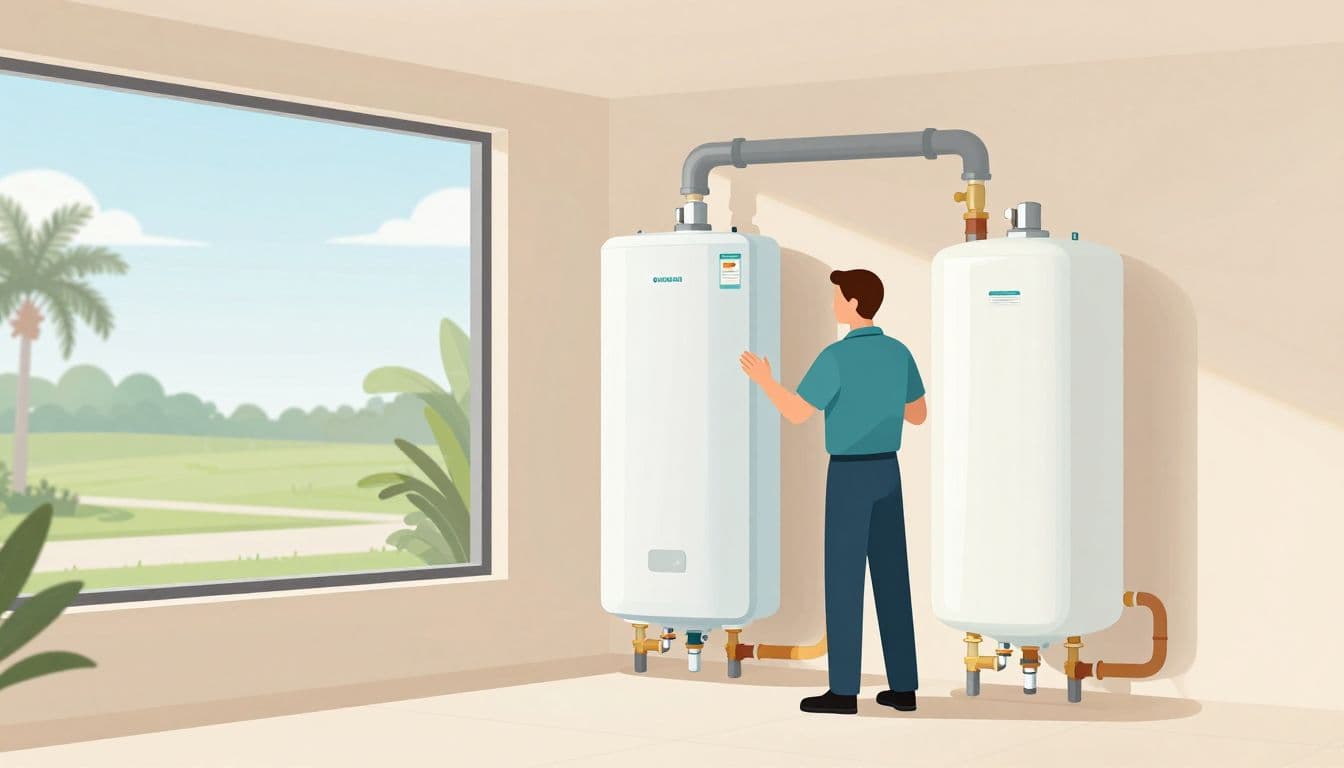
A storage tank heater keeps a reserve of hot water in an insulated cylinder. Electric heating elements or a gas burner raise the water temperature, and a thermostat cycles the system as needed.
This design provides hot water as soon as it reaches the faucet. However, the supply is limited by the tank's stored volume and recovery rate. If several people shower, wash dishes, and run laundry close together, the tank can empty faster than it reheats.
Storage tanks also use energy to maintain water temperature between uses. Modern insulation reduces this standby loss, but it doesn't remove it completely. The unit also needs enough floor space, a suitable drain pan, and access for future service.
How tankless heaters work
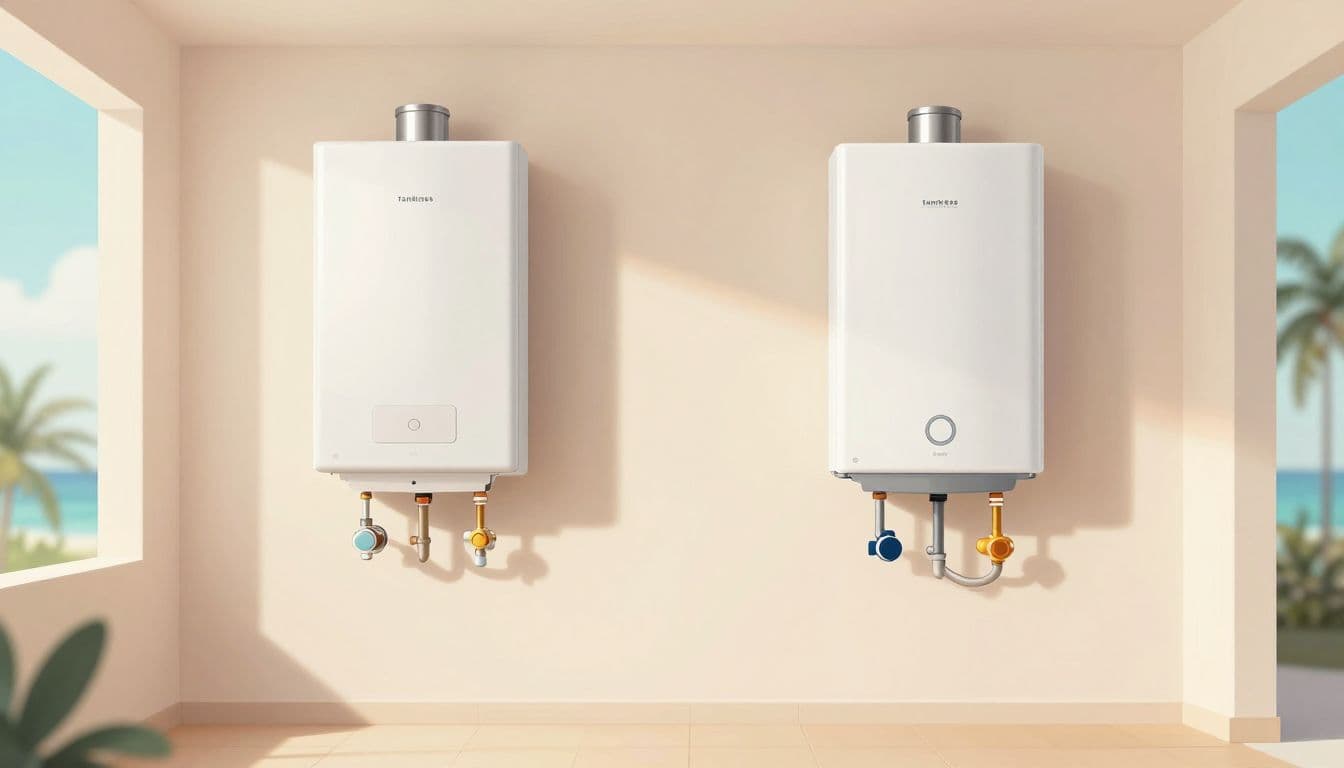
A tankless heater activates when a faucet or appliance creates water flow. The unit sends water across a heat exchanger, then delivers heated water through the home's plumbing.
Because it doesn't store a large volume, a tankless system can save space and avoid much of the energy used to keep water hot. Its output still has a limit, though. If demand exceeds the unit's flow capacity, water temperature can fall or the unit can reduce flow.
Tankless systems may also create a short delay before hot water reaches a distant faucet. A recirculation system can reduce that wait, but it adds equipment, energy use, and maintenance.
Size the system for your household's busiest hour
A water heater should handle the period when your home uses the most hot water. Average daily consumption doesn't tell an installer enough to choose the correct capacity.
Count simultaneous fixture demand
Tankless sizing starts with flow rate, measured in gallons per minute, and temperature rise. Add the expected flow from fixtures that may operate at the same time.
For example, two showers running together create more demand than one shower used alone. Add a kitchen faucet, washing machine, or dishwasher if your household commonly uses them during the same period.
The system must handle peak simultaneous demand , not an average usage pattern. Undersizing can cause temperature swings, reduced flow, or frequent complaints about performance. A licensed plumber can measure fixture flow and calculate a reasonable demand buffer for your home.
Use first-hour rating for tank systems
Storage tank sizing relies on the first-hour rating, or FHR. This number combines the tank's stored capacity with the amount of hot water it can recover during one hour.
Tank gallons still matter, but they don't tell the full story. Recovery depends on the heater's input, fuel type, and temperature rise. Gas models generally recover faster than electric models with the same tank size, although the exact result depends on the equipment.
Sizing references commonly recommend allowing a 10% to 20% margin above calculated peak demand. That cushion helps account for changes in household routines and unusually heavy use.
For tankless systems, Navien's sizing guidance recommends using the coldest expected winter inlet-water temperature when calculating temperature rise. Its performance charts show that output falls as temperature rise increases. One NPE-240 series chart lists roughly 5.3 to 8.7 GPM at a 45-degree Fahrenheit rise, depending on the model and configuration.
Compare energy use, water quality, and maintenance
The tankless vs tank water heaters decision shouldn't rely on an advertised efficiency figure alone. Your fuel type, household schedule, temperature setting, recirculation setup, and installation quality all affect operating cost.
On-demand operation doesn't guarantee lower bills
Tankless heaters avoid most standby heating because they don't maintain a large stored supply. That benefit may matter in a lightly used home or a household with long periods between hot-water demands.
Actual savings vary, however. A large family that runs several showers and appliances every morning still uses substantial energy, even with an on-demand unit. Electric tankless equipment can also require significant power input during operation.
A conventional tank may have a lower purchase and installation price. It can also work well when demand is predictable and the existing plumbing, electrical, or gas connections already match the replacement unit.
Compare estimated annual energy use with the full installed price. A higher-efficiency appliance may take years to offset added installation costs, especially if the home needs electrical or gas upgrades.
Water quality affects service needs
Both systems need regular inspection, but the maintenance tasks differ.
A tank unit may need periodic flushing to reduce sediment, plus inspection of the temperature and pressure relief valve, drain pan, connections, and anode rod where applicable. Leaking tanks require prompt attention because the storage vessel itself cannot be repaired once it fails.
Tankless systems usually need inlet-filter cleaning and heat-exchanger flushing or descaling at intervals set by the manufacturer. Hard water or sediment can increase service needs by restricting flow and affecting heat transfer.
Water chemistry can vary between homes, even within the same community. Ask a plumber about testing before adding filtration or water conditioning equipment. A treatment system should match the actual water problem, not a sales assumption.
Plan installation before choosing the equipment
The available space may determine which systems are practical. So can the home's electrical service, gas supply, venting route, drainage, and access for maintenance.
New homes allow better planning
New construction gives the installer more flexibility. A plumber can plan pipe sizing, shutoff locations, drain protection, equipment access, and the route for electrical wiring or gas piping before walls and finishes limit the options.
An electric tankless model may require 208- or 240-volt circuits and substantial service capacity. The exact amperage comes from the model's nameplate and installation manual. A home that cannot support that load may need a different water-heating design or an electrical upgrade.
Gas tankless equipment requires the correct gas input and approved venting. Condensing models may also need a condensate drain. Conventional tanks have their own requirements, including a suitable platform, drain pan, relief-valve discharge, and clearance for service.
Existing homes need a careful retrofit review
Replacing a tank with a tankless unit is more involved than swapping one appliance for another. The installer may need to modify water connections, add electrical circuits, resize gas piping, install new venting, or improve drainage.
An existing gas vent may not be compatible with a new tankless model. Likewise, an electrical panel may not have enough capacity for a whole-home electric tankless heater.
Permit requirements can apply when work changes plumbing, gas piping, or electrical systems above 50 volts. Local amendments can also affect the process. A licensed local plumber should verify the current requirements for your property, arrange the proper permits, and complete the installation according to the applicable rules.
Choose based on comfort and total cost
A low purchase price doesn't always produce the lowest ownership cost. Compare equipment, labor, required modifications, maintenance, service access, and expected replacement needs together.
When a tank may be the practical fit
A conventional tank often works well for a home with predictable hot-water use and an existing compatible installation. It can provide immediate hot water without the high electrical demand associated with many whole-home electric tankless models.
Tanks also offer familiar service procedures and straightforward replacement planning. If the household occasionally exceeds the tank's capacity, a plumber can compare a larger unit, a higher FHR, or changes to usage timing.
The main tradeoffs are standby energy use, floor space, and the possibility of running out during a busy period. A failed tank can also release a large amount of water, so a drain pan, leak detection, and proper discharge piping deserve attention.
When tankless may make sense
Tankless equipment can suit homeowners who want a smaller wall-mounted system, have limited utility-room space, or prefer heating water only when needed. It can provide extended hot-water availability when the system is correctly sized for the home's peak demand.
That capacity comes with conditions. The unit must match flow rate and temperature rise, and the home must support its electrical or gas requirements. Maintenance also matters, especially when water contains hardness or sediment.
The tankless vs tank water heaters comparison becomes clearer when you request an itemized quote. Ask for the model number, calculated peak demand, required inlet temperature, electrical or gas changes, permit costs, maintenance plan, and warranty terms.
For Babcock Ranch homeowners, the strongest choice is the one that matches the home's real demand without forcing expensive infrastructure changes. A licensed plumber can compare both options using measurements from your house rather than a general chart.
Conclusion
The right water heater for a Babcock Ranch home depends on peak demand, available utility capacity, water quality, installation conditions, and long-term service costs. Tanks offer stored hot water and simpler replacement in many homes, while tankless systems save space and can provide extended supply when properly sized.
Before deciding between tankless vs tank water heaters , have a licensed local plumber check simultaneous fixture demand, temperature rise, electrical or gas capacity, drainage, venting, and permit requirements. A careful evaluation prevents the most common problem, choosing a system that looks suitable on paper but struggles during your busiest hour.
Recent Posts