Water Heater Expansion Tanks for Fort Myers Homes: A Clear Guide
A small expansion tank can prevent big pressure problems in a home's hot-water plumbing. For Fort Myers homeowners, water heater expansion tanks often become necessary after a water heater replacement, a plumbing upgrade, or the addition of a pressure-control device.
The tank itself is simple, but the reason for it is easy to miss. It depends on how your water heater works and whether water can flow backward toward the municipal supply.
Knowing what to look for helps you ask the right questions before a dripping relief valve or pressure issue turns into a repair.
How Water Heater Expansion Tanks Handle Pressure
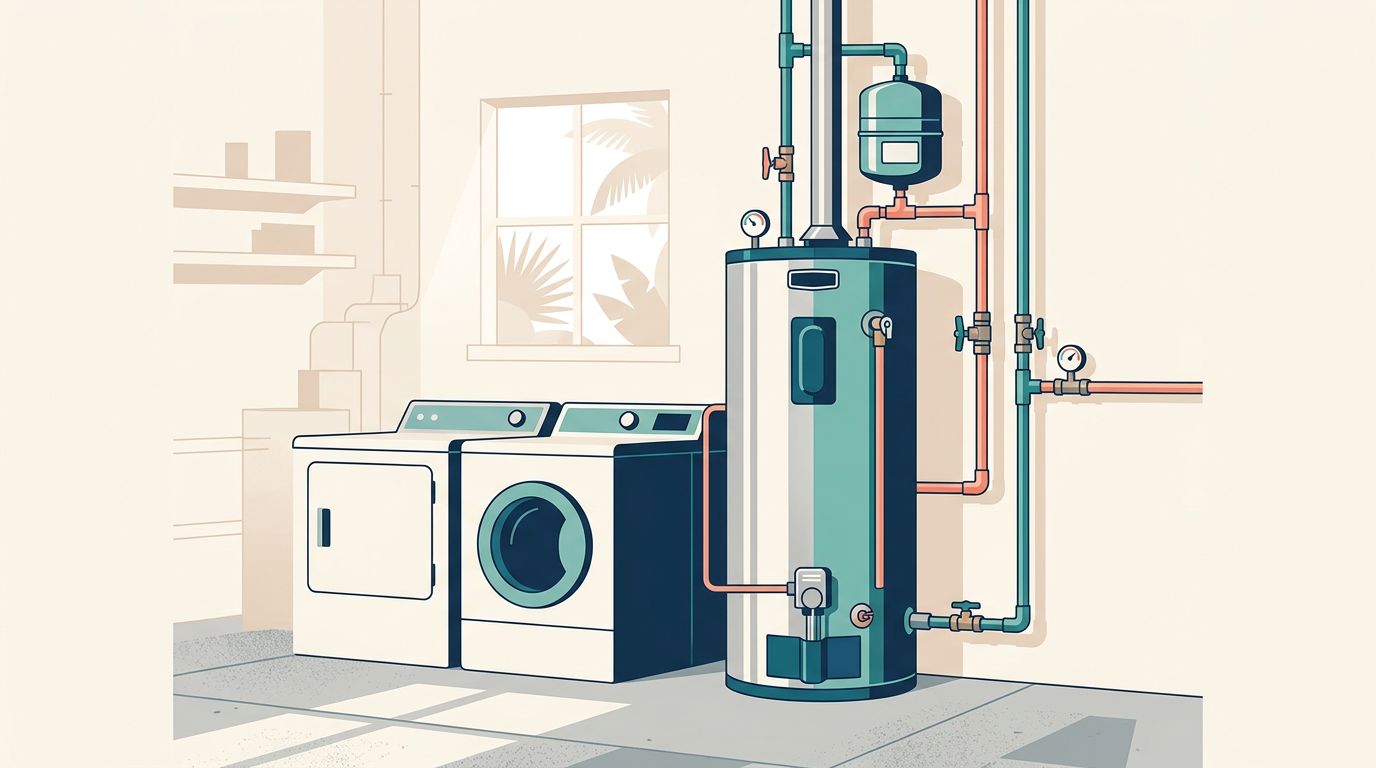
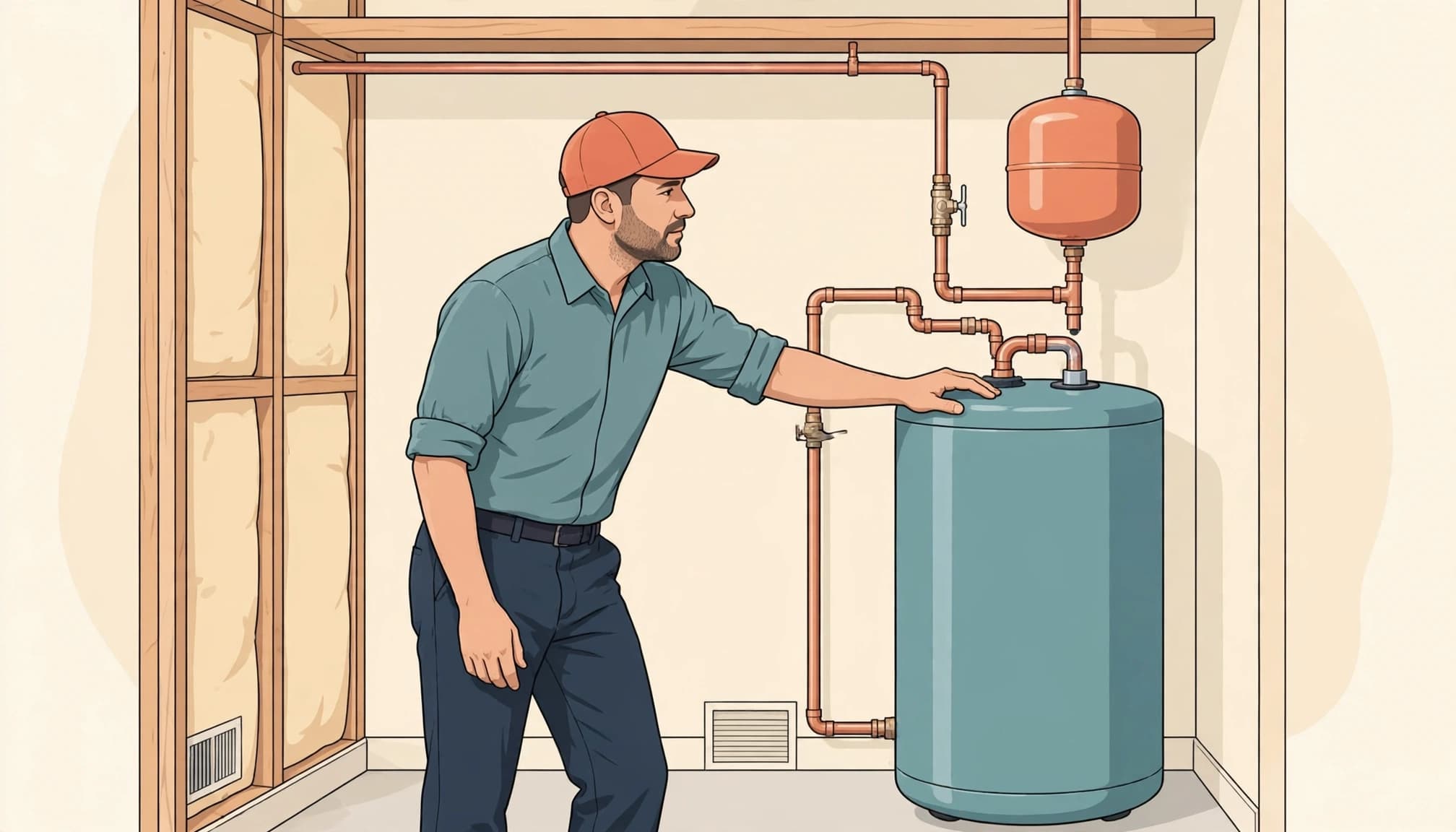
A water heater expansion tank is a small, pressurized vessel connected to the cold-water line near a storage water heater. Inside, a rubber bladder separates water from a cushion of compressed air.
When the water heater warms stored water, that water takes up more space. The expansion tank gives the added volume somewhere safe to go.
Heated water needs room to expand
Water doesn't expand much when heated, but a tank-style heater warms dozens of gallons at a time. In a plumbing system with nowhere for that extra volume to go, household water pressure rises during the heating cycle.
That pressure can trigger the temperature and pressure relief valve, often called the T&P valve. It can also put added stress on fittings, valves, appliance connections, and the water heater itself.
An expansion tank absorbs that added volume. Once someone opens a hot-water tap, the system pressure drops and the tank releases water back into the plumbing.
The tank belongs on the cold-water side
A properly installed expansion tank connects to the cold-water supply line, usually above or near the water heater. It should be on the house side of the device that closes off reverse flow.
The tank also needs proper support. Its connecting pipe should not carry its weight. A loose or unsupported tank can strain fittings and create a leak risk over time.
Closed Plumbing Systems in Fort Myers Homes
The biggest question isn't whether your home has a gas or electric water heater. It is whether your plumbing is a closed system .
In an open system, expanding water can push back toward the public water main. A closed system blocks that reverse movement, so pressure remains inside the home.
Devices that can close the system
A pressure-reducing valve, check valve, or backflow preventer can create a closed water system. These devices are often installed near the home's main water entry, near the meter, or as part of a plumbing update.
A backflow preventer protects the public supply from contamination. A pressure-reducing valve lowers high incoming municipal pressure. Both are useful, but either can change how heated water behaves inside your plumbing.
A home can become a closed system after a plumbing change, even if it had no pressure issues for years before that work.
IAPMO code guidance describes expansion control as necessary when a check valve, backflow preventer, or similar device prevents pressure from dissipating back into the main.
Why pressure problems can appear suddenly
A relief valve may begin dripping after a new water heater goes in, even though the heater isn't defective. The replacement may simply reveal an existing closed-system issue.
Likewise, a utility-side backflow device or a new pressure-reducing valve can alter water flow without changing anything inside the utility room. A licensed plumber can check static pressure and inspect the service-side plumbing before recommending a solution.
Water Heater Expansion Tanks for Storage and Tankless Units
Water heater expansion tanks are most common with conventional storage water heaters. These units hold a large supply of water and repeatedly heat that stored volume.
That doesn't mean every tank-style unit needs one. It means the home's plumbing configuration decides whether expansion control is needed.
Tank-style water heaters create regular expansion
Electric, natural gas, propane, and hybrid storage heaters all heat water held inside a tank. During each recovery cycle, the water expands.
If the supply side is closed, an appropriately sized expansion device can manage that added pressure. The tank's size and air charge must match the home's incoming water pressure and water heater capacity.
Installing a randomly sized tank can create the same trouble as installing none at all.
Tankless water heaters are different
Tankless water heaters heat water as it passes through the unit. Because they don't maintain a large stored volume of hot water, they usually don't create the same thermal expansion conditions as a storage heater.
Still, "tankless means no expansion tank" is too broad. A tankless setup with a recirculation system, buffer tank, or other stored-water component may need expansion control. The plumbing arrangement, rather than the heater label, gives the right answer.
Warning Signs of an Expansion Tank Problem
An expansion tank doesn't make much noise or demand daily attention. However, several household symptoms call for a closer look.
Relief-valve discharge is a serious clue
The T&P relief valve protects the water heater from unsafe temperature or pressure. If it releases water repeatedly, don't cap it, plug it, or ignore it.
Thermal expansion can cause nuisance discharge, but so can excessive incoming water pressure, overheating, or a faulty relief valve. A plumber needs to identify the actual cause.
Other signs to watch for
Call for an inspection if you notice any of these issues:
- Water appears in the relief-valve discharge pipe after heating cycles.
- Water pressure feels stronger at some times of day, then drops later.
- The expansion tank shows rust, corrosion, a wet connection, or visible movement.
- Plumbing fittings begin to seep without another clear cause.
- A newly installed water heater starts releasing water from its relief valve.
These symptoms don't confirm a failed expansion tank by themselves. They do mean the pressure-control system deserves attention.
When Professional Installation Is the Right Move
Replacing a faucet is one thing. Installing an expansion tank involves water pressure, pipe layout, shutoffs, code requirements, and a safety device connected to a water heater.
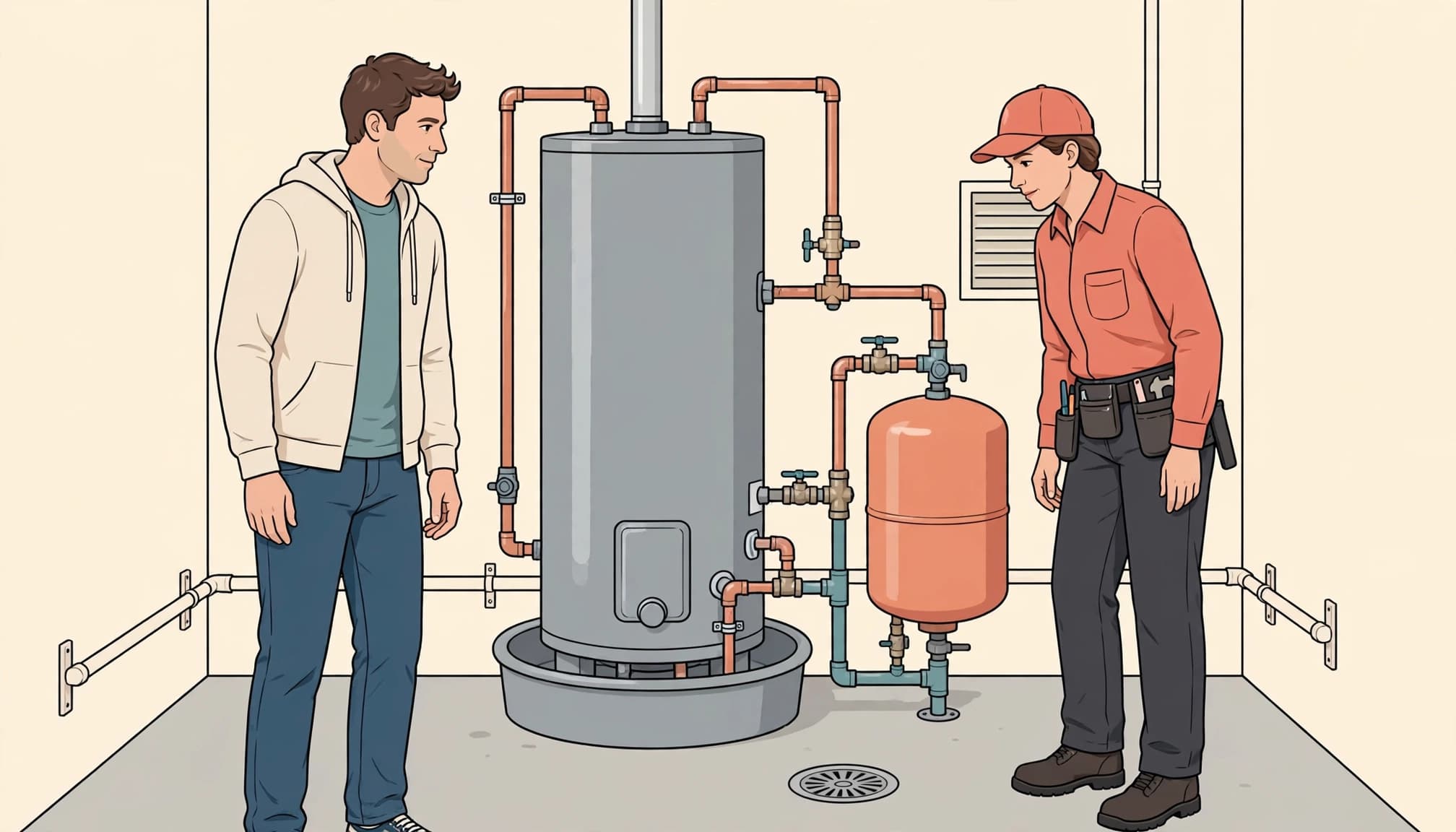
A licensed local plumber can determine if the home is closed, measure incoming pressure, select a listed potable-water expansion tank, and set its pre-charge correctly.
Installation requires more than threading on a tank
The tank must have the right capacity for the water heater and the property's water pressure. It also needs a secure mounting method and a location that remains accessible for inspection.
A plumber may find related concerns during the visit. For example, an unusually high incoming pressure may require attention before a new expansion tank can work properly. Old shutoff valves, corroded piping, or a poorly routed discharge line can also affect the job.
Permits and code requirements can change
Florida Plumbing Code language addresses thermal expansion control in closed potable-water systems. The code refers to an approved thermal expansion device, which can include a properly sized expansion tank.
Permit and inspection rules can vary by location and job scope. Fort Myers and Lee County homeowners should confirm current requirements with a licensed local plumber or the appropriate permitting authority before work begins. A water heater replacement may require more than swapping one unit for another.
Basic Care and Expected Service Life
Expansion tanks are low-maintenance, but they aren't permanent. The internal bladder and air charge can fail with age, and Florida's humid utility spaces can speed exterior corrosion.
During a routine water-heater visit, ask for the expansion tank to be inspected too.
What a basic inspection includes
A professional can check the tank's condition, its mounting, and the piping connection. They can also test the home's pressure and evaluate the tank's air charge after safely relieving water pressure on the system.
Homeowners can look for exterior rust, drips, or a tank that seems unsupported. Leave pressure testing and air-charge adjustments to a qualified technician. Pressing the air valve or removing fittings without the correct procedure can release water or damage the system.
How long does an expansion tank last?
There is no reliable one-size-fits-all lifespan. Water quality, household pressure, installation quality, bladder condition, and local environment all affect service life.
A tank may last for many years, while another fails earlier because its pre-charge didn't match the home's pressure or its bladder lost integrity. Regular checks catch small trouble before it turns into repeated relief-valve discharge or a leak.
What Affects Expansion Tank Cost
The expansion tank is usually a modest part of a larger water-heater or plumbing project. The final cost depends more on the home's conditions than on the tank alone.
A larger storage water heater may require a different tank capacity. High water pressure can require added work. Tight access, corroded pipe, new shutoff valves, secure mounting hardware, permit fees, and code corrections can also change the total.
Ask for clear pricing that separates the equipment, installation work, and any related plumbing repairs. That makes it easier to understand whether the recommendation addresses thermal expansion, excess incoming pressure, or both.
Key Takeaways for Fort Myers Homeowners
- Water heater expansion tanks absorb pressure created when stored water heats up in a closed plumbing system.
- Pressure-reducing valves, check valves, and backflow preventers can prevent expanded water from flowing back toward the main.
- Storage water heaters commonly need expansion control in closed systems, while tankless units need a system-specific review.
- Repeated T&P relief-valve discharge needs prompt professional diagnosis.
- Expansion tanks need correct sizing, air-charge adjustment, secure support, and periodic inspection.
- Current code and permit requirements should be verified locally before installation or replacement work.
A Small Tank With an Important Job
Thermal expansion is normal. Unmanaged pressure isn't. A correctly selected expansion tank gives heated water room to expand without repeatedly stressing the water heater and connected plumbing.
For a Fort Myers home, the best next step is a pressure and plumbing-layout check by a licensed professional. The right answer comes from the whole water system , not the water heater alone.
FAQ About Water Heater Expansion Tanks
Is an expansion tank required on every water heater?
No. The need usually depends on whether the home has a closed plumbing system. A storage water heater in a closed system often needs an approved expansion-control device, while an open system may not.
Can I use an expansion tank with a tankless water heater?
Sometimes, but it isn't automatic. Tankless heaters generally don't store a large heated volume. However, a recirculation loop, buffer tank, or other storage component can change the setup. Have a licensed plumber assess the full system.
Why is water coming from my water heater's relief valve?
Excess pressure from thermal expansion is one possible cause. High incoming water pressure, overheating, or a faulty T&P valve can also cause discharge. Don't block the valve or its discharge pipe. Schedule a professional inspection.
Can I replace a failed expansion tank myself?
A replacement may look straightforward, but correct sizing, pressure adjustment, support, and permit rules matter. Professional installation is the safer choice when the work connects to a water heater or requires changes to pressurized plumbing.
Recent Posts