Why Your Electric Water Heater Stops Heating in Fort Myers
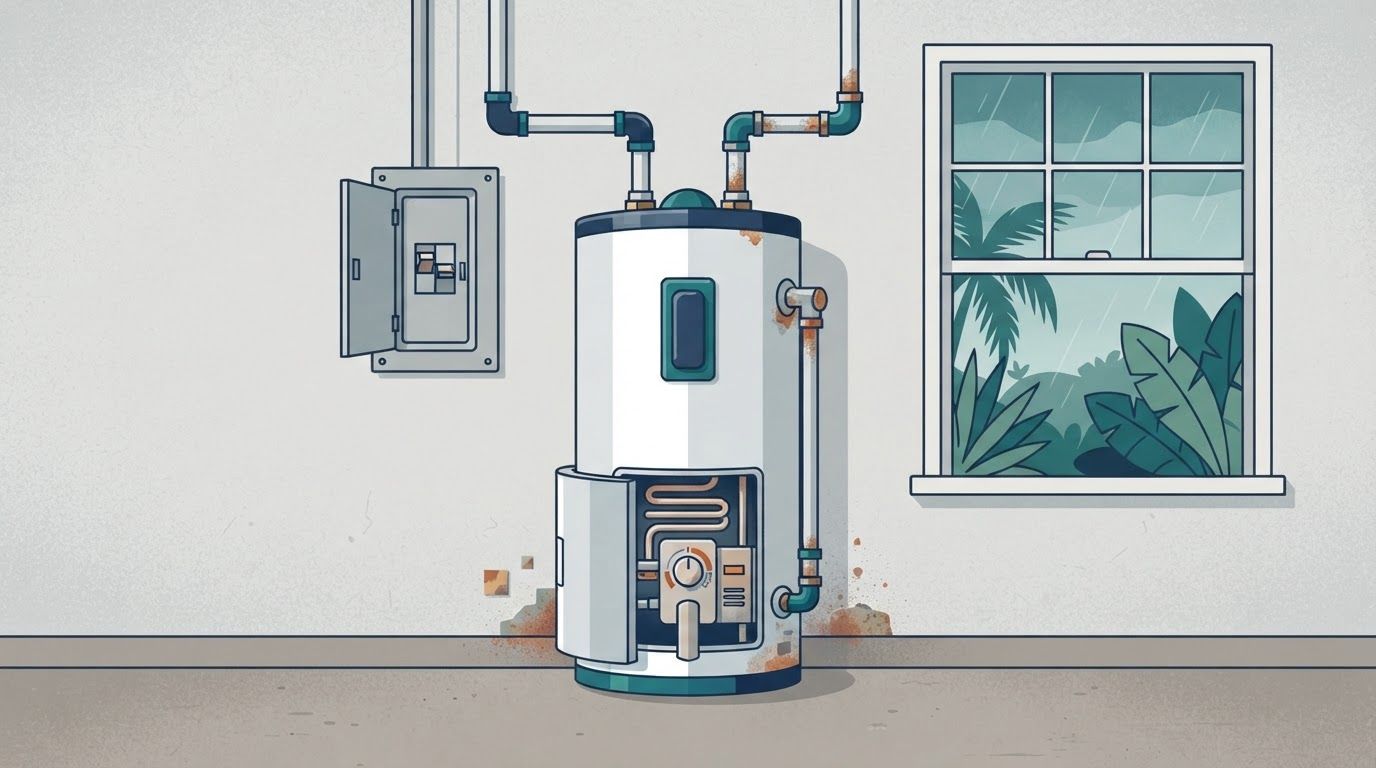
A cold shower often means your electric water heater has lost power, developed a failed component, or cannot move heat into the tank. The symptom may appear suddenly, but the underlying issue can involve a breaker, heating element, thermostat, wiring connection, or leaking tank.
Fort Myers homes also face high humidity, storm-related power interruptions, and coastal air that can contribute to corrosion over time. You can perform a few safe checks, but electrical components and hot water create serious risks. Start by identifying the type of failure before deciding what to do next.
Start by Identifying the Hot-Water Problem
The amount of hot water available can point toward the likely cause. Pay attention to what happens at more than one faucet, and note whether the problem started suddenly or developed over several days.
No hot water anywhere
When every faucet runs cold, the heater may not be receiving power. A tripped circuit breaker is one possible cause, especially after a storm or brief power interruption. A failed upper thermostat, high-limit safety cutoff, or major wiring problem can produce the same symptom.
If the breaker stays on but the tank remains cold, the problem probably requires professional testing. Electric water heaters contain high-voltage connections behind their access panels, so a visual inspection should stop at the outside of the unit.
Lukewarm water or a short supply
Lukewarm water often points to one failed heating element, a damaged thermostat, or a temperature setting that has changed. Many electric tanks use two heating elements. If one fails, the heater may still produce some hot water, but recovery takes longer and the supply may run out quickly.
A short supply can also result from a tank that is too small for current household demand. However, if the problem appeared suddenly, a component failure is more likely than a capacity issue.
| What you notice | Possible cause | Safe next step |
|---|---|---|
| No hot water at any faucet | Tripped breaker, lost power, thermostat fault | Check the breaker once, then call for service if the issue remains |
| Lukewarm water | Failed element, thermostat problem, changed setting | Check the temperature control without removing panels |
| Hot water runs out quickly | One element failed, heavy demand, undersized tank | Schedule a professional diagnosis |
| Water around the tank | Tank leak, loose connection, pressure problem | Avoid wet electrical areas and arrange service promptly |
| Breaker trips repeatedly | Short circuit, damaged element, wiring fault | Leave the breaker off and call a licensed professional |
The pattern matters. A complete loss of hot water usually involves power or the upper portion of the tank. Partial heating more often involves an element, thermostat, or sizing problem.
Why an Electric Water Heater Stops Heating in Fort Myers Homes
A tripped breaker or lost power
Your water heater has a dedicated circuit. If that breaker trips, the tank can't heat water. Power interruptions can occur after thunderstorms, nearby electrical work, or a fault inside the heater.
A breaker that trips once may respond to a single reset. Repeated trips point to a problem that needs testing. The cause could be a shorted heating element, wet connection, damaged wire, or failing thermostat.
If the breaker trips again after one reset, leave it off. Repeated trips are a warning, not a reset routine.
The heater may also lose power because of a loose connection, a failed disconnect, or damage in the electrical supply. Finding that fault requires a licensed professional with the right test equipment.
A burned-out heating element
Heating elements sit inside the tank and transfer heat to the water. Over time, mineral deposits can collect on an element and reduce its efficiency. A coated element can run hotter than intended and eventually fail.
An element may also burn out if power reaches it while the tank is empty. This can happen after installation, draining, or certain plumbing repairs when the tank hasn't fully refilled. A burned-out element usually causes lukewarm water or slower recovery, although some failures can affect all hot-water production.
Replacing an element involves draining part of the tank and working near high-voltage wiring. It isn't a safe do-it-yourself repair unless a qualified person handles the electrical and plumbing work.
A thermostat or high-limit cutoff problem
Thermostats control when the elements turn on and off. If a thermostat fails, the tank may stop heating, overheat, or heat inconsistently. Electric units also have a high-limit safety device that shuts the system down if the water temperature rises too far.
The reset button for that safety device is often located behind an access panel. Reaching it may expose wiring and terminals. Don't remove the panel or press an internal reset button if you see water, damaged insulation, scorch marks, or corrosion.
A professional can test the thermostat, high-limit device, elements, and wiring in the correct order. That prevents a temporary reset from hiding a larger electrical issue.
Age, corrosion, or a leaking tank
Humidity alone doesn't usually stop a heater from working. However, moisture and salt-laden coastal air can speed corrosion on exposed connections, fittings, and the outside of older equipment. A corroded connection can create resistance, heat, or an intermittent failure.
A leaking tank is a different concern. Water may come from a loose fitting, temperature and pressure relief valve, drain valve, or the tank itself. If the steel tank has failed, replacing the heater is usually more practical than repairing the container.
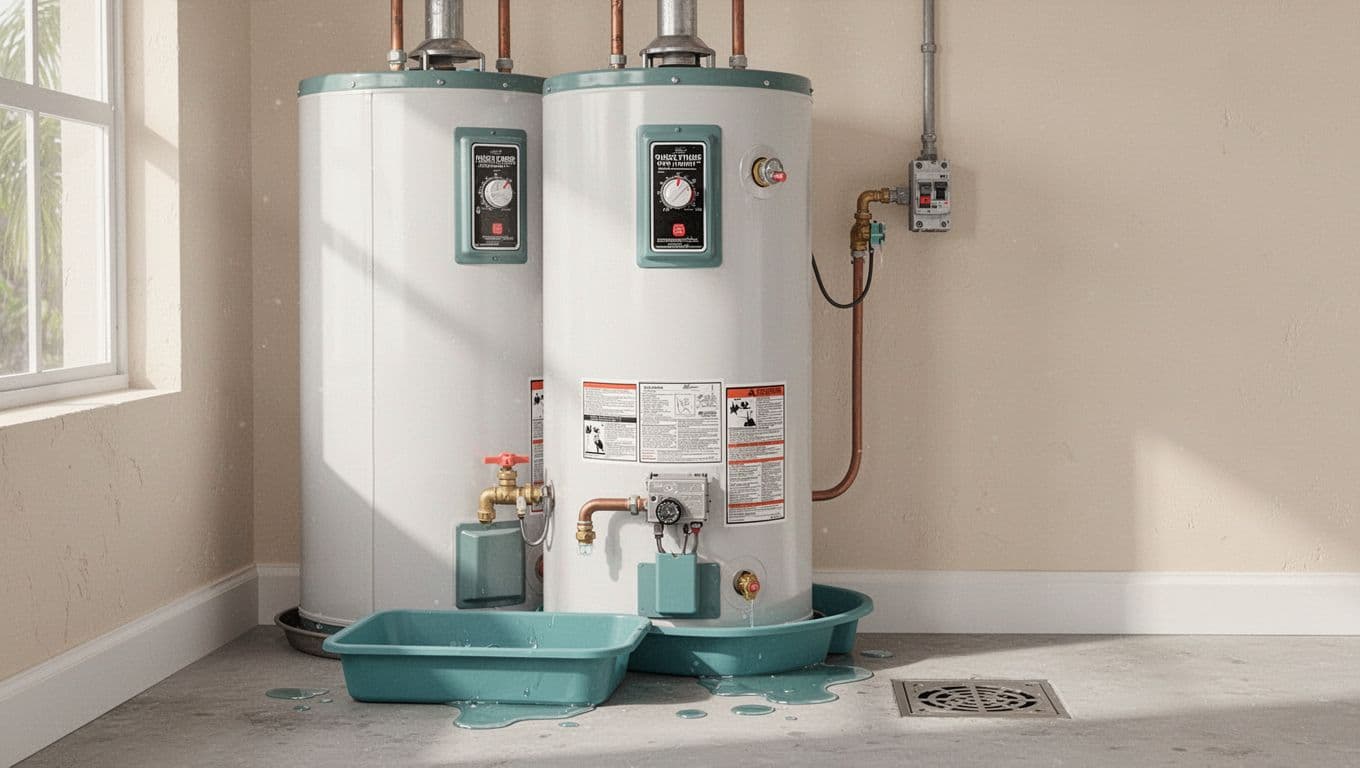
Rust-colored water, damp insulation, a swollen tank base, or water collecting in the drain pan deserves prompt attention. A small leak can become a major water-damage problem while also creating an electrical hazard.
Safe Checks Before Calling for Service
Use this troubleshooting checklist only for visible, low-risk checks. Keep children and pets away from the equipment, and don't touch the tank if water is pooling around it.
Start with the service panel
- Look at the dedicated water-heater breaker. If it is visibly in the middle or off position, switch it fully off and then back on once.
- Wait several minutes, then check whether the water begins warming. A full tank can take time to recover.
- If the breaker trips again, smells hot, buzzes, or won't stay on, turn it off and leave it alone.
- Don't remove the breaker-panel cover, test voltage, tighten wires, or replace a breaker yourself.
Keep your hands dry and stand on a dry surface. If the panel or surrounding floor is wet, don't approach the electrical equipment. Call for help instead.
Check the setting and hot-water flow
Look at the external temperature control if your model has one. A household member may have changed the setting, or a control may have moved during cleaning. Don't raise the temperature sharply to compensate for a heating problem. Water that is too hot can cause serious scalding, especially for young children and older adults.
Next, run hot water at another faucet. If one fixture has cold water while the rest of the home has hot water, the issue may involve that faucet's cartridge or mixing valve rather than the tank.
Also check whether a recent plumbing project, shutoff, or water interruption affected the heater. The cold-water supply valve above the tank should normally be open, but don't force a stiff or corroded valve.
Look without opening panels
Check the area around the tank for water, rust, melted plastic, scorch marks, unusual buzzing, or a burning odor. Listen for loud popping or crackling, although some tank noise can result from mineral deposits.
Never remove the metal access covers to inspect the elements or thermostats. Don't insert tools into openings, touch wiring, or bypass a safety device. These steps can cause shock, burns, fire, or additional equipment damage.
When to Stop Troubleshooting and Call a Licensed Professional
Stop immediately for electrical or scalding hazards
Turn off the heater's breaker only if you can reach it from a dry, safe location. If water has reached electrical parts, leave the area and contact a licensed water heater professional. Don't stand in water while touching a breaker, disconnect, plug, or appliance.
Call promptly when you notice:
- A burning smell, smoke, sparks, buzzing, or melted insulation.
- A breaker that trips more than once.
- Water leaking near wiring, the electrical disconnect, or the service panel.
- Steam, extremely hot water, or signs of overheating.
- A tank that is splitting, bulging, heavily rusted, or leaking from its body.
If hot water is dangerously hot, avoid using it until a professional checks the controls. Keep faucets closed when possible, and warn everyone in the home about the scalding risk.
Schedule service for persistent loss of heat
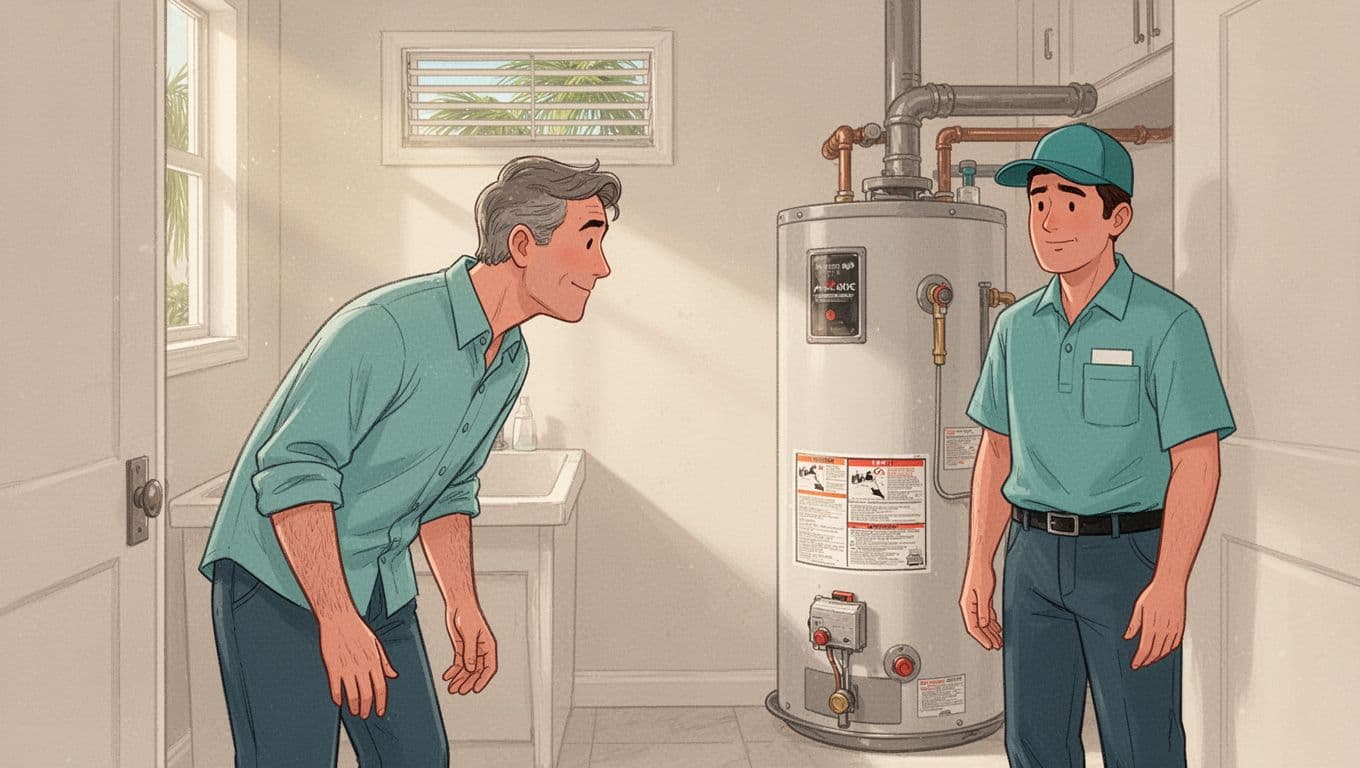
A professional should diagnose the heater when safe checks don't restore hot water. The visit may include electrical testing, element testing, thermostat checks, leak inspection, and an assessment of the tank's age and condition.
Ask for a clear diagnosis before approving work. A repair may make sense when the tank is sound and the failed part is accessible. Replacement may be the better choice when the tank leaks, corrosion is widespread, or repeated repairs have become expensive.
Fort Myers homeowners should also mention any recent storm, power surge, plumbing work, or unusual water condition. Those details can help narrow the problem without guesswork.
Preventing Future Water-Heater Problems
Keep the equipment area dry and accessible
Don't store boxes, cleaning products, or lawn chemicals against the heater. Leave enough room for inspection and keep the drain pan visible. A clear area makes small leaks easier to spot before they damage flooring or walls.
Look at the tank and nearby fittings every few months. You don't need to touch anything. Check for dampness, rust, mineral deposits, or a relief-valve discharge pipe that is releasing water.
In coastal or highly humid areas, keep the utility space ventilated when practical. Have a professional inspect corrosion on connections and the electrical disconnect instead of sanding or coating those parts yourself.
Plan routine inspection and replacement
Periodic service can identify worn elements, weak thermostats, valve problems, and early leaks. Ask the technician to review the tank's age, recovery performance, connections, and drain pan during the visit.
If you replace the unit, choose capacity based on household demand, available space, electrical requirements, and future needs. A properly sized system should recover efficiently without forcing the temperature to an unsafe setting.
Maintenance doesn't prevent every failure, but it can reduce surprises and give you time to plan for replacement. It also helps protect the home from leaks that develop after years of unnoticed corrosion.
Conclusion
When an electric water heater stops heating in a Fort Myers home, start with the symptom and make only safe external checks. A single breaker reset and a review of the temperature setting may solve a simple interruption, but repeated trips, leaks, overheating, or damaged wiring require professional service.
Humidity, coastal air, storms, age, and mineral buildup can all affect equipment condition, yet the right repair depends on testing. Protect your household from shock and scalding by keeping the panels closed and calling a licensed professional when the problem goes beyond a basic visual check.
Recent Posts