
Sunset Gulf HVAC • September 1, 2026

AC Temperature Difference Test for Fort Myers Homes

Share this article

AC Temperature Difference Test for Fort Myers Homes

When your home feels warm or sticky, an AC temperature difference test can offer a useful first clue. It compares the air entering your system through the return grille with the cooled air leaving a supply vent.

For Fort Myers homeowners, that number needs context. Florida humidity, a hot attic, a clogged filter, and a system recovering after doors stay open can all change the result. Use this test to spot a pattern, then decide whether your AC needs closer attention.

What an AC Temperature Difference Test Can Tell You

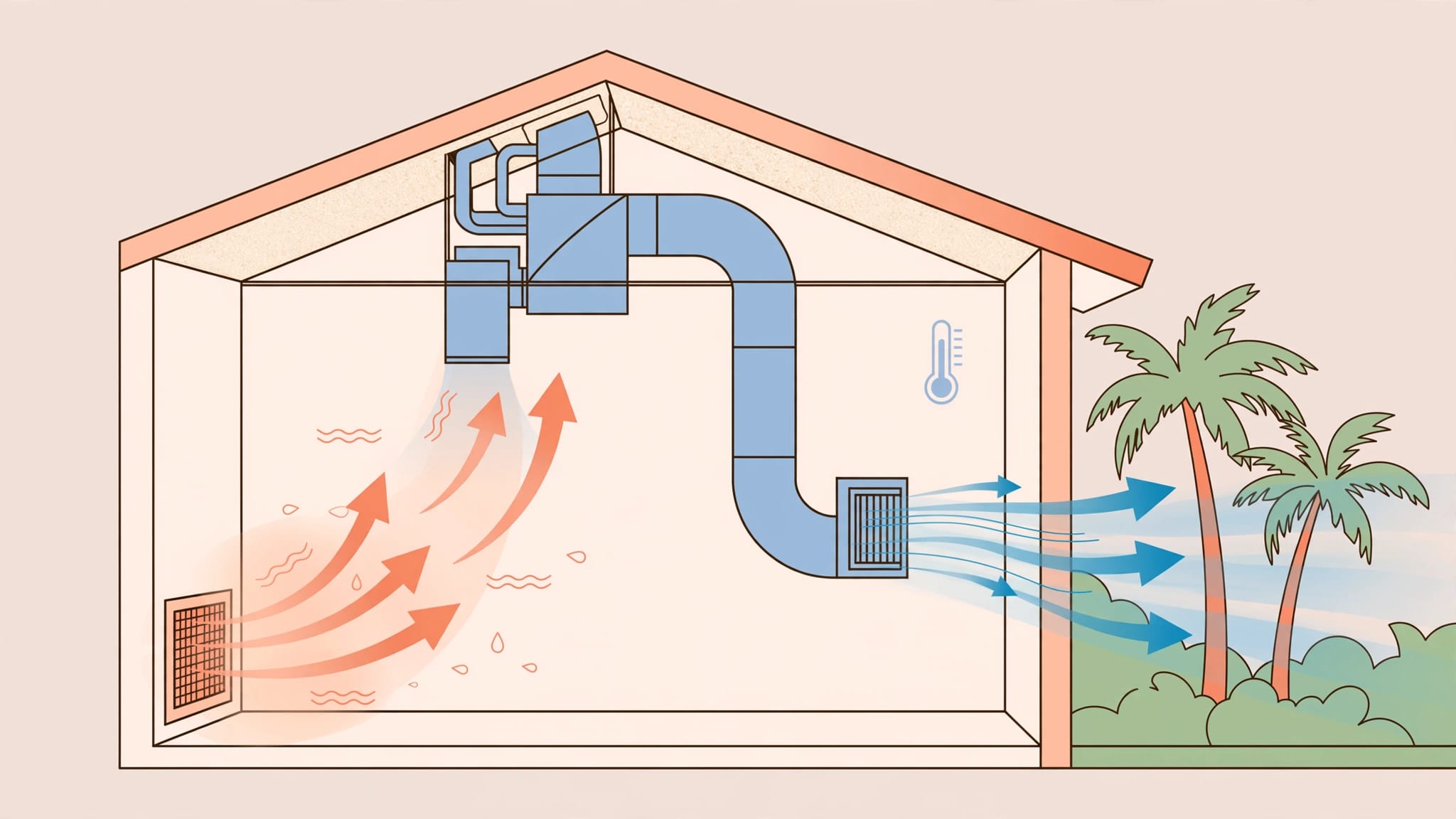
A central air conditioner pulls warmer indoor air through its return, cools it across the evaporator coil, and sends it back through supply vents. The difference between those two readings is often called the temperature split, or delta T.

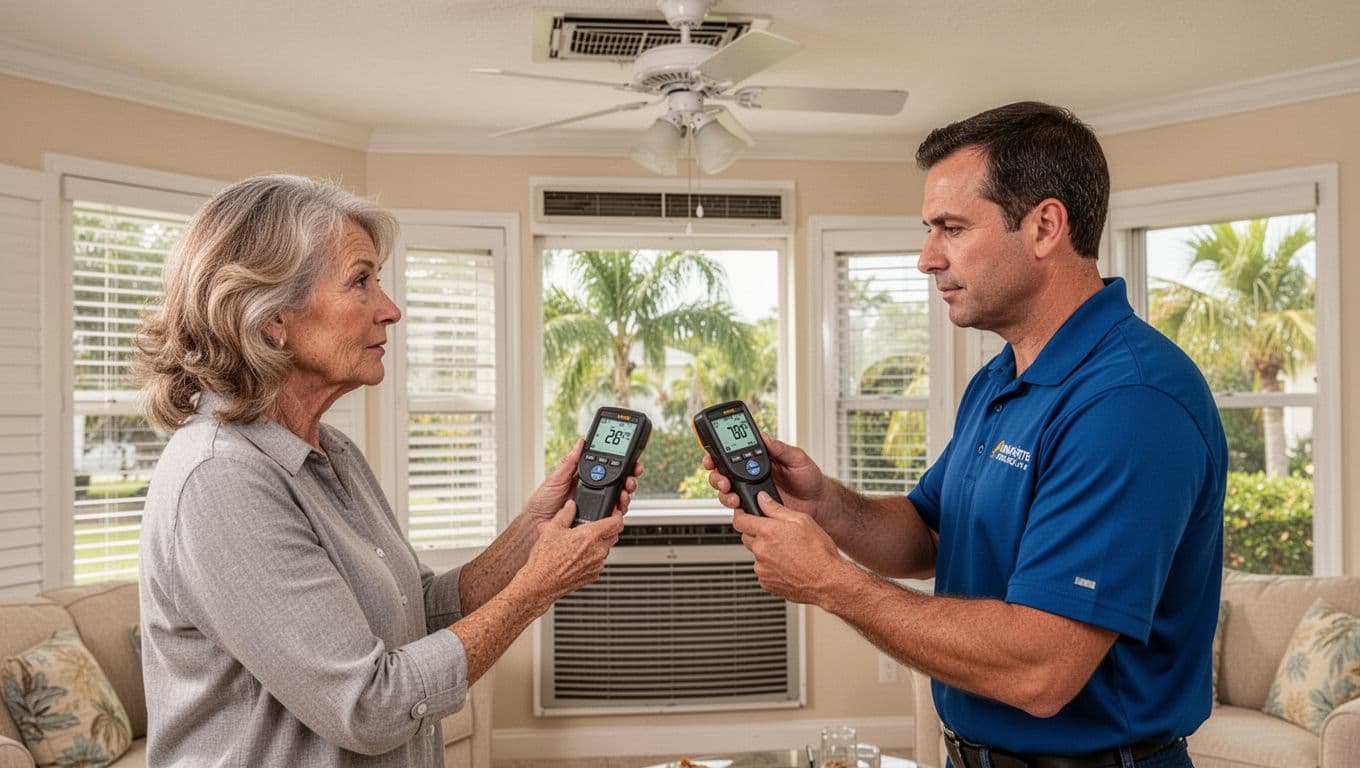
Under steady conditions, many properly operating systems show a supply-air temperature about 16 to 22 degrees Fahrenheit cooler than return air. For example, a 77-degree return reading and a 58-degree supply reading produce a 19-degree difference.

It is a clue, not a diagnosis

A normal split doesn't prove every part of the system is healthy. A weak blower, restricted duct, drain problem, or uneven room temperatures can still affect comfort.

Likewise, a lower or higher difference doesn't automatically mean low refrigerant. A licensed technician must check airflow, indoor humidity, coil condition, electrical components, and refrigerant performance before naming the cause.

A single temperature split is a snapshot. Consistent readings, comfort levels, humidity, and run time tell the fuller story.

How to Perform an AC Temperature Difference Test

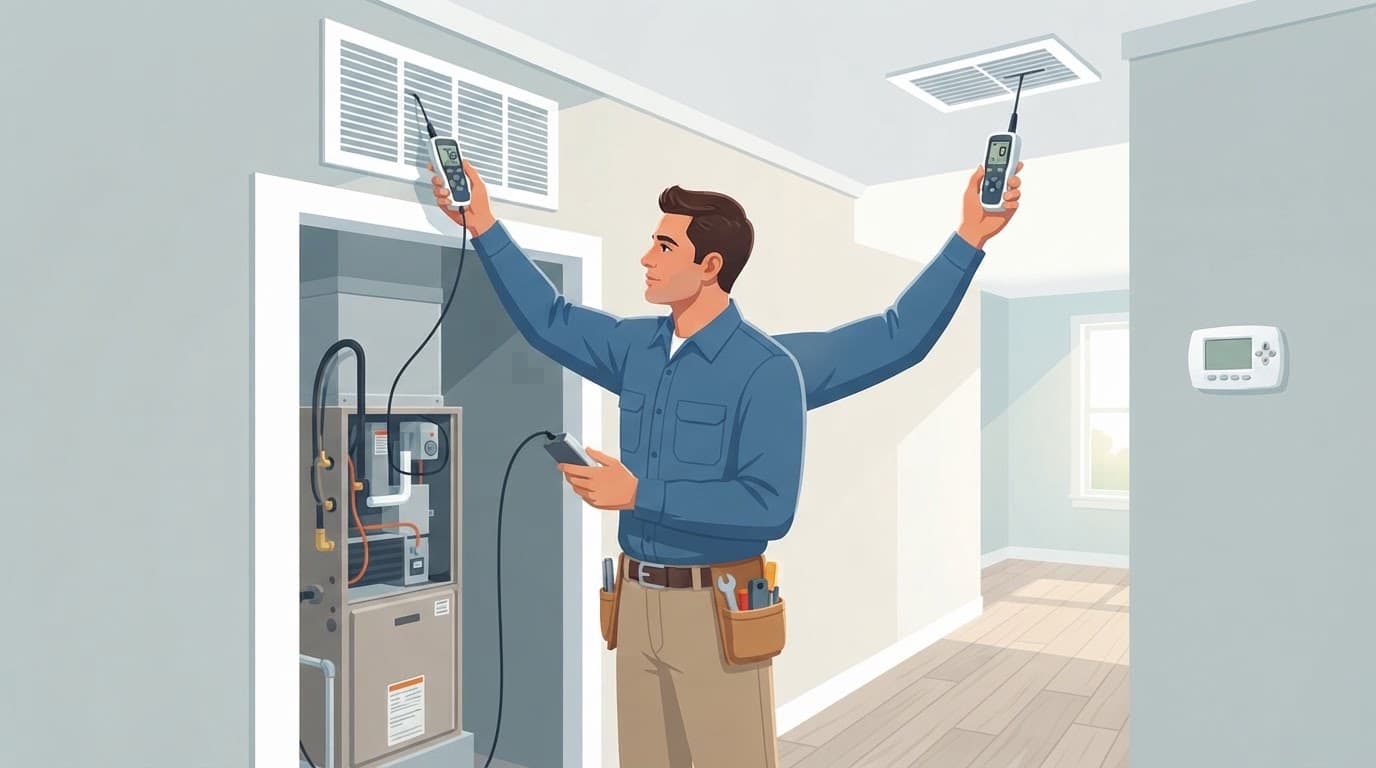
Use two small digital thermometers that measure air temperature. Avoid infrared thermometers for this task because they read surface temperature, not the moving air your AC is cooling.

Set the thermostat to cooling mode and keep the fan on Auto. Close exterior doors and windows, then let the system run for at least 10 to 15 minutes without changing the setpoint.

Take a reliable return-air reading

Choose a large central return grille, not a room return beside a sunny window or kitchen. Hold the thermometer in the moving air just inside the grille, without touching the metal. Let the reading settle for a minute, then write it down.

Don't remove panels or reach near the air handler's electrical parts. The return grille gives homeowners a safer measurement point.

Measure supply air at a nearby vent

Next, select a supply vent near the return grille, preferably in the same open area. Hold the second thermometer a few inches below the center of the airflow. Keep it away from the vent's metal fins and wait for a stable reading.

Subtract the supply temperature from the return temperature. If return air is 76 degrees and supply air is 57 degrees, the difference is 19 degrees.

Take the same readings again after five minutes. Two similar results are more useful than one rushed measurement.

Why Fort Myers Conditions Change the Result

An AC doesn't only lower air temperature. It also removes moisture, and that job matters during a rainy Fort Myers afternoon. When indoor humidity is high, the coil spends more capacity pulling water from the air. Your temperature difference may shift even while the system is working.

A hygrometer can add helpful context. Many homes feel comfortable when indoor relative humidity stays around 45 to 55 percent. If the house feels clammy at a reasonable thermostat setting, review the right indoor humidity level for Fort Myers homes.

Outdoor heat and household activity matter

Direct sun, a busy kitchen, frequent door openings, and afternoon storms increase the load on your system. Therefore, avoid testing immediately after returning home, cooking a large meal, or opening doors for pets and guests.

A dirty filter can also reduce airflow and distort results. Check the filter first, and replace it if it looks loaded with dust. Keep return grilles clear of furniture and rugs so the system can move air properly.

When to Repeat the Test or Call for Service

Repeat the test later if conditions were unusual. Wait for a similar time of day, keep the thermostat and fan setting unchanged, and give the AC a steady run before measuring again.

Also compare comfort across rooms. A reasonable temperature split at one vent does not explain a bedroom that stays humid, a room with weak airflow, or an air handler that leaks water.

Signs that need a licensed HVAC professional

Call for Fort Myers AC installation and repair if the temperature split stays unusually low or high on repeated tests and you also notice performance problems. Prompt service is also wise when you see:

  • Ice on refrigerant lines or the indoor unit.
  • Water around the air handler, repeated drain clogs, or a musty odor.
  • Long run times with little cooling, rising humidity, or weak airflow.
  • A breaker that trips, burning smells, or unusual buzzing.

Turn the system off if you see ice, smell burning, or hear severe electrical noises. Don't open the condenser cabinet, handle wiring, or attempt refrigerant work yourself.

FAQ About AC Temperature Checks

What is a good AC temperature difference in Florida?

Many systems produce supply air roughly 16 to 22 degrees cooler than return air after a stable run time. Humidity and airflow affect that range, so use it as a guide rather than a pass-fail score.

Should the thermostat fan be set to Auto?

Usually, yes. Auto lets the blower stop with the cooling cycle, which can help limit moisture moving back into the home. Review AC fan Auto versus On settings if your home feels damp or the blower runs constantly.

A Better Read on Your Home's Comfort

The AC temperature difference test works best when you repeat it under steady indoor conditions and pair it with humidity and airflow observations. Reliable comfort comes from the whole system, not one number at a vent.

If readings stay inconsistent or your home remains muggy, a professional inspection can find the issue before Florida heat puts more strain on the equipment.

Recent Posts

By Sunset Gulf HVAC September 13, 2026
A hissing air conditioner can make any Naples homeowner worry about a refrigerant leak. However, AC hissing sounds can also come from airflow problems, duct leaks, expansion components, or normal pressure changes as the system starts and stops. The sound matters most when it a...
By Sunset Gulf HVAC September 12, 2026
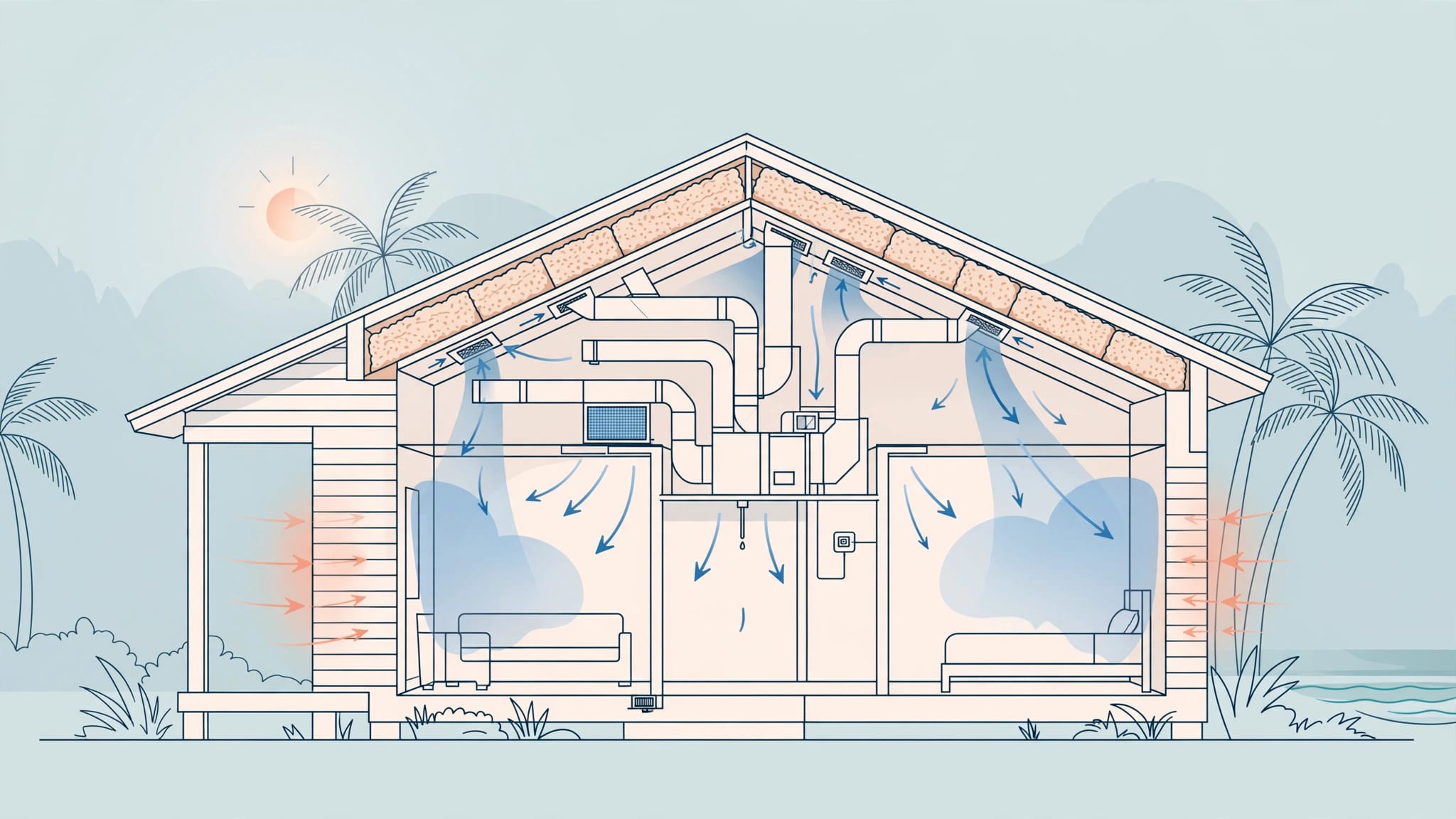
A rising electric bill, sticky rooms, or an air conditioner that runs all day can point to more than an aging unit. Your ducts, insulation, thermostat, filter, and home envelope may also be wasting cooling. If you're searching for an HVAC energy audit Fort Myers homeowners can...
By Sunset Gulf HVAC September 11, 2026
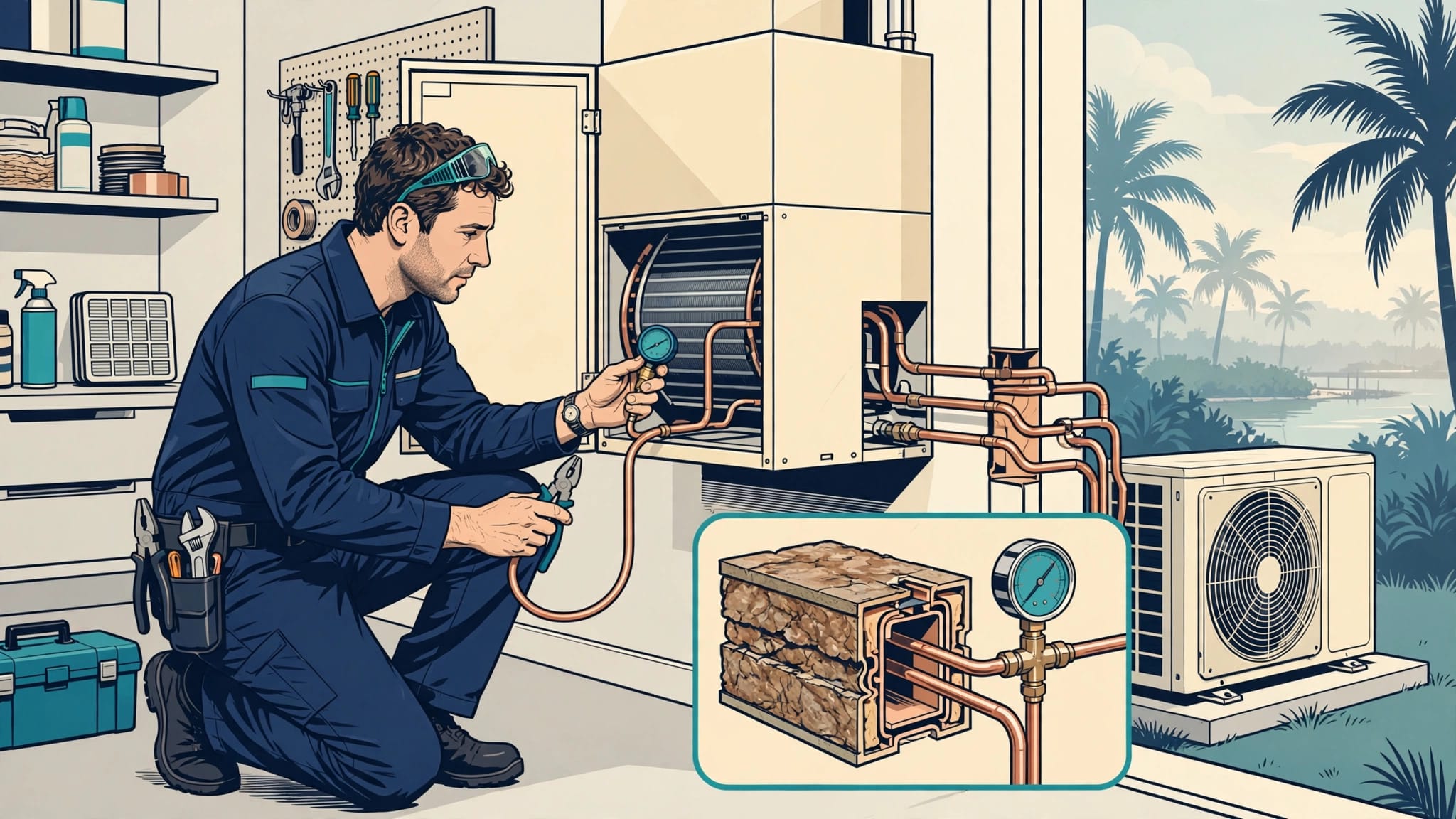
A new outdoor unit can connect to old copper tubing, but that connection alone doesn't make it safe. In Cape Coral, humidity, salt air, heat, and years of vibration can affect the line set hidden between your indoor and outdoor equipment. Homeowners can sometimes reuse refrige...