Babcock Ranch AC Voltage Problems: Signs and Safe Next Steps
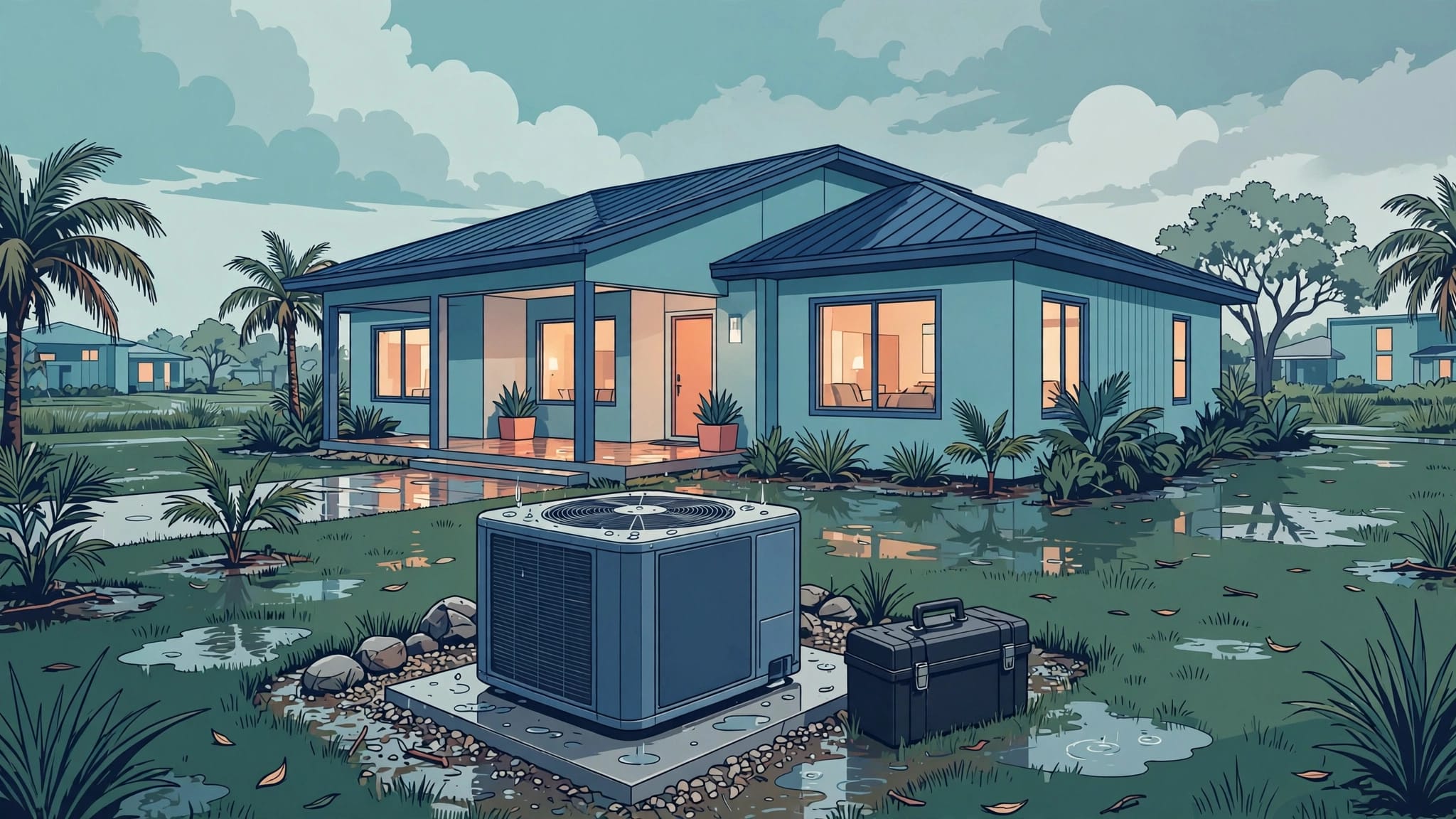
Your air conditioner stops after a storm, but the lights are still on. That doesn't tell you whether the problem is the power supply, an AC component, or a safety switch.
A Babcock Ranch AC voltage concern deserves a careful diagnosis, not repeated attempts to restart the system. You can gather useful clues without touching electrical equipment. Start by separating what you can observe from what a professional needs to test.
Key Takeaways
- AC means home air conditioning here. A cooling failure doesn't, by itself, prove that your home has a voltage problem.
- A blank thermostat, humming outdoor unit, or tripped breaker can have several causes. Don't replace a part based on one symptom.
- Check settings and visible conditions from a safe distance. Never open an electrical panel, disconnect, or equipment cabinet to investigate.
- Call an HVAC technician for cooling-system symptoms. A licensed electrician should assess suspected problems with household wiring, the breaker, or the electrical service.
- If you see smoke or sparks, or smell burning, move away and seek urgent help.
Babcock Ranch AC voltage problems: power versus controls
An air conditioner uses electrical power to run components such as the compressor and fans. It also uses a separate low-voltage control circuit so the thermostat can request cooling. A problem in either area may leave the house warm, but the repairs are different.
For example, a thermostat can appear dead because its batteries are exhausted, its control circuit has a fault, or a condensate safety switch has stopped operation. The display alone can't identify which one happened. When checking thermostat wiring, a technician may verify the system's 24-volt control circuit and C-wire connection. The C-wire requirements for smart thermostats matter most when a display or new thermostat behaves unpredictably.
Power reaching the outdoor unit is another question. A technician must determine whether the equipment receives the power it needs and whether a component fails when cooling starts. A Babcock Ranch AC voltage diagnosis should follow those findings, rather than assume every shutdown came from the utility.
Signs that warrant attention, not a voltage diagnosis
When the indoor system and outdoor unit behave differently
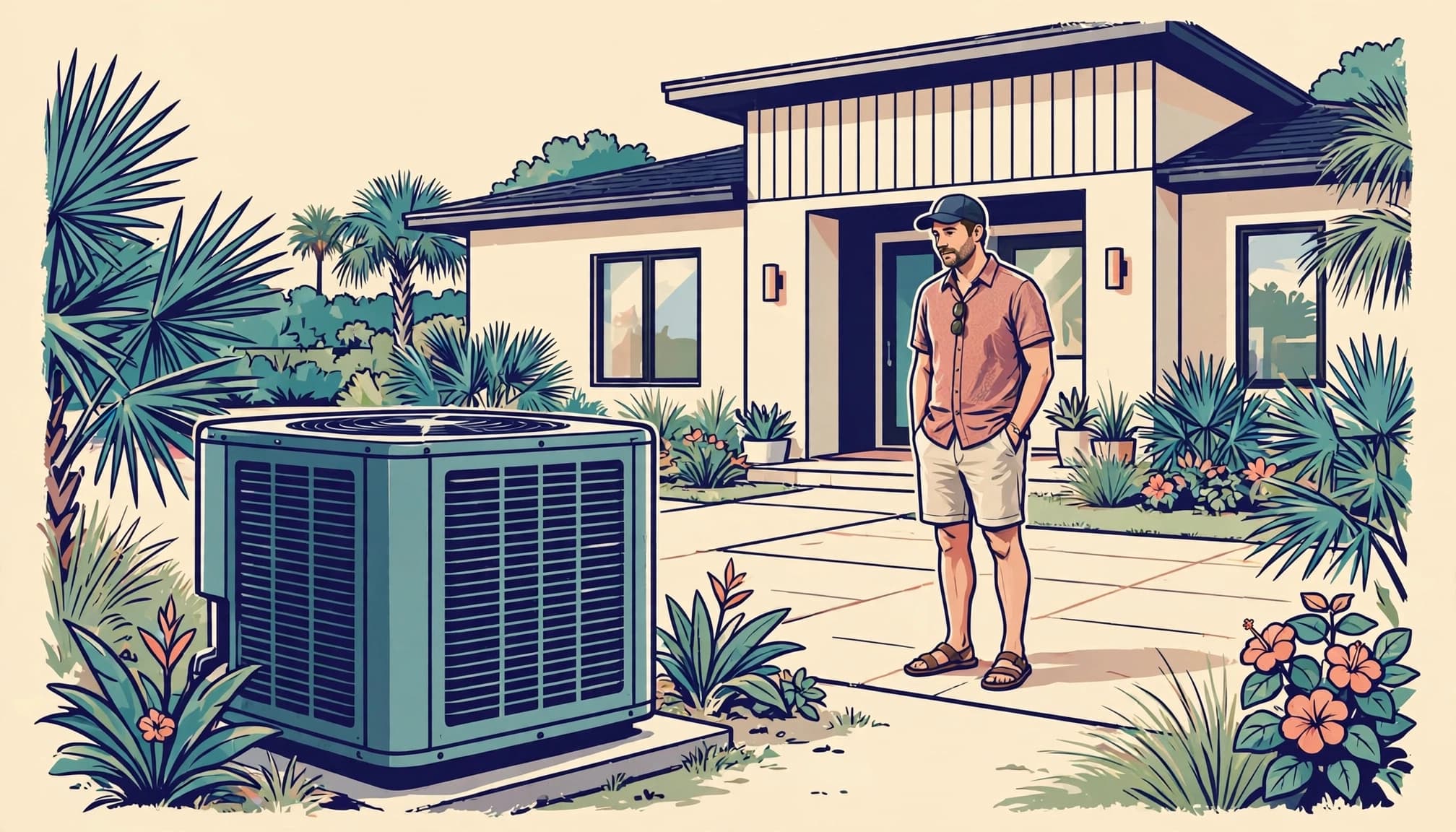
If air moves through the vents but isn't cool, look at the outdoor unit from a safe distance. It may be silent, start briefly, or hum without running. A failed capacitor, contactor, fan, compressor, or control signal could produce similar symptoms. The causes of a humming outdoor AC unit are broader than a voltage problem.
A blank thermostat alongside a stopped system offers a different clue. Check whether other parts of the home have power, but don't remove thermostat wires or equipment covers. Visible water around the indoor air handler also matters because a condensate safety switch may have stopped cooling.
When a breaker trips or operation changes after a storm
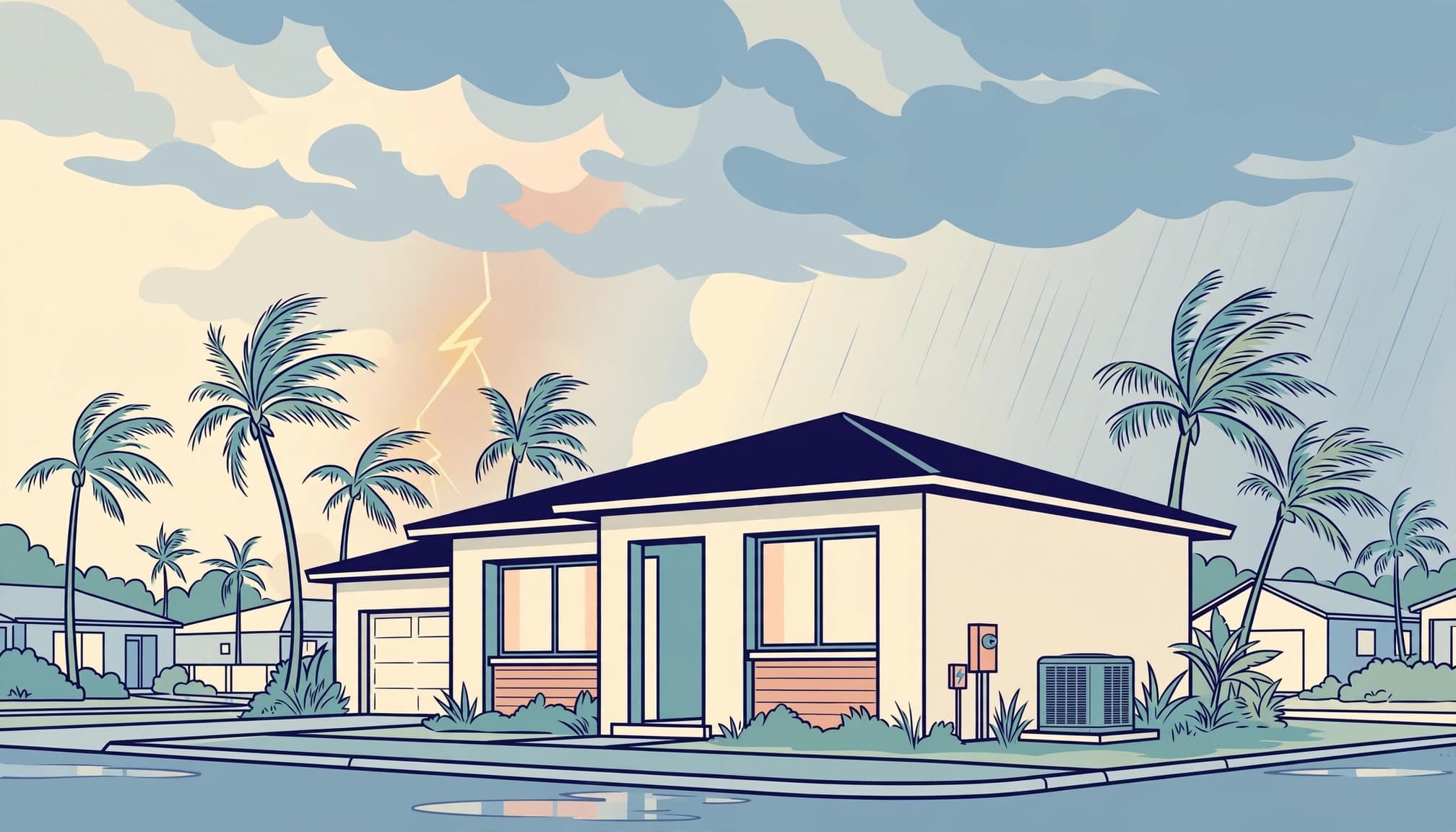
A breaker trip, repeated startup attempts, or new buzzing deserves prompt service. Storm-related surges and voltage swings can stress equipment, yet a worn AC component can also trip a breaker. The same symptom can involve more than one fault.
Don't keep resetting a breaker to see whether the unit will stay on. If it trips again, leave the system off. Repeated trips need an inspection of the AC and, when indicated, the electrical circuit. Sunset Gulf HVAC's discussion of why air conditioner breakers keep tripping explains why guessing at the breaker alone can miss an equipment fault.
What can cause similar cooling problems?
Trouble within the air conditioner
Weak capacitors, damaged contactors, failing motors, and compressor problems can keep an outdoor unit from starting. A clogged filter or dirty coil may also contribute to poor cooling or a shutdown, even when the electrical supply is normal. In humid weather, a blocked condensate drain can trip a float switch and make the system appear to have lost power.
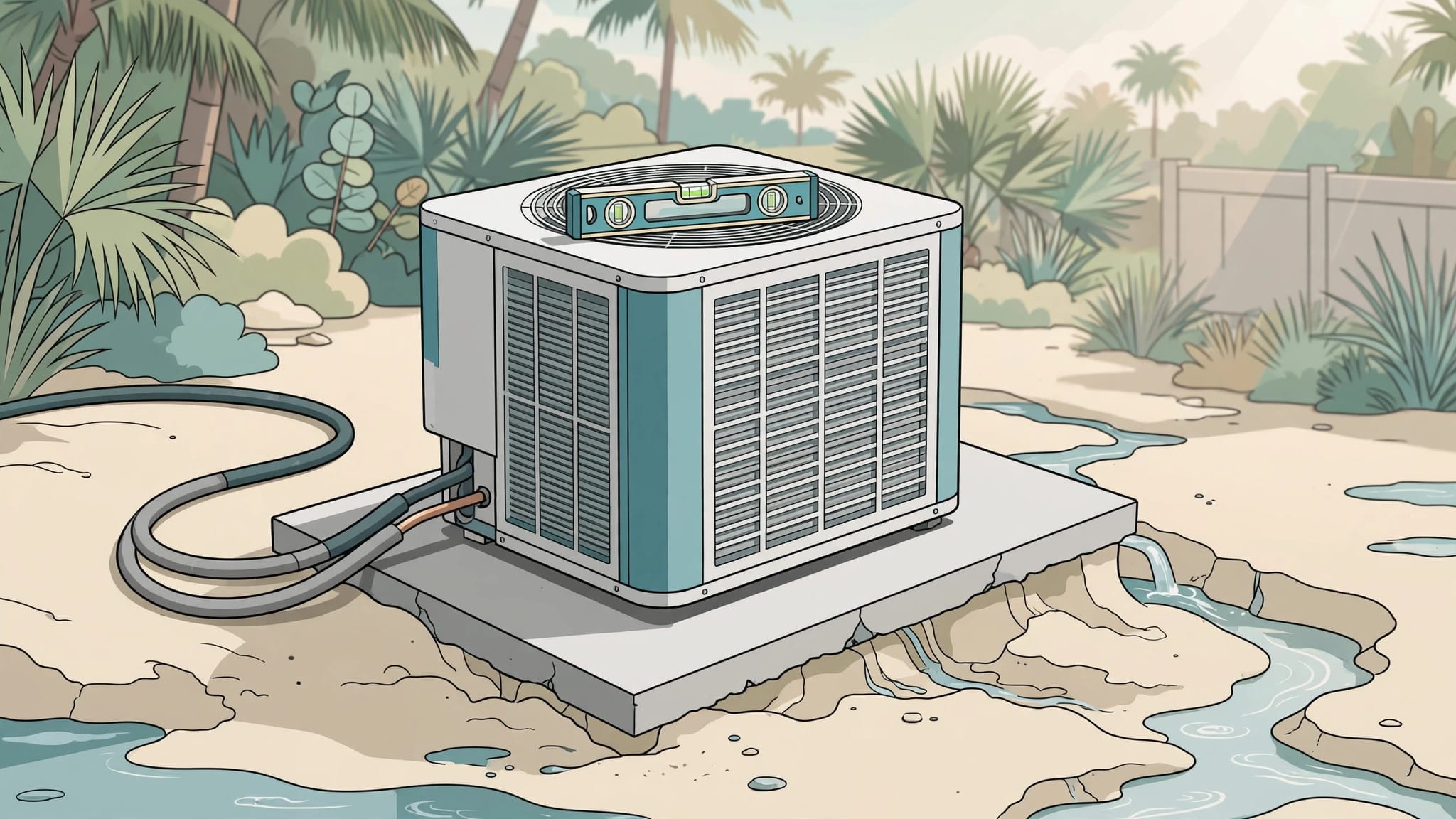
Outdoor equipment faces rain, heat, and debris in Southwest Florida. Moisture damage or corrosion can affect connections over time, but a visible symptom can't confirm where a fault began. A technician needs to check the equipment rather than assume a storm damaged it.
Trouble beyond the equipment
The branch circuit, breaker, disconnect, or household electrical service may be involved. If several appliances or rooms lose power at once, that points to a wider issue than one air conditioner. A nearby lightning event or outage is useful context for the technician, though timing alone doesn't prove the cause.
Likewise, a surge protector can't fix a deteriorated wire or loose connection. Any concern about the home's panel or supply belongs with a licensed electrician.
Safe checks you can make before calling
Set the thermostat to Cool and confirm its target temperature is below the room temperature. If its display is blank and it uses replaceable batteries, check those first. Note whether the indoor fan moves air and whether the air feels cool, warm, or weak.
Next, check the filter if you can reach it without removing equipment panels . Replace a visibly dirty filter with the correct size and type. Look for water around the air handler and observe the outdoor unit from a distance. You can clear loose leaves from the surrounding ground when the area is dry and safe, but don't reach into the cabinet.
Write down when the trouble started and what happened immediately before it. Did power go out? Did the outdoor unit hum, chatter, or make a grinding sound? Are other household devices affected? These details help a technician narrow the inspection.
If the equipment is wet, damaged, buzzing, or giving off a burning odor, stop the checks. Don't open an electrical panel or disconnect, handle wiring, test a live circuit, or replace a capacitor. Electrical parts can remain hazardous after the AC stops.
When to call an HVAC technician or an electrician
Start with HVAC service for AC-specific symptoms
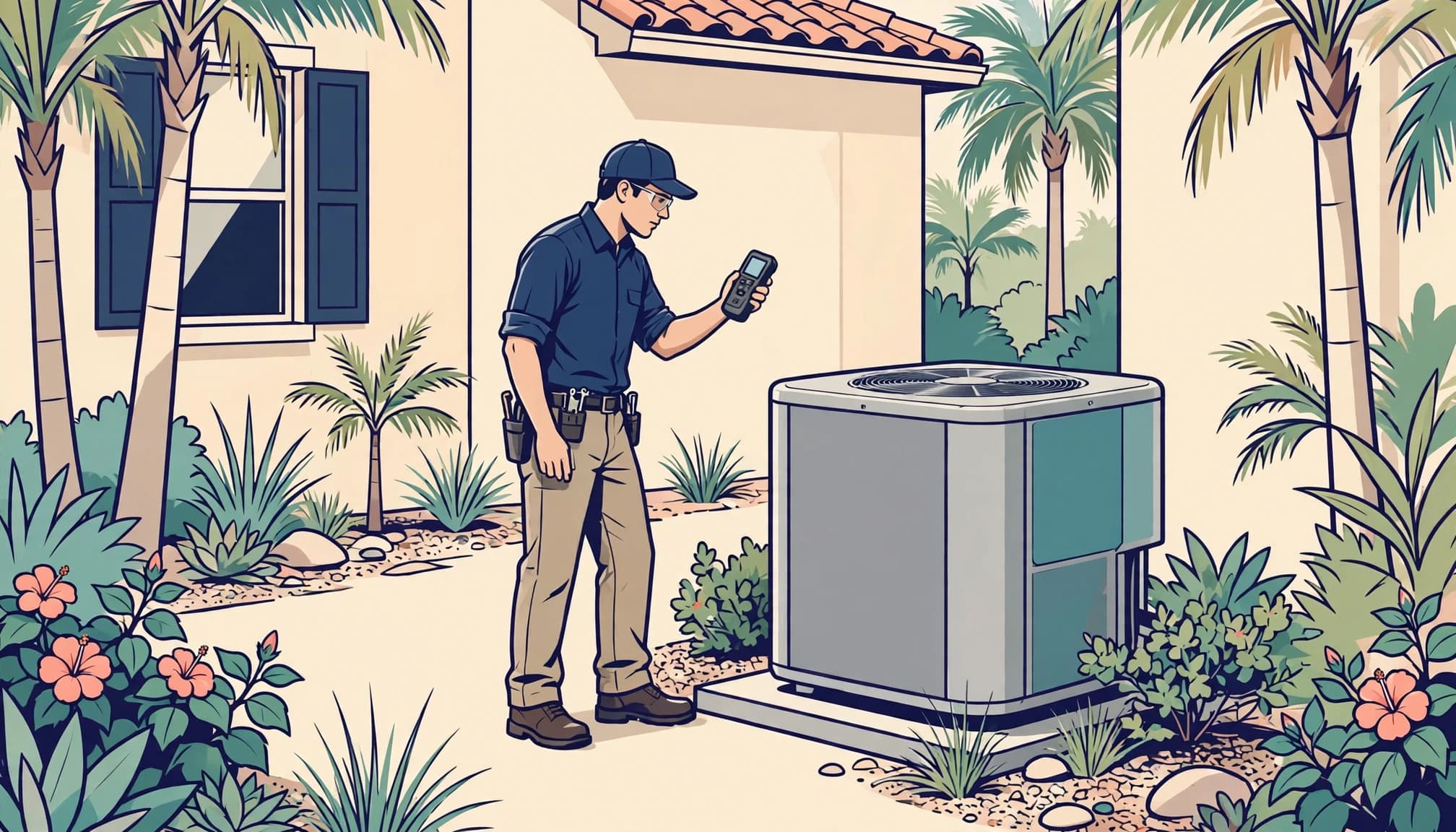
Call an HVAC technician when cooling fails despite correct thermostat settings, the outdoor unit hums without starting, or the system cycles off repeatedly. Warm air, weak airflow, water near the air handler, and unfamiliar equipment noises also call for AC service. An HVAC technician can check the controls, electrical components, drainage, airflow, and cooling performance together.
Sunset Gulf HVAC provides air conditioner repair in Southwest Florida, including Babcock Ranch. Ask what the diagnostic visit includes and request an explanation before approving a repair. The company lists diagnostic fees for service troubleshooting and offers same-day appointments when scheduling allows.
Bring in an electrician for household power concerns
Contact a licensed electrician if the problem appears to involve the home's breaker, panel, branch-circuit wiring, or electrical service. Widespread flickering or power loss outside the cooling system also merits electrical assessment. Your HVAC technician may recommend an electrician after checking the equipment.
If you see smoke, sparks, or signs of an electrical fire, move away. Call emergency services for an immediate hazard. Stay clear of downed lines and contact the utility if the issue appears to involve its equipment. Don't approach a damaged condenser to shut it down if doing so puts you at risk.
What a useful professional diagnosis looks like
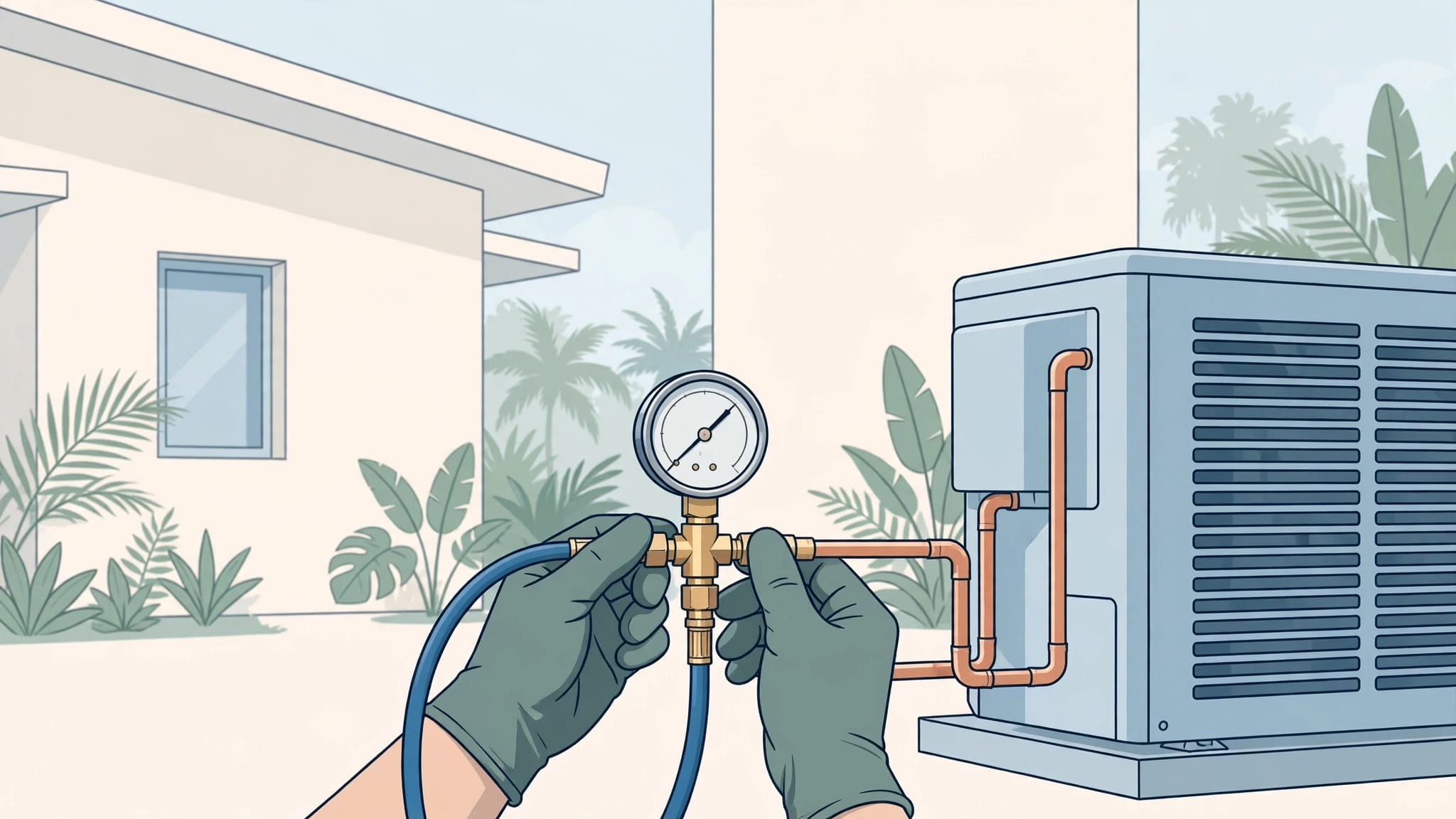
A technician should connect the symptom to a finding. After taking appropriate safety precautions, an HVAC professional can check power at the equipment, examine control operation, and evaluate the contactor, capacitor, motors, and compressor. They may also measure current draw and look for heat or moisture damage.
Those checks matter because two faults can occur together. A component might fail after an electrical event, while a loose connection or failing motor may also affect operation. Replacing one part without checking why it failed can leave the original problem unresolved.
Ask which test identified the fault, what repair is needed, and whether the system can run safely afterward. If the findings point beyond the AC to household wiring or the panel, ask which portion a licensed electrician will handle. Clear responsibility is important when HVAC and electrical work meet at the outdoor unit.
Reducing the risk of another shutdown
Discuss surge protection without treating it as a cure
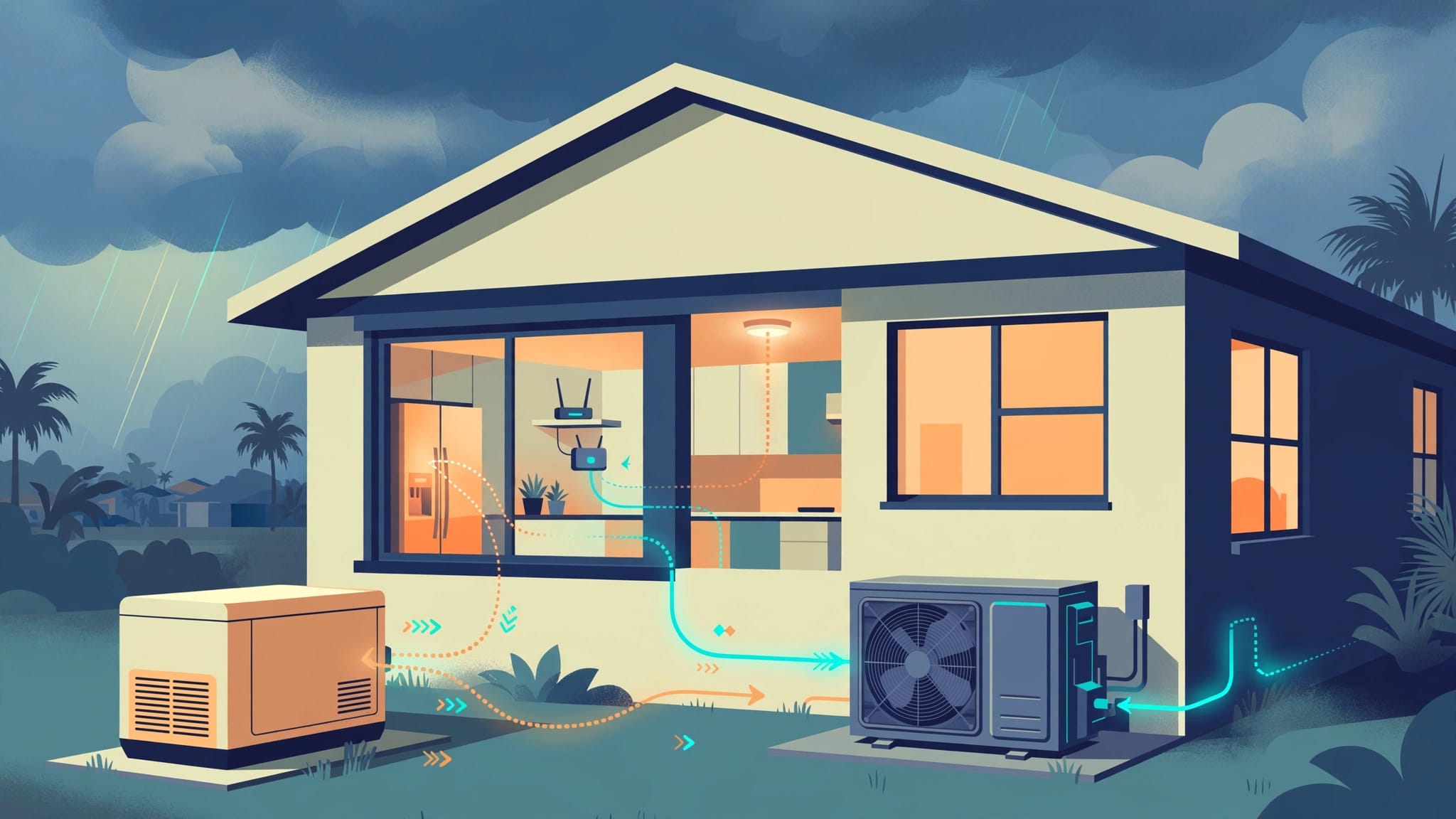
Southwest Florida storms make surge protection a sensible topic during service. A professional can discuss protection for the AC, while a licensed electrician can advise on options at the home's electrical service. Ask what the proposed device protects and how its status should be checked.
Protection has limits. It won't correct a loose terminal, damaged wiring, or a worn AC component. The guide to AC surge protector benefits in Babcock Ranch covers that distinction. After a major storm or unusual electrical behavior, have the equipment checked rather than assuming a protector settled the issue.
Keep up with ordinary AC care
Change filters as needed and leave space around the outdoor condenser for airflow and service access. After storms, report visible debris, flooding, or unusual sounds instead of restarting damaged equipment.
A professional tune-up can include electrical connection checks, capacitor testing, thermostat checks, and a look at the drain system. Those tasks may catch trouble before a hot afternoon shutdown, although maintenance can't prevent every electrical failure. The Babcock Ranch AC tune-up checklist separates simple homeowner observations from work that belongs to a professional.
Frequently Asked Questions
Can low voltage make my air conditioner stop?
Yes, unsuitable power at the equipment can affect operation. But a stopped AC doesn't prove low voltage. A failed component, control fault, drain safety switch, or other issue may look similar. A qualified professional needs measurements and equipment checks to identify the cause.
Should I reset the AC breaker after a storm?
Don't reset it if you notice water damage, heat, burning, or other unsafe conditions. Never repeatedly reset a breaker that trips again. If you aren't sure why it tripped, leave the system off and arrange service rather than using resets as a test.
Does a blank thermostat mean the house has an electrical problem?
Not necessarily. Batteries, thermostat settings, the low-voltage control circuit, and a condensate safety switch are possible factors. Check only what you can access safely, then call an HVAC technician if the display remains blank or cooling doesn't return.
A safer path back to cooling
A silent condenser or tripped breaker after a storm is a clue, not a diagnosis. Safe observation gives the right professional a better starting point without putting you near hazardous electrical parts.
Leave testing to an HVAC technician, and involve a licensed electrician when the concern extends to household power. That way, the repair addresses the fault the tests reveal.
Recent Posts